Majorities that speak volumes
The electorate has spoken: Labour’s record in government continues to earn the public’s confidence, says Leonid McKay
This general election has once again resulted in a decisive mandate for the Labour Party. It represents a historic fourth consecutive electoral victory and reflects the constant confidence of the Maltese people in a government that has served them since 2013.
The message from the electorate is clear: people believe they are enjoying a better quality of life than ever before, that Labour remains the political movement best placed to tackle the challenges facing the country and that the Nationalist Party has yet to convince voters that it is ready to return to government.
This outcome should come as no surprise. While Labour is far from perfect and has undoubtedly made its share of mistakes, the progress achieved in recent years has delivered tangible benefits to people’s lives.
Malta has moved from high unemployment to record levels of employment, from stagnant pensions to consistent annual increases and from a society often characterised by social conservatism and discrimination to one that embraces stronger civil rights, greater inclusion and enhanced equality.
These achievements (among many others) help explain why many voters continue to place their trust in Labour.
Citizens have sent a clear and powerful message. They want Prime Minister Robert Abela to continue leading the country forward, building on Malta’s success and shaping a brighter future.
That is precisely what voters are endorsing. It explains why Labour continues to secure electoral majorities that would have been considered unimaginable only a few years ago.
I take particular pride in having helped lead a campaign that remained firmly positive throughout, free from personal attacks or petty political point-scoring.
This approach is shaped by my own early experiences. As a child growing up in a politically mixed family, I often found electoral periods difficult, as political disagreements would sometimes spill over into family life and create tension at home. Those experiences left a lasting impression on me. It is part of what has driven my commitment to ensuring that politics is conducted with respect, restraint and a focus on ideas rather than division.
That commitment was reinforced throughout the campaign, as I witnessed first-hand the positive and hopeful spirit with which so many people engaged in the political process.
Wherever the prime minister went, he was greeted by large and enthusiastic crowds. What struck me most was not merely the size of the gatherings but the genuine enthusiasm shown by people from all walks of life.
These were citizens who were proud of their country, confident in its direction and optimistic about a new legislature in which the government will continue to stand by them and support them at every stage of life.
Some numbers: Labour’s majority of 22,000 votes is significant. It surpasses the largest electoral majority ever achieved by the Nationalist Party, which stood at around 13,000 votes in 1992. The Nationalist Party last secured an absolute majority of votes in 2003.
While it managed to obtain a relative majority in the 2008 general election, it has since been defeated in every major electoral contest, including local, national and European elections. That record speaks for itself. Some within the PN appear to disregard all this.
What I find difficult to understand is the reaction of the Nationalist Party to these results. I experienced this first-hand a few days ago during Popolin, a televised programme on PBS.
PN representatives clearly viewed the outcome of this 2026 general election with a degree of satisfaction. Yet, the figures indicate that the party has essentially returned to the level of support it achieved in 2017 under Simon Busuttil. There has been no breakthrough, no significant shift in voter sentiment and no meaningful inroads into Labour’s support.
Yet, it is being presented by some as a success, despite it still amounting to a significant defeat.
The PN has yet to convince voters that it is ready to return to government
What followed has been equally surprising. We are hearing explanations that Labour won because voters were given jobs or favours. We are hearing allegations that foreigners who were not eligible to vote somehow participated in the election. We are hearing claims that the media was not impartial.
I find it difficult to understand how such a political party can justify a result of this nature through such explanations. Rather than seeking external reasons, the Nationalist Party should instead look inward and ask why voters continue to place their trust in Labour, while consistently turning away from the PN election after election.
Of course, it is not my role to decide the strategy the Nationalist Party should adopt.
As a Labour Party, we have a duty to analyse the result honestly and to address our own shortcomings. Despite the convincing victory, there remain voters who chose not to participate, as well as others who deliberately invalidated their ballot as an expression of dissatisfaction.
We must reach out to these people with humility and with our feet firmly on the ground. We did this in 2024 and we will do so again now. I have always believed that a strong government is only possible with a strong party behind it.
Doing better remains our commitment. The newly appointed cabinet is full of energy and determination to implement the ambitious measures outlined in the Malta manifesto. We have promised bold projects and initiatives that will benefit every sector of society and we intend to deliver on those commitments.
Each measure is linked to a wellbeing index, a first in Maltese politics.
While we will continue to strengthen the economy and ensure that prosperity is shared, our priority now is to improve quality of life.
People deserve more time with their families, which is why we are introducing measures designed to improve work-life balance. Citizens will also benefit from more open spaces, recreational areas and sports facilities that contribute to both physical and mental wellbeing.
We are able to pursue these goals because we have already laid strong economic foundations.
At a time of uncertainty across much of the world, Malta continues to offer stability and peace of mind. With that sense of security, we can focus on building a healthier, happier and more prosperous society.
The electorate has spoken clearly. The scale of Labour’s victory speaks for itself.
 l
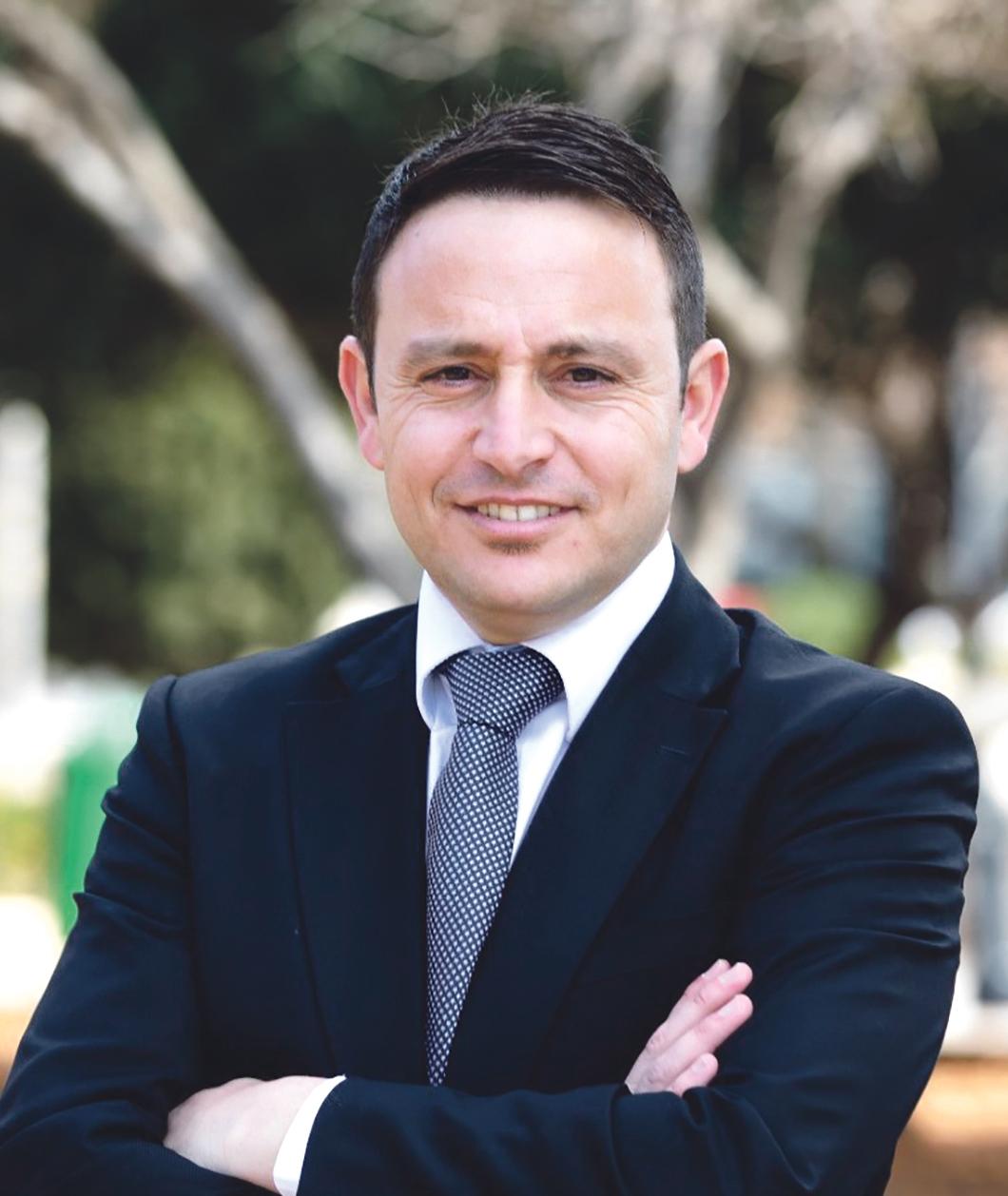
lLeonid McKay is the CEO of the Labour Party.