Malta’s artistic community ‘punches above its weight’, says Joseph Calleja
The fifth edition of the annual Academy of Givers’ Annual Conference was held at Rabat’s Xara Lodge last Tuesday
Malta’s artistic community “punches above its weight” on the international stage, Maltese opera star Joseph Calleja has said, while emphasising the importance of investing in the arts.
Speaking on Tuesday at a conference on philanthropy and sustainable development, Calleja stressed that Malta’s artistic community was among the country’s strongest export, highlighting the achievements of singers and actors past and present.
“We don’t have raw materials... [but] what Maltese people have achieved in the arts – like [Maltese-born American actor] Joseph Calleia, [operatic soprano] Miriam Gauci, movie star Marama Corlett... in the arts, we have always, so far, punched above our weight,” he said.
“Marvic Monreal is the first Maltese mezzo to sing in Convent Garden, which is extraordinary. So, these are great achievements and these are the people that we should invest in and support because nobody flies the Maltese flag higher than our cultural ambassadors,” said Calleja.
“We have no raw materials – no copper, iron, oil – even water we have to take from the sea. So, our only true resource we have is human resources; is us. We excel when we put our mind to it... we achieve things for a small country that are exceptional.”
Calleja was speaking at the fifth edition of the annual Academy of Givers’ Annual Conference, held at Rabat’s Xara Lodge, which asked delegates to consider how Malta’s business and philanthropist communities could give more effectively.
Opening the conference, Academy of Givers founder and president Mark Weingard said the world’s global community was “living in a time of great challenge but also a time of great opportunity”.
He advocated for not just increasing philanthropic donations “but giving in a way that really changes lives” in a bid to tackle global challenges in wealth distribution, climate change, access to education and healthcare.
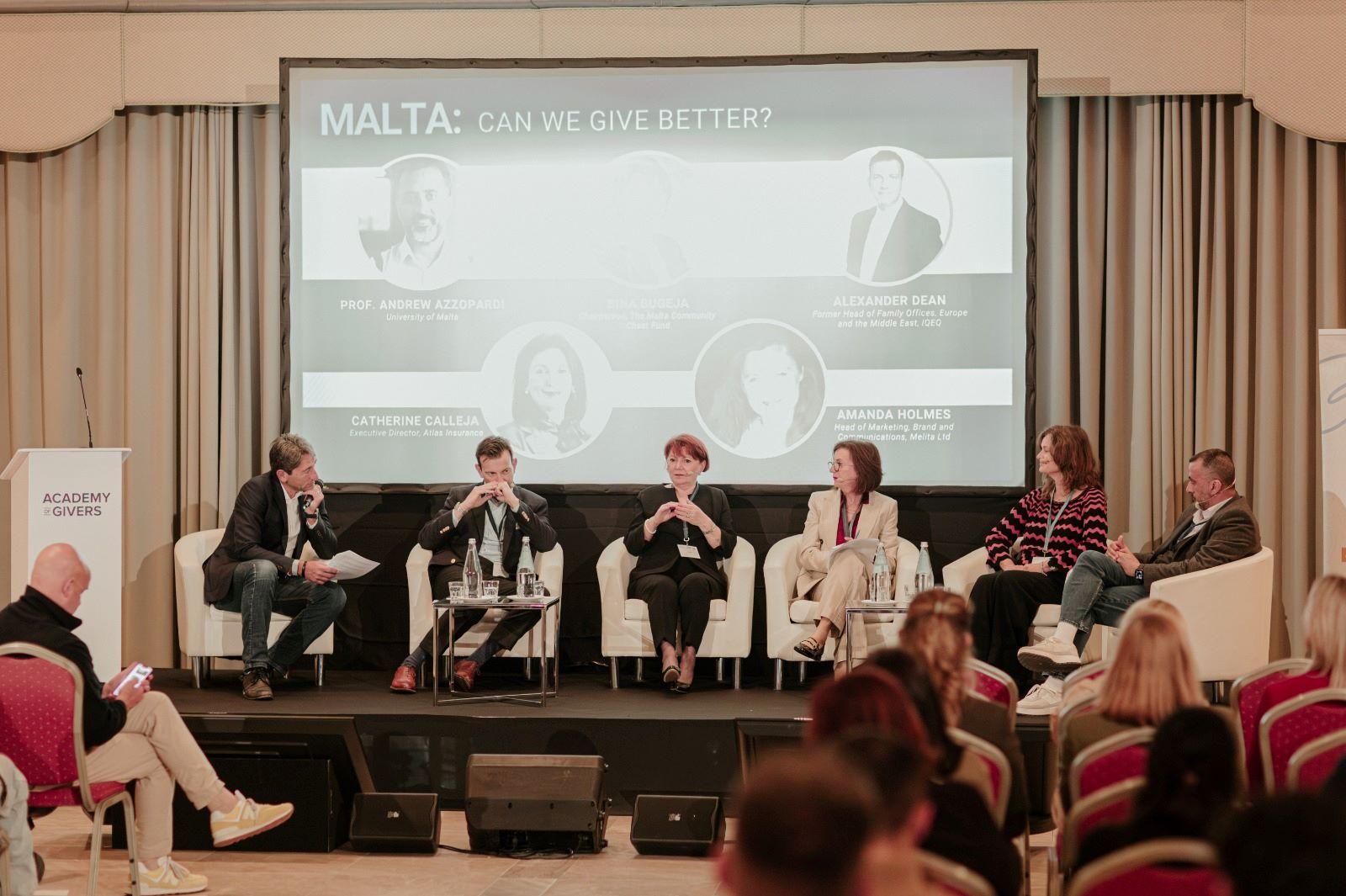 From left: Panel moderator Nathan Farrugia, Alexander Dean, Sina Bugeja, Catherine Calleja, Amanda Holmes and Andrew Azzopardi. Photo: Frank Farrugia
Conference discussions took place within the context of Malta’s efforts to meet its UN sustainability goals while dealing with a raft of challenges arising from climate change, geopolitical risks and the country’s changing demographics.
‘Can you do more?’
Citing World Economic Forum data, KPMG Malta sustainability lead Rachel Decelis said Malta faced challenges from geopolitical conflicts, misinformation, societal polarisation and “extreme weather events”.
She noted that while Storm Helios three years ago had caused around €1.2 million worth of damage, the recent Storm Harry had left insurers picking up the bill to the tune of €12 million.
We achieve things for a small country that are exceptional
Highlighting Malta’s progress on reaching its UN sustainability goals, Decelis warned of a “huge obesity problem” facing the country which she attributed to poor diets and lack of pedestrian infrastructure, and highlighted data showing increased GDP was not being distributed evenly.
She invited the audience to consider what they believe to be the greatest sustainability challenge, asking: “Can you do more to reduce your negative impact?”
‘Outdated, patronising, dangerous’
Decelis’s keynote speech gave way to a panel discussion more closely examining how those in Malta can give more effectively.
Former University of Malta Faculty for Social Well-being dean Andrew Azzopardi criticised charity telethons for featuring stories of those assisted by donations.
“The amount of money channelled in the [public] social sector is enormous. I struggle to understand why we need to plaster people’s stories and tie them with collecting funds,” he said, describing the approach as “”outdated, patronising and extremely dangerous”.
Atlas Insurance executive director Catherine Calleja agreed, warning some parents could feel “pressured” to allow their children to be featured in such programmes, which she said was “wrong”.
Addressing the concerns, Malta Community Chest Fund chairperson Sina Bugeja noted, however, that the organisation’s “main problem” was “stopping people from wanting to appear and from wanting to share their story”.
“We have had persons insisting that they want to be part of this visibility and, after taking them through psychological testing, it results that it is not healthy for them to appear,” she said.
Bugeja noted that many were keen to share their story after feeling like they were “given a second chance” following successful health treatments, while emphasising that TV appearances of those affected helped by the charity helped viewers to connect with people’s experiences.
‘You want the entrepreneurs’
Disagreeing with Azzopardi’s suggestion for a supra-foundation to manage donations countrywide, Alexander Dean, a Malta-based advisor to ultra-high-net-worth individuals, advocated for the country leaning more on the private sector for donations.
Dean warned that such a solution, and state dominance of the social sector, could take away the feeling of agency from those interested in donating funds, “and often the most efficient allocation of capital... you want the entrepreneurs who’ve made money and have great ideas”.
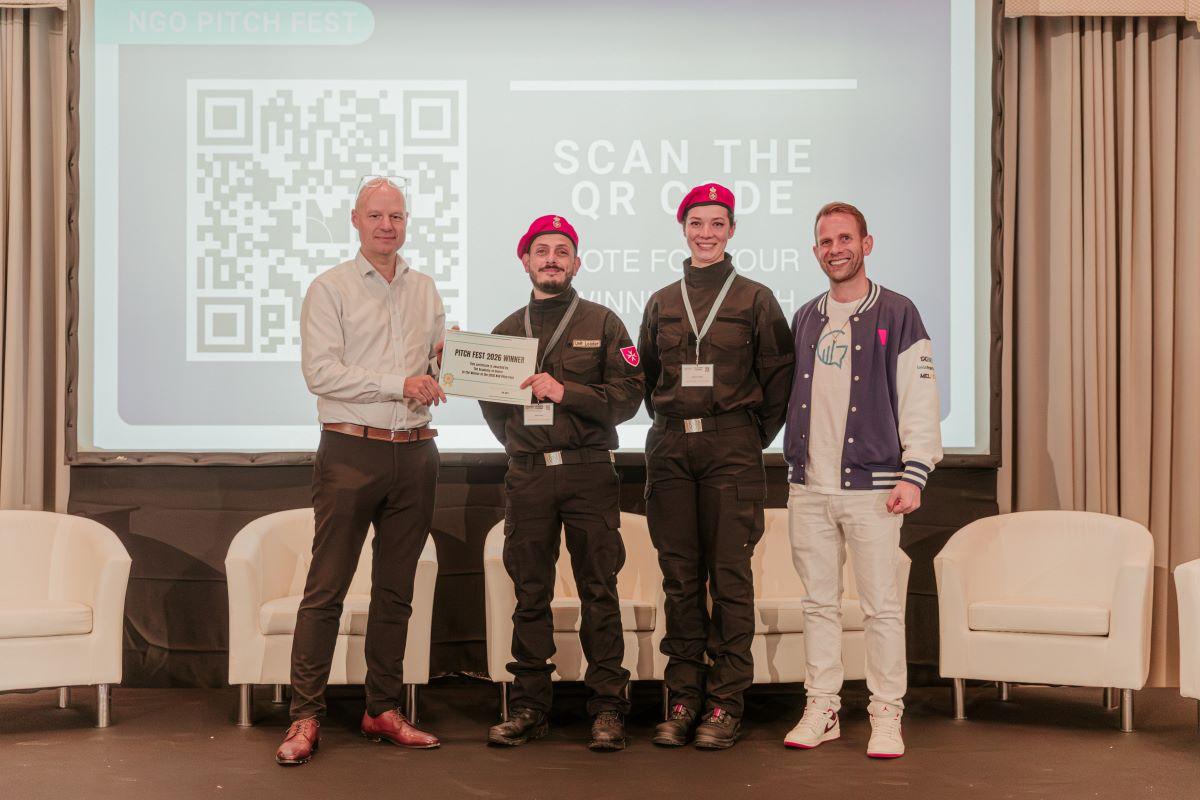 The Order of Malta Canine Search and Rescue Team walked away with €5,000 in funding. Photo: Frank Farrugia
Melita Foundation board member Amanda Holmes, meanwhile, stressed the importance of making “strategic choices” for philanthropy, drawing on data similar to that highlighted in Decelis’s presentation.
The event also saw four NGOs compete for funding, with the winning organisation of the ‘pledge fest’ voted by the conference audience.
The Order of Malta Canine Search and Rescue Team, featured on Times of Malta last year, walked away with €5,000 in funding, which team leader Simon Briffa said would help the organisation with equipment and training.