Malta falls short of WHO syringe target for drug users who inject themselves
European Drug Report shows Malta is one of 17 EU countries that distribute fewer than 200 needles per drug user who injects, annually
Malta distributes fewer than 200 sterile syringes per person who injects drugs annually, falling short of a key benchmark set by the World Health Organisation aimed at reducing the spread of HIV and other infectious diseases.
The WHO recommends that countries achieve “high coverage” by providing at least 200 sterile needles and syringes per person who injects drugs each year. This indicator is widely used to assess the effectiveness of harm reduction programmes.
According to the European Drug Report 2026, Malta remains below this threshold, with estimates suggesting distribution levels range between 50 and 150 syringes per user annually.
This places the country among those identified as having a critical area for improvement in preventing infectious disease transmission among drug users.
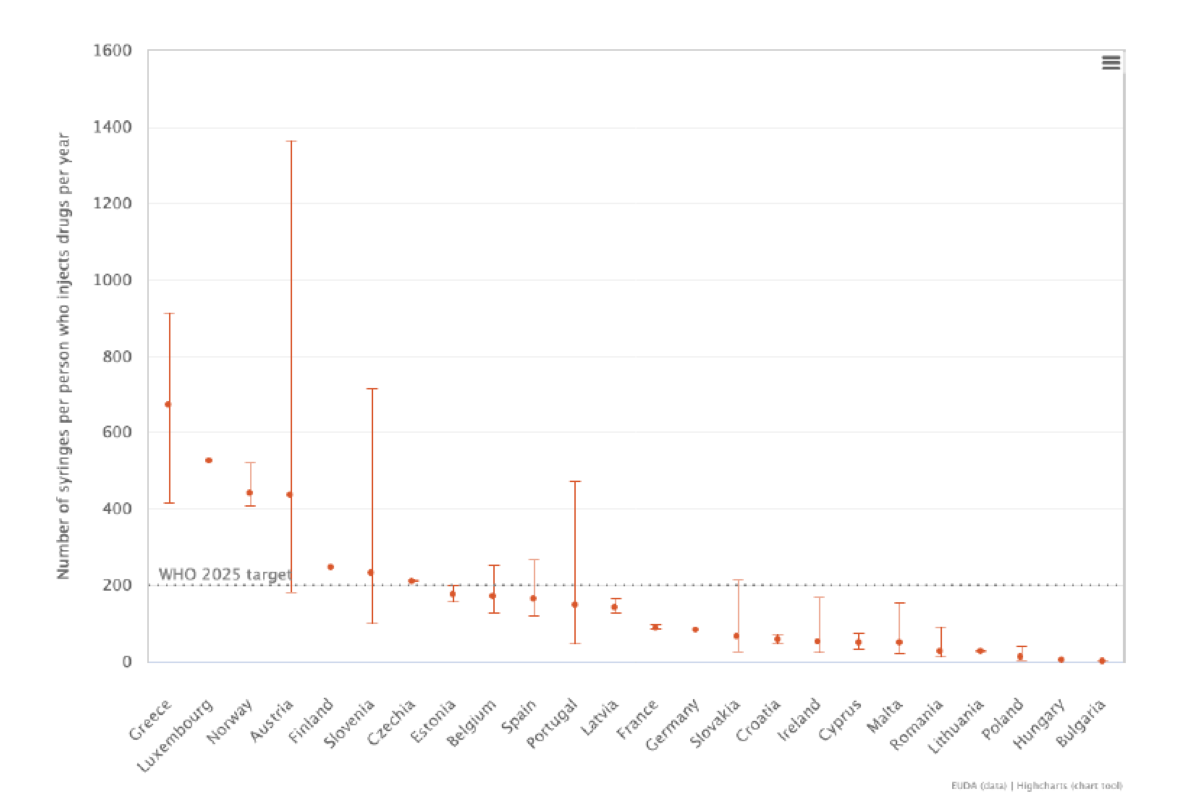 Number of sterile syringes distributed per person who injects drugs per year, 2024 or latest data. Source: European Drug Report
Only seven out of 24 European countries exceed the WHO target. These include Greece (about 650 syringes per person annually), Luxembourg (550), Norway (450) and Austria (450). Others such as Finland (250), Slovenia (240) and Czechia (just over 200) also meet or surpass the benchmark.
The report estimates that Malta has a prevalence of approximately 1.4 people who inject drugs per 1,000 population. Despite this relatively low prevalence, insufficient access to sterile injecting equipment increases the risk of transmission of blood-borne infections.
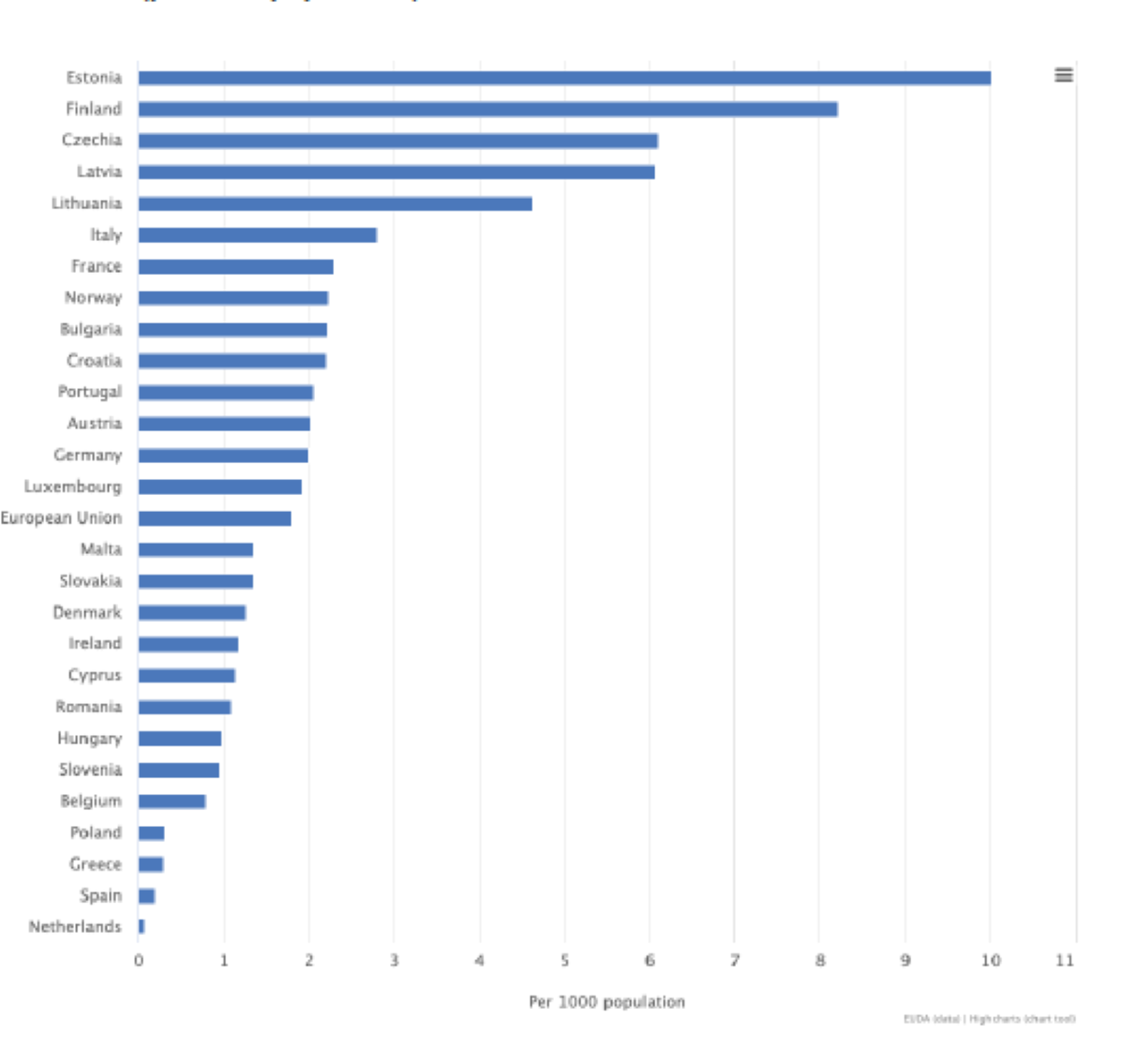 Estimated prevalence of people who inject drugs in the last 12 months (per 1000 population), 2024 or latest data. Source: European Drug Report
People who inject drugs are particularly vulnerable to infections such as hepatitis C, hepatitis B and HIV, often due to the sharing of needles and other drug-use equipment.
The findings come against a backdrop of rising HIV diagnoses in Malta. Data published in 2025 shows that the country recorded 20.6 new HIV cases per 100,000 people in 2024, equivalent to 116 cases. This marked the highest rate in a decade and the second consecutive year in which Malta registered the highest rate in Europe.
A snapshot of drugs in Europe
The European Drug Report 2026 provides a snapshot of Europe’s drug situation based on the latest data available. The report also highlights broader drug trends across Europe, warning that the growing availability of a wider range of substances - often of high potency - poses increasing risks to public health.
This report is based on information provided to the EUDA by the EU Member States, the candidate country Türkiye, and Norway, in an annual reporting process.
Cannabis remains the most widely used illicit drug in Europe, with an estimated 24.9 million adults aged 15 to 64 having used it in the past year. The emergence of high-potency cannabis products, extracts and edibles has been linked to increased emergency hospital presentations.
New psychoactive substances continue to appear at a steady rate, with around 50 new substances detected in Europe in 2025 alone. Some of these include potent synthetic opioids, which carry a high risk of overdose.
Polysubstance use — the mixing of multiple drugs — is also becoming more common, increasing health risks and complicating treatment responses.
Most drug deaths in Malta due to Cocaine
In Malta, cocaine was involved in the majority of drug-induced deaths in 2024. A 2025 Caritas Malta report recorded five heroin-related deaths and 13 linked to cocaine, with a further 10 potential fatalities still under investigation.
The report notes that Malta has also adjusted its regulatory framework on cannabis. Since December 2021, adults have been permitted to cultivate limited amounts of cannabis at home, possess small quantities and consume it in private settings. Non-profit communal growing clubs are also allowed.
Across Europe, law enforcement agencies are facing growing challenges as drug trafficking networks adopt increasingly sophisticated methods. These include the use of smaller ports, “go-fast” boats, drones and advanced concealment techniques to evade detection.
The findings underline the need for strengthened public health responses, particularly in harm reduction services, to address evolving drug use patterns and associated risks.