Third Malta-Sicily energy interconnector at centre of Abela's energy plan
Feasibility of an interconnector with North Africa is also being explored
Updated 1.50pm
Malta will build a third interconnector between Malta and Sicily, Robert Abela announced on Thursday, in the middle of an election campaign.
The interconnector will complement the already existing interconnector, opened in 2015, as well as a second interconnector, which is currently in the works.
The new interconnector will be higher voltage than the existing 220-megawatt cables, Energy Minister Miriam Dalli said, with a carrying capacity of 380kV, potentially growing to 400 megawatts.
It is expected to cost around €600 million, Abela said, although he declined to give any details on the project's timeline, saying the government's was focused on getting the second interconnector up and running over the coming months.
The third interconnector is part of a broader plan to diversify Malta’s energy supply over the coming years, Abela said. Malta’s longer-term aim is to become a Mediterranean clean energy hub linking Europe and North Africa, a document released on Thursday shows.
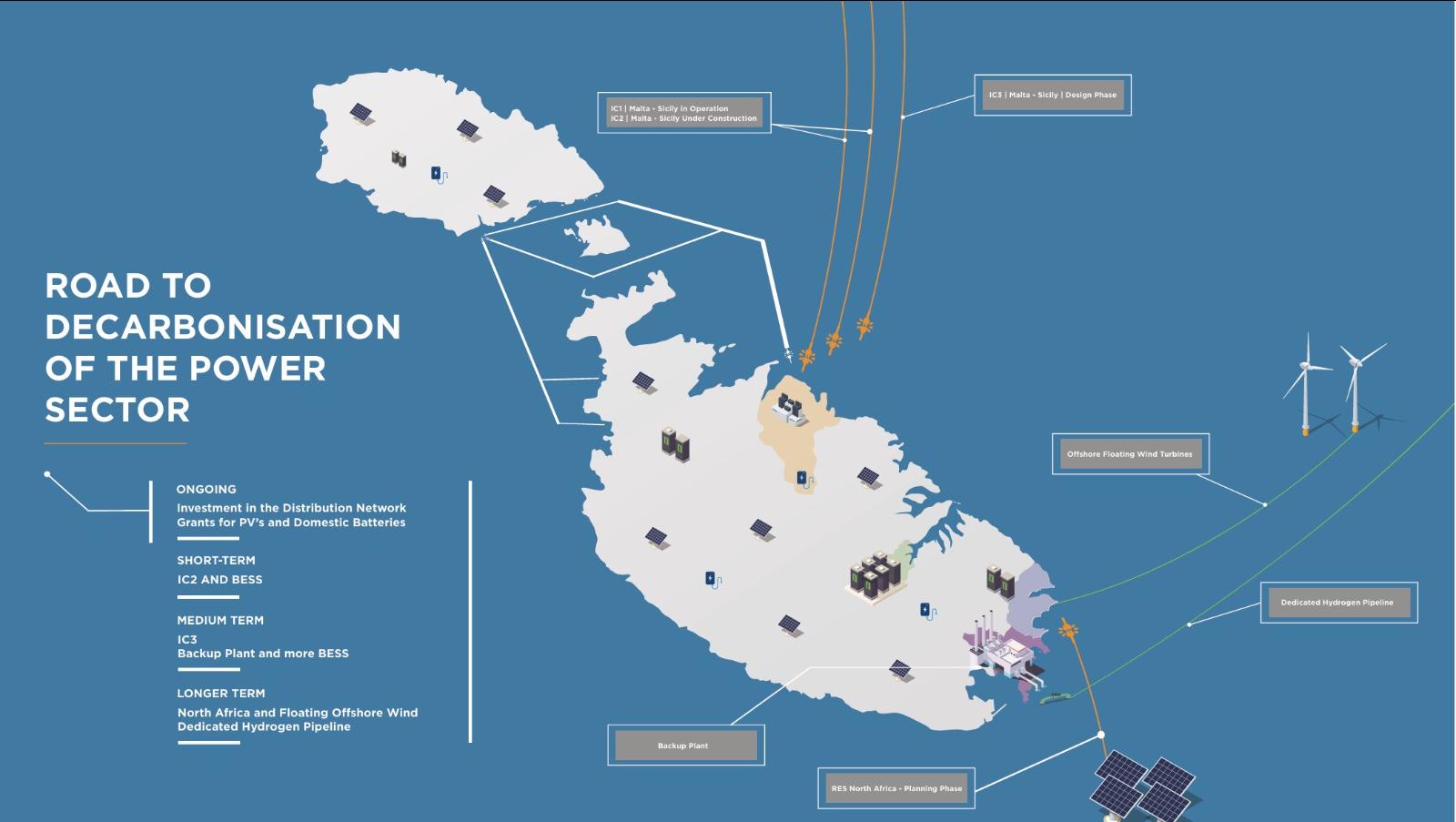 Malta is looking to diversify its energy supply.
This could allow renewable electricity from North Africa and Southern Europe to pass through Malta to other regional markets.
Dalli said the tender for design and engineering of third interconnector is to be published in the coming weeks.
The feasibility of an interconnector with North Africa is also being explored, she said.
Abela and Dalli were unveiling the plan, which comes at the start of an electoral campaign, at a government, not party, event held on Thursday morning.
When asked whether Thursday's announcement was blurring the lines between a government and party event, Abela said the plan had in the works for several months.
"Today was the appropriate time to launch this ambitious plan, at the height of an international crisis over the subject," Abela said.
This plan includes works towards establishing an offshore wind farm, intended to increase Malta’s supply of renewable energy.
Abela also pointed to a recently-announced plans for households without roof access to invest in solar panels installed on state-owned buildings.
He also reiterated a pledge made during an election campaign event on Wednesday evening to install a €45 million submarine cable connecting Malta and Gozo.
Dalli pledged that Malta's energy distribution network will remain within the government's control, ruling out the prospect, previously floated by the opposition, of liberalising Malta's distribution network.
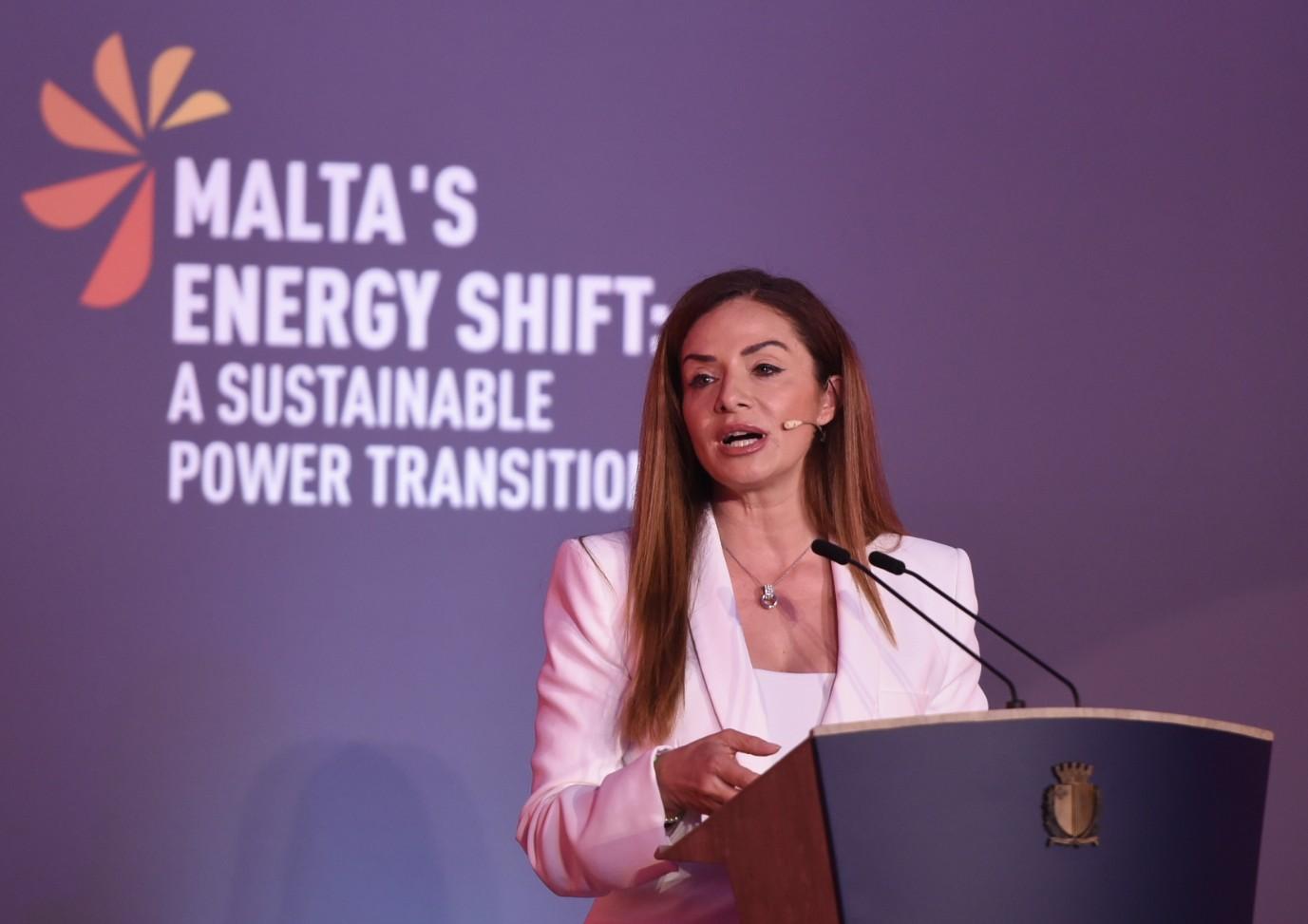 Energy minister Miriam Dalli. Photo: Matthew Mirabelli
She also praised Malta's hedging agreements, saying they had saved Malta €116 million over the years.
Dalli said renewables will make up a quarter of Malta's energy supply by 2030, up from the current 17%, pointing to previously-announced plans to build large-scale battery storage systems.
Abela had previously cited global uncertainty driven by the war in the Gulf as the main reason for calling snap elections, saying the country needed a government with a new mandate to address these challenges.
With several European countries scrambling to secure their energy supply, the Maltese government has repeatedly sought to reassure its citizens, promising that both energy supply and prices will remain stable.
While the party had repeatedly pledged to keep energy subsidies in place, it had yet to outline its plans for Malta’s energy sector over the coming years.
Earlier this week, Energy Minister Miriam Dalli had said that, with Malta’s current hedging deal expiring over the summer, Malta was looking to sign a short-term hedging agreement to tide it over until gas prices become more stable.
'False promise'
Reacting to the announcement, ADPD said a third interconnector underlined a government failure to plan for the long-term.
“Malta’s over-reliance on imported fossil fuels leaves it acutely vulnerable to international crises. As global events have shown, fluctuations in oil and gas markets can rapidly translate into higher costs and economic instability,” the party said.
While the party referred to connection with the European energy grid as "a must", they also said it didn't necessarily mean cheap electricity, calling the measure a “false promise”.
The Green Party championed renewables as the "only credible long-term solution".
“Investment in solar and wind energy, energy storage systems, and improved grid infrastructure would significantly reduce Malta’s dependence on imported fuels”, the party said.
“Expanding renewable energy generation not only reduces emissions substantially but also shields our economy from external shocks, stabilises energy costs, and strengthens national security and energy sovereignty.”