Manoel Island: a saga of padlocks, protests and a petition
A timeline of events from the signing of the MIDI contract in 2000 to today
With Manoel Island looking set to be returned to the government, Matthew Bonanno speaks to activists about a 25-year fight
Developers have been pitted against grassroots activists about the future of Manoel Island, an 18th-century island rich in history.
The government and opposition have dramatically backed a campaign to turn it into a national park and developers MIDI say they want to return it to government hands. The details are yet to be hammered out but a new chapter is opening.
Here’s a timeline of a campaign told through the people who fought it.
2000: The contract is signed
Following negotiations that began in the early 1990s, the government handed over Manoel Island, together with Tigné Point in Sliema, to MIDI plc through a 99-year lease.
While groups like Moviment Graffitti decried the project, NGOs put up little resistance.
“There was a sense of fatigue after the protest against the Portomaso project a few years earlier. We were also occupied with other issues such as the Kalkara valley project and the golf course, as well as various other social and humanitarian issues,” said Mary Grace Vella, a veteran Graffitti member and academic.
When MIDI sealed off the island to the public shortly after being awarded the concession, Gżira residents held a small protest, but the campaign was not sustained and the movement fizzled out.
For the next 16 years, Manoel Island would continue to be closed off.
2015: Back on the agenda
When Konrad Borg Manché was elected Gżira mayor in May 2015, he says he immediately sought to reopen access to Manoel Island.
“It didn’t make any sense that it was closed. I approached MIDI to propose holding an event in the fortress. After deliberating for some weeks, they told me they wouldn’t grant access to ‘outsiders’,” he said.
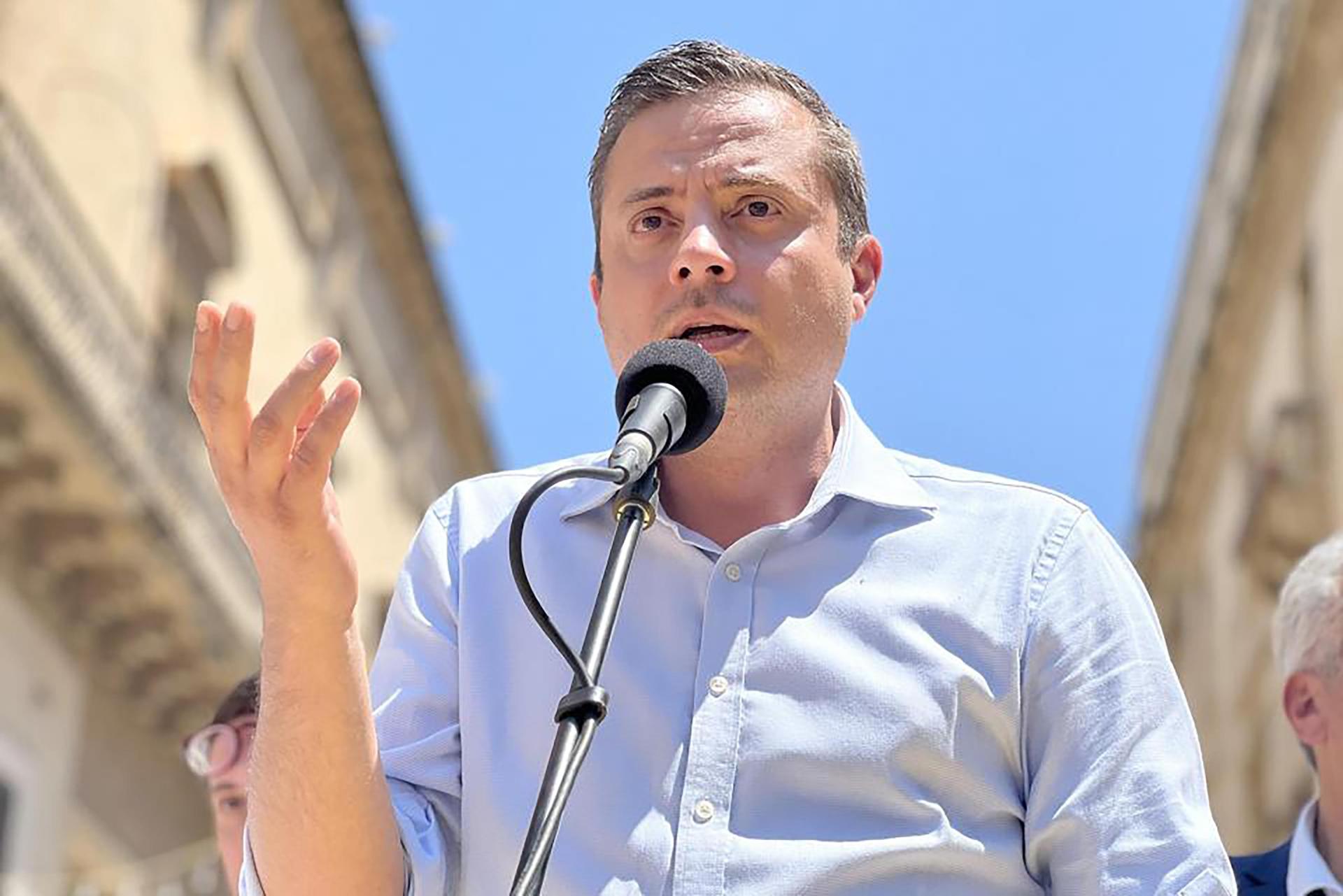 When Konrad Borg Manché was elected Gżira mayor in May 2015, he sought to reopen access to Manoel Island.
“After that, I spent a year reading up on every aspect of the project from A to Z – the contract, the plans and everything – to be in a better position to resist it.”
A year later, Borg Manché organised a protest outside the main gate that had been put up by MIDI. The protest reignited interest in the issue and was a precursor to the more direct action that was to follow shortly after.
2016: The gate is breached
On September 10, 2016, a group of activists under the name Kamp Emerġenza Ambjent entered Manoel Island armed with bolt cutters, with the intention of opening access to the foreshore. Unable to get through the main gate, they ventured to a side gate with a flimsier padlock and got to work.
“Because none of us had ever set foot on the island, we didn’t know where we were going and ended up getting lost. We eventually found our way to the fortress and camped there,” said Moviment Graffitti activist Andre Callus.
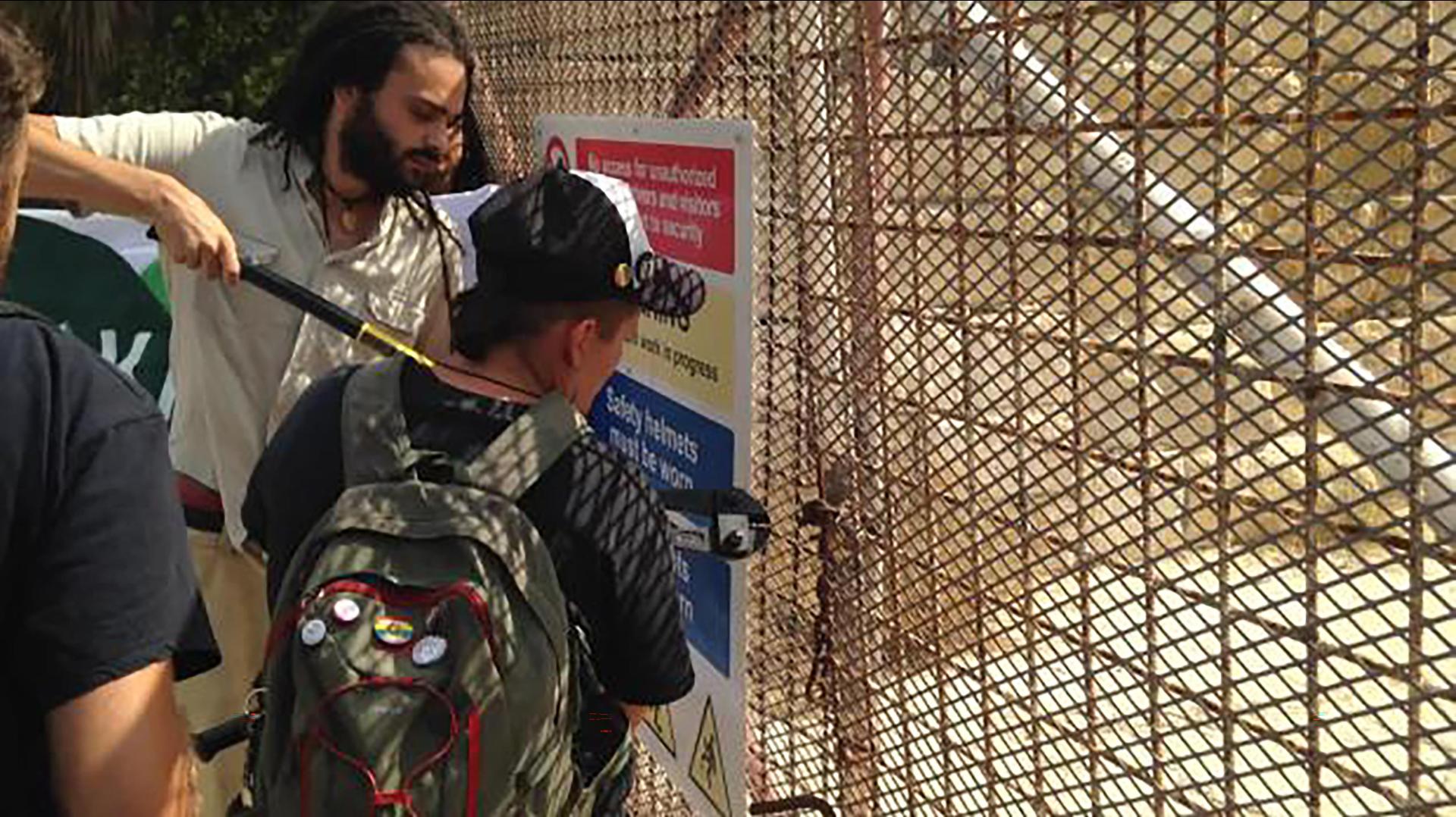 Moviment Graffitti activist Andre Callus breaking the locks at Manoel Island in 2016.
“It was the most emotional direct action we’ve ever carried out. Older Gżira residents, who had been denied entry for almost two decades, told stories of how they used to play there when they were children.”
Two weeks later, activists returned to the site once again, pulling down fences and allowing hundreds of Gżira residents to pour in and explore the island.
It was the most emotional direct action we’ve ever carried out
The day before, the government had filed a judicial protest against MIDI, calling on it to adhere to its contract and Maltese laws and guarantee access to the Manoel Island foreshore.
On September 27, the consortium said it would allow the public to access the island along the south-facing road leading from the entrance gate to the foreshore below the steps under Fort Manoel. From this point, the public could walk around the foreshore of the entire island.
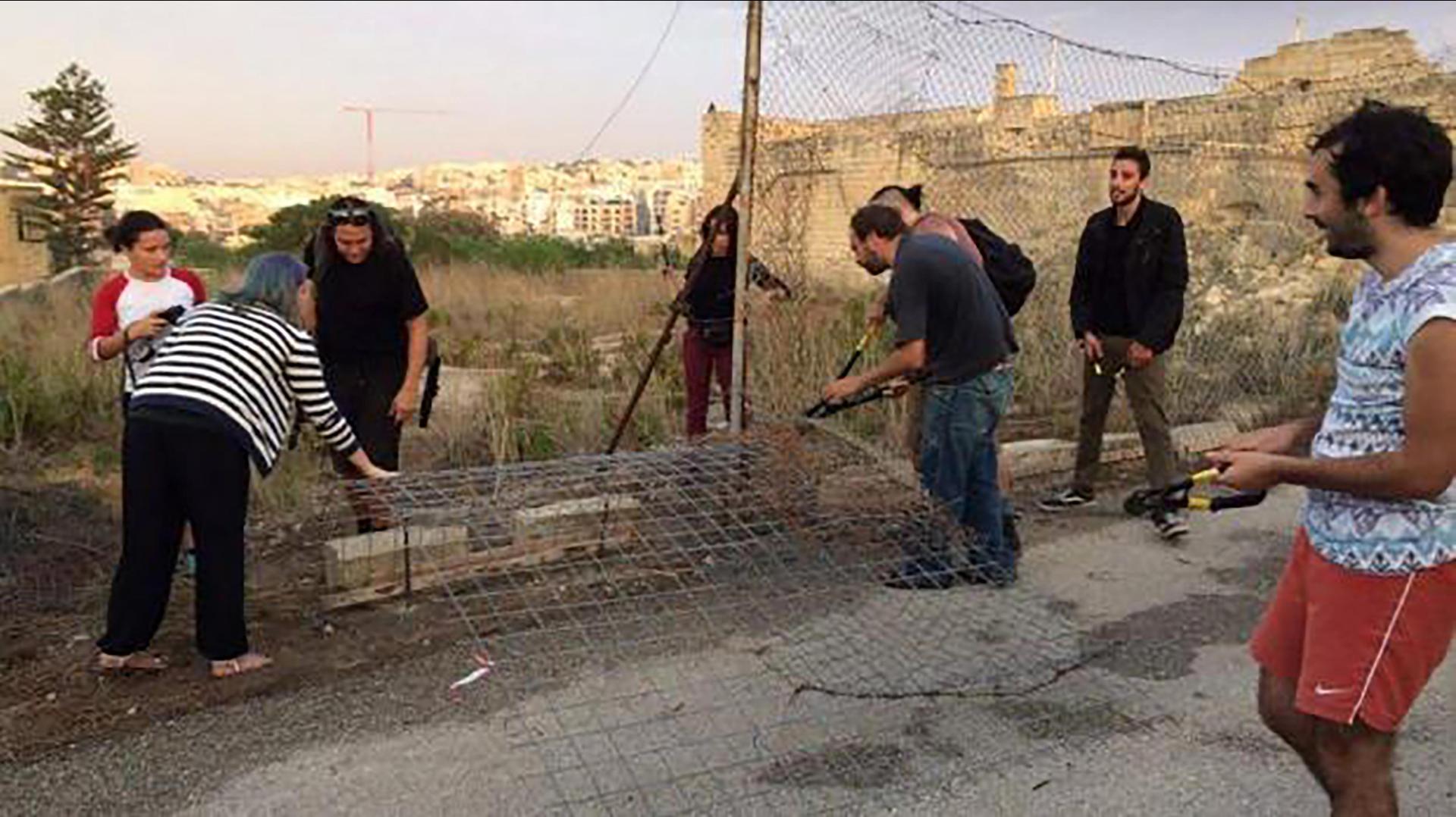 Activists bringing down fences in 2016.
In March 2017, MIDI applied for a new Outline Development Permit which was subject to an Environment Impact Assessment (EIA). The permit eventually was approved in March 2019 and immediately appealed by NGO Flimkien Għal Ambjent Aħjar.
2018: Guardianship deal signed
In 2018, the Gżira council signed a guardianship agreement with MIDI with the goal of guaranteeing protection and public access to the island’s heritage buildings, foreshore and green areas.
The agreement saw the setting up of the non-profit Manoel Island Foundation, headed by environmentalist and lawyer Claire Bonello as chairperson, with members Borg Manché and then-deputy mayor Ralph Mangion, and MIDI CEO Mark Portelli.
“The rationale behind the guardianship agreement was to crystalise the maximum heights, open space and access once the full development permit was issued. By means of the agreement, MIDI, and anybody it sold or transferred to, would have to abide by these conditions permanently. If they breached these, the foundation was granted a right of action in court to rectify the said breach,” Bonello said.
In June 2020 MIDI’s outline permit and EIA were annulled by the EPRT due to the fact that MIDI had engaged the son of a company director as a consultant for the EIA.
The managing director of MIDI plc admitted in an interview that they were fully aware of the fact that the consultant had a conflict of interest and that the declaration of independence was false. MIDI did not appeal this verdict and was ordered to redo the EIA, which was approved by ERA in June 2021.
FAA further appealed the EIA but was denied. Since works were not halted, neither of the appeals delayed MIDI’s progress on the project. The Planning Board met to consider this application in March 2024, but was advised to defer the decision as the site fell within the proposed buffer zone of Valletta and required a Heritage Impact Assessment in accordance with the UNESCO/ICOMOS Guidance and Toolkit for Impact Assessments.
2025: Post Għalina
Last March, following MIDI’s announcement that it was negotiating an extension to the lease conditions with the government, a new campaign with the name Manoel Island: Post Għalina (A Place For Us) was launched, spearheaded by Moviment Graffitti and FAA.
The activists argued that the concession agreement should be ripped up due to contractual breaches by MIDI.
The opening move of the campaign was a parliamentary petition, which ended up attracting 29,000 signatures, among them from several members of parliament.
The contract states that works on the planned luxury accommodation must be “substantially complete” by March 2026. Activists argue this is impossible and, therefore, the government has the necessary leverage to negotiate a more favourable deal for the public.
While both Prime Minister Robert Abela and Opposition leader Bernard Grech initially poured cold water on the prospect of turning the island into a park, both party leaders went on to endorse the idea.
Hours before a late-night statement issued by MIDI, Abela said in an interview that he was ready to fight for Manoel Island to be turned into a national park, while also indicating that the government was gearing up to file a judicial challenge against MIDI.
Late on Sunday night last week, the MIDI consortium released a statement to the stock market announcing that it was committed to finding a solution that could return Manoel Island to government hands.
What next?
The consortium appears to have yielded to pressure from activists who for the past three months have carried out a sustained grassroots campaign to turn the island into a national park.
While it remains to be seen how the next phase will unfold, activists expressed cautious optimism that a satisfactory conclusion could be reached.
“MIDI will no doubt press for compensation for the restoration works carried out on the fort, but not to the tune of hundreds of millions as has been stated,” said FAA coordinator Astrid Vella.
Vella said the campaign has so far been a success because it brought together several NGOs that carried out a positive campaign.
“The public stood up to be counted,” she said, while praising politicians for “going back on their word and reassessing the situation”.