Why a master’s in Maltese studies changed how I see my country
Applications for the October 2026 intake at the University of Malta close on July 22
I have always been deeply interested in the diverse issues affecting our country. This passion stems partly from my work as a tour guide, where encountering different realities constantly sparks my curiosity.
While I read a wide variety of books, reading alone sometimes lacks the depth of first-hand experience and cannot always provide the specific answers I am searching for.
In my search for answers, I discovered the Master of Arts in Maltese Studies programme, which opened up a much larger world than I had ever anticipated. The curriculum spans an incredibly diverse range of topics, including our natural heritage, music, local cuisine, identity, traditions, religious feasts, agriculture, migration and emigration − the list is endless.
The curriculum explored these subjects through a historical lens while continuously bridging the gap between the past and contemporary issues, emphasising the challenges and shifts of the time. Furthermore, the programme featured a rotating roster of expert guest lecturers for each topic, which exposed students to a rich variety of specialised perspectives. This diverse classroom instruction was then reinforced by site visits, allowing us to ground our theoretical knowledge in real-world application.
Through the course, I discovered several topics that I initially had no idea would be so fascinating, which ultimately inspired me to conduct my own independent research.
I never anticipated finding the subject of fishing so intriguing. Discovering the intricate routines of the fishermen, their strategic techniques for catching various species, and the daily challenges they face has given me a profound respect for these communities.
Uncovering the fascinating historical path of the Maltese language has been truly rewarding
This newfound insight has transformed the way I introduce these villages to tourists. Rather than framing them merely as picturesque backdrops for colourful boats, I now highlight them as resilient spaces that embody the genuine, daily lives of the locals.
Old buildings will never look the same again. Delving into architectural restoration opens a window into how to decipher a structure’s true history, proving that historic façades can never be taken at face value. Because historic sites evolve over centuries, close scrutiny of a wayside chapel or a palace reveals a wealth of hidden stories. Small tell-tale details − like blocked-up doorways, altered masonry styles, or shifted structural joints − clearly expose past modifications and forgotten reconstructions.
Uncovering the fascinating historical path of the Maltese language has been truly rewarding. Witnessing its journey evolve from a spoken Arabic dialect into a fully fledged national language is nothing short of remarkable. Its history unfolds through distinct eras and cultural friction points that constantly redirected its growth. Exploring the life stories of the determined individuals who fought to protect and refine the language brings a powerful human element to our native tongue.
The newfound knowledge offered by the course has greatly enriched me − not only professionally in my career as a tour guide but also on a personal level.
The true strength of this programme lies in its ability to immerse individuals in the historical and cultural background of Malta, which in turn enriches the wider community. It is the ideal course of study for anyone seeking a comprehensive understanding of our country’s heritage.
Applications for the course close on Wednesday, July 22 at 2pm, accessible at um.edu.mt/apply.
For more information, e-mail maltesestudies@um.edu.mt or call 2340 2566 / 2340 3305. Follow the Institute of Maltese Studies on Facebook for updates and information.
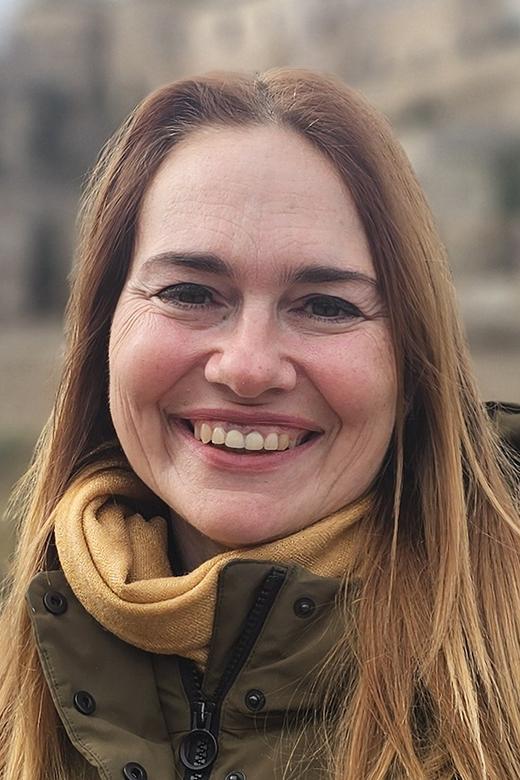
Germaine Vassallo is an engineer by profession. She has a Higher Diploma in Tour Guiding and a Master of Arts in Diplomatic Studies. She is currently a second-year student reading for a Master of Arts in Maltese Studies at the Institute of Maltese Studies, University of Malta.