Mellieħa mayor warns of Imġiebaħ Bay danger after Comino rock collapse
People are still accessing the area underneath a pronounced rock fissure
The mayor of Mellieħa has called for part of Imġiebaħ Bay to be closed off to the public due to a deep fissure in the rock overlooking the bay that could lead to a collapse.
Authorities placed no-entry signs at the bay, near Selmun, in September 2025, four months after a government report identified unstable rock formations as a “significant risk to public safety”.
However, Mellieħa mayor Gabriel Micallef on Sunday posted a photo on Facebook of several bathers relaxing exactly beneath a precarious formation in the cliff near the bay.
“Warning signs alone do not eliminate the danger. As long as the rock face remains unstable and people can still access the area beneath it, the risk remains very real,” he said.
Micallef had first reported the issue to the police and several government entities in April. By May, a report commissioned by the police and drawn up by public works officials confirmed the danger.
“For this reason, I continue to insist that access to the hazardous section must be closed immediately until all the necessary interventions have been completed and the site has been officially certified as safe,” the mayor wrote.
Imġiebaħ Bay is a popular swimming spot for bathers who want to avoid the beach crowds.
However, a deep crack in the rocks just above a flat, clay part of the bay set off alarm bells.
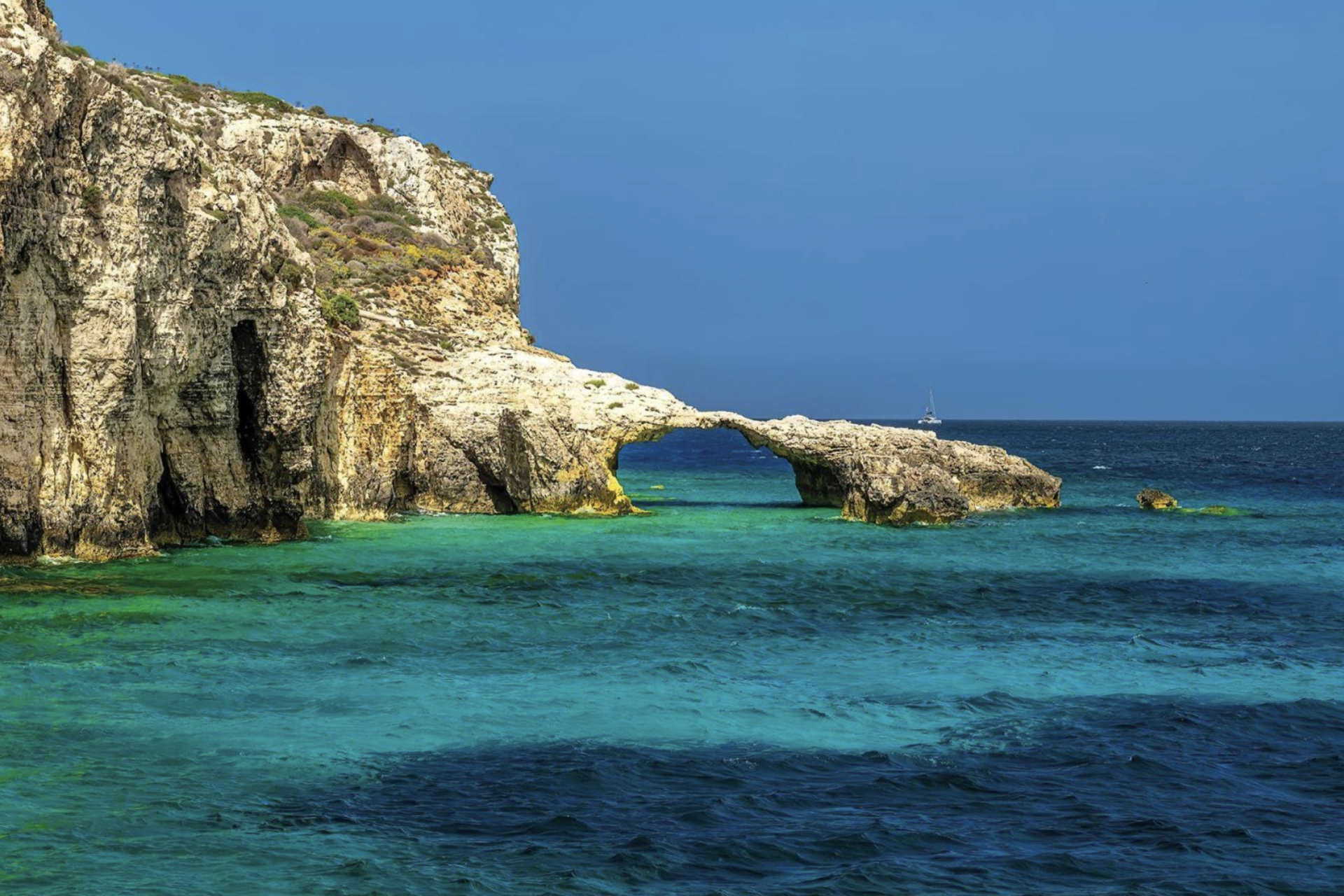 The natural arch that collapsed on Saturday, killing a tourist. Photo: Daniel Cilia.
Micallef’s warning comes days after a natural rock arch collapsed in Comino, killing a tourist.
While there were no warning signs in the area, a kayaker told Times of Malta that there was a visible crack in the rock as recently as two weeks before the collapse.
Unstable rocks around Malta’s coast have been an increasing source of concern.
In 2024, 22-year-old Mirabelle Falzon died when she was hit by falling rocks at a popular spot in an area known as Munxar, in the limits of St Thomas Bay. The ruins of an 18th-century military battery, known as Riħama, are perched on the cliff overlooking the site.
After the incident, several signs were put up, warning that swimming in the area is prohibited, and a fence was erected around the battery itself.
A magisterial inquiry into the tragedy said reports about the dangerous state of the coastal battery in Marsascala, made in the months and years before the collapse, which killed Falzon, were lost in the bureaucracy of government entities.
The magistrate recommended that a single entity should be responsible for receiving reports about state-owned and private buildings, as well as abandoned buildings and structures like bastions and cliffs that presented a danger to the public.