Metsola urges Constitutional reform in State of the Nation address
The Constitution's language is 'outdated', EP President believes
Malta needs to overhaul its “outdated” Constitution, European Parliament President Roberta Metsola told an audience at the State of the Nation conference on Friday.
The fifth edition of the survey, presented on Friday, provided a snapshot of Maltese society, casting a particularly watchful eye on the theme of education.
In a pre-recorded video message, Metsola argued that the Constitution’s archaic references to “able and deserving students” and “persons who are not capable of work” reflect the need for a comprehensive overhaul of the document.
“The language is outdated, it puts students in pigeon holes; the language with regards to workers does not focus on their abilities,” she said.
Metsola’s call echoes that of her party, with PN currently opposing a parliamentary bill to amend sections of the Constitution, arguing that a more comprehensive reform needs to be undertaken
In her address, Metsola argued that Malta has tinkered with its Constitution too many times over the years (“more than 40 times in sixty years,” she said), adding that “it is time to look at the Constitution as a single document”.
Metsola, who on Thursday was blasted by a group of 160 academics and artists over what they described as her silence on the genocide in Gaza, told the audience that Malta needs to work harder to foster critical thinking and problem solving by providing students with more hands-on, experiential learning opportunities.
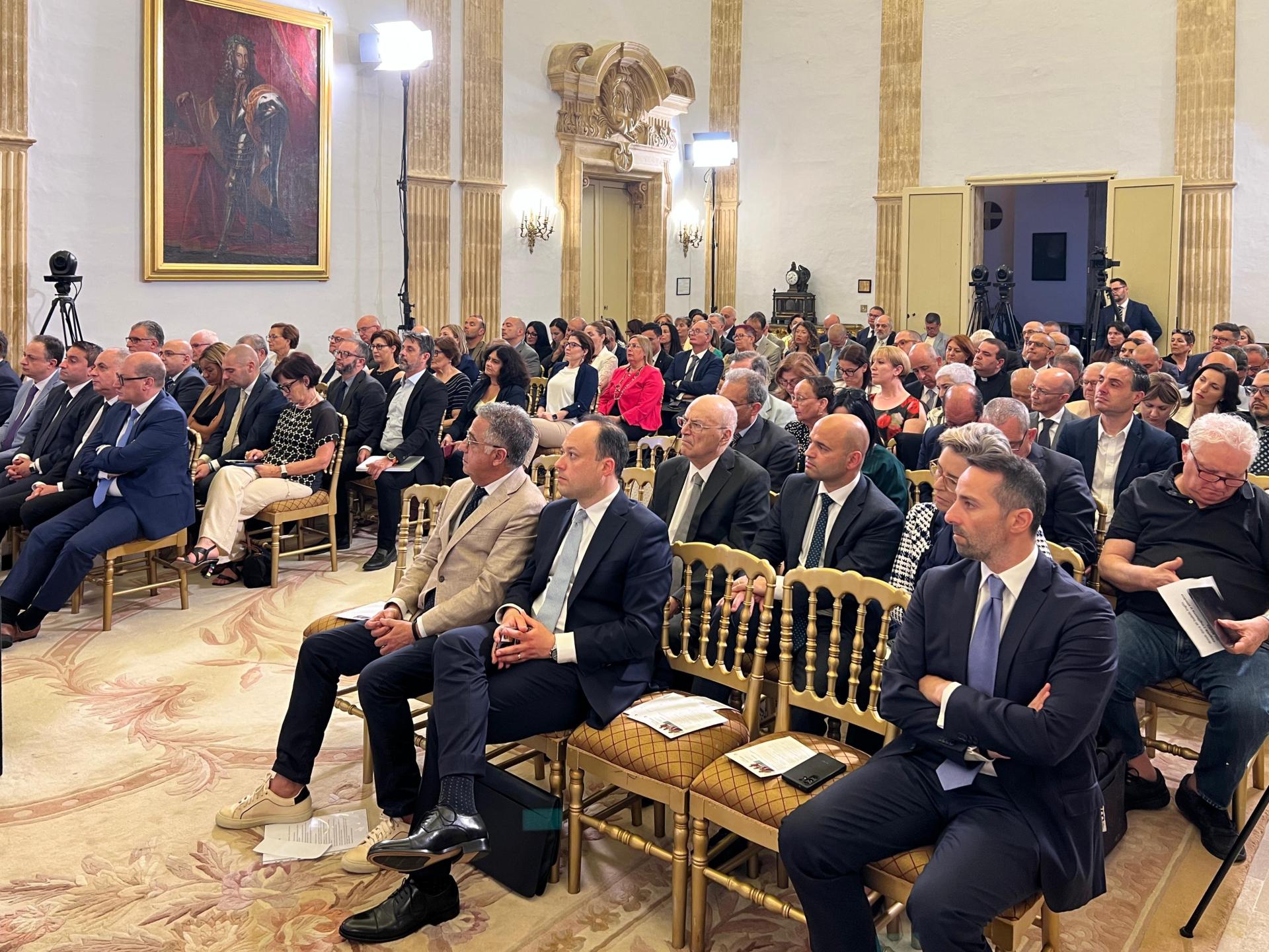 This year' State of the Nation study was presented on Friday. Photo: Chris Sant Fournier
Abela and Grech emphasise family role
The conference was also addressed by Prime Minister Robert Abela and Opposition leader Bernard Grech, both of whom pointed to how the survey found the role of the family to be central to young people’s social and academic development.
Abela said the survey shows how happiness and optimism are again on the rise, pledging that the government will place greater focus on measuring happiness and wellbeing over the coming years as part of its Vision 2050 plans.
He argued that Malta is now offering greater educational opportunities than ever before, pointing to the maritime and aviation sectors as two industries offering a wealth of opportunities.
However, he added, the loss of trade schools over the years has left “a void” in Malta’s skillset, he said.
“Opportunities in that sector continued to grow but the workforce is scarce,” Abela said.
Meanwhile, Grech questioned whether Malta’s economic success was translating to a better quality of life for people, pointing to a finding that half of the people in Malta say they are living from day to day, rather than planning their lives.
Referring to the study’s findings on the role of the family, Grech argued that “traditional values are still important, with the family being the anchor of our society”.
“However, the ever-increasing working hours and economic pressures are placing a strain on the family,” Grech said.
Grech also questioned the study’s choice to exclude the thousands of foreigners living in Malta from its analysis, saying that this presents an incomplete picture of the state of the nation.
“Do these foreigners give value to religion? Do they care about politics?” he asked.