Mother transcribes blind daughter’s schoolwork amid lack of Braille support
Parents advocate for the teaching of Braille in schools to visually impaired children
The metallic clack of a typewriter breaks the quiet in Marilena Imbroll’s home late at night and early morning as she transcribes her nine-year-old daughter’s schoolwork into Braille.
Her daughter, Melania Haegdorens Imbroll, was born blind. Her mother is determined to give her the full, all-round education she has a right to ‒ and this includes the ability to read and understand what the world looks like through tactile pictures she creates for her daughter.
Now Marilena wants to ensure that all visually impaired children have the same opportunity, which is why she is advocating for the teaching of Braille in schools to visually impaired children, something which she says is not being given enough priority.
“I wish that, out there, they understand the importance of Braille ‒ it’s the road to independence. If in the classroom, something basic, these children have to wait for someone to read what’s in front of them, that is the opposite of independence. Through Braille, Melania has gained confidence and self-esteem that made her not afraid to try new things,” she says.
And Melania agrees: “I love Braille because it makes me more independent,” she says as she stands near her dining table, which is covered with beautifully crafted “textbooks” that her mother created for her.
The importance of Braille was recently highlighted during a conference at which research about the challenges faced by visually impaired people in Malta was presented.
The research, carried out on behalf of The Malta Trust Foundation, identified that educational services are under-resourced, with over 100 visually impaired students supported by only one teacher for visually impaired learners. It flagged that opportunities to learn Braille are limited.
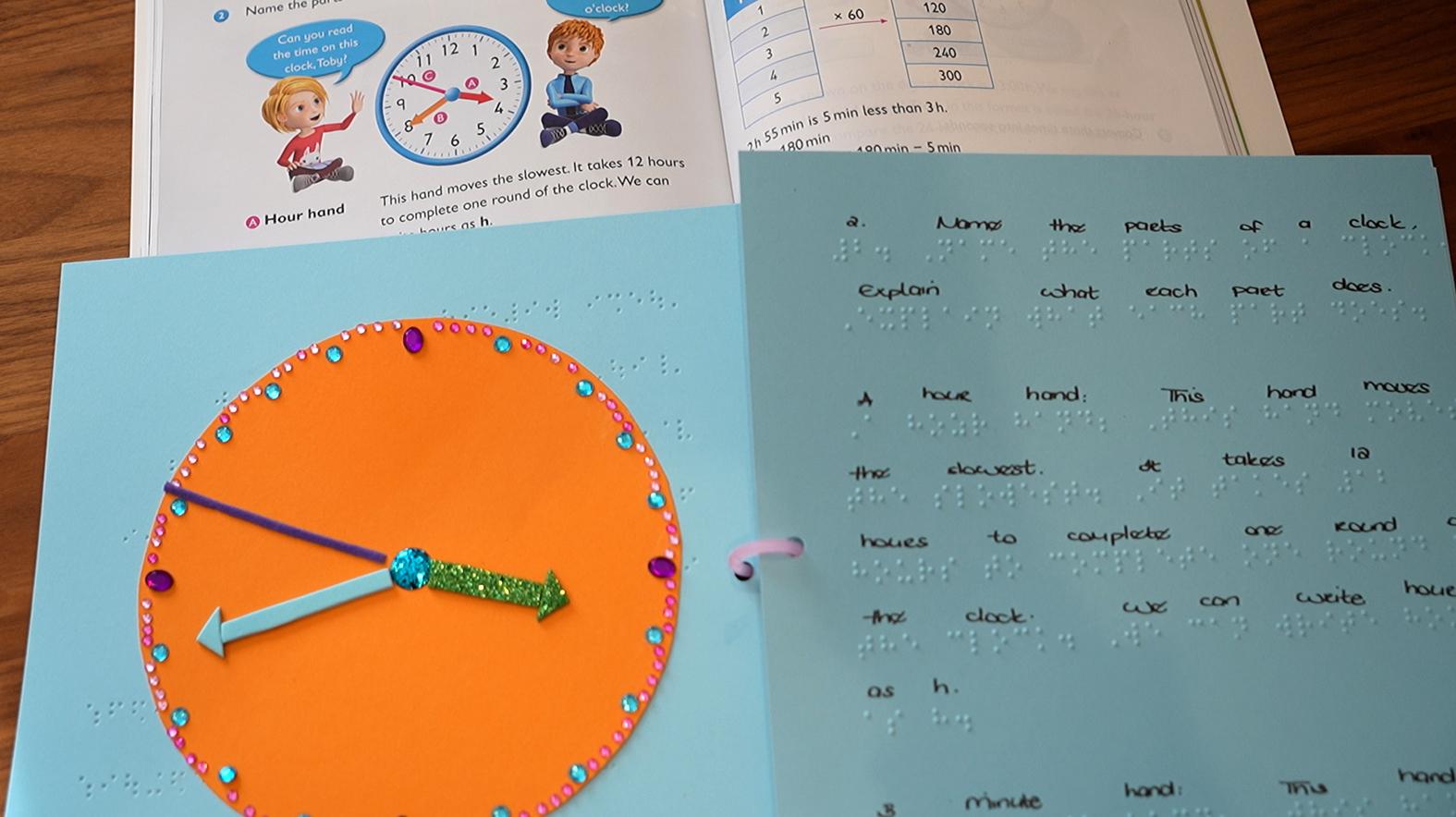 Marilena Imbroll transcribes her daughter’s schoolwork into Braille and creates tactile images to help her understand concepts.
Braille is the road to independence
Marilena has made it her mission to advocate for the importance of Braille because she is living the benefits. A former learning support educator, she stopped working to be her daughter’s “full-time LSE”.
Ever since Melania was a toddler, her mother learned Braille with her and stuck words in Braille around the house for her daughter to learn and get her bearings.
Now that Melania is nine years old, Marilena spends endless hours translating her schoolwork into Braille.
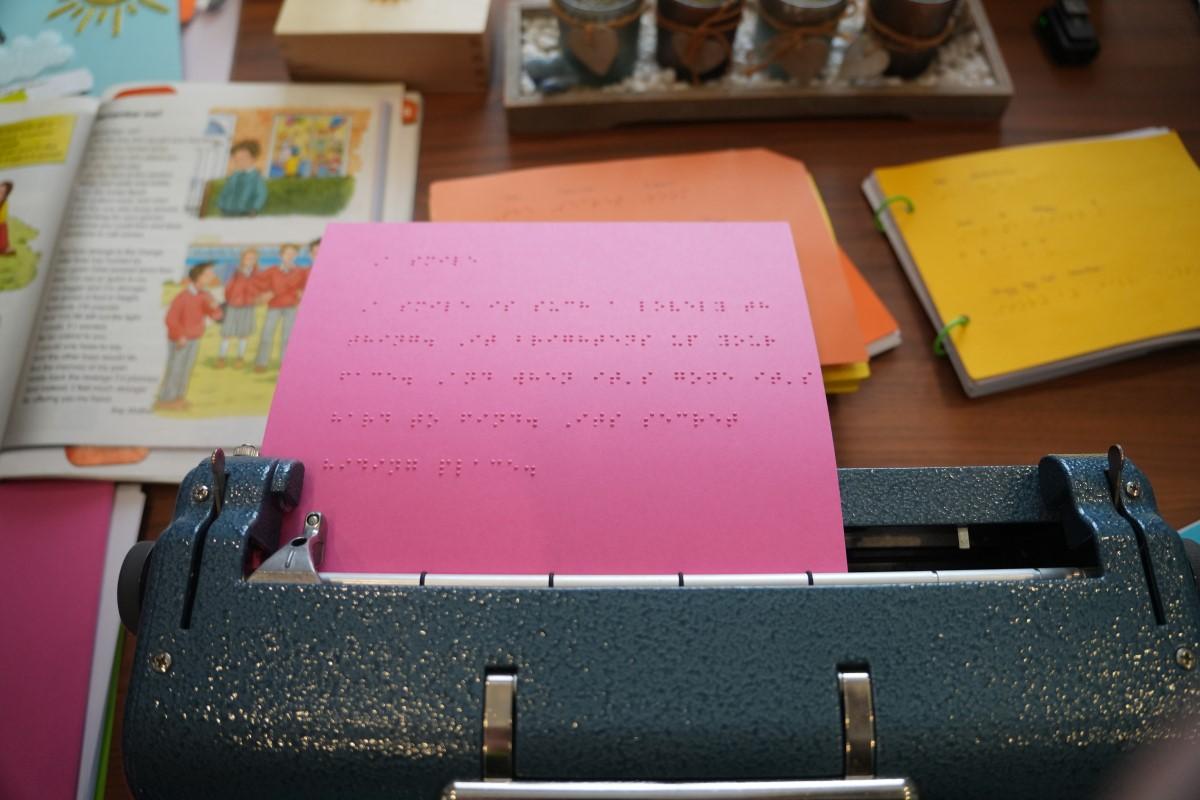 Marilena's Braille typewriter.
“I think 80% of my time is on Braille. Melania’s LSE passes on the weekly planner, which she gets from the class teacher, and I start preparing for the following week. I type during the nights and early mornings and throughout the day,” she says with a smile.
Why is this so important to her?
“Why are books so important for other kids? That is why Braille is so important for my daughter. It’s the way she learns, participates in class and outside, during leisure time to read, and the tactile pictures help her understand and keep her more engaged and interested to learn. And she loves learning. She also feels really proud that she can read to her friends and teach them Braille,” she says.
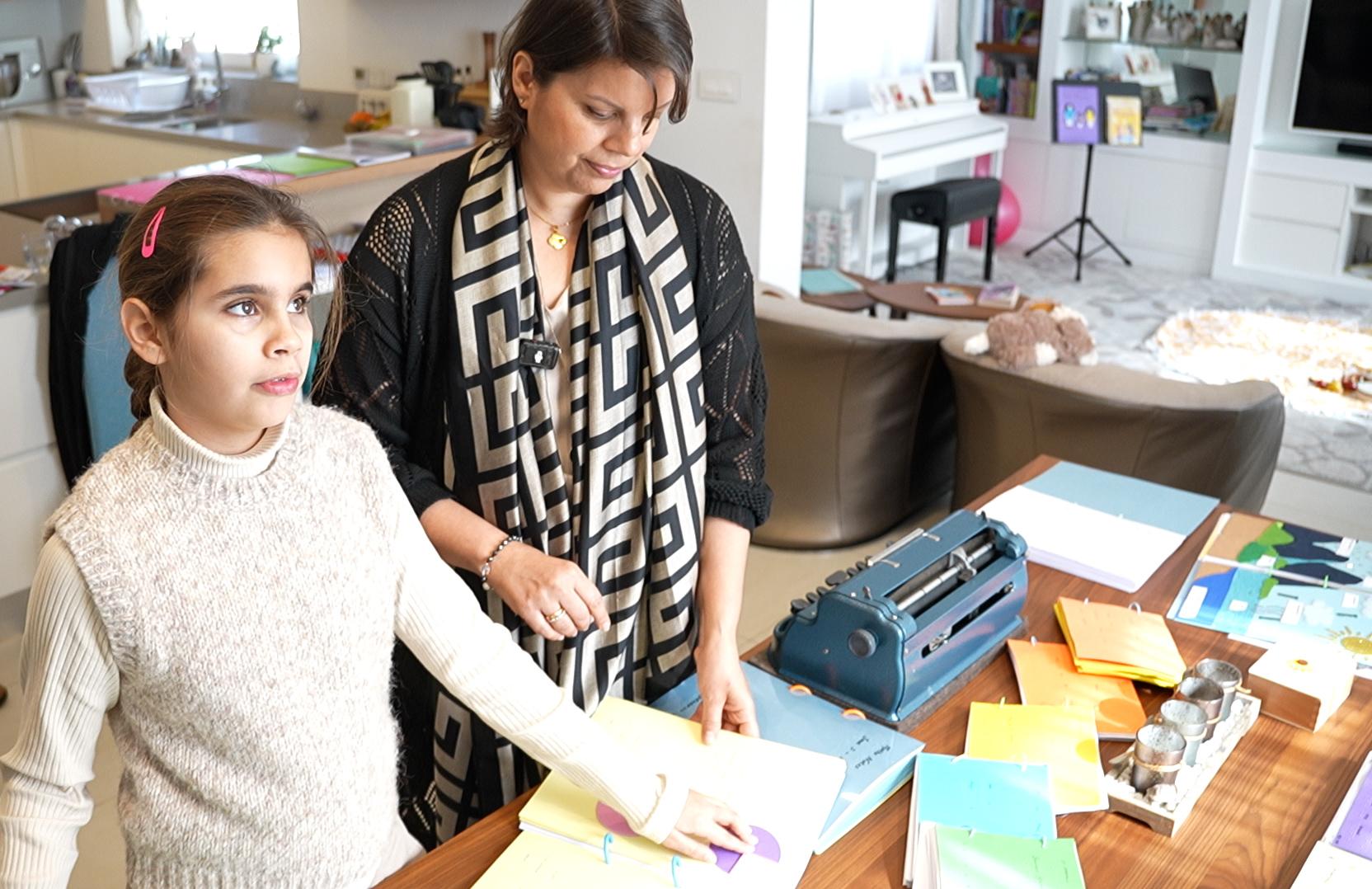 Melania using her hands to read an illustration with the help of her mother Marilena.
And there is another level. Melania cannot experience the world the way other children do ‒ and books open up a descriptive world that can help her visualise what she cannot see.
Marilena recounts how she was once at a conference where they presented a study in which researchers asked a sighted child and a blind child to draw a river. The sighted child drew a river as we know it: the winding water, the trees.
“The blind boy drew a big circle with little circles in the middle: the big circle represented him and the small ones were the pebbles he felt with his feet. This shows the importance of reading, as it takes you out there. And it’s also important for others to describe what’s around them to visually impaired children,” she said.
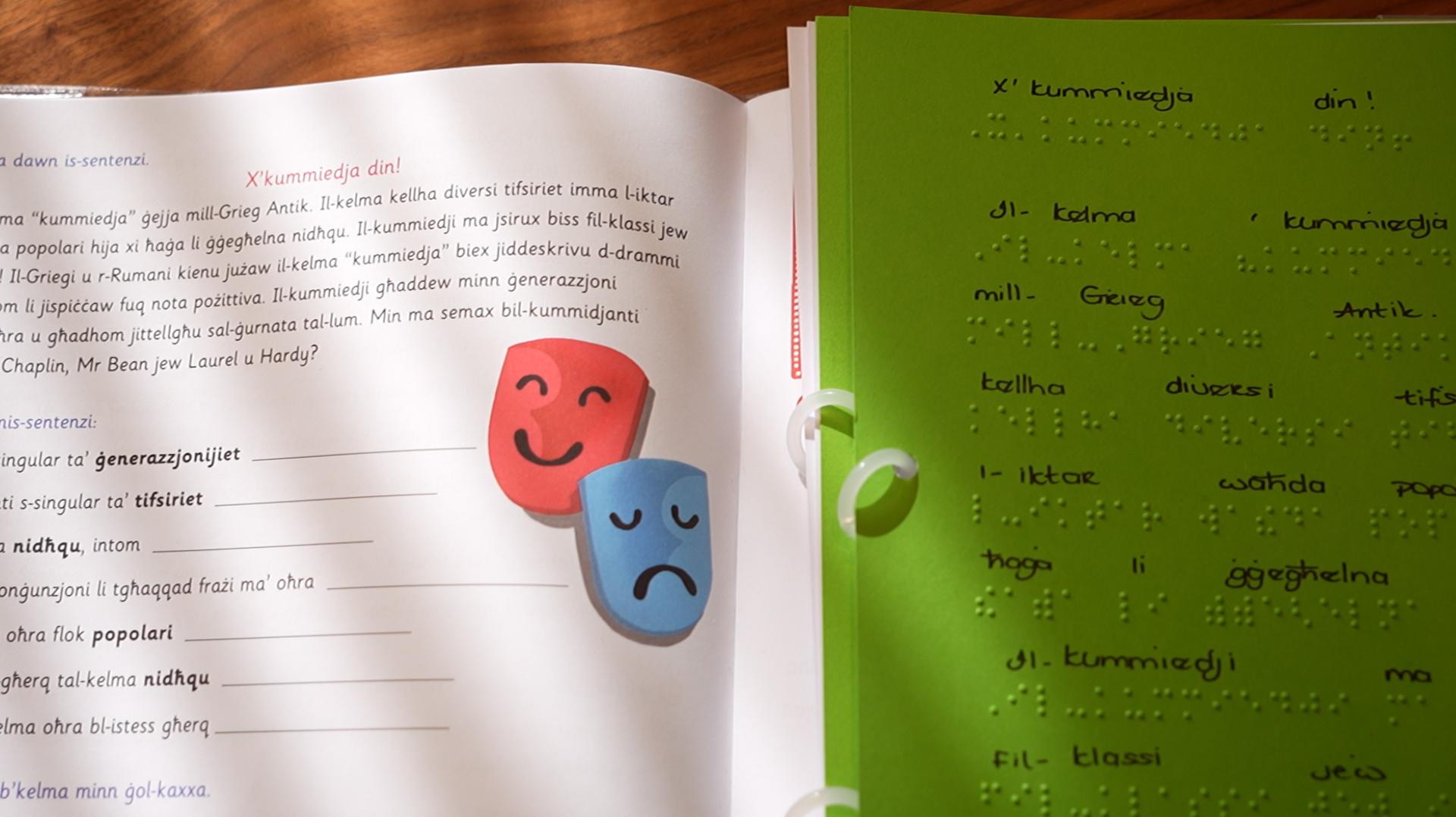 A school textbook turned into Braille.
This is also why Marilena does not just transcribe the words in textbooks. She creates tactile images on the page for her daughter to follow. So even though Melania cannot see the textbooks with the water cycle, the digestive system or mathematical angles, her mother creates tactile images that help her feel ‒ through different shapes and textures ‒ how they work. This has opened up the world to Melania, who plays the piano, swims, does wall climbing and even sails.
A right for all children
During the interview at their home, she is joined by 10-month-old baby Max Mercieca and his parents, Rachel Privitera and Clint Mercieca.
Max was born blind due to Norrie disease, a rare genetic condition affecting fewer than 500 people worldwide. The condition causes blindness from birth and progressive hearing loss later in life. His parents are fundraising to support research that could help prevent future hearing loss.
They are now supporting the cause to teach Braille to visually impaired children. They have already started learning it.
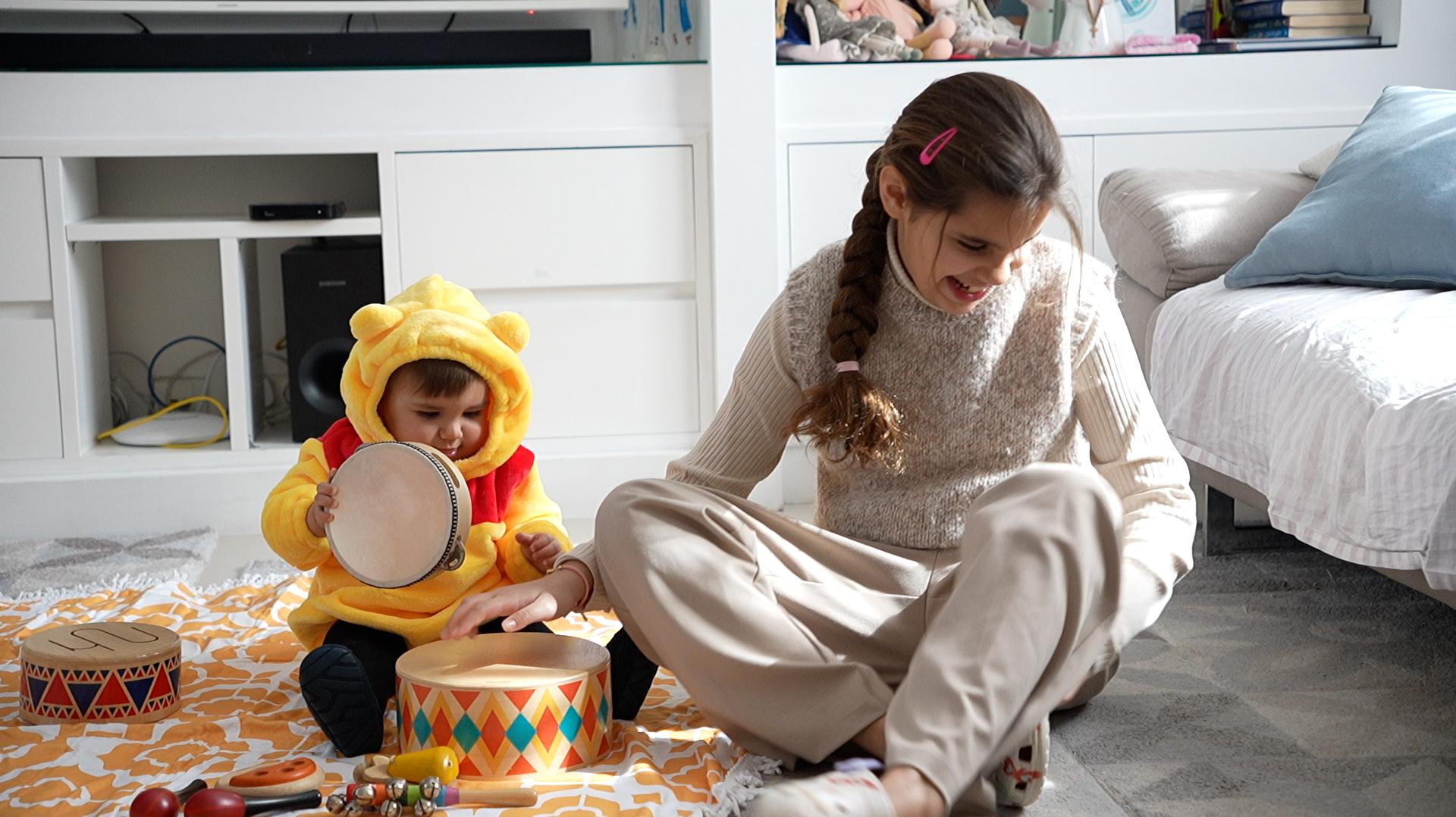 Melania with 10-month-old Max, who was born blind due to Norrie disease.
“It’s going to be part of his life ‒ our aim is for him to be fully independent. For these children, cognitively, this is important. When you’re a child, you read books to fuel your imagination. Braille is their reading tool and their way into the creative world they need to unlock,” they say.
Literacy expert Marion Mallia Rapinett agrees. She notes that, contrary to what many think, Braille is not a language. Braille is made of six dots in a cell ‒ like a carton of eggs ‒ and there are 26 ‘dot formations’ to represent the letters of the alphabet. In total there are 63 combinations to represent things like numbers and punctuation.
“When a child is reading through Braille, their sense of touch, memory and language are stimulated,” she says.
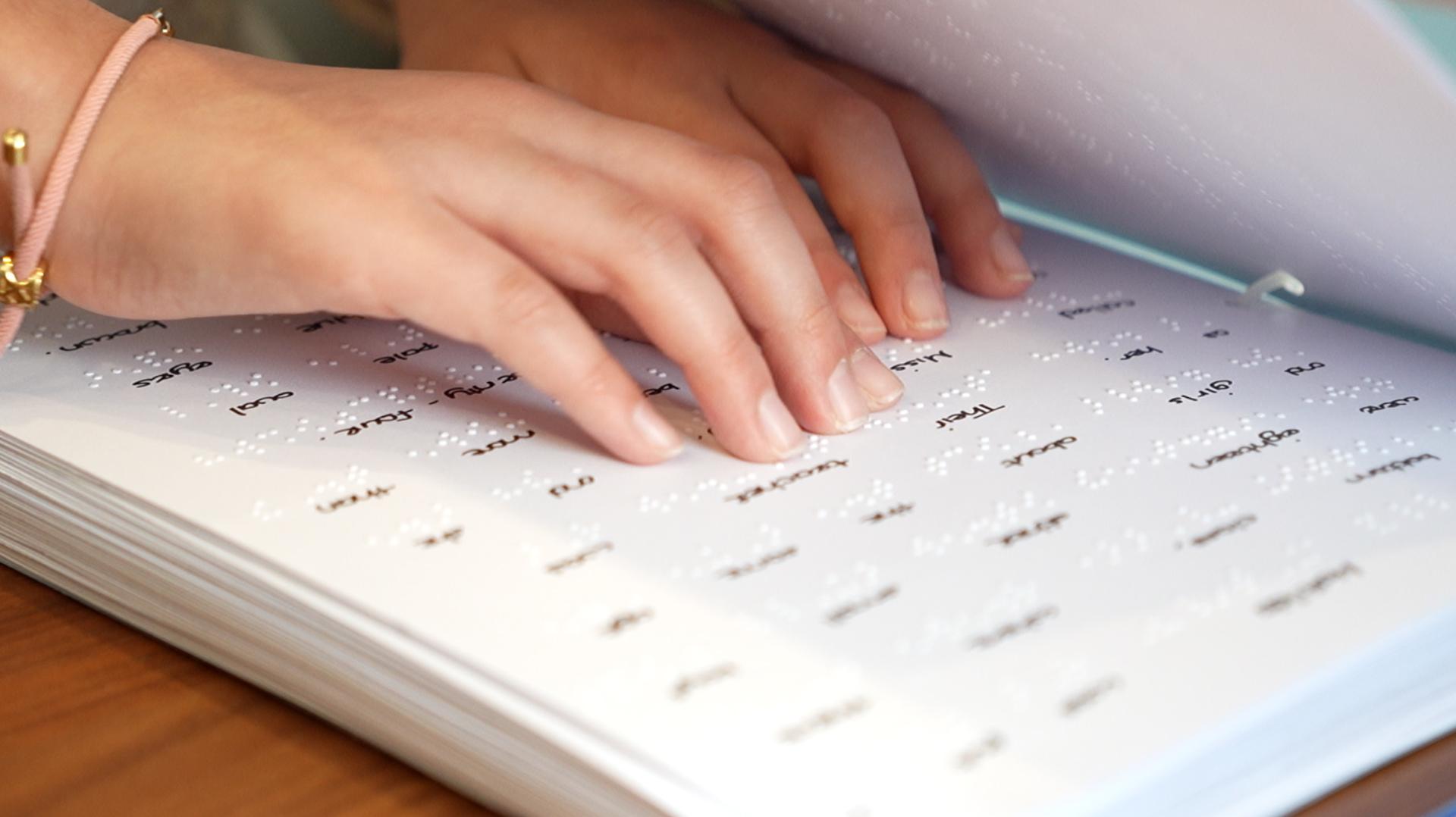 Melania reading using Braille.
Some might argue there is no need for Braille due to technology that can read the text. While it is true that there are many helpful apps, Braille offers something different.
“In schools, children are assessed according to their literacy level and given books to read according to their age. The big question mark to put out there is: since kids read different kinds and levels of books, why shouldn’t children like Melania be given the opportunity to read their own books? They should have all the right in the world to read a book.”