PL-PN: that stubborn 5% difference
Unless major divisive issues rile Labour supporters, there is no reason why the PL cannot continue to win election after election in Malta, Godfrey Baldacchino and Michael Briguglio write
The figure of 51.8% holds iconic power in post-Independence Maltese politics, based on the first count of valid votes.
That is the percentage vote secured by the Labour Party (PL) in the 2026 election. It is the lowest percentage of first-count votes for the PL since 2013.
Meanwhile, the same percentage – 51.8% – is also the highest ever achieved by the Nationalist Party (PN) since 1966 (under the leadership of Eddie Fenech Adami in both the 1998 and 2003 elections). Moreover, since the 1971 general election, the PN vote has dipped as low as 41.7% (in 2022); whereas the PL vote has never dipped below 46.97% (in 1992).
The PN now does well to celebrate its best electoral result since 2013. Yet, the long-range voter statistics suggest that the party has a structural disadvantage: the PN commands less ‘core’ allegiance among its voters than the PL. The difference translates into around 5%: this is remarkably similar at both the lower and upper ends of historic voter support.
It has needed strongly divisive issues to sway enough ‘Labour voters’ away from the PL to the PN in order to get the PN elected: mainly, the Mintoff-Boffa split in the 1950s; the Church-MLP rift of the 1960s; the antagonism of the 1980s; and the question of EU accession at the turn of the century. But only just, even in the best of times: the largest PN majorities have been decided by around 5,000 votes switching sides. But it appears that these voters eventually ‘drift back’, perhaps feeling more at home in the big Labour ‘tent’.
The PN has had three consecutive leaders in the last decade who never made it to prime minister. For the PL, the last leader not to make it to that top executive office was Michael Dundon, almost 100 years ago.
Of course, voters change. People are born and reach voting age, while others die or migrate, never to return. In line with a trend observed by the late Prof. John C. Lane in previous elections, Prof. Dominic Fenech has roughly calculated that some 16,000 persons who were eligible to vote in 2022 have been replaced by a different 16,000 by 2026. It means the electorate has seen an overhaul of 32,000 during this four-year period, or about 10% of current registered voters.
History suggests PL is the more ‘natural’ government
And yet, voting preferences are remarkably solid in Malta. Even though voters are totally free to choose to vote for anyone on a ballot (and not just a party list). Even though voters can vote for candidates from different parties with their single transferable vote. So, while the system in use welcomes wide variations and huge personal choice in principle, local voters have remarkably gone for consistency in practice, with the 13th district (Gozo) being the regular outlier.
Such a consistency is possible with strong party discipline as well as ‘softer’ factors like party investment in internal culture and belonging, quite akin to proto-ethnicity. Intergenerational loyalty is a vital guarantor for such stability.
We also suggest that the political party's adaptation to people’s aspirations and lived experiences is a major factor in deciding electoral outcomes. The impact of ‘floating voters’ is important in this regard. Such voters, with their commonalities and differences, tend to prefer to shift from one major party to the other, rather than voting for a smaller party. And, after 2008, Labour has clearly been more successful in welcoming such voters in its tent.
Our conclusion is that the Nationalist Party has a mountain to climb. History suggests that the PL is the more ‘natural’ government for Malta: why this should be so is a matter that deserves further investigation. By implication, unless major divisive issues rile PL supporters, there is no reason why the PL cannot continue to win election after election in Malta.
Clearly, allegations of corruption, favouritism, clientelism, or ministerial arrogance have not translated into significant shifts in political party preference.

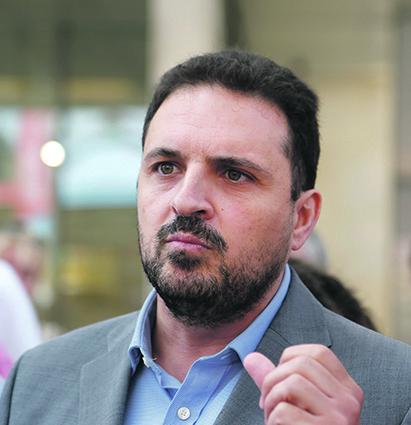
Godfrey Baldacchino and Michael Briguglio are professors of sociology at the University of Malta.