Take money out of Maltese politics
Malta urgently needs to reform its party financing laws, Cyrus Engerer and Robyn Lewis write
We have never met in person, though we have worked together on corruption assignments at the University of Sussex from opposite sides of the planet.
One of us writes from Malta, shortly after a general election; the other from Australia, a federation of six states in which one of them, South Australia, has just done something the rest of the country, and almost the entire democratic world, has not dared to try.
The question both our countries face is easy to ask and uncomfortable to answer: Who pays for our politics and what do they expect back? For decades the answer has been the same. Private money pay s and expects something in return: rarely a bribe, more often access, the returned call, the meeting granted, the regulation quietly softened. It works through dependence, long before any law is broken.
In South Australia that dependence has been cut. Late in 2024, the state’s Labour premier, Peter Malinauskas, passed the Electoral (Accountability and Integrity) Amendment Act, arguing campaigning had become a game rigged for the rich. This is a state law, not a national one: Australia’s federation lets each state set its own rules and South Australia went furthest.
From July 2025, it became unlawful there to give or receive a political donation to a party, candidate or MP. Capped public funding replaced the lost money, enforced with fines up to fifty thousand dollars or 10 years in prison. Malinauskas was frank that the change cost his own party most and defended it in six words: “our democracy is not for sale.” It passed with opposition, Green and crossbench support. When one big party offered to disarm, the other agreed.
The predicted disaster never came. At the election this March, Malinauskas was returned with a larger majority, hardly the verdict of a cheated electorate, while a record 436 candidates stood, up from 291 four years earlier. A ban on private money did not shut newcomers out. It let more of them in. The contrast with the rest of Australia is stark: only weeks later, the country’s richest person lawfully gave a party’s federal leader a two-million-dollar jet because the ban applies in South Australia alone, not nationally.
Malta has travelled the opposite way, by standing still. It is the only EU member state that gives its parties no direct public funding, leaving them almost wholly reliant on private money. The Council of Europe’s anti-corruption monitors have called its disclosure regime incoherent and its threshold critically high, and the existing law has been all but unenforceable since a court found the watchdog could not be investigator, prosecutor and judge at once.
Beneath it lies a feature shared with nowhere else in the Union: the two main parties own their own television stations. Between them, ONE and NET control two-thirds of the main channels and the regulator meant to police them is appointed by those same parties.
Malta’s democracy should not be for sale
Set the two side by side and the lesson is plain. Both countries built systems in which a small set of interests could fund both sides and collect from whoever won. South Australia dismantled that machinery; Malta’s two big parties gestured at reform in 2022, then said little in 2026.
A new legislature, sworn in this month, is the moment to stop promising and start legislating. Reform should be a parliament’s first business, not the alibi of its last.
Malta should adopt South Australia’s design, then improve on it and adapt it to its own realities, because the Australian model still leaks. New parties may keep taking small private donations; the big parties kept channels such as levies and nominated entities that rivals lack; and money has already been routed through federal branches to dodge the ban.
The instinct to protect newcomers is right but the method is wrong. A ban full of exceptions breeds loopholes and letting new parties chase private cash simply rewards the challenger with a rich backer over the one with the better idea.
Malta’s problem is sharper than Australia’s, because here the airwaves belong to the incumbents. Ban donations and change nothing else and the party that still owns a television station wins by default. So, reform cannot stop at money: it must be paired with a broadcasting reform guaranteeing every party fair, regular airtime and a public broadcaster and regulator independent of the parties that appoint them. The Nationalist Party itself once proposed that both it and Labour give up their licences. Equal money means little without equal voice.
The usual objection, in Valletta as in Adelaide, is that taxpayers should not fund parties they did not vote for. But we already fund our politics, in the hidden currency of decisions shaped by donors rather than voters; a capped, accountable subsidy with airtime open to all is the cleaner bargain. The current system costs taxpaying citizens much more in quality of life. None of it suits the two big parties, which is exactly why South Australia matters: there, the parties assumed to lose backed it anyway.
You cannot take money out of politics entirely. But you can control how it flows and to whose benefit. Robert Abela speaks of a fresh mandate and unity; Alex Borg of change and listening. Here is a reform that could carry both their names, with a working example eight time zones away to prove it can be done.
Malta’s democracy should not be for sale either. As Malinauskas put it, “an election should be determined by the quality of the candidates, the power of their ideas, the strength of their credentials. It shouldn’t be about money”.
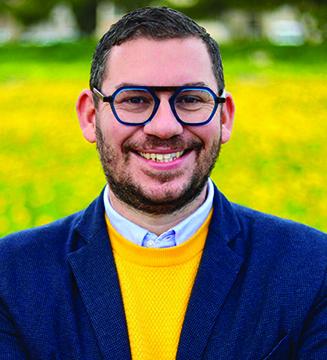
Cyrus Engerer is a former Labour MEP and consultant on democracy, rule of law, human rights and governance. He is reading for a master’s in Corruption and Governance at the University of Sussex.
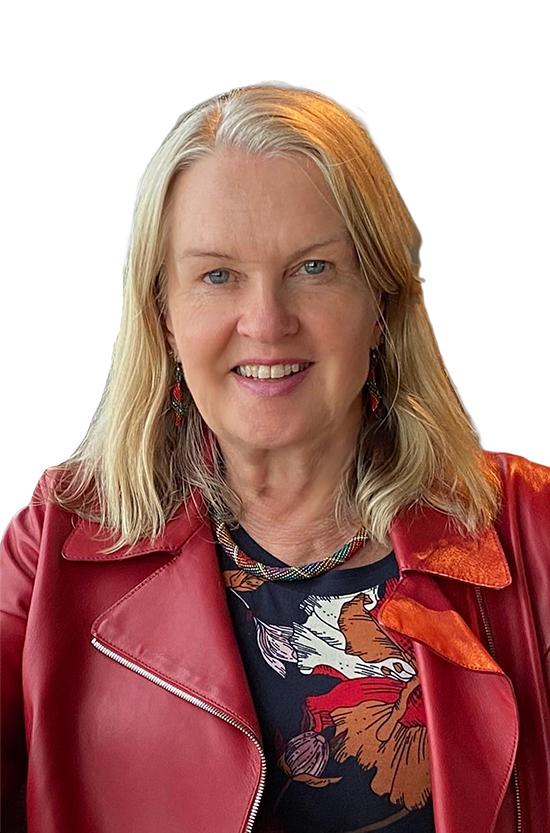
Robyn Lewis works on governance, anti-corruption and environmental sustainability and is reading for a master’s in Corruption and Governance at the University of Sussex.