Post-Roman burial ground discovered in Bidnija
Two skeletal remains were discovered on site
A post-Roman burial ground, containing at least two skeletal remains, was discovered by archaeologists working at the Tal-Bidnija site, in Burmarrad.
In a press release on Tuesday, Heritage Malta announced that the exciting findings provide fresh insight into the areas' long-term historical development and coincide with what is known from Late Medieval historical sources, namely that the area remained in use well beyond Classical antiquity.
"Evidence uncovered this season is helping researchers reconstruct the area's social and agricultural history," Heritage Malta said.
 Archaeologists working at the Tal-Bidnija site. Photo: Heritage Malta
"From an apsed building, conservator-restorers have uncovered layers of fine decorated plaster and patiently lifted each piece for study and conservation. The site's significance is further enhanced by its association with olive cultivation- underscored by the site's olive grove and the presence of a unique Roman stone vat used to decant olive oil."
Excavations will resume next year, while a post-excavation study of all the finds will continue.
The excavations form part of the OLEA project – a collaboration between Heritage Malta, the University of Malta, and the Superintendence of Cultural Heritage.
Launched in 2020, the project combines national expertise and resources to professionally manage, protect, and study one of Malta’s most promising rural heritage sites.
Now in its second year of excavation, the OLEA project continues to serve as a training ground for University of Malta archaeology students, who gain hands-on fieldwork experience while contributing to an active research project.
The place was first brought to the attention of Sir Temi Zammit in 1912 but remained largely unexplored until it was picked up during the Malta Survey Project (2008–2012).
Ground-penetrating radar and surface artefact analysis revealed buried structures consistent with a Roman villa rustica or farm complex, in the vicinity of an olive grove estimated to be at least over 500 years old.
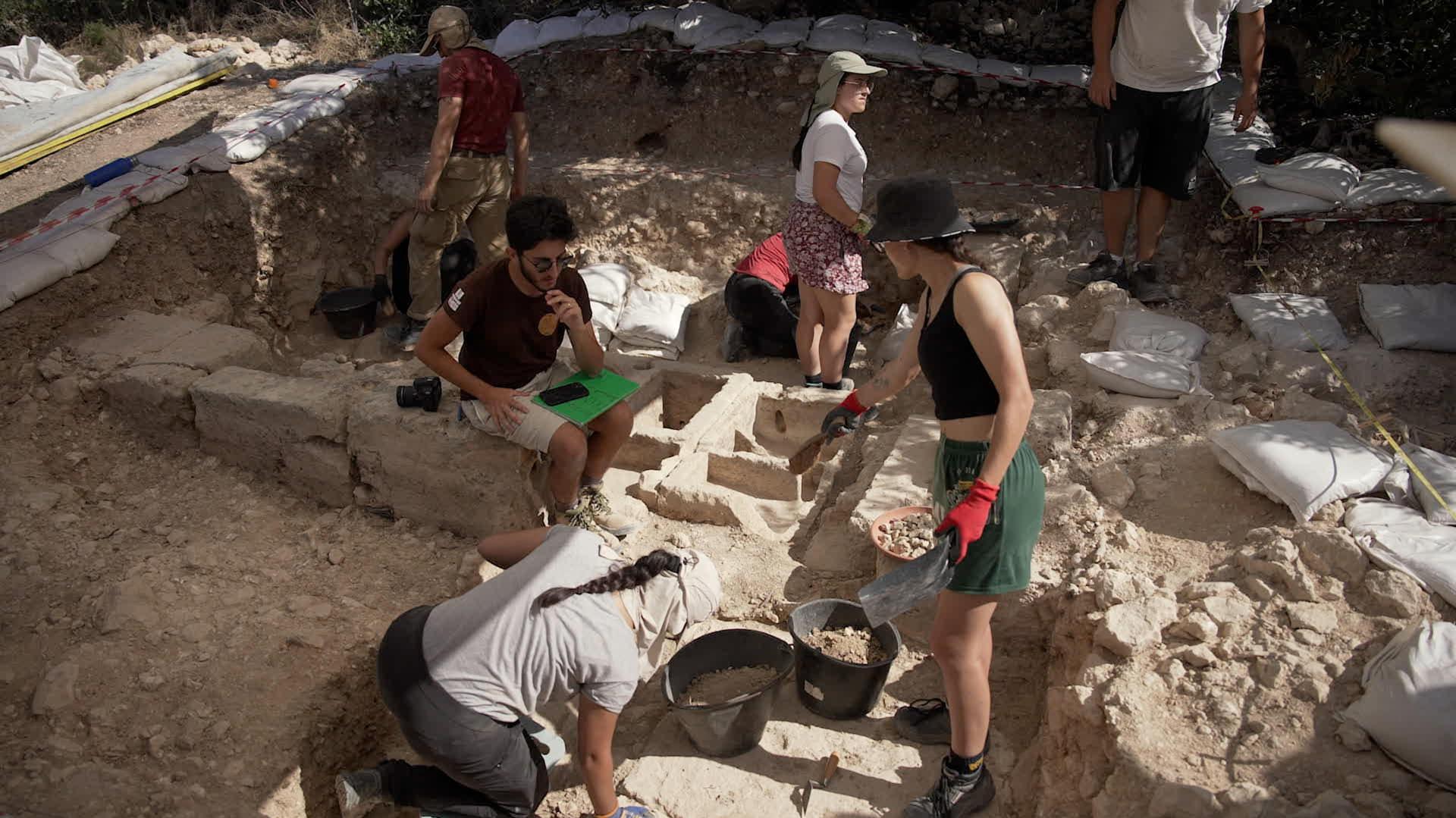 Excavations will continue next year. Photo: Heritage Malta
Back in April, Times Talk revealed an exclusive, first look into a groundbreaking discovery led by two Maltese archaeologists, which has altered the history of Malta and the Mediterranean. The discovery revealed that Malta's human history is at least 1,000 years older than previously thought, and that the first people to ever descend on the islands were hunter-gatherers, not the farmers described in school textbooks and museums.