Prisons should not create conditions for re-offending
The true measure of a prison system is not simply how effectively it contains people but how successfully it prepares them to live beyond its walls, says Andrew Azzopardi
A recent court case in Malta raised an uncomfortable but important question about what happens when prisoners leave the so-called Corradino Correctional Facility, Malta’s main prison institution.
In a report in Times of Malta, ‘Court urges better support for former inmates after “overwhelmed” man reoffends’, the court called for better support for former inmates after a recently released man admitted that he felt “overwhelmed” by life outside prison and ended up reoffending. The court recognised that the transition from prison back into society can be so difficult that former inmates struggle to cope without proper support.
The story may surprise people. After all, freedom is supposed to be the reward for completing a prison sentence, no? Yet, for many former inmates, release is not simply a return to normal life. It can be a profound shock.
This is where the work of sociologist Erving Goffman becomes particularly relevant. Goffman described prisons as “total institutions”, places where every aspect of a person’s life is organised and controlled by a single authority.
Over time, people adapt to this environment. They learn how to survive within the institution. The problem often begins when they leave it.
For most of us, everyday life involves making constant decisions: finding work, managing money, maintaining relationships and navigating social expectations. For someone who has spent years in a highly controlled environment, these ordinary responsibilities can suddenly feel daunting. The person mentioned in the recent court case appears to have experienced precisely this.
The issue is not simply one of personal weakness. It is structural.
Goffman argues that institutions do not merely confine people; they reshape them. The routines that create order and control within prison walls may leave individuals less prepared for the uncertainties and demands of life outside them.
This concern becomes even clearer when viewed through the ideas of political scientist Robert Putnam. In his influential book Bowling alone: The collapse and revival of American community, Putnam (2000) argued that healthy societies depend on social capital, the networks of trust, friendship and community that connect people to one another.
These connections matter because they provide stability. Family members, friends, employers, neighbours and community organisations often help people navigate difficult moments in their lives. They offer guidance, support and, perhaps most importantly, a sense of belonging.
Prison frequently weakens these relationships, both intentionally and structurally.
Family ties become strained. Friendships fade. Employment opportunities become more difficult to access. Former inmates often continue to face stigma long after they have served their sentence.
Instead of returning to strong support networks, many leave prison carrying the burden of isolation. The removal of extended visits for prisoners in relationships is just one example of how important social bonds can be weakened rather than strengthened.
This is why the recent court comments deserve serious attention. They challenge the assumption that imprisonment ends when the prison gates open. In reality, the transition back into society is often one of the most critical stages of the entire process.
For many former inmates, release can be a profound shock- Andrew Azzopardi
The French philosopher Foucault argued that modern prisons were designed around discipline, surveillance and control. Their purpose was not only to punish but also to regulate behaviour through routines, observation and constant monitoring. In this sense, prisons became institutions focused on managing individuals rather than preparing them for life beyond incarceration.
Yet, control alone cannot prepare someone for freedom.
A prison can teach a person how to follow rules within an institution. It cannot automatically teach them how to rebuild trust with family members, secure employment, find accommodation, manage finances or navigate the complexities of independent living. These are social challenges, not disciplinary ones.
If reducing crime is truly the goal, policymakers must focus not only on what happens during imprisonment but also on what happens after. Support services, housing assistance, mental healthcare, education programmes and employment opportunities are not acts of leniency. They are practical investments that reduce the likelihood of reoffending.
The recent case reported by Times of Malta should serve as a warning. When a former inmate says he felt overwhelmed by freedom itself, society should listen carefully. It suggests that punishment alone is not enough.
Prisons are necessary. Accountability matters. But a prison system that releases people without helping them reconnect to society risks creating a cycle that benefits nobody. Victims are failed, communities are harmed and ex inmates are pushed back towards the same system they have just left.
Human beings depend on social connection. When institutions isolate people for long periods and those connections are allowed to disappear, reintegration becomes significantly more difficult.
My concern is that, in this sector, we continue to lack the leadership necessary to bring about meaningful and lasting change. Political direction, so far, remains weak and there appears to be no coherent long-term strategy capable of guiding the prison system towards genuine rehabilitation and reintegration. Too often, internal power struggles, competing agendas and personal egos overshadow the institution’s core mission. Meanwhile, those working on the ground are left trying to make sense of an environment that appears uncertain and directionless.
Rather than confronting its challenges honestly, the institution sometimes seems more concerned with protecting its reputation than addressing its shortcomings.
What is urgently needed are clear protocols, effective systems and a coherent strategy that places rehabilitation at the heart of the prison experience.
Many professionals serving on boards and in advisory capacities have valuable expertise to offer. Yet, their contribution is often constrained by an institutional culture that prefers to project self-sufficiency rather than draw on the knowledge, experience and resources already available. As a result, opportunities for learning, collaboration and improvement are frequently lost.
Structures and policies are important but they are not enough. Institutions ultimately depend on people. Without capable leadership, a clear vision and a commitment to collaboration, even the most carefully designed structures become ineffective. When that happens, the institution’s focus shifts from fulfilling its mission to protecting itself.
The true measure of a prison system is not simply how effectively it contains people but how successfully it prepares them to live beyond its walls. If that objective is neglected, the system risks perpetuating the very cycle of exclusion, isolation and reoffending that it claims to prevent.
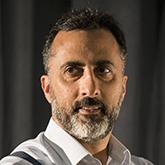
Andrew Azzopardi, Department of Youth, Community and Migration, University of Malta.