Could a local sea plant help spice up the Maltese ġbejna?
SAMEOC project introduces samphire into Maltese cheeselets
Samphire (sea asparagus or sea fennel) is a coastal plant enjoyed in cuisines worldwide. Rich in vitamins, antioxidants and minerals, yet low in calories, it has strong potential to substitute salt, replace artificial additives and functionalise foods by enhancing nutritional value and health benefits. Despite this, samphire has never truly entered Maltese culinary culture.
The Maltese islands host two samphire varieties: golden samphire (daisy family) and rock samphire (parsley/celery family). These local ecotypes have never been fully characterised, leaving their chemical composition and functional properties poorly understood – a scientific gap and missed opportunity for local food innovation.
The SAMEOC research project aims to unlock the functional potential of Maltese samphire and transform these neglected plants into sustainable, nutritious food ingredients that respect tradition and biodiversity.
The project is led by Georgios Psakis and Frederick Lia at the MCAST Institute of Applied Sciences, in collaboration with the Genetic Conservation and Resource Unit (Ministry for Agriculture), the Malta Food Agency, Xirka Produtturi Nagħaġ u Mogħoż, Delectat, and the National and Kapodistrian University of Athens. SAMEOC is supported by Xjenza Malta through the REP programme.
How can samphire gain a seat at the Maltese table? Rather than asking people to change what they eat, SAMEOC introduces samphire and its extractable components (e.g., essential oils) into cheeselets (a food already deeply rooted in Maltese culture). While samphire extracts have been studied elsewhere in the Mediterranean, little is known about how Maltese varieties behave or interact with complex food systems like cheese.
A key question is safety. Can samphire extracts inhibit harmful microbes without affecting beneficial ones? These bacteria are essential for cheese fermentation, flavour and human gastrointestinal health. Any natural preservative must, therefore, be effective yet selective.
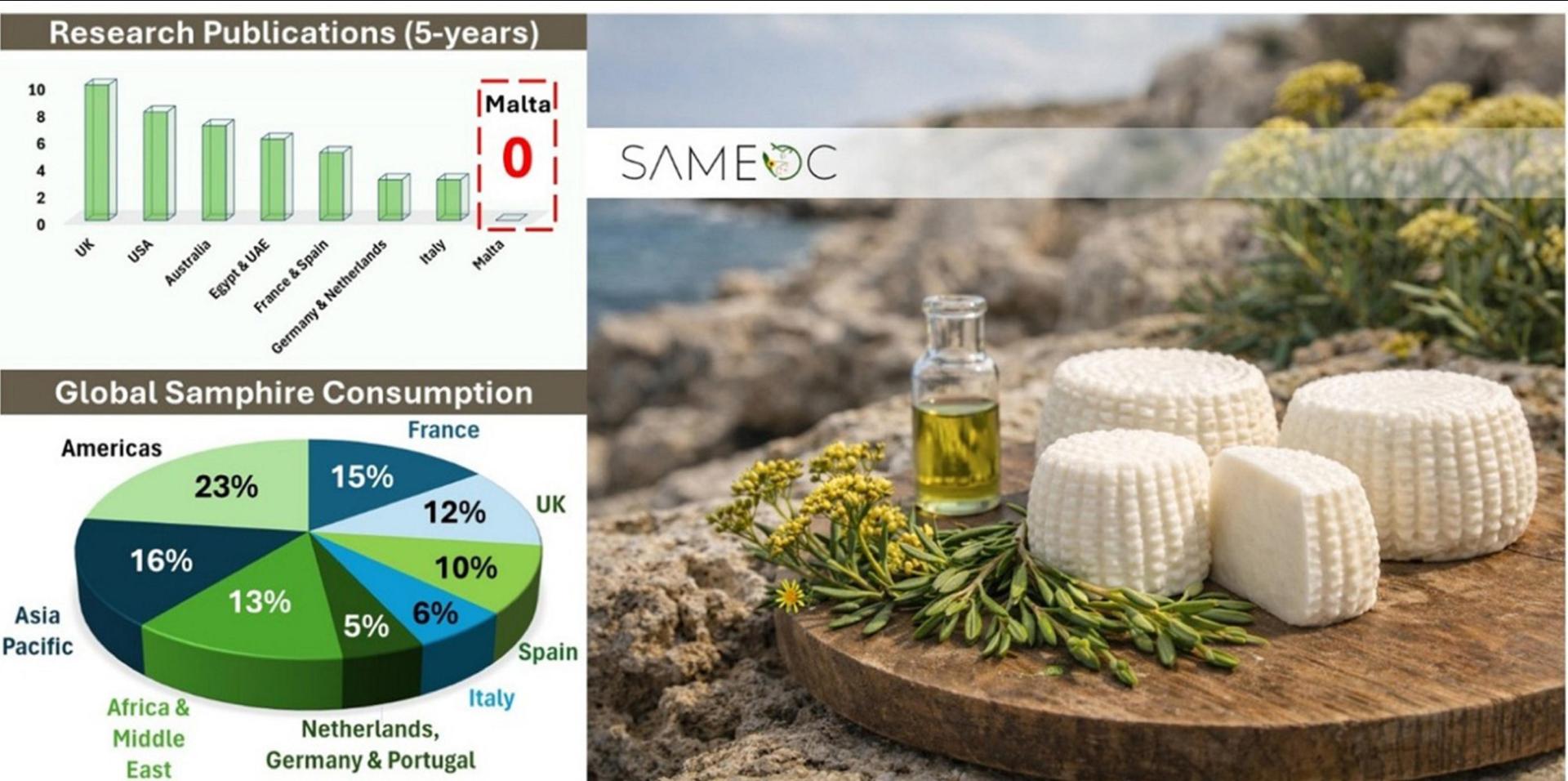 SAMEOC gives Malta’s overlooked samphire a role in cheeselets.
To address this, SAMEOC applies innovative extraction strategies. Alongside conventional distillation, n-butane extraction is used to preserve delicate bioactive compounds. Extracts are tested against foodborne and spoilage organisms while monitoring their impact on beneficial bacteria.
Promising extracts are incorporated into experimental cheeses made from sheep and/or goat milk. As the cheeses mature, scientists track microbial communities, chemical composition, safety and nutritional properties.
By fully characterising Maltese samphire and testing it in real foods, SAMEOC demonstrates how a low-value coastal plant can generate high-value products, supporting circular economies and sustainable food innovation that benefits producers, consumers and the environment.
SAMEOC project is financed by Xjenza Malta through the FUSION R&I Research Excellence Programme (REP-2025-021).
Georgios Psakis and Frederick Lia are senior lecturers at the MCAST Institute of Applied Sciences. They hold PhDs in biochemistry and chemistry respectively, and have extensive research experience in biochemistry, microbiology, analytical-chemistry and food science.