Save our shores: The gap
When it comes to maritime projects, there is a chasm between policy and public anger
Twenty years ago, Maltese civil society was in its infancy. Today, a growing network of local councils, residents’ groups, environmental NGOs, and even international organisations are working together to address local issues.
Our latest investigative project, Save Our Shores, explored the health, environmental, and social risks currently facing communities that live in proximity to both commercial and luxury maritime activity.
For this project, we spoke to dozens of people from localities across Malta and Gozo, particularly those communities which are disproportionately affected by health and environmental risks.
The project is an initiative created and implemented by Friends of the Earth Malta, backed by Amphora Media and funded by The Minor Foundation for Major Challenges.
Hard numbers
Our research shows that, over the past seven years, the Southern Harbour district was by far the most severely affected region in Malta in terms of respiratory illnesses. The Southern Harbour district consists of the 14 towns in and around the Grand Harbour area.
Our conclusion is based on two robust data sets sourced directly from the Health Ministry: an analysis of the amount of inhalers consumed by people in every region of Malta, and the rate of hospital discharges with asthma as the primary or secondary diagnosis.
We looked at three different types of inhalers, known formally as oral bronchodilators: beclometasone and budesonide, both of which are used for the prevention of respiratory problems and to deal with inflammation in the lungs, and salbutamol, which is used to treat acute asthma attacks and wheezing.
The rate of discharges from Mater Dei Hospital also paints the same exact picture.
While burgeoning traffic and the widespread proliferation of active construction sites across Malta and Gozo also factor into the high rates of respiratory illnesses suffered in the Southern Harbour region, the consistency of high rates of inhaler use is unique to the area.
It is also worth mentioning that the same region reports other notable contributing factors to the prevalence of respiratory illnesses in the district.
One such factor is tobacco use. The Family Ministry’s Alcohol, Tobacco, and Drug Use survey from 2023 found that around 50% of respondents in the Southern Harbour reported using tobacco in their lifetime, 4.3 percentage points higher than the second highest region.
The same survey notes that lifetime use of both prescription and recreational drugs was particularly elevated in the Southern Harbour.
21.4% of respondents in the Southern Harbour said they made use of prescription drugs, 2.5 percentage points higher than the next region.
As for the use of drugs such as cocaine, heroin, and methamphetamines, the Southern Harbour reports in second at 0.7%, beaten only by the Northern Harbour region at 0.9%.
A recent meta-study, which is basically a study that reviews a large number of other academic papers, also shows a significant link between low-income households and asthma rates.
Within the context of the Southern Harbour’s historical socio-economic disadvantage, it only makes sense for the government to develop a primary healthcare hub in Paola.
The new regional hospital began to operate three years late after a legal dispute over poor workmanship led to an additional €1.7 million in emergency works.
Air quality monitoring data from the Environment and Resources Authority (ERA) shows that Malta has a nationwide air pollution problem, based on the World Health Organisation’s (WHO) air quality guidelines.
These monitoring stations track different types of pollutants which, in high concentrations, can cause severe respiratory problems.
PM2.5, PM10, and NO₂ levels exceeded WHO guidelines in Msida, Attard, Senglea, Żejtun, and St Paul’s Bay between 2020 and 2024.
Ozone limits were breached in nearly all localities until 2023, while SO₂ and CO stayed within safe levels across the board.
ERA provided its justification for the removal of Senglea’s air monitoring station in its responses to our questions, reproduced further below.
A bay under seige
As far as landscape-altering maritime projects go, Marsascala has had it rough.
In fact, it was the first town in Malta that set up an organised residents’ group with one clear objective: saying ‘no’ to the government’s proposal to turn Marsascala Bay into a luxury yacht marina.
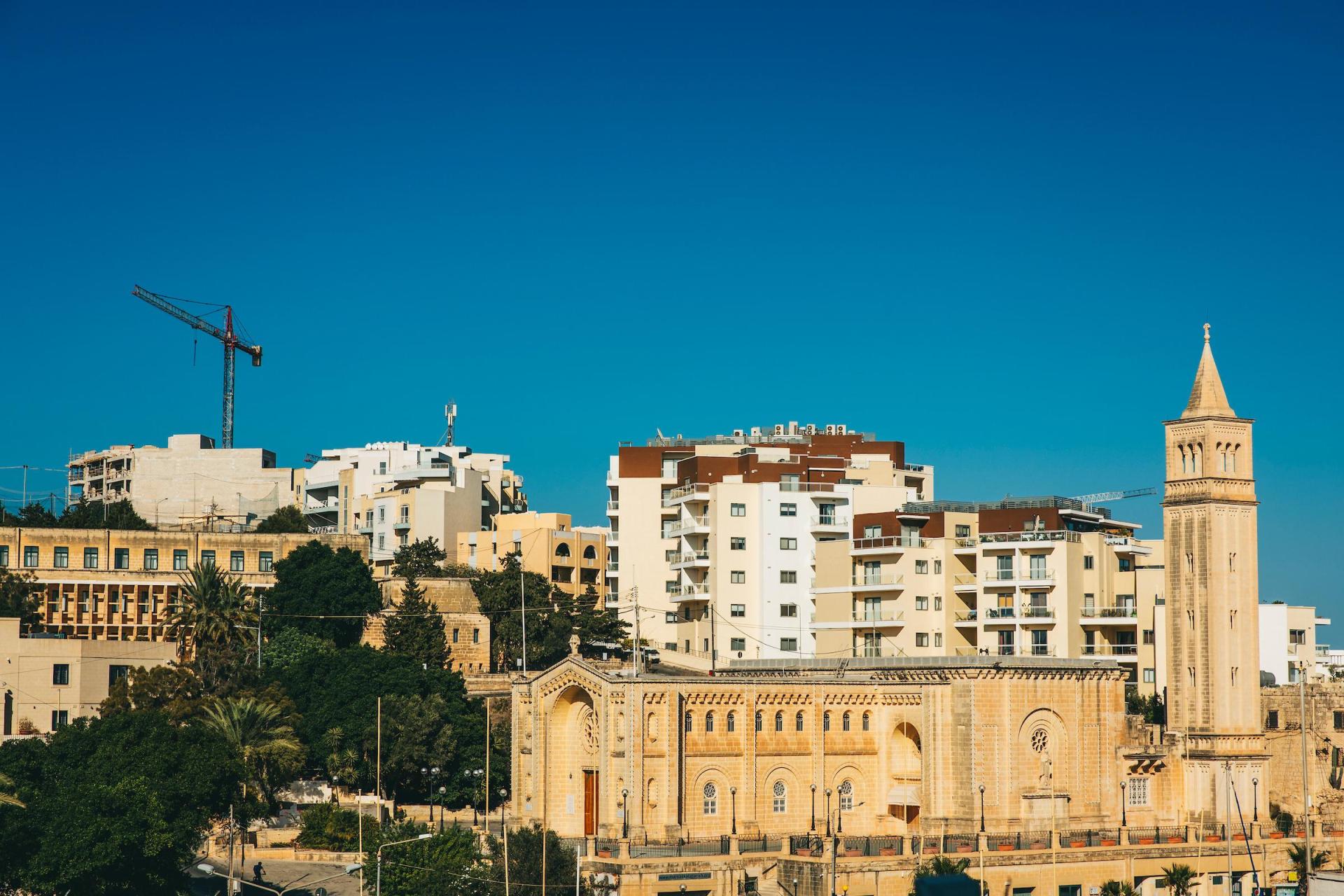 Tower cranes and new developments rise in Marsascala. Photo: Darrin Zammit Lupi
Now known as Marsascala Residents’ Network (MRN), the group was a vital nerve centre in a campaign that successfully forced the Prime Minister to announce that the project would be scrapped.
Few within MRN could have ever guessed that they would later be completely blindsided by the Transport Ministry’s rush to spend €18 million on a promenade regeneration project that is also laying the groundwork for a public ferry in the same exact bay.
In an interview held in May, MRN members Caroline Caruana and Jacqueline Rotin had already voiced their fears about the bay’s slow demise, noting that they’d already witnessed the decimation of marine life, before any of the transport ministry’s plans were rushed through.
When asked whether they believe their highly urbanised town has reached saturation, both agreed.
“I think we’re oversaturated - over and above. This bay is the only open space we have left in this area. If this area gets choked up with a lot of marine activity, then there will be no open space left at all. The pace of development in Marsascala should have been toned down a long time ago. There was no need to develop this town to this extent,” Rotin says.
At a community assembly organised by Friends of the Earth Malta and MRN where around 30 - 40 residents showed up, every single person agreed that, while refurbishment works were necessary for some parts of the coastline, the fact that they were lumped together with a public ferry made them feel like they were presented with a Trojan horse of a proposal.
While the government commissioned a survey by statistician Vincent Marmara, which reported that 59% of Marsascala’s residents favoured a public ferry in their town, MRN and its supporters vehemently oppose it.
Despite the lack of approval from the Planning Authority (PA), Infrastructure Malta proceeded with the regeneration works, which were still ongoing at the time of publication.
Repeated attempts by residents, activists, and the media to obtain clarification from the authorities about the size, scope, and cost breakdown of the works were futile, with the Infrastructure Ministry’s repeatedly breaching the Freedom of Information Act in the process.
When towns stop being homes
While Marsascala appears to be bracing for another surge of economic activity that will continue to strain the locality to its limits, Gżira is a town that went into overdrive years ago.
Ornithologist and Moviment Graffitti activist Marie-Claire Gatt, who is also directly involved in the Manoel Island: Post Għalina campaign, explained that an urban heat island map found that temperatures in Gżira exceeded those in Wied Għollieqa (a comparatively low-density area) by a few degrees.
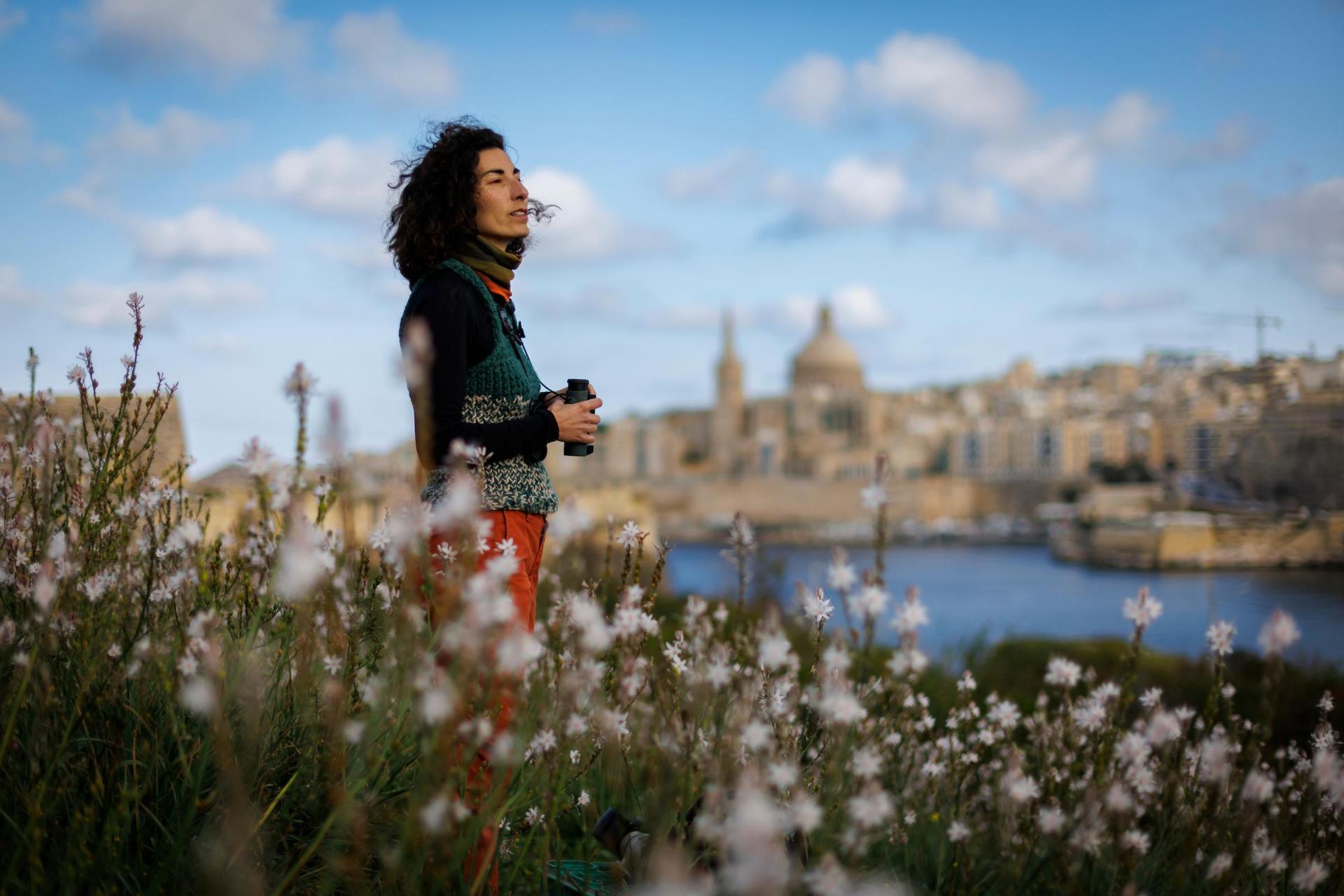 Marie-Claire Gatt says she has seen Gżira's transformation. Photo: Darrin Zammit Lupi
“Lots of townhouses became apartments, hotels, short-lets and so on. A lot of people left. What we have here are the remains of a community,” Gatt says, drawing on her experiences as a local herself.
For Gatt, the demise of locally owned businesses in favour of tourist-focused establishments is a result of the surge in economic activity.
“The commerce that happens in Gżira no longer serves the locals or the wider population, it is geared mostly for cheap, mass tourism,” she adds.
The community has responded. In a town that looks and feels like a 24/7 construction site, an open space like Manoel Island is worth its weight in gold.
Over 30,000 people signed the petition that forced Prime Minister Robert Abela’s promise to turn Manoel Island into a national park - a promise which remains subject to a vote that is yet to be taken by MIDI shareholders at the time of writing.
Gatt views the campaign’s overwhelmingly successful strategy as a beacon of hope, particularly because it laid the foundation for subsequent conciliatory announcements such as the White Rocks & Fort Campbell proposals.
“I won’t say that this campaign about a specific location will somehow change all the other problems we have. What I think this campaign does in that regard is teach us that these kinds of changes are possible if and when we unite together. We really threw some weight around with this one, and that’s because we did it together,” she says.
While Gżirjani and Skalin groan under the weight of commercial sprawl and fast-moving short-let markets, Beltin and Furjaniżi will be the first to tell you that they’ve already been priced out.
Valletta’s residential property prices are unaffordable for younger generations who would be able to renew the community’s lifeblood, with the prices also serving to drive out smaller businesses. An investigation published by Amphora Media revealed that one out of every six homes in the capital have been converted into Airbnbs..Authorities’ lax attitude towards enforcing public order regulations in Valletta has also led to a booming nightlife scene that has become difficult to endure as a resident, especially for the increasingly elderly population in Malta’s capital city.
One of the founders of a group called Residenti Beltin notes that the group was formed in similar conditions to Marsascala Residents’ Network: a need to fill in critical gaps left by complacent authorities, and in response to a tipping point.
In Valletta’s case, it was a legal notice which allowed for “moderate” levels of music to be played live in bars late into the night.
“I don’t care if a bar destroys its own clients’ hearing with high volume inside their own bar. But when that noise leaks outside and starts affecting everyone else, sometimes with the express intent of clearing out residents from their own homes, it is not acceptable. That’s where me and my friends want to intervene,” Billy McBee, one of Residenti Beltin’s founders, says.
In nearby Floriana, independent mayor Nigel Holland has plenty to say about how his hometown has fallen victim to the shapeshifting influence of lucrative maritime industries, which bring a wave of commercialisation.
“In 20 years’ time, these localities will become hotels and airbnbs,” he says gruffly, barely a few minutes into the interview.
A fixture among the locals, Holland was one of the early pioneers of the civic committees that later became local councils as we know them today.
He notes that, in the span of around 30 years, Floriana’s population declined from around 5,000 to below 2,000.
“ …I always ask my fellow councillors: what’s the point of embellishing the locality if we’re losing the local community?” he recalls.
While his tone often veers into the despondent, Holland maintains that the public holds the key to reversing the creeping decline that has hollowed out communities in the Grand Harbour.
“Whatever you and I say right now doesn’t matter: the truth is that politicians change if people want them to change. It has to come from the bottom, not from the top. Politicians who find no resistance to an agenda that is harmful towards their own voters will do it anyway, because they can,” he concludes.
Responses
Out of all the relevant stakeholders we reached out to for comment for this investigative project, we received two responses - a response from ERA’s spokesperson, and a response from Valletta mayor Olaf McKay.
ERA’s spokesperson noted that Malta’s legally binding standards are set by the EU Ambient Air Quality Directive - which are far less stringent than the guidelines published by the WHO.
“These standards set the EU limit values which constitute the official basis for compliance across all Member States including Malta. All official assessments and compliance reporting follow such EU standards,” the spokesperson noted.“In this regard, the regulated pollutants are in line with EU standards during the period in question for all pollutants, with the exception of particulate matter of size 10 micrometres or less (PM10) at Msida station in 2018 and 2023, where the number of exceedances of the daily limit value exceeded that of the EU, and ozone which was exceeded in our Għarb station* in 2021, 2022, 2023,” the spokesperson added.ERA also explained that ozone is known as a “transboundary pollutant”, which means that it is not just generated locally but also carried over from other countries, making it impossible to control except through “global action and efforts from other countries”.
Earlier this year, ERA published an air quality plan, which the spokesperson says is meant to target road transport as the main source of air pollution and “includes a set of measures aiming to reduce traffic congestion, focusing on the inner harbour area.”The spokesperson cited proposals including collective transportation, cleaner distribution services, grants and schemes for cleaner vehicles and incentives to surrender vehicles.“These measures build on a series of initiatives that the government has implemented over the years, which have already contributed to significant emission reductions. These include the reform of the power generation sector, the introduction of free public and school transport, the provision of free ferry services in the inner harbour area, and the fast-ferry link between Malta and Gozo,” the spokesperson added.The spokesperson also stated that the mobile monitoring station in Senglea was set up to collect samples for a study on “any impact shipping in the Grand Harbour may have on air quality”, noting that the exercise was completed and that the station was removed afterwards.The regulator did not share the results of its study nor did it explain whether its study was impacted by the poor quality of the data that was collected through the mobile station.As for Valletta’s mayor, who was elected on the Labour Party’s ticket, his comment was largely about ongoing cooperation with the government to form a master plan for the capital city.
“I have always believed that a “one-size-fits-all” approach cannot be applied in all cases. Valletta needs its own dedicated action plan so that, together with the relevant entities, we can develop a model that truly addresses the needs of both residents and commercial establishments in the City,” McKay says.
Valletta’s mayor also stated that the council is collaborating with the office of the deputy prime minister on a pilot project that will design “measures tailored for a capital city that attracts high-quality tourism.”
“Through this initiative, we will be able to tackle issues such as waste management, public order, and the regulation of tourist accommodations. I thank the Government for its support in helping us present our proposals and the residents' suggestions, and implement our ideas so that we may achieve a balanced approach that meets the needs of residents, commercial activity, and tourism,” McKay adds.
The health ministry, the transport ministry, the culture ministry, and Marsascala’s local council did not respond to a request for comment.
This is part two in a three-part series. Read part one here. Part three will be published next week.
The Save our Shores project is an initiative created and implemented by Friends of the Earth Malta and funded by The Minor Foundation for Major Challenges.
The author used ChatGPT 5.1 for analytical support, multi-stage data processing, comparison against WHO air quality guidelines, and the interpretation of pollutant trends across Malta’s monitoring stations (2020–2024).