Surrogacy: legalising the market for children
Legalising surrogacy normalises the commercialisation of children, writes Miriam Sciberras
These last few days we have seen articles in the media promoting surrogacy as though it were an unambiguous good. The fertility industry promotes surrogacy because it is a multi-billion-dollar business. It creates a global market for babies and turns women into incubators.
In surrogacy, the body of a woman is rented and a baby is purchased as a good. And although the result of surrogacy is a child, this is a case where the end does not justify the means: in surrogacy, the child ‘is’ the transaction. A child is conceived from a donor egg or sperm, the embryo is transferred to a woman who is not genetically the mother and the resulting baby is then handed over to the paying third parties, the commissioning parents.
The process involves embryo screening, testing and selection. For the right price, it seems, only the ‘fit’ are allowed to survive: embryos deemed imperfect are discarded at will and commissioning parents who demand a ‘healthy baby’ can request abortion at the first sign of disability or suspected birth defect.
Women are treated as incubators, used for their bodies. At birth, the child is separated from the woman who carried them and handed over to the commissioning parents.
Would we stop to consider what this means for the child? Studies show that during pregnancy there is a transfer of cells and a deep physiological connection between mother and baby, microchimerism, and that the baby bonds with the mother throughout pregnancy. The child comes to know his mother’s voice, feels her heartbeat and is oriented, from the very start, toward the moment of encounter at birth.
In surrogacy, that moment is deliberately denied him: the newborn is taken immediately from the woman whose voice, heartbeat and body he has known for nine months and placed instead with adults he has never heard, felt or bonded with in the womb. This is not a minor detail. It is the first rupture in that child’s life.
The mother’s body, meanwhile, has been preparing for this birth: her breasts producing milk to nurse, her hormones priming her for the natural, healing reunion of mother and child. That reunion is taken away and the woman is left in distress.
Even a mother who undergoes surrogacy willingly still suffers, because surrogacy breaks the natural bond between mother and child at the moment of birth. We also now know that children carry effects of this rupture, separation anxiety that can surface years later. Even ‘altruistic’ surrogacy does not escape these consequences, as recent studies confirm.
Worldwide, feminists are speaking out forcefully against surrogacy. Where, then, are the feminists of Malta?- Miriam Sciberras
The women drawn into surrogacy are often the most vulnerable. They face serious medical risks, coercion and exploitation, and, for many, surrogacy is simply a way out of poverty. The children, meanwhile, face lifelong psychological and legal consequences, having been separated at birth from the woman who carried them.
A movement against surrogacy, led by those born from it
There is a growing worldwide movement – the Casablanca Declaration – calling for an end to surrogacy. It is led by Olivia Maurel, herself born through surrogacy, whom I had the privilege of meeting recently.
Earlier this month, a coalition of states stood before the United Nations to declare with one voice that the practice of surrogacy must end.
The declaration was launched at a high-level event moderated by ADF International and co-hosted by the governments of Italy, Chile and Cameroon, together with the Holy See. It calls for an international moratorium, a temporary ban on surrogacy, as a first step toward abolishing it globally.
Italy’s Minister for Family, Natality and Equal Opportunities, Eugenia Roccella, summarised it best: “Surrogacy is no longer a matter confined to domestic legislation or individual choices. It has become a global phenomenon, increasingly shaped by international markets, cross-border arrangements and profound inequalities within and between societies.”
She went on: “As policymakers, we have a responsibility to ask a fundamental question: Do we still recognise every human being as a person to be respected or are we willing to accept situations in which human beings can become a means to satisfy the interests and desires of others?”
Worldwide, feminists are speaking out forcefully against surrogacy, recognising how it exploits women’s bodies and commodifies children.
Where, then, are the feminists of Malta?
Meanwhile, we are being fed a steady drip of articles this summer, as if orchestrated, all pushing for surrogacy in Malta as though it were some noble initiative.
When will we wake up from this? How can we allow, quietly, under the cover of the summer lull, in the name of equality, for women’s bodies to be turned into incubators and babies into goods for purchase?
Why are more voices not asking the obvious questions: Who benefits from this industry, who carries its risks and who pays its price for a lifetime?
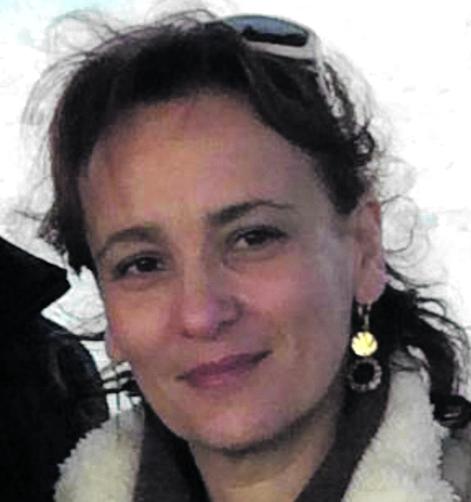
Miriam Sciberras is CEO of the Life Network Foundation Malta.