Third of businesses will raise prices ‘significantly’ as shipping costs soar
Half of businesses surveyed say they already faced price hikes on imports
A survey among small and medium businesses found that rising freight expenses linked to Middle East instability have already forced half of them to pay more for imports, with more than a third admitting they will likely increase the prices for consumers “significantly”.
The questionnaire, carried out by the Malta Chamber of SMEs, reveals that the escalating conflict is hitting the pockets of local businesses and their customers.
Of the 162 businesses surveyed between March 11 and 23, 47% reported an immediate increase in the cost of products bought from abroad.
While 53% of respondents have yet to see a price change, those affected are feeling it significantly.
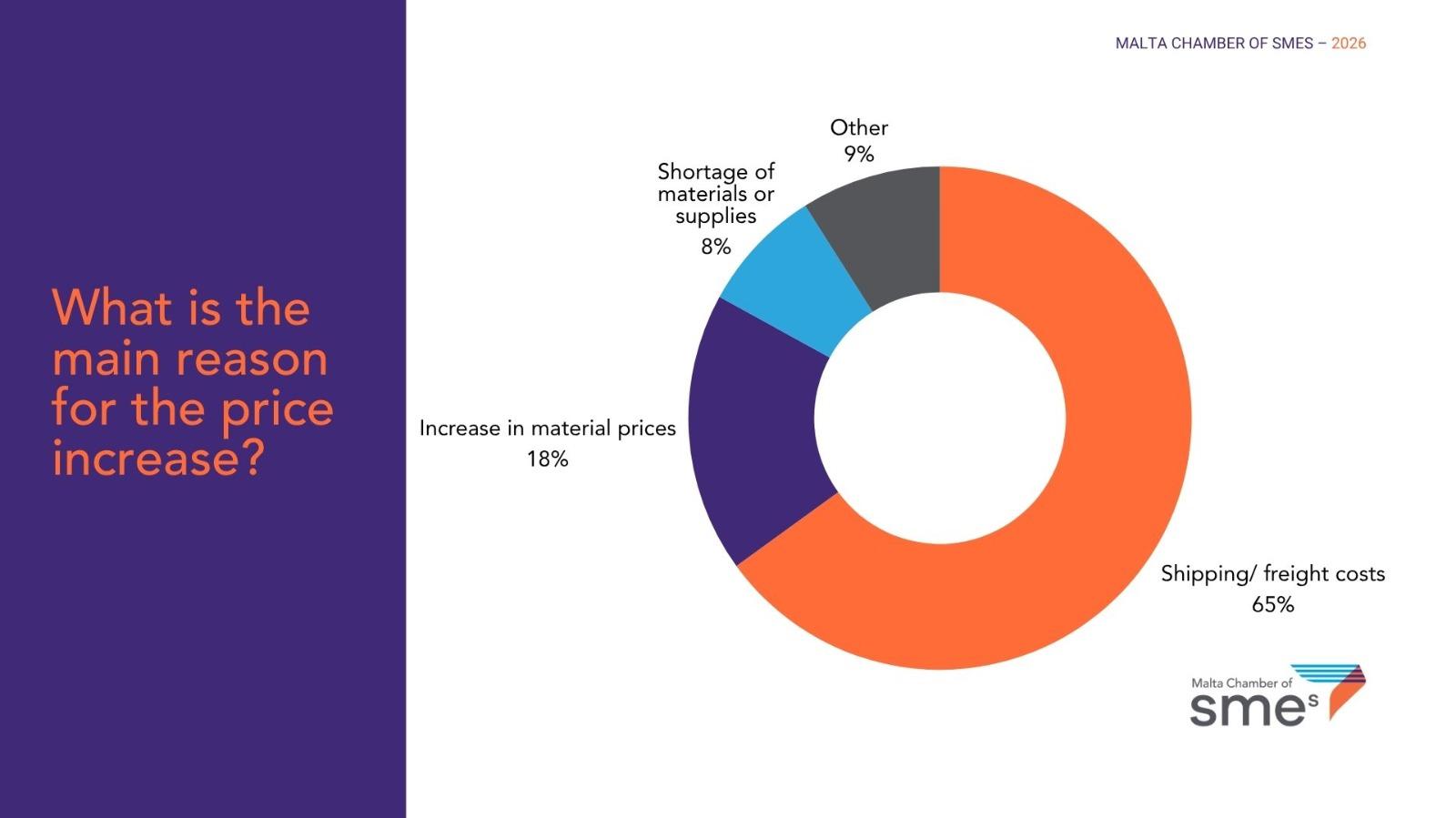
Among the businesses facing higher costs, a staggering 64.5% identify shipping and freight charges as the primary culprit, overshadowing other factors like raw material prices (18.4%) or material shortages (7.9%).
 Source: Malta Chamber of SMEs
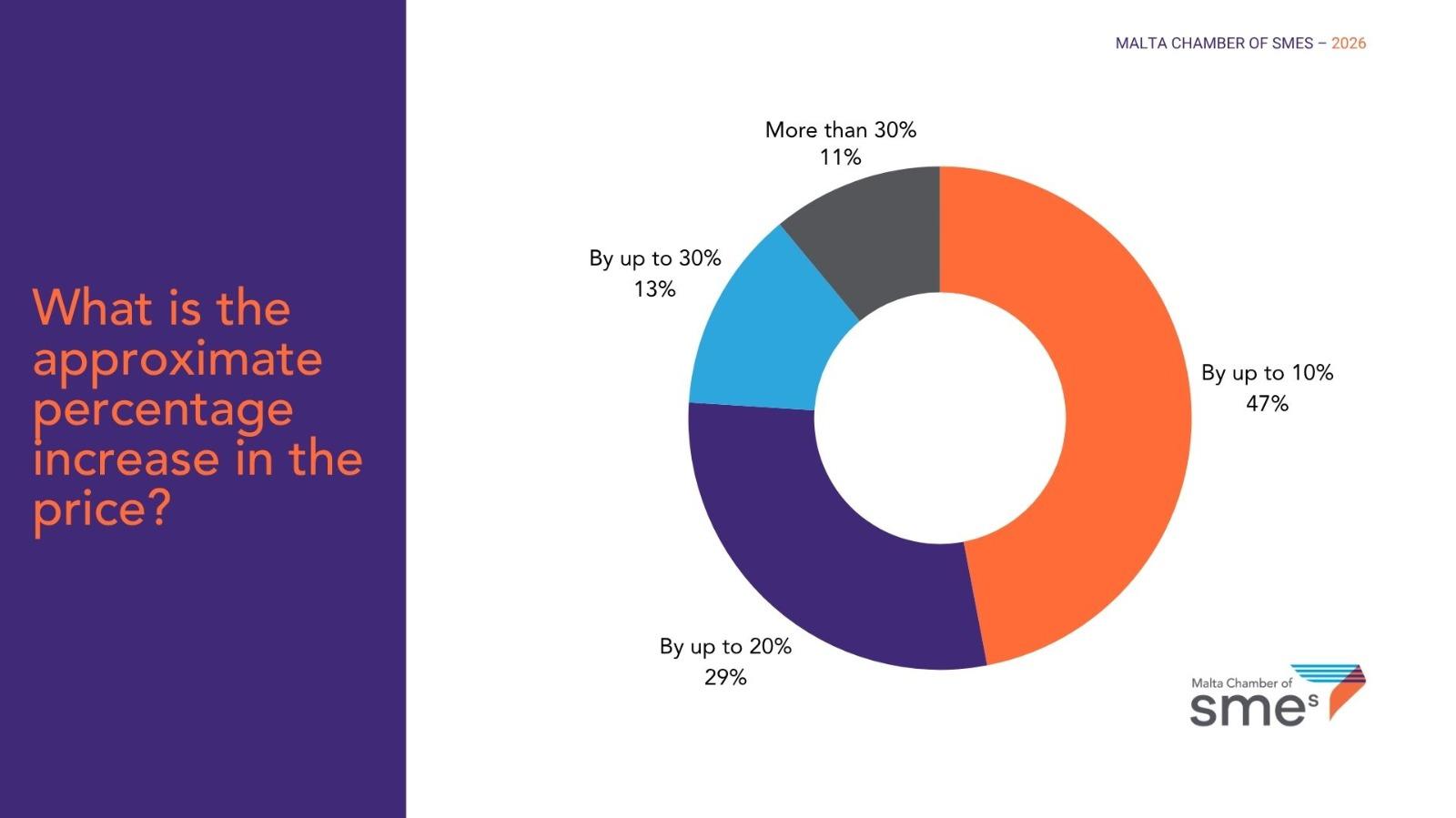
For most businesses (47%), the price rise has been kept under 10%. However, nearly a quarter of respondents are dealing with jumps of 20% or more.
 Source: Malta Chamber of SMEs
Onto the consumers?
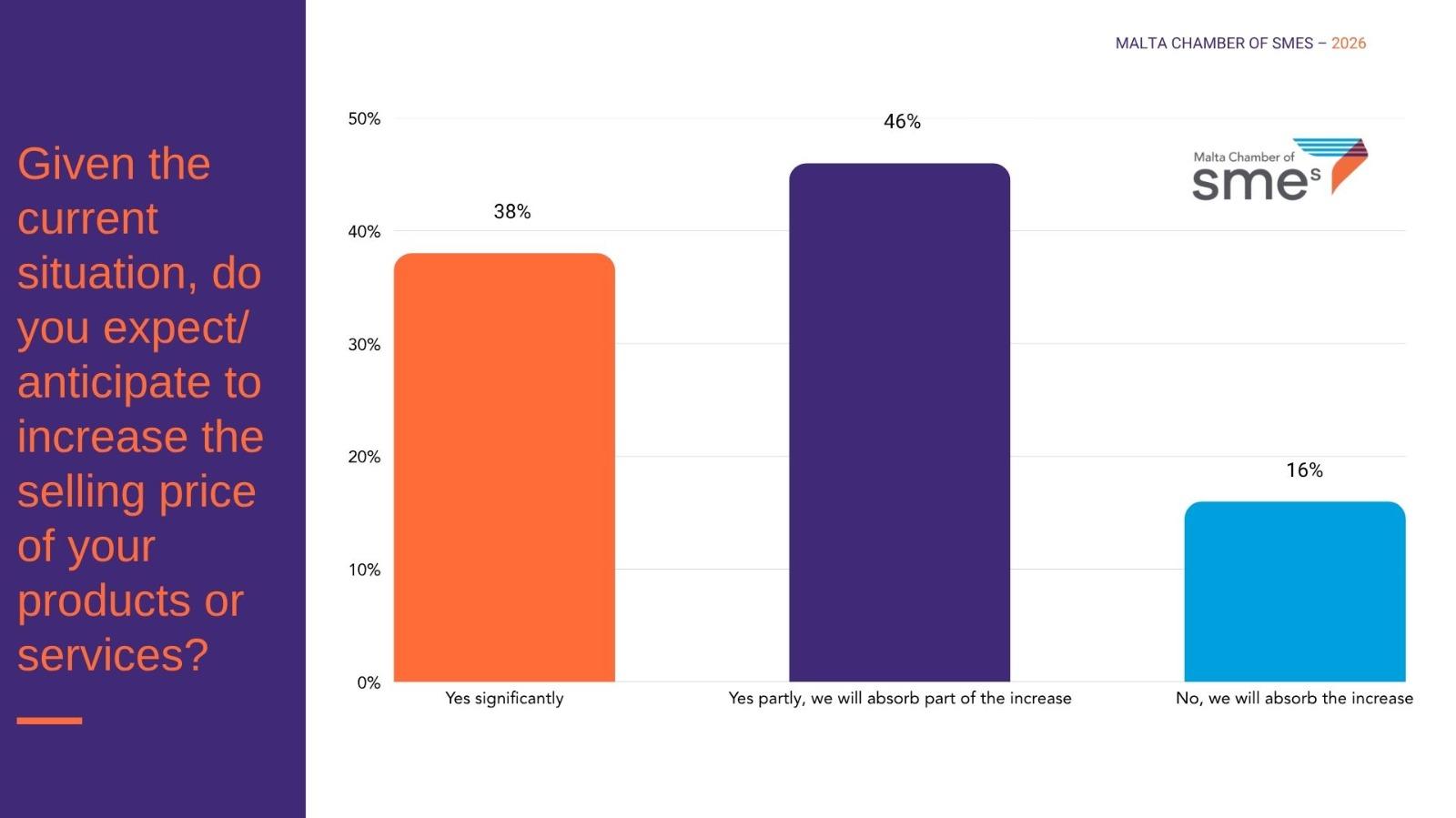
Only 16% of affected businesses are currently absorbing the extra costs themselves. The vast majority (84%) say prices will likely be increasing prices for consumers, while 46% said they are ready to partly increase prices and absorb the rest of the cost. The other 38% said they would be raising prices “significantly”.
Moreover, half of the surveyed businesses are already experiencing or anticipating disruptions to their deliveries due to the regional instability.
 Source: Malta Chamber of SMEs
The survey reached a wide cross-section of the economy. Most respondents were coming from the wholesale and distribution sector, followed by retail (clothing, jewellery and watches) and professional services.
The price hikes are mostly down to a logistical bottleneck caused by the crisis in the Middle East. To avoid the risk of missile and drone attacks, major shipping lines have been forced to abandon the Suez Canal – the shortest route from Asia to the Mediterranean.
Instead, vessels are being diverted around the southern tip of Africa, a detour that adds thousands of miles and roughly two weeks to every journey. This extra distance has sent fuel costs and insurance premiums through the roof, with those expenses now being passed down the line to Maltese importers and, ultimately, the consumer.
The trend confirms the war created, yet again, a bottleneck that is making it more expensive to get goods to Malta’s shores.