‘This is not a life’: mother wishes she could ask to end son’s suffering
As the country debates euthanasia, we speak to people with a direct interest in it
An anguished mother who would like to end her son’s suffering has proposed that loved ones be allowed to request assisted dying for a patient.
“It’s not easy, seeing a person you love in so much pain and knowing you can do nothing. The discussion on euthanasia is a good thing. It needs to be opened up to include cases like those of my son,” she said, asking not to be named due to the sensitivity of the topic.
The government last week unveiled proposals on the introduction of euthanasia for public consultation. Terminally ill patients with less than six months to live could be allowed to voluntarily end their lives following a strict process.
The government indicated it has deliberately avoided more liberal models seen internationally. Patients would not be allowed to opt for euthanasia ‒ to end their life “in dignity” ‒ unless they were fully conscious and aware of what they were doing.
A living will would allow patients to specify their preferences for future medical treatment in case they become unable to communicate their wishes. That means a person who did not leave a living will, after being rendered medically incapable of making a decision, would still have to endure years of pain.
While this is done to protect the life of the individual, the mother of the young man wishes she could just end his suffering.
Her son suffered a stroke in his late teens. He underwent an operation that involved removing part of the skull to relieve the pressure on his brain, but it left him severely brain damaged.
“Back then, we were clinging on to hope. We did not know what was to come. Looking back, I think doctors should have given us a clearer picture of what would follow. Knowing what I know now, I would not have agreed to the operation. I would have let him go.
“For these years, pain is all that I have seen in my son’s face. He cannot speak or express himself. But I see the pain. This is not a life,” she says.
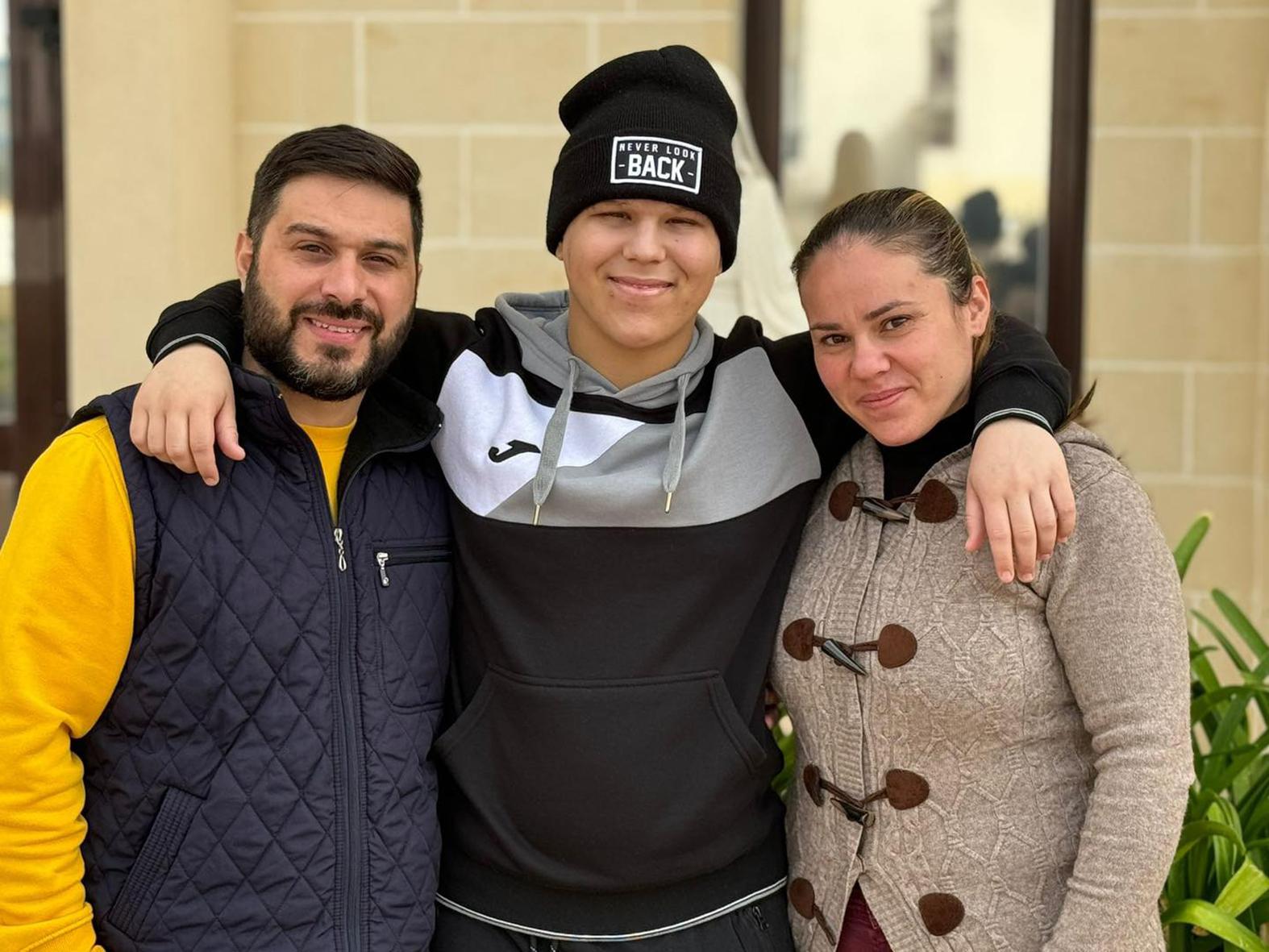 The late Francesco Spiteri with his parents. Photo: Facebook
Clinging to hope
Luke Spiteri’s 15-year-old son Francesco died last September almost a year after being diagnosed with cancer.
Luke explains how Francesco at first responded to treatment but, around August 2024, started regressing. “Doctors told us he would not make it to November. But hope is the last to die. You continue to hope – I did. Until, at the very end, I realised that I had to let go. In the last weeks, he was on morphine. Then he passed on September 17,” his father says.
With that experience, he believes the conversation on euthanasia is a very important one.
“I think it should be available for those people who are nearing the end of their life and are suffering,” he says, adding that he also agrees with the concept of the living will.
Should assisted dying be available for those who cannot make the decision but are suffering? “This is a double-edged sword,” he says, adding that the discussion is important.
Former PL deputy leader Daniel Micallef, who was on the technical committee that drafted the proposal, agreed with him. Micallef has spoken openly in favour of euthanasia after his own father lost his battle with a fatal illness.
“On a personal level, I firmly believe that no one should make this decision on behalf of someone else. It must remain a strictly voluntary choice, with each individual having the right to decide and also change his mind,” he said, adding that the very purpose of the public consultation was to bring forward all perspectives.
One perspective, that of the Medical Association of Malta, is that legalising euthanasia is premature because end-of-life care in Malta is not good enough. MAM said assisted voluntary euthanasia should not feel like the only option available due to inadequate symptom control or lack of support. The reforms, it maintained, “must be built on a foundation of readiness, not rushed to meet political timelines”.
Archbishop Charles Scicluna has said health professionals should never “dispense death”, and that death and dying should be accompanied by a culture of compassionate care.
On the other hand, James Buhagiar, chair of the Humanists Malta, called the proposal an important first step in the right direction. It should include end-of-life chaplain care, he added: a trained person who would provide spiritual and emotional support to patients, families, and care teams throughout the end-of-life journey irrespective of religious belief.
The Life Network Foundation said that while the government proposal was framed as a compassionate choice under strict conditions, “true care means standing by those who are suffering, ensuring they receive the dignity, comfort, and support they deserve in their final days. Palliative care remains the most humane and ethical approach to end-of-life treatment.”
But the introduction of euthanasia would also come with heavy legal considerations that go beyond the ongoing ethical debate.
Legal debates: What is dignity?
Daniel Bianchi, a lawyer and lecturer in health care law at the University of Malta’s Faculty of Laws, is planning to give full feedback to the public consultation later, but he said a quick look at the documents suggested the government was asking two broad questions:
First, should the main procedure being discussed in the consultation be allowed in Malta? If yes, to what extent, and what other possible options might there be?
Secondly, if it should be allowed, how should it be regulated, and what practical steps are needed to make it work?
He said whether the answer to the first question is “yes” or “no” might depend on how “dignity” is defined.
If it is decided the procedure should be allowed, then one would also need to figure out how to create rules adapted to Malta’s legal system, rather than just copying what other countries have done on the assumption it would work here, he explained.