Vanni Bonello’s fourth, fortieth and ninetieth
Giovanni Bonello's 4th volume from 'More Histories' series explores Maltese history, art and language
Toiling in Craft by Giovanni Bonello
Fondazzjoni Patrimonju Malti and Kite Publishing, Malta, 2026
Giovanni Bonello’s very popular series More Histories is proceeding smoothly with admirable regularity. It has had the great value of attracting many to experience the pleasure of peeping into microhistory and the recounting of anecdotes that may sometimes throw a light on the greater canvas of history.
This, the fourth volume of the series, dealing with arts, artists and the creative impulse, happens to be Giovanni Bonello’s 40th publication. It also comes just after he has celebrated his 90th birthday, a landmark few of us may reach. God has not only granted Bonello the gift of years but also the retention of a sharp, witty mind, ever fascinated with detail.
Add to that a most elegant style – one that sweetens a profound learnedness and a still youthful curiosity. For all that, we should all be grateful as we hold on to the hope that there are more fruitful harvests in this abundant autumn. There is no way of guessing what subject strikes Bonello’s fancy and leads him to carry out his broad research about it.
 Toiling in Craft by Giovanni Bonello
The first long paper deals with our first cousins, once removed, that is simian creatures in Maltese history, art and language. And what a treat it turns out to be! He first deals with the various local names of apes and monkeys and makes insightful remarks about their etymology.
Monkeys have earned an association with lust and lechery and often feature as chained creatures in religious paintings to depict the overcoming of those vile passions. Darwin’s statement of our proximity to them was an earth-shaking moment in human consciousness, similar to Galileo’s assertion that we are not the centre of the cosmos.
It drew quite a controversy in religious circles that unexpectedly even drew the local philanthropist and author Alf. Maria Galea into it. Bonello has discovered the connection and explains it. The marble sculptures that decorate the façade of the Order’s Castellania are attributed to a Neapolitan felon who sought refuge in Pinto’s Malta.
There is no way of guessing what subject strikes Bonello’s fancy
In one of the ironies of justice, he would be one of the first to experience its effect and pass through it to a gruesome end-of-life experience. Again, ironically, he could very well have been the innocent victim of a miscarriage of justice (not the last one of the blindfolded goddess). Antoine Favray has in recent years been substantially revalued as an artist, especially following the publication of Roger de Giorgio’s sumptuous publication.
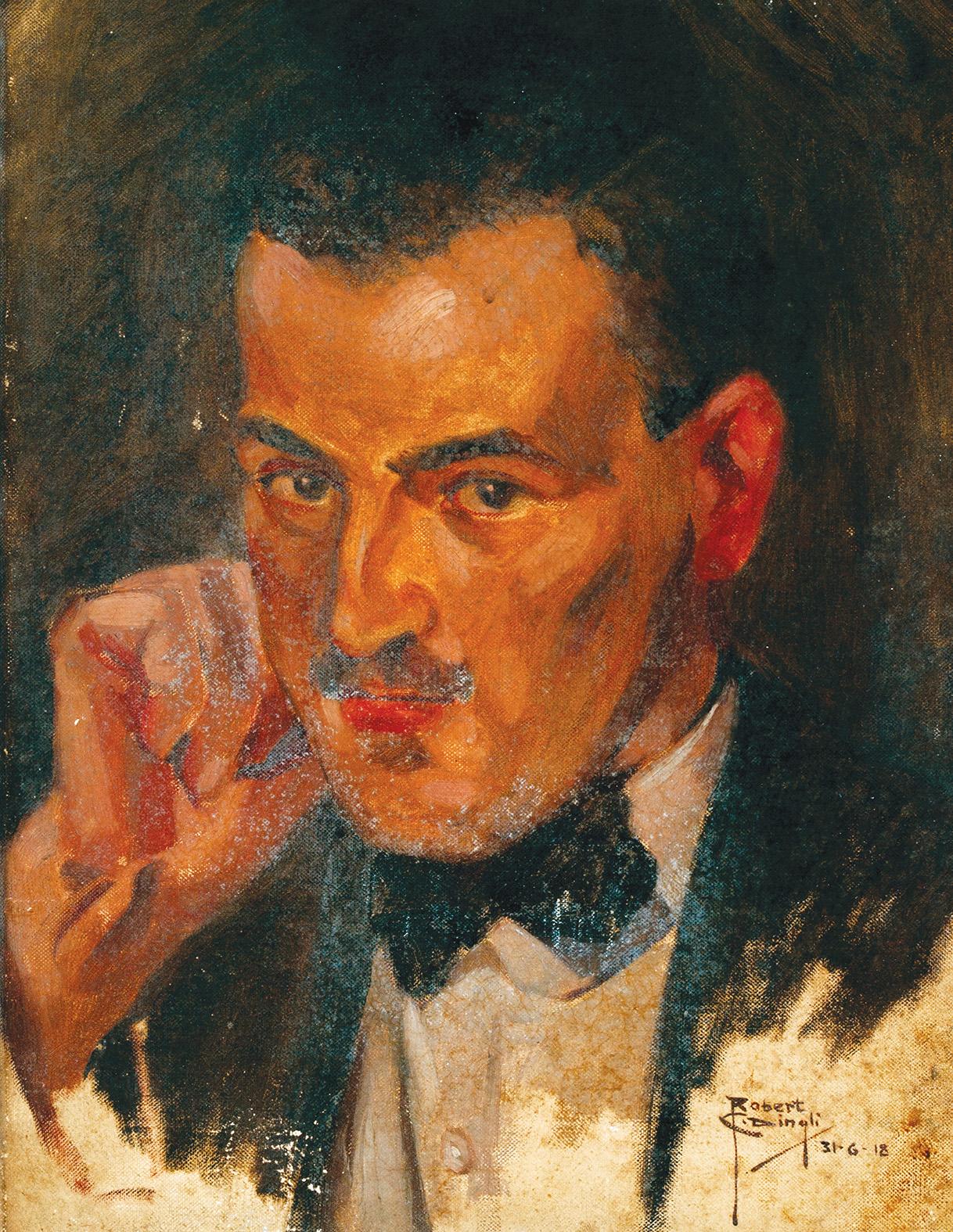 Dingli, Portrait of Vincenzo Bonello, p.96
Bonello provides his own assessment of the artist’s life in a paper that had featured in de Giorgio’s book. Favray has been described as one who delighted all and one with his wit, humour and talent. Did this bonhomie ever transgress the strict bounds of the Order? He would not have been the first brother to succumb to the lures of the flesh. Anyway, Bonello persuasively hints that Favray’s great The Birth of Stanislao to Caterina Lott could actually be the artistic celebration of the birth of his son.
A unique painting dated 1783 commemorates the visitation to Gozo of Count Van Reinach in his official position of visitor of the fortifications, a post that belonged by right to the German langue.
What is so striking about the picture are two apparently anachronistic details
The count was quite a naughty youth before he mellowed into his august role. What is so striking about the picture are two apparently anachronistic details: the reference to the matrice as a cathedral, and the depiction of the altarpiece that recalls the present one by Michele Busuttil but that was only put in place in 1791.
Another paper seeks to throw some light on the queries and doubts that surround the Melitensium Amor inscription the British brazenly set up on the Main Guard to rewrite historical events.
Bonello suggests the name of the author of the inscription and explains why a grammatical error in it may not, in fact, be so. The authors of the new errors that crept in after the restoration of 2009 are not known. Better for them. Richard Dadd is by far not a well-known name in the artistic world.
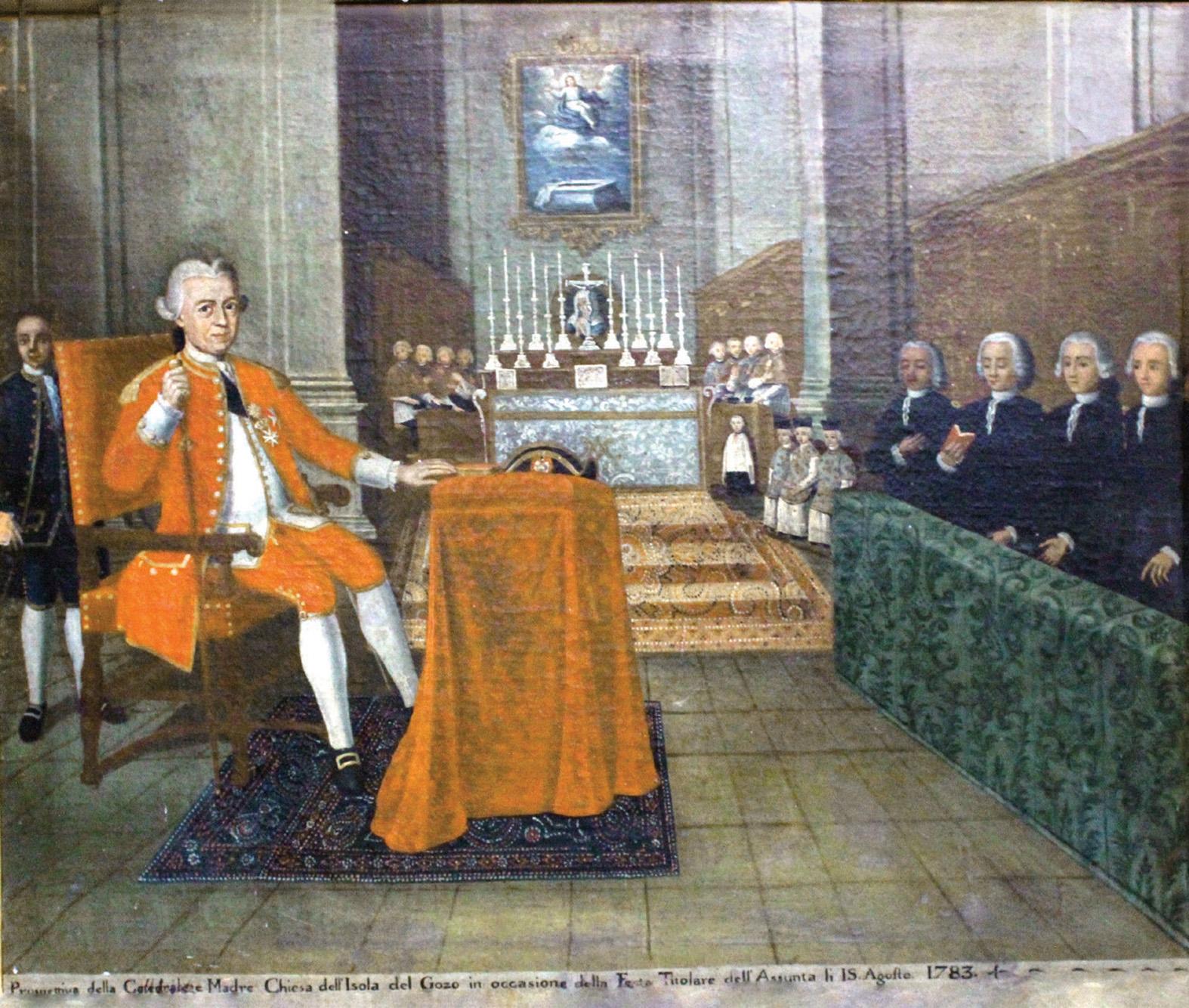 Count Reinach visiting the Gozo Matrice, p.61
As a 26-year-old he spent a few days at the Lazzaretto on his way home from Alexandria. His few days on Manoel Island were far from happy ones but he spent some time making preparatory sketches of Valletta. Bonello publishes four of these competent sketches, three of which have never been published before. But Dadd was a sick soul, then already tormented by paranoid schizophrenia which would a few months later lead him to commit an obnoxious crime. He spent the next 42 years of his life in institutions for the criminally insane. There he kept painting, works which in recent years have been highly revalued.
Two papers are closely connected with Vincenzo, the author’s father, who left behind him a huge cache of letters he received from important personages, most of them coming from the world of arts. Giovanni’s patient attempt to sort out this unique disorderly treasure trove keeps turning out most interesting information for art historians and the public alike.
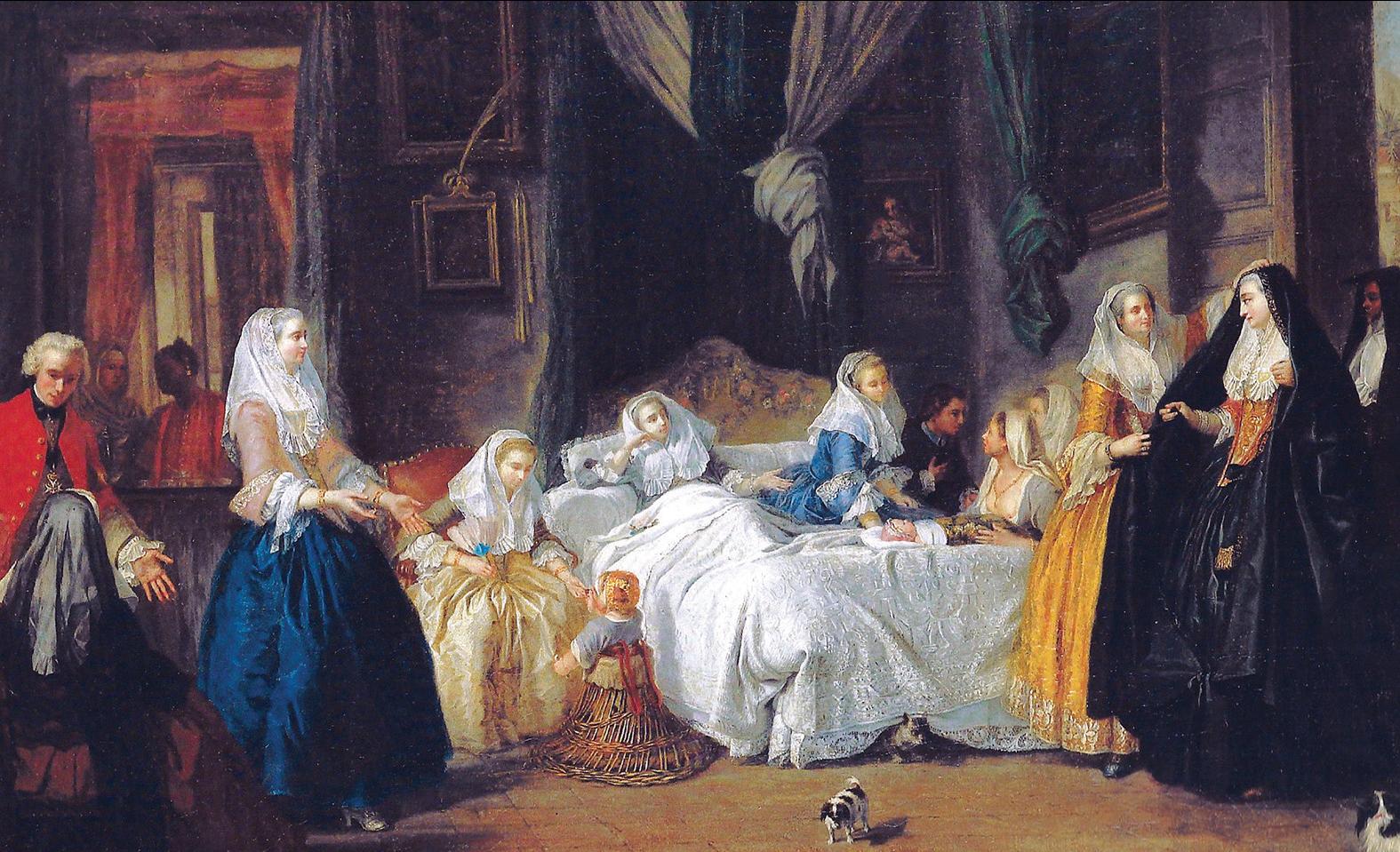 Antoine Favray, The Birth of Stanislao to Caterina Lott, p.36
In the longest paper in the book, the author delves into the correspondence Bonello père received from Robert Caruana Dingli and Giorgio Preca. With Caruana Dingli he had achieved a very close artistic friendship. The letters coming from London, sometimes intimate in nature, discuss aspects of aesthetics, technique, financial difficulties, as well as his failed attempt to sell his ‘Rembrandt’.
Even more illuminating of the artist’s character are the letters he wrote during his Gozo stay.The six letters by the student Giorgio Preca in Rome throw light on the artistic milieu in the 1930s.
Haber has the ability of transmuting humble clay to artistic gold
The other paper recounts that Willie Apap was quite a regular visitor to the Bonello household after having been acquitted of most unfair accusation in the house of law. He found the Bonello study an ideal place to paint his portraits, which he did often to the curious attention of the young Giovanni. Jack Whitehouse is a Malta war artist whom Bonello has successfully drawn out of general forgetfulness.
Posted in Malta as a sergeant quartermaster with the Ardwicks, he found time to sketch several scenes of the experiences of his fellow servicemen and the locals during that most frightening of times. No great art admittedly, but fairly competent productions with a distinct charm of their own, and yet another tessera in the pictorial account of the war.
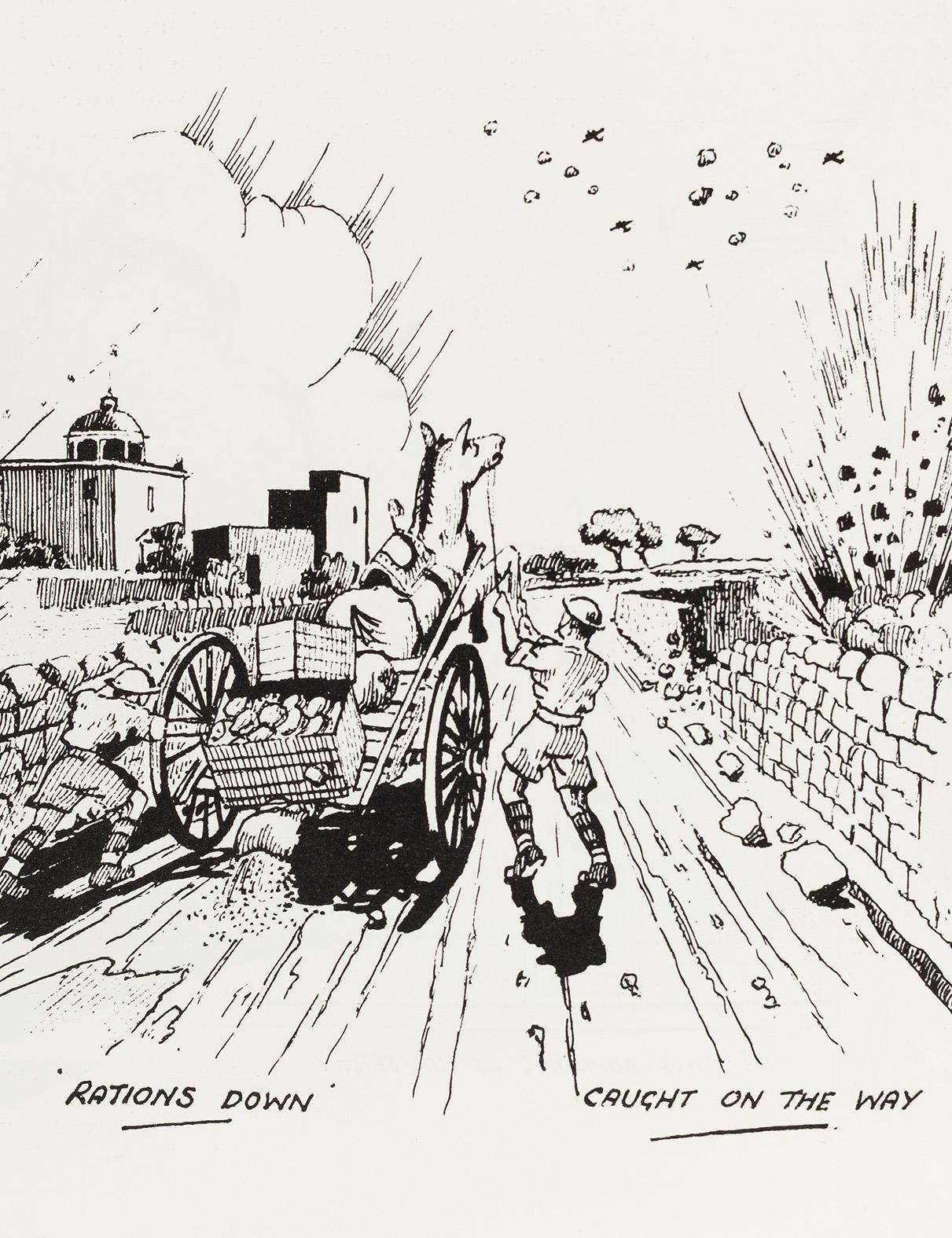 Jack Whitehouse, Rations down. Caught on the Way, p.168
Paul Haber is one of the foremost of the good number of ceramists who have achieved fame even beyond our shores. The art is a fairly recent one locally, only having been introduced to the island 99 years ago thanks to the vision of Vincenzo Bonello. Haber has the ability of transmuting humble clay to artistic gold.
As Bonello notes, his work is the triumph of mind over matter. Finally, the story of two firsts. Francesco Galea, with his studio in St Mark Street, emerges as the very first local practitioner of the photographic art, while another section recounts some of the bureaucratic problems itinerant photographers had to face until their eventual total disappearance from our square and streets.
The other paper of ‘firsts’ deals with local filmmakers. Lorenzo Cassar was the local pioneer who was already making films locally a few years after the first performance in Paris. Another pioneer filmmaker was Alfred Vella Gera, whose film Karnival ta’ Malta proved a huge success and even contributed to the unmaking of an errant husband a spat between two jealous women.
Giovanni Bonello’s Histories make Oliver Twists out of all of us, as, cap in hand, we queue up to ask the kindly dispenser, “Please, sir, can we have some more?”