Watch: St John's Co-Cathedral museum project enters final phase
Works will not be completed by end of 2025 as originally projected
A total of 2,700 local stones, the heaviest weighing 350 kilograms, have been individually designed, cut, and placed as part of the restoration of the façade of Valletta's St John’s Co-Cathedral modernised museum.
The façade, located on Merchant Street, will serve as the entryway into the museum, which will showcase artefacts and collections from one of Malta’s most historically important monuments - the capital city’s St John’s Co-Cathedral.
The massive €13 million museum extension and rehabilitation project was originally planned for completion in 2018. However, following delays, the deadline was revised to the end of 2025.
Even that target will not be met, as the tender for the final phase – finishes and services – has only just been issued and is expected to last about two months before work can begin.
On Tuesday, Culture Minister Owen Bonnici and Archbishop Charles J. Scicluna were given a tour of the ongoing works. They were accompanied by representatives from the St John’s Co-Cathedral Foundation, as well as contractors involved in the project: AX Construction and the architecture firms Edward Mintoff and AP.
They began by viewing the façade at the museum entrance on Merchant Street. The 1960s façade previously housed a row of shops within its arches.
These arches now form the base of a new, modern first-floor construction that will house the Tapestry Chamber, where the 29 Flemish tapestries will be displayed. The set of tapestries was a gift made by the Aragonese Grand Master Ramon Perellos y Roccaful to the church upon his election in 1697.
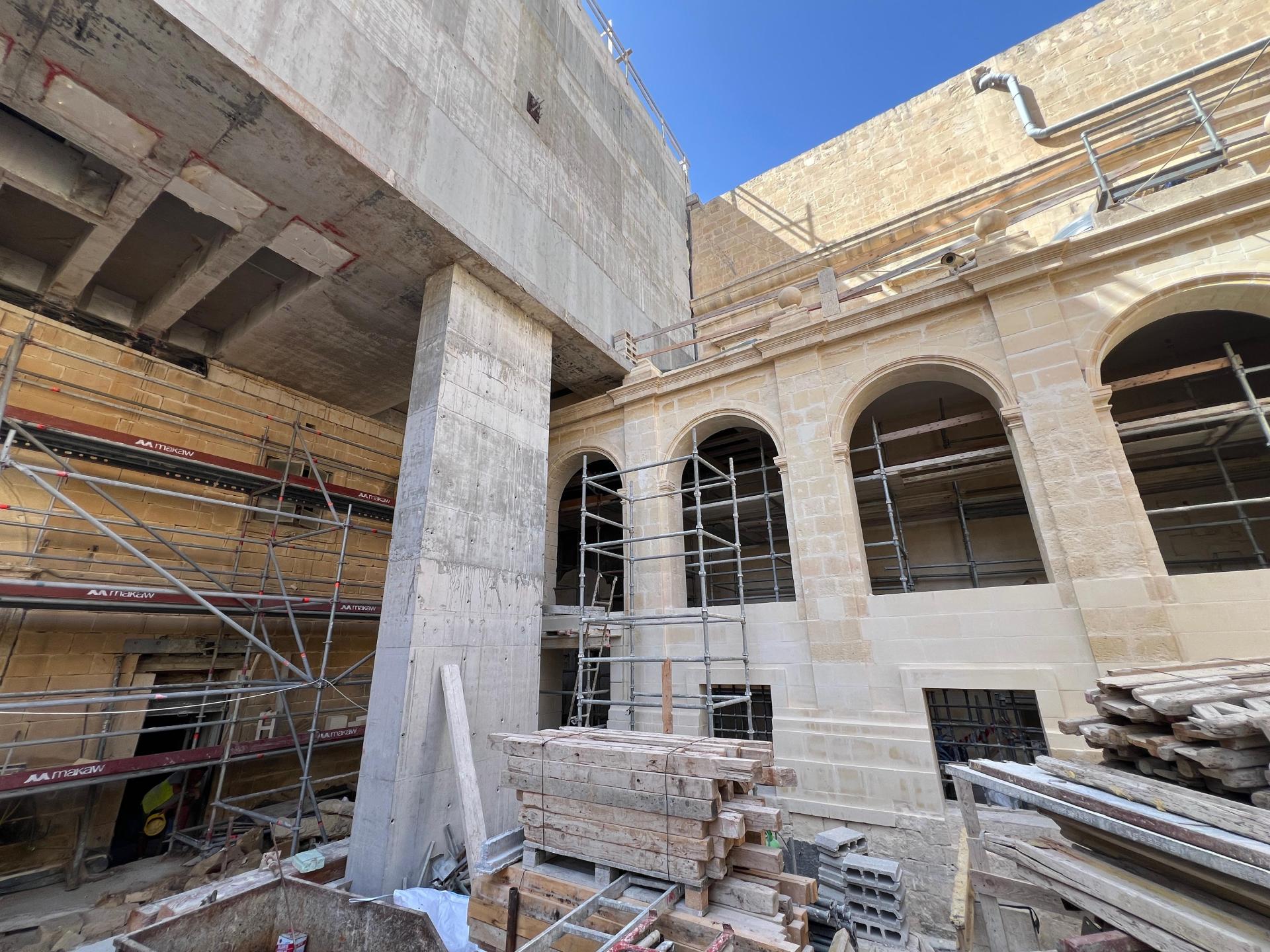 Work ongoing on the arches which will form a base of the new, modern first-floor construction that will house the Tapestry Chamber. Photo: Chris Sant Fournier
The modern addition is lined with the 2,700 stones, designed to respect and blend in with the surrounding architecture.
Once through the museum gates, visitors will enter the lobby, which was formerly a courtyard. To the left, they will be able to view the sacred vestments.
To the right of the courtyard, visitors will be led to a large spiral staircase that ascends to a mezzanine level displaying the Choral Books – large musical manuscripts from the early period of the Knights’ stay in Malta.
There are three sets, all gifts from different Grand Masters.The same staircase will also lead to the Tapestry Chamber on the first floor, and down to an underground corridor – previously disused – that will now house relics and the silver collection. The latter will be displayed in what was once the Bartolott Crypt, previously closed to the public.
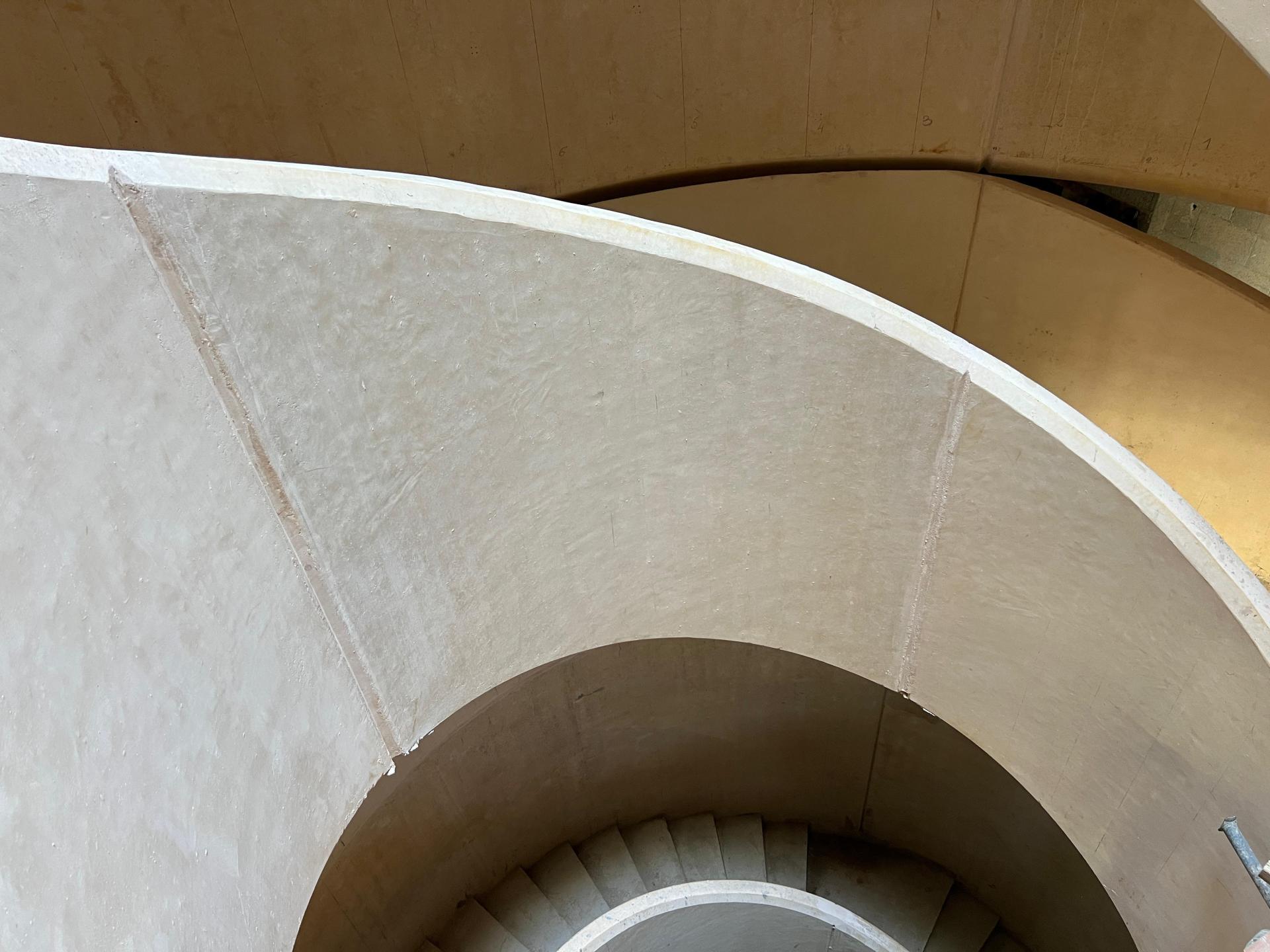 The large spiral staircase will lead guests to a floor displaying the Choral Books – large musical manuscripts from the early period of the Knights’ stay in Malta. Photo: Chris Sant Fournier
The crypt was also the storage site of the majestic Cappella Ardente. The Cappella Ardente is a large, ornate wooden funerary structure designed by Romano Carapecchia in 1726. It was intended to stand at the center of the cathedral during solemn requiems held for popes, Grand Masters of the Knights of St John, and other important public figures.
The plan is to display the chapel in the mezzanine near the Choral Books.
Above the crypt – though not accessible from it – is the Oratory and the Caravaggio Wing, which were not part of the tour. This hall will exhibit Caravaggio’s St Jerome Writing, along with information about the artist’s life and his stay in Malta.
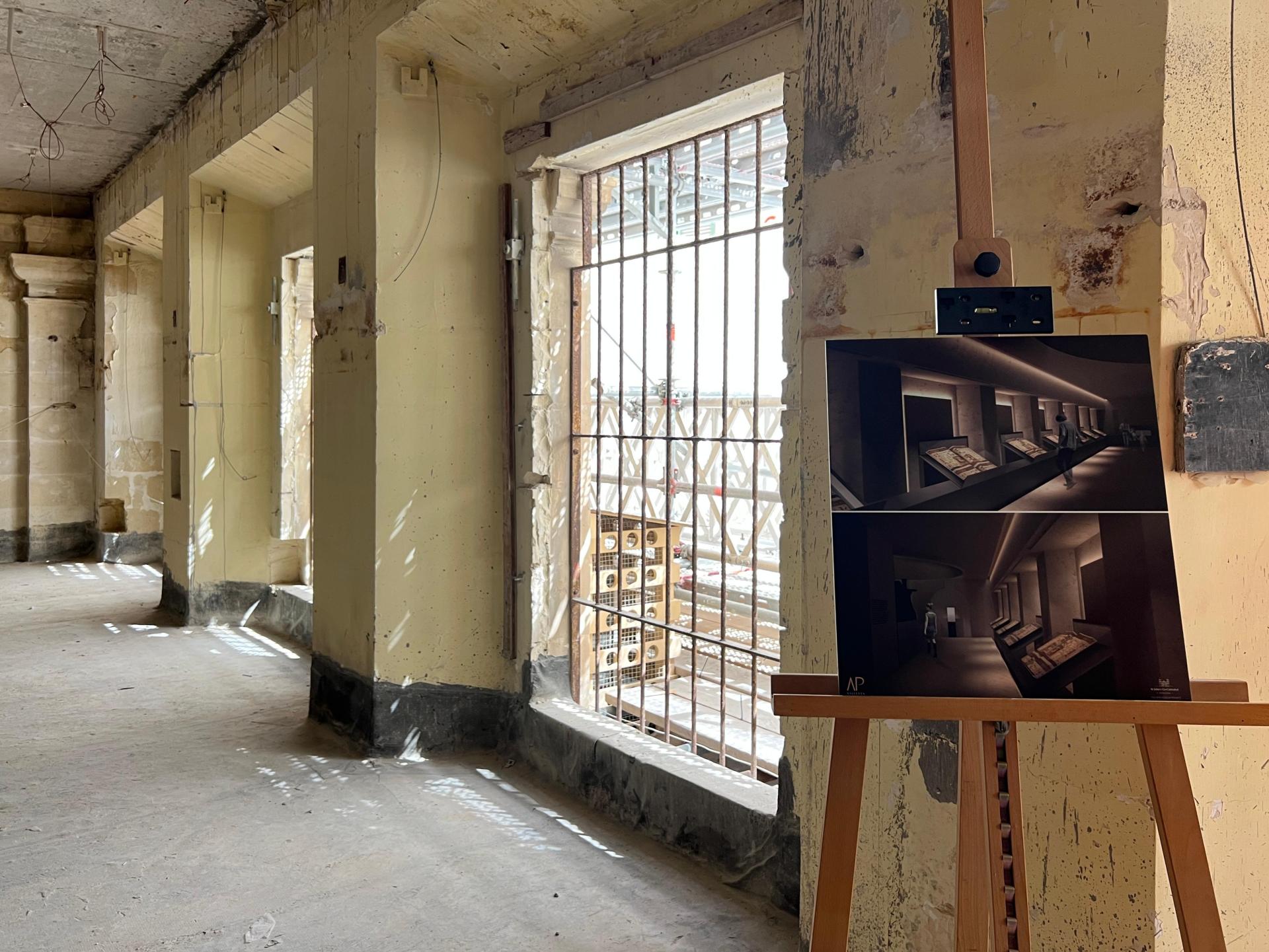 Renders on display of what the planned museum will look like. Photo: Chris Sant Fournier