'We have nowhere to go': Family of seven sleeping in van as temperatures soar
Refugee family, including sick child, have spent three nights sleeping in a van in Birżebbuġa
Updated 4.10pm with AWAS statement
Just days after returning to Malta from medical treatment that allowed their daughter to walk again, a Libyan refugee family of seven have found themselves sleeping in their van as temperatures soar.
They are trapped between expired paperwork and rents that they cannot afford.
The family, who have lived in Malta for the past nine years after being granted refugee status, say they have exhausted every option since returning from Tunisia on July 13.
Unable to afford the asking prices for rental accommodation and still waiting to renew documents that would allow the father to return to work, they have spent the past four nights sleeping in their vehicle while searching for somewhere safe to stay. Friends have been providing them with food and water.
"I am the father of a family and I can't do anything and this is a big problem," says Adel, breaking down in tears as he recounts the chain of events that left them homeless.
"My family and I are now homeless and living on the street," he said. His wife and their five children - a 12-year-old son, daughters aged 10 and nine, and five-year-old twins, a boy and a girl - spend their days sheltering from the heat under a tree on the Birżebbuġa seafront, which has become their temporary home.
They are struggling in the heat as the Met Office issues a red weather warning, with temperatures forecast to hit 40°C.
Their greatest concern is their nine-year-old daughter, who was born with complex congenital conditions and requires a clean, hygienic environment and daily medical care to reduce the risk of infection.
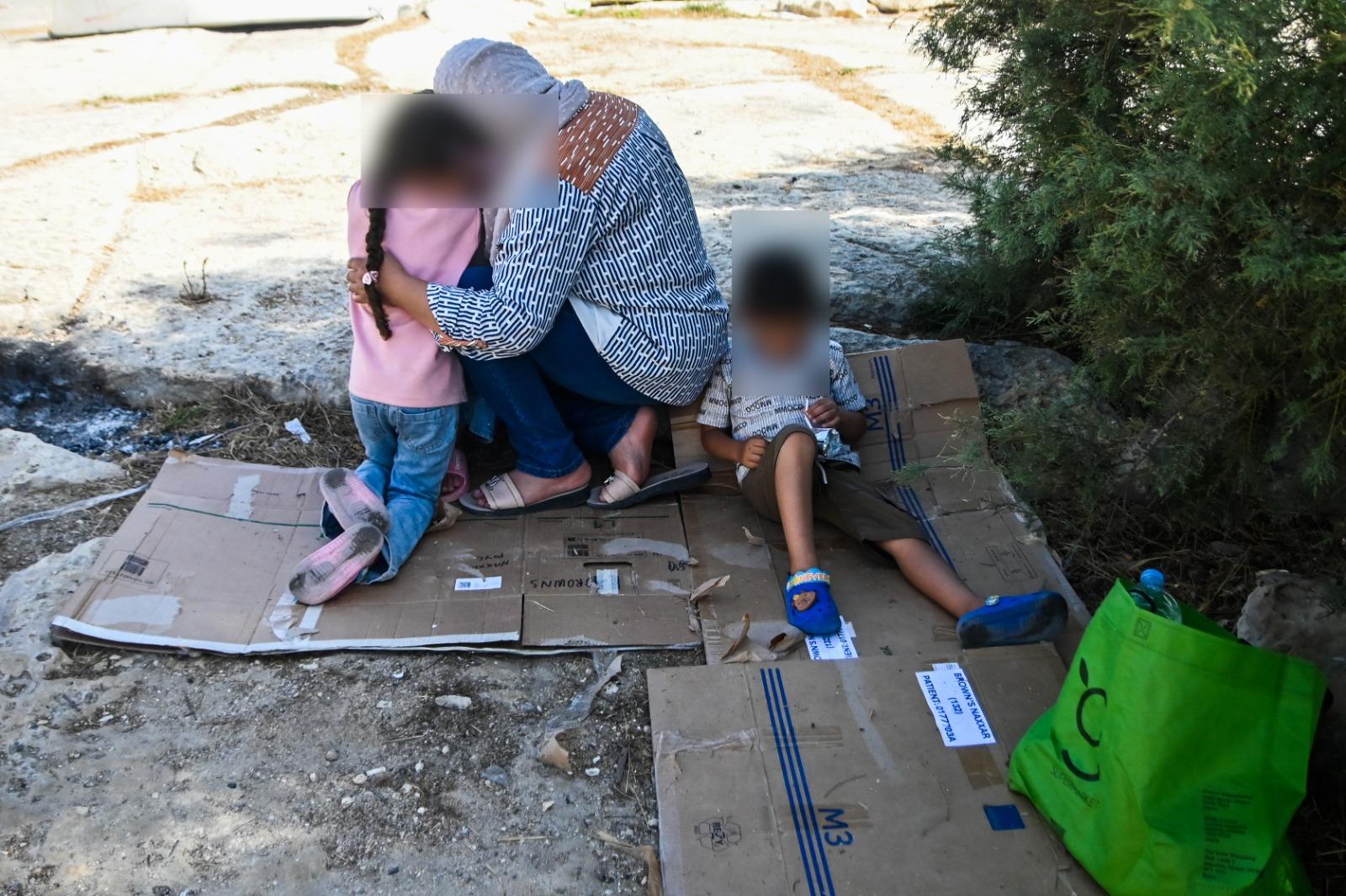 The family have been spending their days in the shade of a tree on the beach. Photo: Jonathan Borg
As Adel speaks, his wife comforts whichever child comes to her for a hug. When she notices her husband struggling to hold back tears, she quietly walks over to embrace him.
The nine-year-old girl says: "I'm sick and we're very tired sleeping in the car. The girls are sleeping in the car and the boys sleep down next to the car. Outside, the bathrooms are very dirty and they cannot be used, as I am very sick and if there is a virus I'd need to go to the hospital. We need lots of money and we don't even have money, and we need someone to help us to find a house and money."
As the girl talks, her older sister bursts into tears. Her mother turns her affection towards her as the older brother adds: "It's not been the best time. People look at us bad... I’d like to ask people if they can help the people like us. The people who don't have houses."
Having a home would not only provide shelter and a hygienic environment for their daughter, but would also give the family something they urgently need: a fixed address.
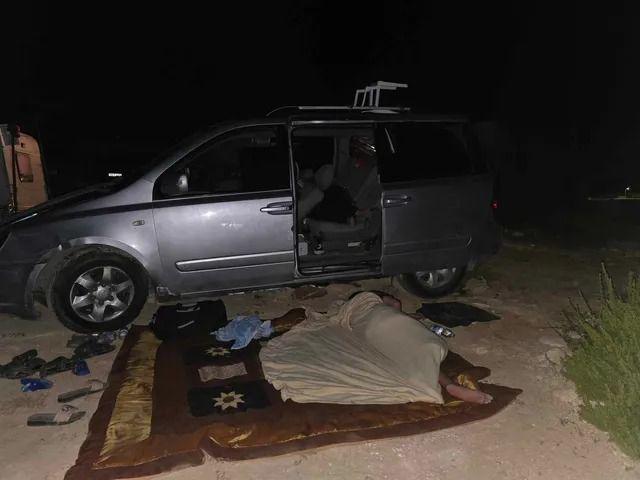 The family sleeping outside as they cannot afford the rent. Photo: Family handout
Without one, they cannot renew their documentation. Without renewed documents, Adel cannot work or regain access to government support, including children's allowance and the medication their daughter needs.
The family’s story
The family's connection with Malta began unexpectedly nine years ago. Originally from Libya, they were travelling from Tunisia to Jordan when, about 30 minutes into the flight, their daughter suffered a medical emergency. The aircraft diverted to Malta, where she received treatment.
She was born with severe congenital conditions, including kidney disease, club feet and she now has stoma — an opening in her abdomen that allows her to pass stool — which requires daily medical care and a clean environment to prevent infection.
The family settled in Malta after being granted refugee status. Adel found work in various jobs, including as a diver and a shopkeeper. They rented an apartment, received government support and enrolled their children in school.
Over the years, their daughter underwent around 40 operations in Malta for a range of medical conditions affecting her kidneys and bones. Four months ago, however, her club feet deteriorated to the point where she could no longer walk.
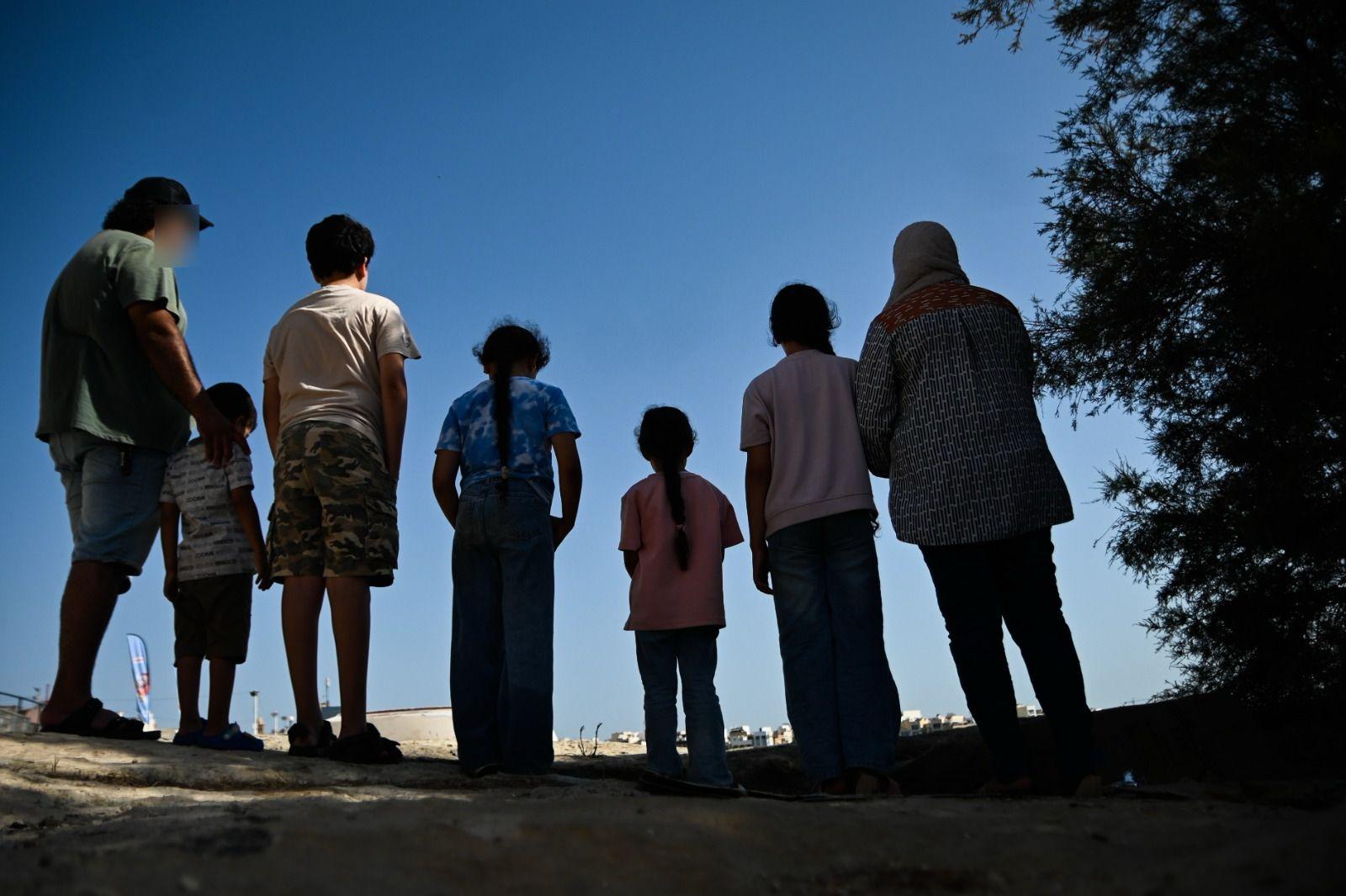 The family, pictured together as they face another night without a roof over their heads. Photo: Jonathan Borg
Adel says they were given appointments at Mater Dei Hospital about two months away.
"I want her to live a normal life. I had some money so we went to a rehabilitation clinic in Ariana, Tunisia," he says. After 15 days of treatment, she was walking again. They had hoped to continue the rehabilitation, but mounting living costs in Tunisia forced them to return.
By then, they realised their Maltese identity cards had expired. They went to the Maltese embassy in Tunis, where they were issued temporary permits allowing them to return to Malta.
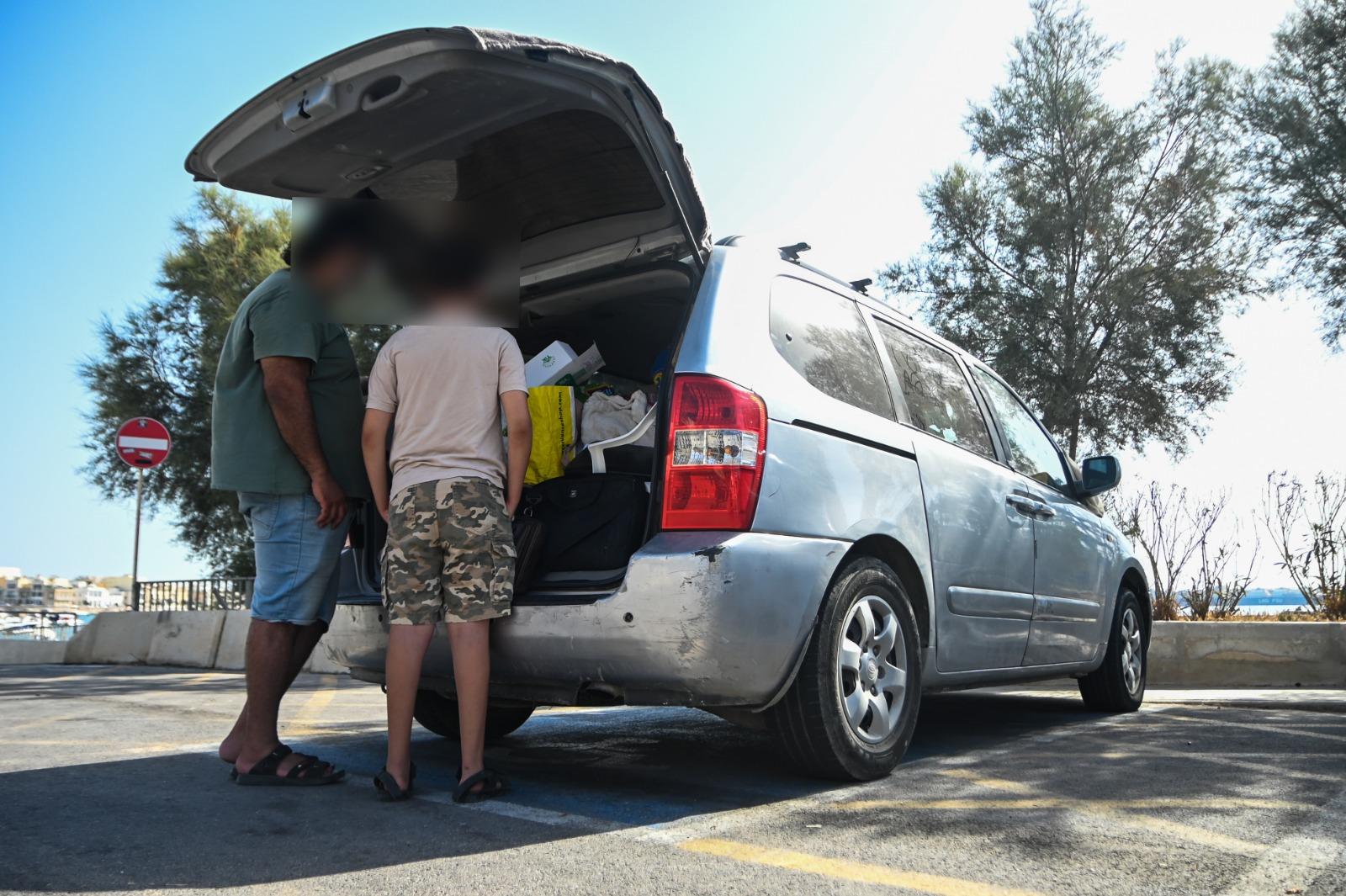 Father and son look into the boot of the van - their home - where they keep all their belongings including medication for a sick child. Photo: Jonathan Borg
The family managed to reach Pozzallo, but after running out of money they spent three days sleeping on the streets until a friend bought them ferry tickets to Malta. They returned on the evening of July 13.
With nowhere to stay — having already moved out of their rented home — they returned to their van.
Over the following days, they searched for somewhere to rent, but every option was beyond their means. "The monthly rent for such a home is usually between €2,000 and €2,400, or even more. Even if I worked from morning until late at night, it would be extremely difficult to cover these housing costs while also supporting my family," Adel says.
The family were willing to live in a single room temporarily, but one prospective landlord told them this would not be permitted.
They also approached shelters and social services, but were told there was no space available. Adel says he contacted several government ministers seeking help.
The family were offered accommodation by the Agency for the Welfare of Asylum Seekers (AWAS) but, while grateful, declined because they believed it was not suitable for their daughter's medical needs.
"They offered us a metal container in Ħal Far. In this temperature it is unbearable. We honestly believe that, despite how difficult it is, living in our car by the seaside is safer for our family, especially for our daughter, than staying in the accommodation at Ħal Far. Our daughter is not exposed to shared bathrooms, shared kitchens, or close contact with many other people, which reduces the risk of infections that could seriously affect her health," he says, adding that because of her condition she cannot use a normal shared toilet.
The family have therefore remained in their van.
In a statement, AWAS said the case does not fall within the agency's legal remit.
"Nonetheless, accommodation has been offered to them based on exceptional humanitarian basis, particularly in view of the medical condition of the family's daughter. They refused," AWAS told Times of Malta.
"The conditions offered at our centres are far more comfortable than the car you are referring to. The offer to accommodate them still stands."
Trapped by bureaucracy
Adel cannot currently work because he does not have valid documents. The family have an appointment next Tuesday to renew their refugee documents, after which they can apply for new identity cards.
But first they need a fixed address. "We are trapped. I need an address to be able to apply and without the ID card I cannot work and do anything," he says.
Adding to their difficulties, while in Tunisia his vehicle registration expired. To enable him to return to Malta, he completed a temporary legal procedure in Tunisia and replaced the original licence plates with temporary foreign plates.
"I even considered selling my car to help support my family. However, because the vehicle has many mechanical problems, its value is very low and it would not sell for more than €500. In addition, the annual licensing and registration costs are around €800, which is one of the main reasons why its market value is so low."
The Malta Islamic Welfare Fund is accepting donations on behalf of the family.