The whitest elephant of all
We need to develop a plan that over a period of three to five years reduces both the resident population and the number of cars by one third, says John Vassallo
Both main political parties, along with several developers eager to dispose of millions of tons of rock by reclaiming land for yet more high-rise construction, have been competing over who can offer the ‘best’ mass transport solution for this beautiful country and, in doing so, risk destroying it.
Maltese people love their cars for the independence they provide, whether it’s escaping crowded areas for some quiet time alone or with family or reaching any nook and cranny of the country for a picnic, a swim, or a leisurely Sunday drive.
Despite the time lost, most Maltese rarely use buses today and are likely to avoid underground transport that takes them from somewhere far from home only to drop them off equally far from their intended destination. It would also add billions to the public debt, primarily to serve foreign TCN workers and tourists once again.
I do not believe there is any viable way to meaningfully reduce travel times between points A and B in Malta and Gozo through changes to road infrastructure or by introducing a metro, elevated rail, light monorail or any similar large-scale transport system.
Journeys that once took 20 minutes can now take up to an hour, and those that took 40 minutes can take as long as two hours. This situation is costly, environmentally damaging and increasingly frustrating, often contributing to heightened tempers and road rage.
The only way to improve the situation is to reduce the population on these islands.
Nature has a way of correcting imbalances: densely packed populations such as bees and ants often divide, while lemmings rush off cliffs in social mass suicides. In Malta, what measures could realistically be taken to reduce the combined resident and temporary population, including tourists, to more sustainable levels so that pressure on roads, sewers, hospitals and health services, the electricity grid, water supply, waste collection and disposal and overall air quality and pollution is brought back to acceptable limits?
It is possible to develop a plan that, over a period of three to five years, reduces both the resident population and the number of cars by one third without reducing the real income of the Maltese electorate. After all, it is the Maltese who own, live in and are primarily responsible for this small island in the middle of the Mediterranean Sea.
Visitors, foreign TCN workers, inward investors and retired tax-avoidant residents may appreciate Malta, and may even care about its natural beauty and historic heritage, but they do not share the same deep-rooted attachment to this country as its citizens and their families do.
The country’s GDP, inflated as it is by excessive consumption and other low-productivity activities, appears strong and substantial. This also helps keep Malta’s public debt, now around €13 billion, below the 60% threshold that the EU considers risky, at least on paper.
Stop talking about mass transport reforms. We need to address underlying population growth- John Vassallo
However, a large share of economic activity is externally driven; roughly two-thirds of flows pass through Malta via foreign sources.
These funds are either repatriated by TCN workers or extracted as dividends sent abroad by foreign-owned companies, which benefit from generous tax rebates embedded in the country’s taxation system.
Only about one third of annual GDP is both generated and retained by the local Maltese population, which numbers roughly 300,000 out of a total resident population of around 570,000, alongside approximately 200,000 monthly arrivals of tourists and cruise ship passengers on short stays.
It is this locally generated portion of GDP that forms the main basis for government tax revenues, which, in turn, fund public administration and the maintenance of national infrastructure.
Trying to continue to service this overload by breaking up the subsurface of Malta or by reclaiming more land from the shallow bays in Mellieħa, Marsascala, Sliema or Valletta harbours would destroy the natural balance created by the forces of nature over millennia.
Human history is full of examples suggesting the limits of hubris when attempting to reshape nature. From the symbolic warnings of Ozymandias and the Tower of Babel to the real tragedies of Pompeii, Chernobyl and Fukushima, efforts to impose control on the natural world have often ended in disaster.
More recently, events such as COVID-19 and, now, concerns like Hantavirus, are sometimes viewed as reminders of nature’s capacity to disrupt human systems. Whether framed as warnings or as part of broader ecological dynamics, they underscore the fragility of complex societies in the face of natural forces.
We do not want our small island to suffer further destruction of its ever-shrinking ODZ areas, nor to see its uninhabited south-west and north-east regions, where endemic flora still survives, gradually disappear. We also do not want Valletta to be further overwhelmed by low-quality restaurants and an excess of outdoor eateries, their tables crowded with diners, which increasingly dirty our once-glorious capital and reduce it to a bazaar where it is difficult to walk.
Our roads are in a similar state of overload with road rage, exhaust fumes, traffic jams and delays. Every small accident creates gridlock for half the island. Each ambulance seems to cry for a miracle to bring the patient inside to hospital for treatment in time.
I would hate to need such transport on any day between 7am and 9.30am or from 3 to 7.30 each evening. I pray to God that if I ever need urgent ambulance transport let it take place in the night or early morning or late evening.
Please stop talking about mass transport reforms.
We need to address underlying population growth.
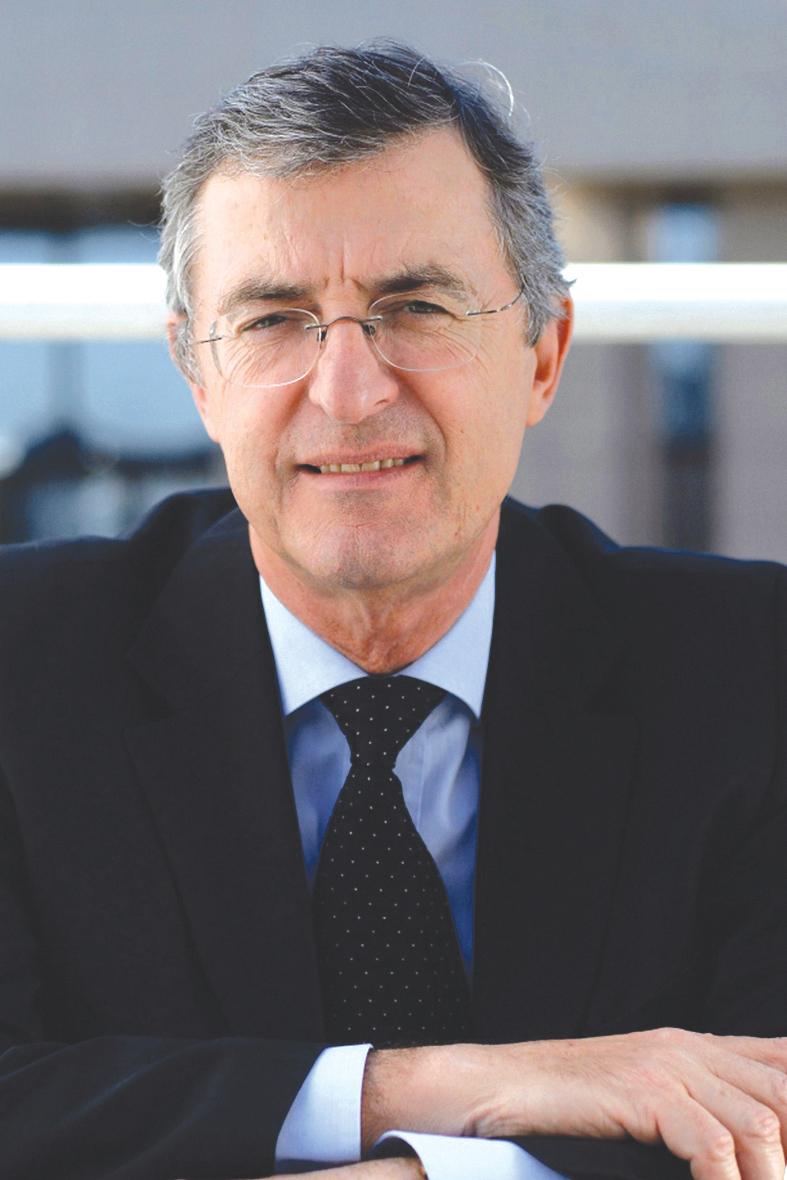
John Vassallo is a former ambassador to the EU.