Architects urge 10-year inspections after two balconies collapse in a week
BCA confirms construction site was not to blame for Qawra collapse
The Kamra tal-Periti has renewed its call for buildings to be inspected for structural issues every 10 years after two separate balconies collapsed last week.
The first collapse happened in Qawra in the early hours of Monday morning, just two hours after the owner of a popular bar on Imrejkba Street had called last orders and closed for the night.
The balcony of the third-floor apartment fell onto the second-floor apartment’s balcony, causing both to crash down onto the bar’s terrace below.
Two days later, a stone balcony in Żabbar collapsed onto the pavement below.
No one was injured in either incident.
The block where the Qawra collapse occurred is located next door to a construction site where 39 apartments and 33 garages are being developed.
Following the collapse, the Building and Construction Authority (BCA) issued a stop works notice for the site. However, the notice was reversed soon after and works were allowed to continue.
On Thursday, the BCA confirmed that after a professional assessment, it had deemed that work on the site was not responsible for the collapse of the balconies.
Lack of maintenance is a cultural issue
“The BCA would like to appeal to the public to maintain their properties,” the authority said.
KTP president Andre Pizzuto noted that photos he had seen of the collapsed balconies in Qawra showed improperly placed steel reinforcement, which had deteriorated due to rust from exposure. The quality of the materials used could also have been a factor, he added.
“I don’t see any connection between the neighbouring site and the incident,” he said.
Saying that these were common issues in similar buildings constructed between the 1960s and 1990s, Pizzuto insisted that owners were obliged to carry out regular maintenance on their buildings and ensure they were structurally sound.
While reluctant to draw conclusions, fellow architect Christopher Mintoff said he would not be surprised if the adjacent building site was not to blame, stating the way in which the balconies collapsed was “very typical”.
 The façade of the Cerviola Hotel in Marsascala after two balconies collapsed in 2023. Photo: Matthew Mirabelli
“Lack of maintenance is a cultural issue. If this is not addressed, I believe these incidents will keep happening, and more frequently,” he warned.
Pizzuto noted that these were not the first such collapses. In 2023, two balconies on the façade of the Cerviola Hotel in Marsascala collapsed, sending debris hurtling to the pavement below.
And in 2021, a balcony collapsed onto a busy street in Sliema after heavy rains lashed most of the island earlier in the day.
No one was injured in either incident.
“The chamber has been saying for a long time that buildings should be inspected every 10 years. This could consist of a simple visual inspection to make sure there are no issues. If problems are found, then a more thorough examination would be needed,” he said.
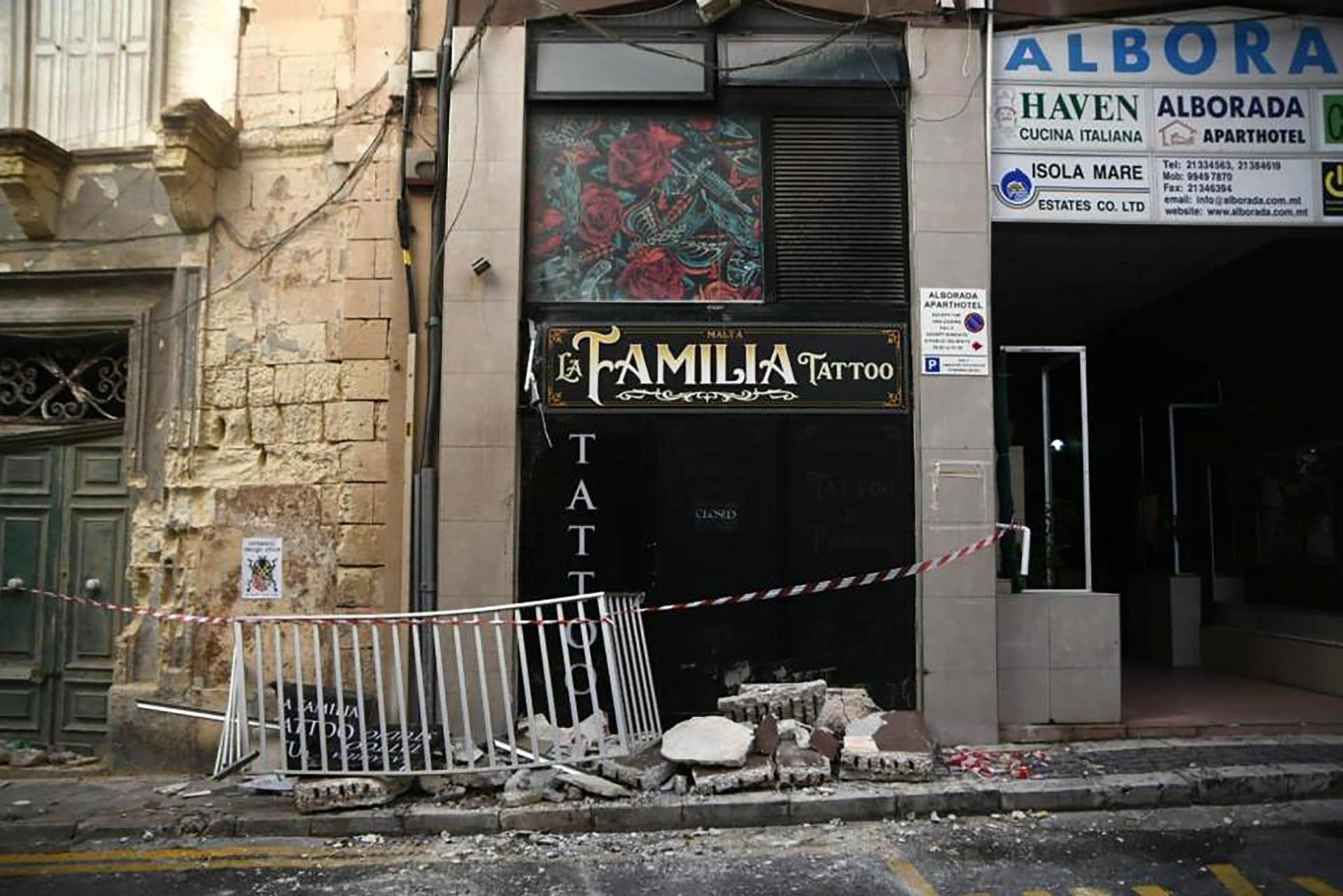 Debris in High Street, Sliema, after a balcony collapsed in 2021. Photo: Jonathan Borg
The architect said regular inspections were part of a wider overhaul of the regulatory processes and standards involved in the building and construction industry that the chamber had been working on.
Point 10 of these proposals calls for “post-occupancy checks and audits to be undertaken as pre-determined by the Building and Construction Authority to ensure the continued compliance of the structure with building regulations”.
Such checks, Pizzuto said, could also include compliance with fire safety regulations, as well as the electrical wiring and lifts of a property.
“How often these checks occur, and whether they are also carried out on existing buildings is something the government would have to decide on. Ultimately, it has to weigh the cost of carrying out such inspections against the risk of further collapses,” he said, adding that disused buildings and those located near the sea should be checked even more frequently.