Cannabinoid CC9 will be banned under new bill, cannabis watchdog says
The lab-made cannabinoid compound is linked to seven hospital cases
A new semi-synthetic cannabinoid linked to seven hospital cases over the last five days is to be banned from being sold in a bill currently being discussed in parliament, the Authority for the Responsible Use of Cannabis (ARUC) pledged.
Patients who turned up with vomitting, vision problems and liver damage showed doctors packets of edibles they had consumed containing the lab-made compound, called CC9.
The synthetic drug mimics the effects of cannabis.
Currently, CC9 is not mentioned as one of the banned synthetic cannabinoids in the law, exposing a loophole.
The Medical Association of Malta (MAM) called for "immediate government action" to remove them from the market. They were backed by NGO Releaf, which seeks the regularisation of natural cannabis.
Joey Reno Vella, CEO of ARUC, told Times of Malta that he is "worried" about this new substance, which he only heard about two days ago.
The University of Malta’s Forensic Analysis Laboratory had recently examined a number of products that had this cannabinoid and issued a public awareness alert this week saying that the new substance "demands rigorous attention".
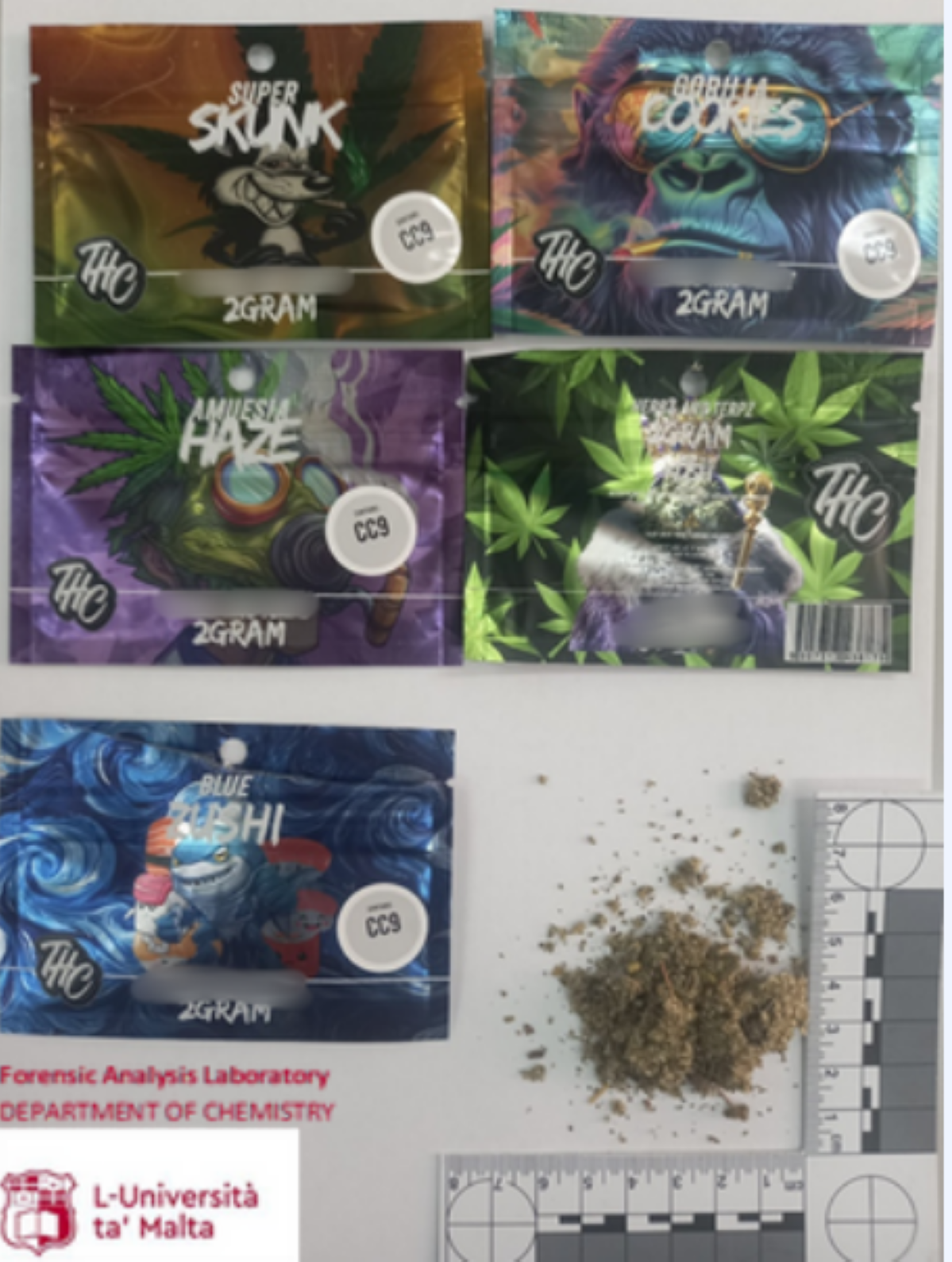 All the products analysed by the laboratory that included CC9. Photo: Forensic Analysis Laboratory
It was first reported in Italy in December 2024 linked to a number of acute poisonings after the substance was used in e-cigarettes and gummies.
A legal notice published last September banned the sale of 15 synthetic cannabinoids, including HHC.
Given that CC9 had not been discovered yet, it was not included in the list.
HHC, short for hexahydrocannabinol, is a semi-synthetic cannabidiol extracted from low-THC cannabis (hemp) and is a popular cannabis substitute.
The ban means that the importation and sale of any of these products could potentially be considered drug trafficking.
Vella said that he only heard about the new synthetic cannabinoid two days ago, after being notified about it by the emergency department.
“ARUC is only responsible for overseeing the cannabis associations that are registered with it, and not unlicensed shops that are selling cannabis,” Vella said.
However, a bill currently being discussed in parliament will expand the role of ARUC to enable it to enforce action against commercial shops advertising cannabis without being licensed associations.
The amendment bill, which is being piloted by junior minister Rebecca Buttigieg, seeks to strengthen enforcement and address legal ambiguities.
“ARUC would be a one-stop shop for the enforcement of cannabis,” said Buttigieg.
Vella added that once the bill goes to the committee stage, where the bill has the chance to be amended before a final vote, he will ensure that, through Buttigieg, the bill will recognise CC9 as a semi-synthetic cannabinoid and ban its sale.
The bill also states that if ARUC identifies a new synthetic or semi-synthetic compound, the responsible minister will have the authority to add it to the list of substances banned from sale.