Cave dig expands to learn more about hunter-gatherers
Humans inhabited Malta 1,000 years earlier than previously thought
The team of archaeologists, whose groundbreaking research showed that humans inhabited Malta 1,000 years earlier than previously thought, has expanded its search for more clues about the lives of the island’s hunter-gatherers.
The discovery at Latnija, in the limits of Mellieħa, led by Maltese professors Eleanor Scerri and Nicholas Vella, and published in leading international scientific journal Nature in April, revealed that Malta’s first people were hunter-gatherers from the Mesolithic Age and not farmers from the Neolithic Age as previously thought.
The findings also challenge the global scientific community’s belief that hunter-gatherers did not reach small and remote islands, and change the understanding of what these primitive communities were capable of.
Those initial findings – originating from animal bones, man-made tools and other remains that were meticulously analysed – came from a one-metre by one-metre trench that Scerri first dug in 2019.
Now, the team has started to dig into the sediment from the Mesolithic Age in an expanded five-metre by five-metre area in an attempt to learn more.
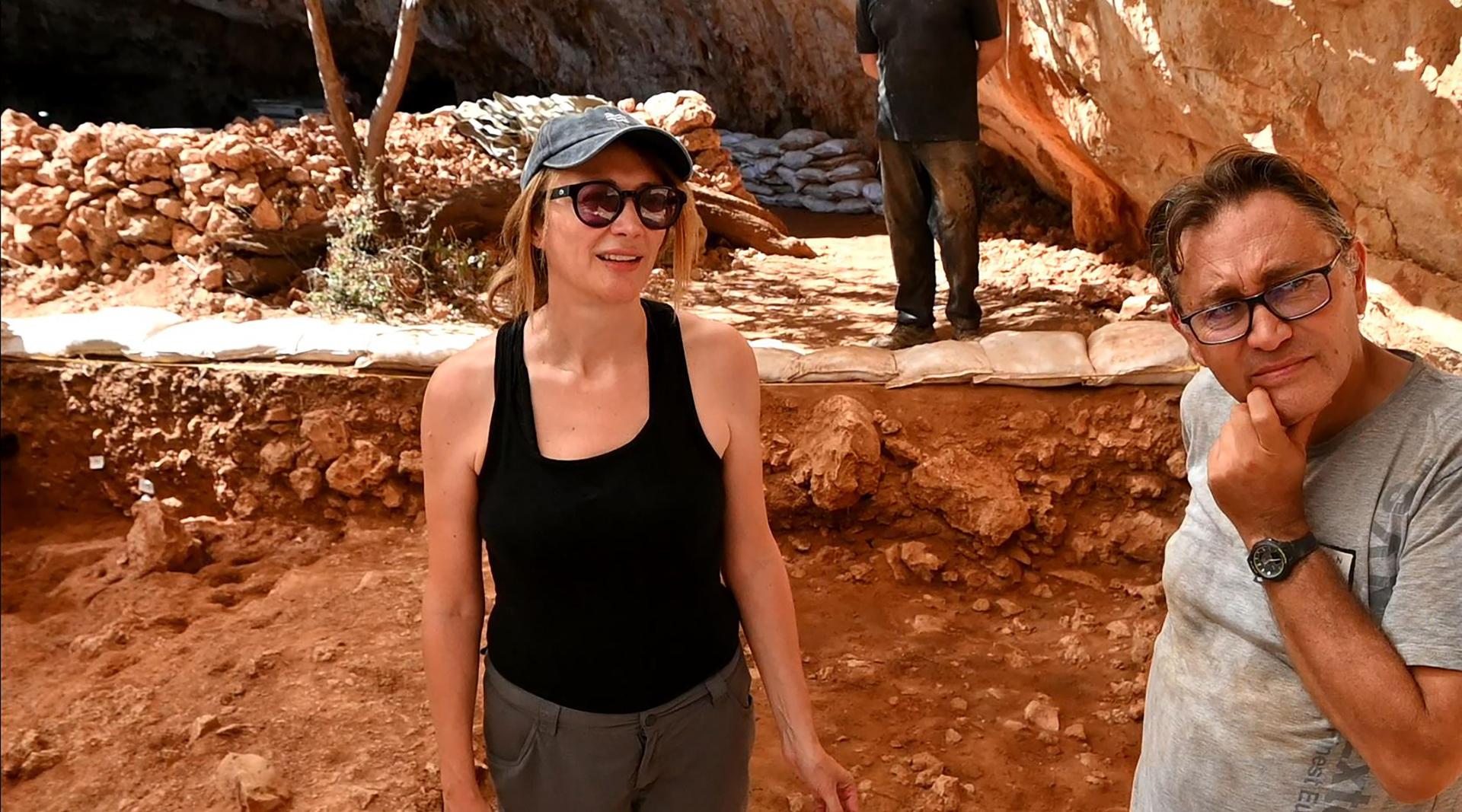 Professors Eleanor Scerri and Nicholas Vella, who are leading the excavation.
“With this excavation, we’re hoping to double what we already got. We’re trying to get more DNA from the sediment to better understand the spectrum of animals and plants that they exploited here,” Scerri said during a recent visit by Times of Malta to the dig site.
“Now that we’ve established that there is a Maltese Mesolithic, it’s about answering key questions about that period: how were these people able to survive here? How often did they come here in a year? Were they here all year round? Did they come and go from Sicily?”
Now that we’ve established that there is a Maltese Mesolithic, it’s about answering key questions about that period- Professor Eleanor Scerri
Scerri estimates that, at that time, Malta could not have supported a population of more than around 50 people, since the amount of food they could forage and hunt was limited.
“Because they didn’t have farming, to support that population continuity over 1,000 years, there would have been a certain degree of coming and going.”
Vella pointed out that, to travel between Malta and Sicily, ancient humans would have had to travel across a 100-kilometre stretch of sea.
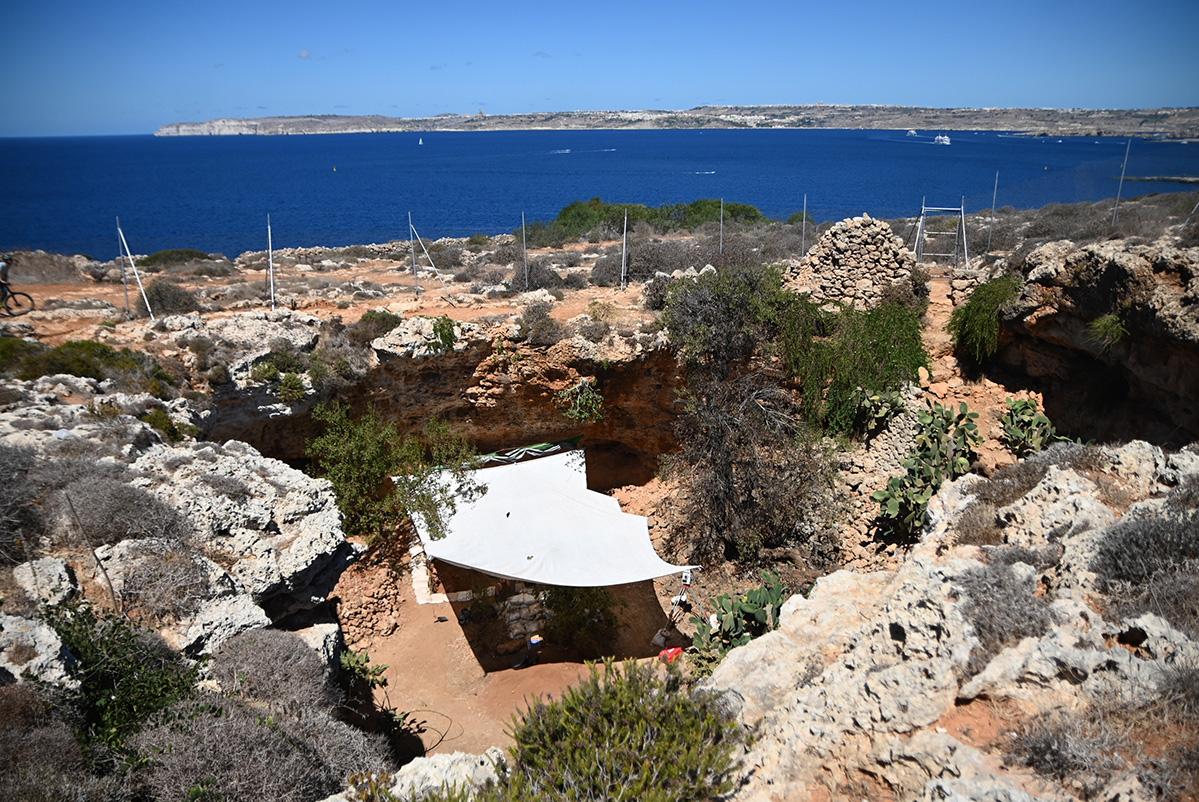 The archaeological site at Għar Tuta is in the limits of Mellieħa.
“That implies not just knowledge of seafaring, but the ability to come and go fairly easily. We would be lucky if we could find the remains of a dug-out canoe but that is very unlikely. But we are still finding a lot of evidence of interaction with the sea in the form of mollusc shells and fish bones.”
Scerri described the international reaction to the findings as “phenomenal”.
“We’ve had messages from colleagues working on other Mediterranean islands like the Balearics, where there doesn’t seem to be anything older than the Neolithic. They told us we inspired them to search for something older.”
Scerri said the process of excavating a cave was much harder than digging in a site such as a Roman villa.
“This is so ephemeral – if we didn’t have the trench here we never would have known Malta had a Mesolithic. It’s very easy to miss. We’ve been extraordinarily fortunate to have this almost miraculous preservation in this part of the cave and to work with this incredible team.”