Could road quality be leading to accidents? New policing unit plans to find out
The unit has dealt with one fatality and 20 accidents involving injuries
A newly formed Road Policing Unit will be able to determine how and whether the quality of the roads are contributing to traffic accidents.
During a media briefing on Friday, the unit demonstrated how it works.
A police car is equipped with a special device linked to a gyroscope on the roof. As the car drives over the road, the device measures the quality of the road surface.
During the demonstration, a car sped down the road towards a mock traffic accident and made a sudden stop. The device within the car printed out a piece of paper that included data that helps police understand if poor road conditions may have played a role in a crash.
They also need to take other factors into account, such as whether the road is wet or sloped.
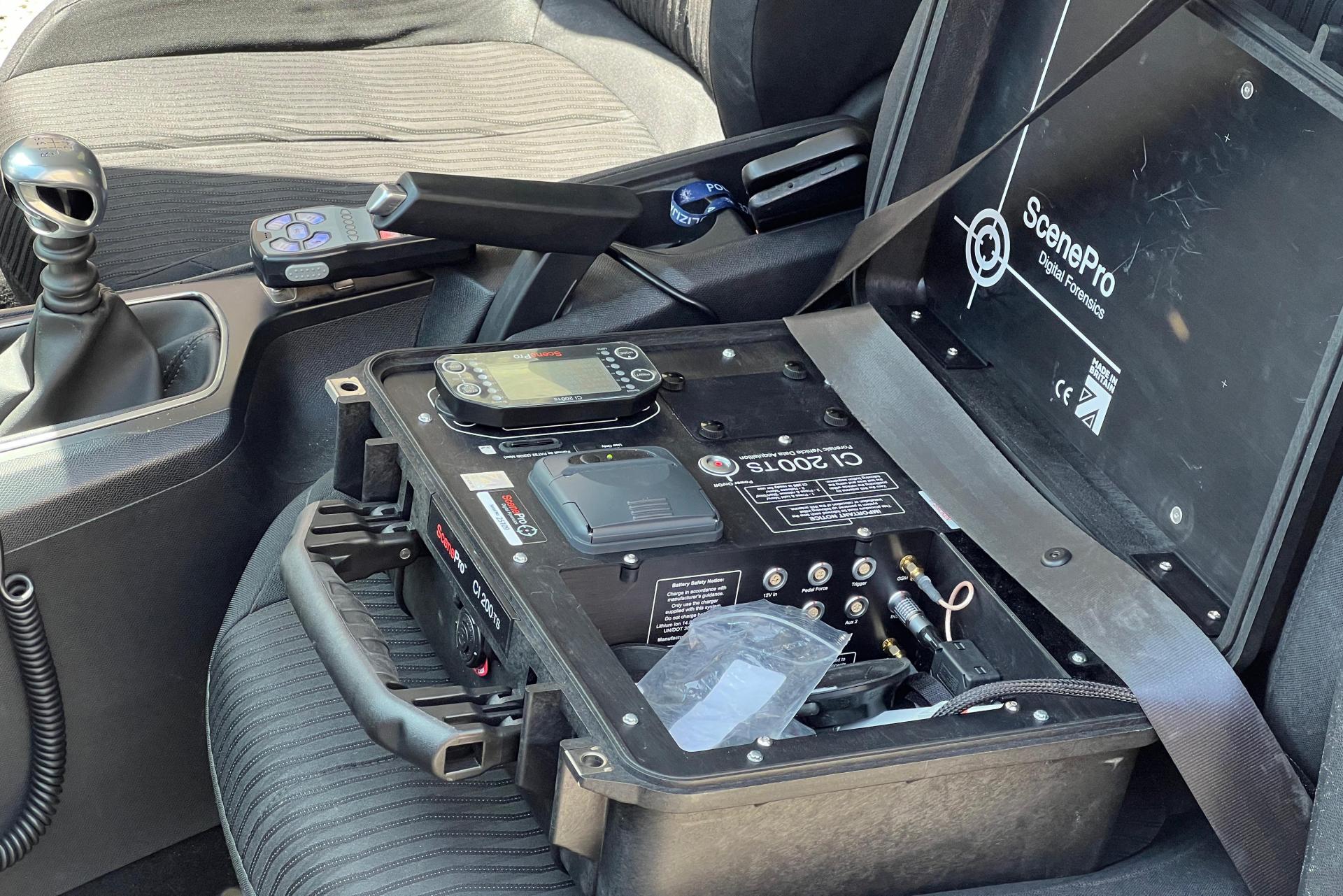 The new device police can use to gather data on the quality of the tarmac. Photo: Chris Sant Fournier
Traffic Section Inspector Nicholas Vella said that if the data shows the road is substandard, the information will be shared with the responsible authorities.
So far, Vella said that none of the investigations they carried out have shown that the road was not up to standard.
This new unit began operating on 27 May, and six hours later, they were called in to handle the death of Shaun Coppola, who died upon impact after he lost control of his motorcycle in Xemxija.
Since then, this unit has also been involved in 20 other cases where there were instances of bodily harm.
From now on, accidents involving injuries or fatalities will be handled by the Roads Policing Unit rather than the district police.
Speaking to the media, Police Commissioner Angelo Gafà explained that this unit was set up to centralise and specialise in traffic accident investigations.
"This specialised unit will also reduce the amount of time that a road is closed off," Gafà added.
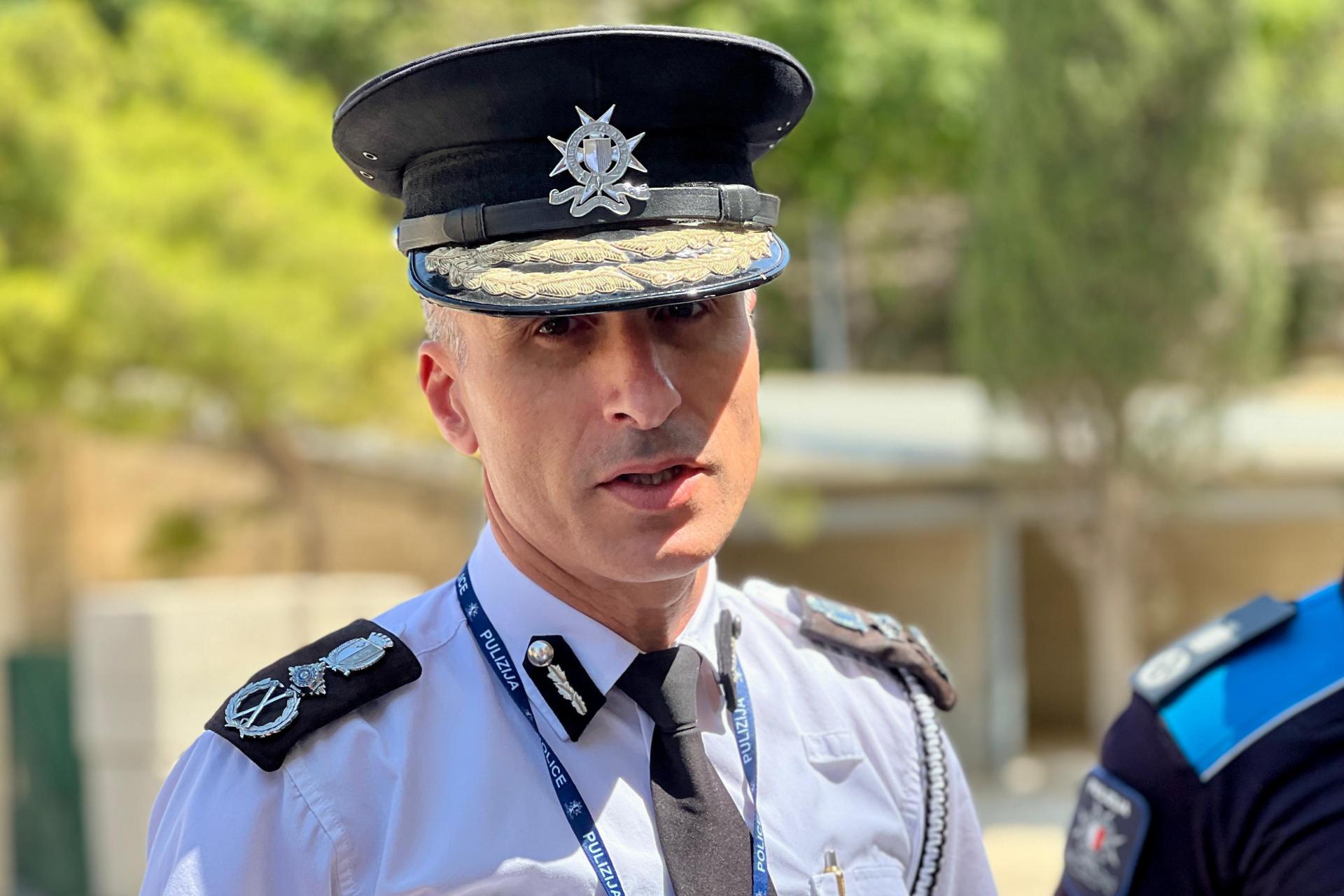 Police Commissioner Angelo Gafà. Photo: Chris Sant Fournier
The road policing unit works around the clock and is comprised of 17 people.
Gafà explained that all these people have received basic levels of training, whilst 12 of these individuals are undergoing advanced, accredited training to become forensic collision investigators.
Tied to this, Gafà said officers within the Victim Support Unit have received training on how to deliver bad news to relatives of a victim, and the best way to follow up with these relatives.
What does the unit do when there's an accident?
The unit set up a mock traffic accident between two cars and demonstrated how they would respond to the situation.
First, they cordoned off the area with cones and flashing lights placed on top of the cones. Then, they began taking pictures of the accident while preserving it as much as possible.
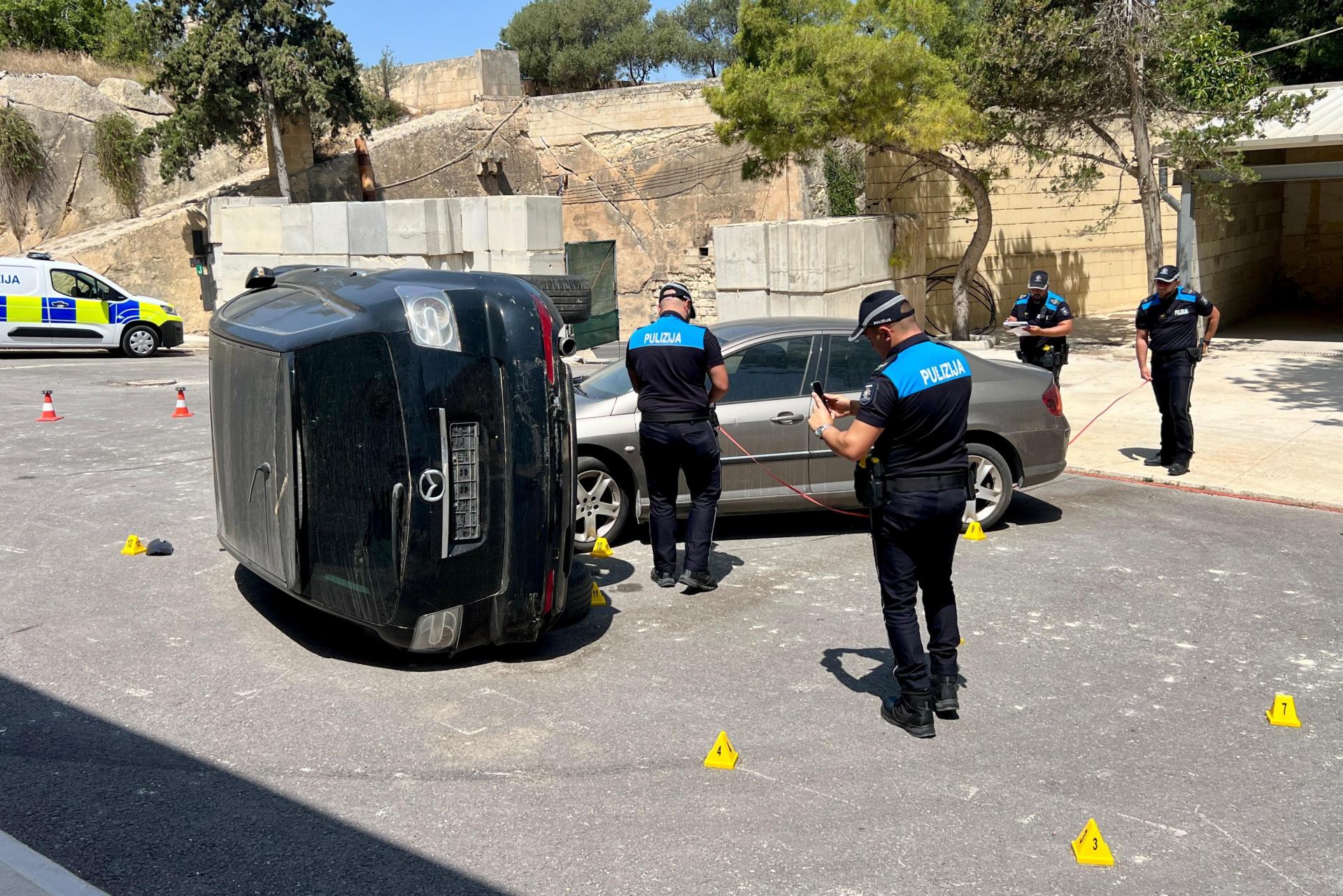 Members of the roads policing unit carrying out a demonstration. Photo: Chris Sant Fournier
They placed numbered yellow cones, which help to identify the evidence as investigations are carried out later on.
Depending on the gravity of the situation, the police might even deploy a drone to get a shot of the accident and the surrounding area.
The pictures the drone takes can then be used to develop a 3D image of the site, which is then reviewed in their offices.
The data collected from this investigation is then passed on to the magistrate who is dealing with the case.
The police initially announced that they would be setting up this new unit earlier this year after the death of motorcyclist Dieter Vink, who crashed into a skip in December 2024.