Fact-check: How many young people use cocaine in Malta?
A new study shows that just 0.1% of young people consume cocaine, according to Home Affairs Minister Glenn Bedingfield
Claim: A United Nations study shows that just 0.1% of young people in Malta consume cocaine.
Verdict: This figure is taken from a report by the European Union Drug Agency, not the United Nations. The report is based on a local survey, carried out in 2023, asking people to report their own use of substances. Accurate data on drug use is hard to obtain, but several studies suggest that cocaine use has risen sharply in recent years.
A recent Facebook post by Home Affairs Minister Glenn Bedingfield, claiming that just 0.1% of young people in Malta consume cocaine, prompted criticism, leading to a flurry of incredulous Facebook posts and a rebuke from opposition MP Beppe Fenech Adami in parliament.
In his post, Bedingfield pointed to a United Nations study which found that the use of several drugs among youths in Malta ranked far below the EU average.
Just 1.2% of young people in Malta consume cannabis, compared to 15.3% in the EU, Bedingfield said.
Meanwhile, the consumption rate for cocaine, MDMA and amphetamines all stood at a meagre 0.1%, just a fraction of the rate recorded throughout the rest of Europe.
Critics argued that this would effectively suggest that just 500 young people in Malta consume cocaine, running counter to widespread reports of escalating drug use and more frequent drug busts.
What report is Bedingfield talking about?
Bedingfield cited an unspecified “United Nations study” for his figures.
This could suggest that the figures originate from the UN’s World Drug Report, an annual study tracking trends in drug consumption, trafficking and policy across the world. This year’s edition of the study was published earlier in June, just days ahead of Bedingfield’s post.
The figures Bedingfield cited, however, do not feature in the UN report at all.
Instead, they come from an entirely different study, carried out by the European Union Drugs Agency (EUDA).
EUDA’s 2026 European Drug Report tracks illicit drug use across Europe, providing a snapshot of patterns in each EU country.
What does the EUDA report say?
As Bedingfield pointed out in his post, the study lists the prevalence of drug use in Malta as particularly low, with just 0.1% of young people (aged 15 to 34) using cocaine, MDMA or amphetamines in the past year.
The figures are similarly low for ecstasy, the study suggests, while those for LSD are so negligible that they are not reported at all.
Likewise, the percentage of all adults who used any illicit drugs in the past year is not reported. Malta is the only European country for which this figure is not reported.
Is there a catch?
Not necessarily, but these figures need to be contextualised.
For a start, the numbers cited in the EUDA report date back to 2023, so they are not as recent as they might have initially appeared in Bedingfield’s post.
While these are the most recent figures available, it is unclear whether they are likely to have changed over the subsequent three years, when several media reports have pointed to escalating cocaine use in Malta’s towns.
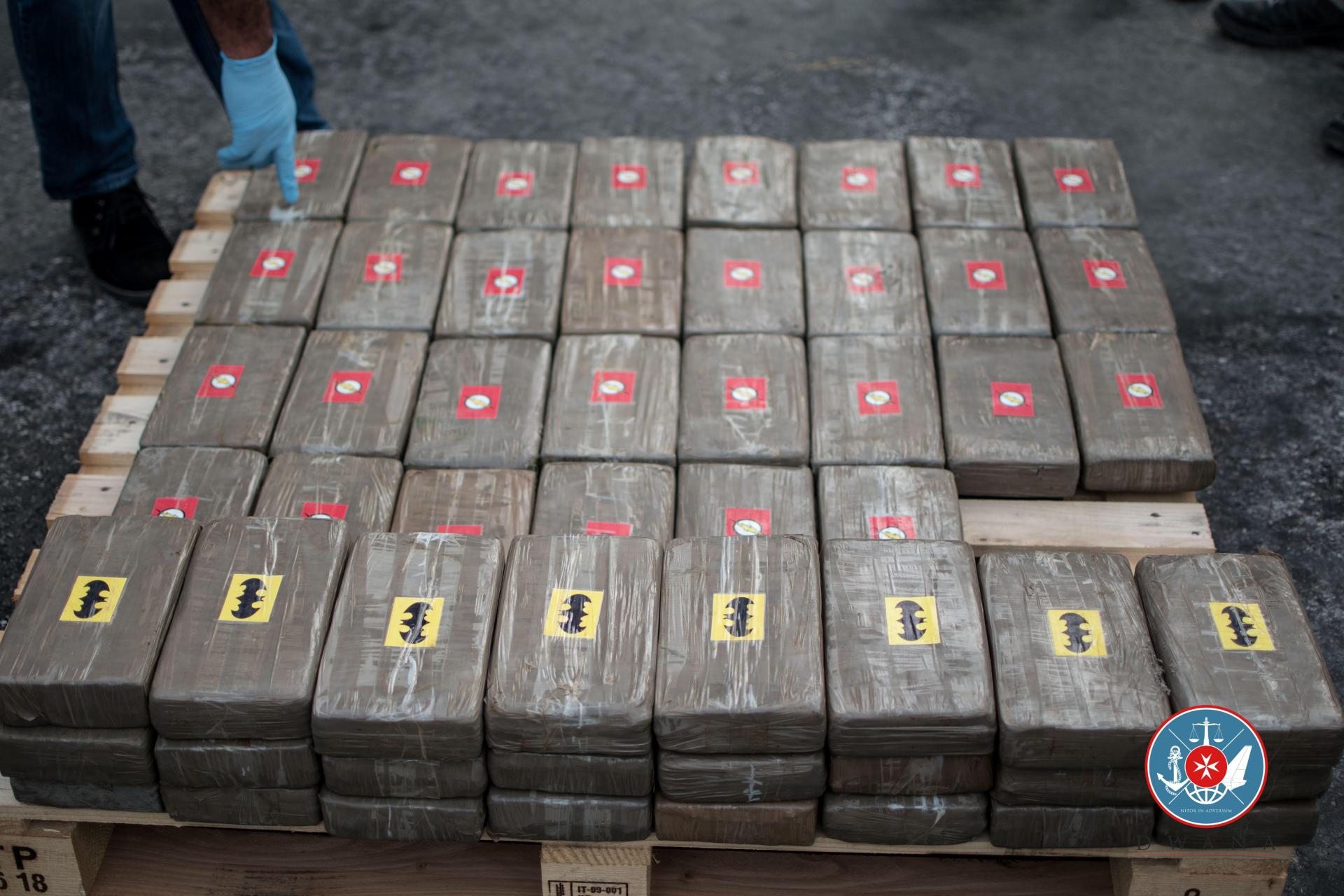 A 2019 drug bust at the Freeport. File photo: Malta Customs
Secondly, the figures do not reflect concrete figures linked to issues such as drug-related arrests, hospitalisations or rehab admissions, as some may have initially assumed.
Rather, they are taken from a representative survey, coordinated by Malta’s social policy ministry, in which respondents were asked, among other things, to report their own drug use.
In practice, the survey asked 3,463 people in Malta (including 1,263 people aged 15-34) whether they had consumed several substances, either over the past year or at any point in their lifetime.
While this sort of self-reporting is common when estimating the prevalence of drug use, researchers have long worried about the possibility of underreporting, particularly in the case of illicit substances. Some studies have shown young adults underreporting their drug use by as much as 60%.
The EUDA report itself, in its methodological notes, warns that these figures need to be treated with caution, pointing to the “limitations of surveys in estimating prevalence of the more intensive forms of drug use (e.g. heroin injection, crack use) due to the low prevalence figures,” among other things.
Surveys alone “therefore cannot be used to obtain reliable estimates of the prevalence of these forms of use,” EUDA says.
Are Malta’s real drug use figures underreported?
There is no real way to know this, but what is certain is that Malta’s numbers appear low compared to most of its European peers across several of the survey’s questions.
When asked whether they took any illicit substances at any point in their life, the study points to a 2013 edition of the survey in which just 1.4% of Maltese respondents said they did, by far the fewest in the study.
Aside from Türkiye (3.1%), the next lowest figure was reported by Hungary (11.1%) and Greece (11.2%), with most countries topping the 20% mark. In some countries, such as Spain and France, about half of all respondents said they had taken drugs at some point in their life.
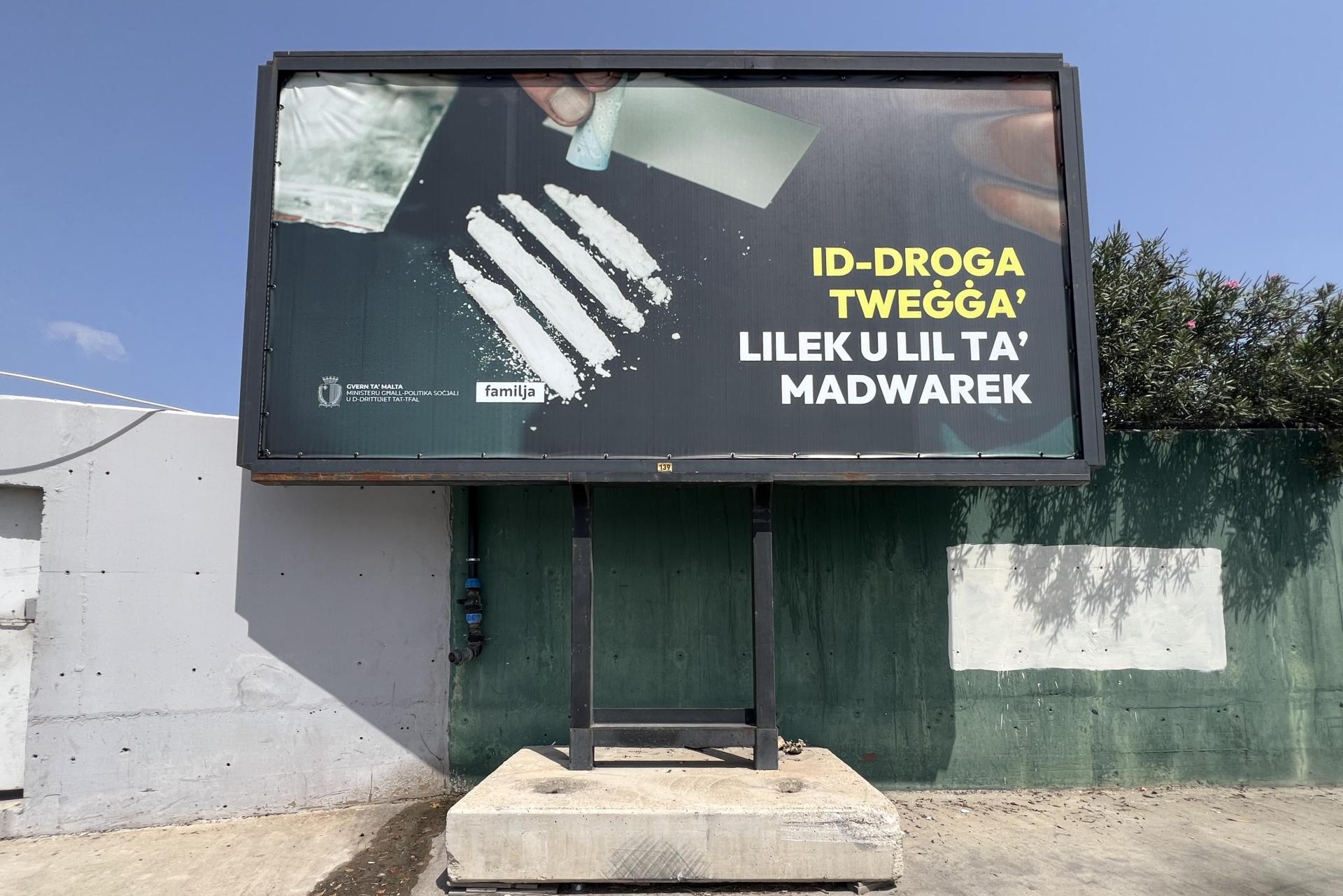 Authorities launched a billboard campaign to discourage cocaine use in 2025. File photo
Likewise, just 1.2% of Maltese say they took cocaine at any point in their life, significantly fewer than most other European countries. The same is true of other drugs, including ecstasy and amphetamines.
Is cocaine use on the rise?
The EUDA report itself, as well as the 2023 survey upon which it is based, would indicate that drug use is on the rise, with cocaine particularly prevalent.
The 2023 survey found that attitudes towards trying cocaine or crack have softened over the years. While more than 70% strongly opposed the prospect of trying cocaine in 2013, this dropped to just over 52% a decade later. Meanwhile, the number of people open to the idea almost doubled to reach just under 12%.
In total, 2.7% of people in Malta tried cocaine in their lifetime, the survey says, more than any other recreational drug aside from cannabis. This has risen sharply from just 0.5% a decade ago.
This means that around 7,000 people have taken cocaine, the study says.
In total, the study estimates that roughly 25,000 people in Malta have taken cocaine, ecstasy, amphetamines or synthetic drugs at some point in their life.
Meanwhile, other reports have revealed similar findings.
According to one Caritas report, cocaine-related emergencies increased by 56% between 2022 and 2023.
Likewise, Malta’s 2024 National Drug Report reported that the share of people seeking treatment for cocaine-related issues has risen from just 4% in 2003 to 26% in 2019 and a hefty 41% in 2023.
Meanwhile, 57% of people seeking treatment for the first time pointed to cocaine as their drug of choice, signalling the drug’s growing presence on Malta’s streets.
In total, 938 people had sought treatment for cocaine addiction in 2023, the report says.
Many of them appear to have been young men, with a median age of 20 for people seeking treatment for the first time.
The National Drug Report estimated that 2,029 people in Malta could be classified as “high-risk cocaine users,” with 554 people receiving treatment for daily use.
However, cocaine-related arraignments appear to be declining, dropping by 84% between 2017 and 2023, when just 38 people were arraigned for cocaine-related offences.
Another study, looking specifically at substance use among school students in Malta, found that 1.3% of students had tried cocaine in their lifetime, with 15% saying it would be “easy” to get their hands on the drug.
Meanwhile, figures by the OASI Foundation show that the number of people receiving therapy for crack cocaine addiction shot up between 2023 and 2024.
Verdict
The figures cited by Bedingfield are from a report published by the European Union Drugs Agency (EUDA), not the United Nations, as Bedingfield stated in his post.
The EUDA report, in turn, takes its figures from a survey carried out regularly by the social policy ministry.
In the survey, respondents were asked to report their own drug use.
While this is a method frequently used in estimating the prevalence of drug use, given the difficulties in getting hold of reliable data on drug users, researchers warn of the possibility of underreporting.
Several studies in recent years have flagged the rise in cocaine use in Malta, with the 2024 National Drug Report estimating that more than 2,000 people are now considered “high-risk cocaine users”. A 2024 study among school students found that 1.3% of students reported trying cocaine at some point in their lifetime.
The Times of Malta fact-checking service forms part of the Mediterranean Digital Media Observatory (MedDMO) and the European Digital Media Observatory (EDMO), an independent observatory with hubs across all 27 EU member states that is funded by the EU’s Digital Europe programme. Fact-checks are based on our code of principles.
Let us know what you would like us to fact-check, understand our ratings system or see our answers to Frequently Asked Questions about the service.
 MedDMO