What we learned from the Alex Borg interview and Robert Abela no-show
Il-Każin x Times of Malta hosted the PN leader and an empty podium
It was the most-watched online debate of the 2026 general election campaign.
But only one debater showed up.
Nationalist Party leader Alex Borg spent almost two hours answering questions on Il-Każin x Times of Malta, as a live audience watched and voted. Opposite him, an empty podium where Robert Abela was meant to be.
Thousands tuned in to follow the event, comment and cast their vote on the question 'Who do you think should be Malta's next prime minister?' The final vote went 77% Alex Borg's way.
Here are some takeaways from the one-man debate.
1. Alex Borg, gambler?
After Robert Abela left Alex Borg standing next to an empty podium, the PN leader would have been justified in deciding to call it a night. Instead, he agreed to face questions – arguably the toughest ones he's faced in the campaign so far - alone.
That was already a risk. Borg then upped the ante by making some major commitments.
Borg said he was ready to resign if his government did not complete a metro line in its first five years.
He bound himself to introducing a party financing law that would see political parties struck off if they failed to publish their subsidiaries' audited accounts in time. He agreed to introduce a transparency register for ministers – something that's been promised for almost a decade.
And he committed himself to redrafting Freedom of Information laws to get rid of a contentious article that grants the prime minister the power to veto requests.
The metro pledge is arguably the riskiest because it seems so absurdly unrealistic. But it is also the one Borg will find it easiest to slip out of should things not go to plan. A massive infrastructural project, after all, depends on many factors outside the control of any one individual.
Not so the legislative changes he promised: those are entirely within the prime minister’s control.
Still, with just days left in the electoral campaign and Borg behind in the polls, he has little to lose by making such pledges. Roll the dice, see how they fall.
2. Robert Abela's podium
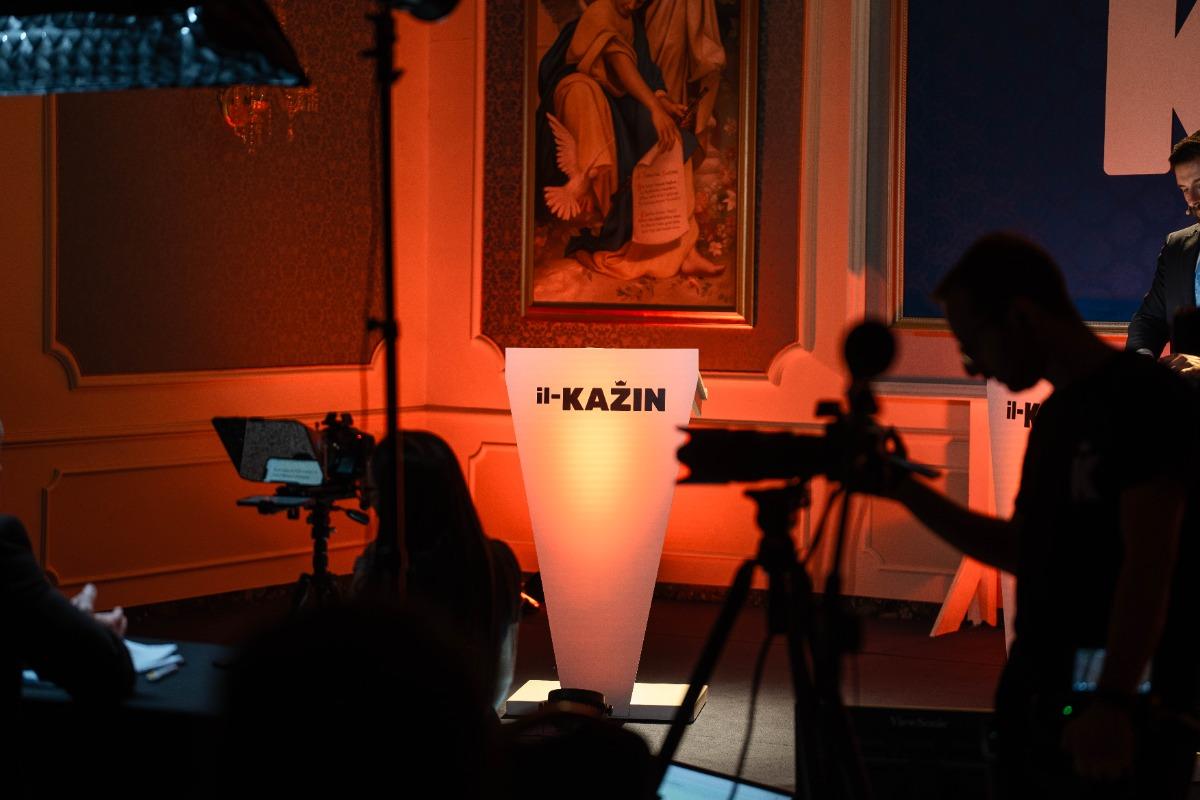 An empty podium instead of Robert Abela. Photo: Jake Bellizzi
At the start of the electoral campaign, Labour did its utmost to present Robert Abela as the media-friendly politician and Alex Borg as the man who was hostile to journalists.
“Thank you for your work,” a beaming Abela would tell journalists before they asked questions at press conferences. “Ask as many questions as you want.”
The smiles fell, though, when we invited the Labour leader to a debate on Il-Każin x Times of Malta.
After weeks of silence, Abela's team told us there were just too many debates on the schedule to justify another one. When the cameras began rolling, Abela's podium remained empty.
Labour supporters will interpret his absence as a justified boycott; Nationalist ones will call the prime minister a coward.
What is clear is that Abela’s no-show is a bad look for him personally and for Labour more generally.
Nobody wants a leader who ducks the toughest gigs. And Labour’s electoral pledge to give the media constitutional recognition rings hollow in the context of that empty podium.
3. Return of the dodgy calculators
We now know how much both parties expect their electoral pledges to cost. But the numbers don't tell the whole story.
Labour's pledges would cost €6.3 billion over five years, Abela revealed earlier on Monday. Alex Borg then said the PN’s pledges cost €6.7 billion.
Both figures raise major questions.
In Labour’s case, arguably the biggest one is whether that €6.3 billion also factors in spending on the ‘Malta in Motion’ light rail system that Finance Minister Clyde Caruana has been reluctant to sign off on. Is Labour promising a mass transport solution it won’t have the money for?
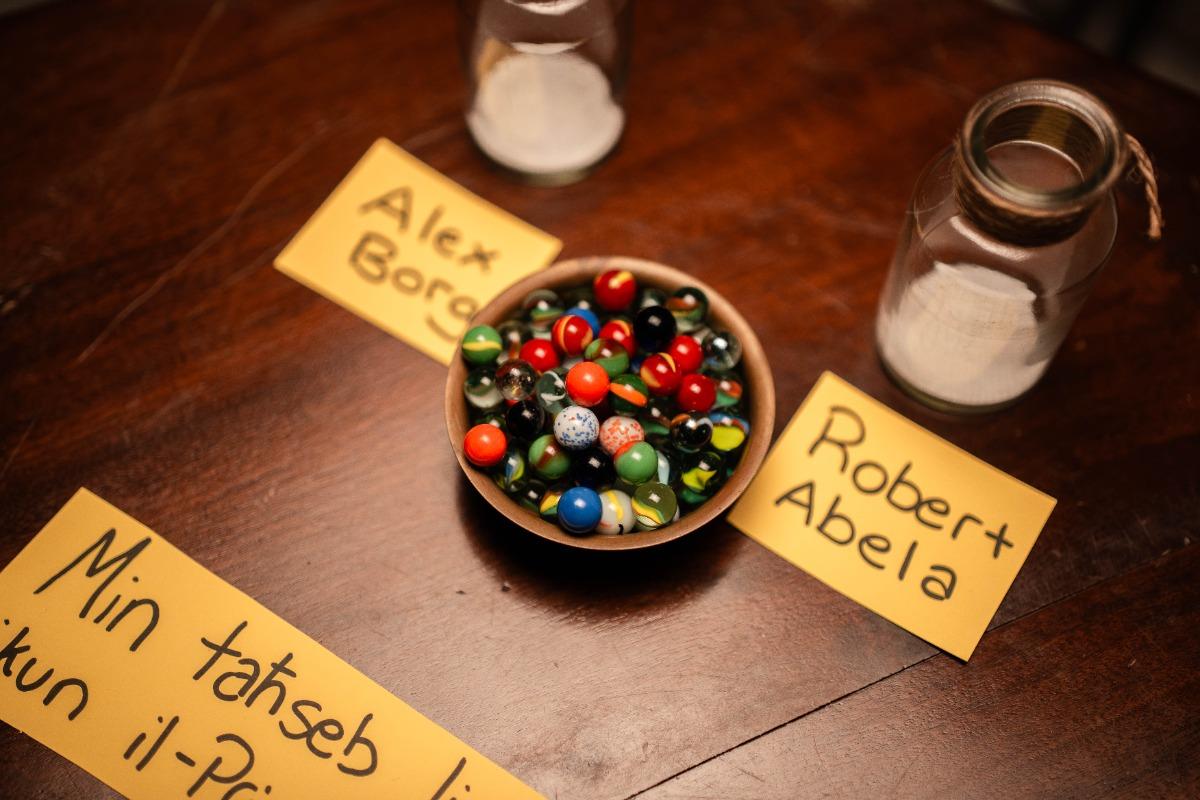 Audience members could vote on the question: 'Who do you think should be Malta's next prime minister?' Photo: Jake Bellizzi
For the PN, the €6.7 billion seems remarkably low. It is promising more sweeping tax cuts than Labour, five new schools in five years, refurbished and rebuilt hospitals, an offshore fuel hub and an undersea gas pipeline – all for just €400 million more than Labour’s pledges. Will we be buying all this infrastructure from IKEA?
4. Sweet dreams for big developers
For much of his interview on Il-Kazin x Times of Malta, Alex Borg spoke in absolute terms.
He was absolutely committed to governance reform. He was absolutely committed to the fuel hub project. He was absolutely confident the metro could be done in five years.
Then he was asked about revising local plans to curb development, and the absolute certainty vanished.
When asked if his plan to limit population growth meant he was also willing to slam the brakes on the development of new apartments, Borg ducked and weaved.
When pressed, he made a half-commitment: he would allow experts to assume full control of local plan reform “provided there is a plan”.
On this front, there appears to be little difference between Robert Abela and Alex Borg.
Abela is avowedly pro-development and construction – he spent years representing the Planning Authority as its lawyer – and he has also made vague noises about reforming local plans, saying that will help “fix injustices” without impinging on people’s so-called development rights.
In other words, anyone hoping either of the two will make tough and unpopular planning decisions for the country’s long-term good should not hold their breath.
5. A hard line on Islam
Borg appears to be amenable to many things - but a mosque is not one of them.
Even when pressed by an audience member with statistics about the country's growing Muslim population, Borg spoke in absolutes.
Malta does not need a new mosque, he said. Muslims have other places they can pray. The PN is a Christian democratic party.
His hardline stance will grate with liberals but could win him votes within the party's conservative wing.
"I'd rather be clear. I won't play with words. This is where we stand," he said.