As it happened: Jury hears 'I need to kill Daphne Caruana Galizia' claim
Degiorgios got to know of il-Koħħu's secret cooperation a day after OPM meeting
Claims that Yorgen Fenech said he "needed to kill Daphne Caruana Galizia", together with evidence about burner phones, boat movements and a possible leak following a high-level meeting at the Office of the Prime Minister, dominated the third day of the businessman's trial.
Lead investigator Keith Arnaud spent almost seven hours retracing the painstaking investigation that police say exposed the alleged hitmen before turning their attention to those suspected of commissioning the murder.
He also told jurors that, a day after senior investigators briefed then prime minister Joseph Muscat and other top officials at Castille, hitman Vince Muscat's secret cooperation with police had somehow become known to the Degiorgio brothers, sparking fears for his safety.
Friday marked the first full day of witness testimony in the long-awaited trial of Fenech, who is charged with complicity in the murder of the journalist and with criminal association. Five men have already been convicted over the October 2017 assassination. Fenech denies the charges.
Arnaud, who led the investigation, took jurors back to the moments immediately after the bomb exploded outside Caruana Galizia's home in Bidnija on October 16, 2017.
Police secured the crime scene, preserved it for almost a week and enlisted the assistance of Europol, the FBI and foreign forensic experts.
Investigators soon established that the bomb had been concealed inside the journalist's Peugeot 108 rather than underneath it, before turning their attention to thousands of mobile phone records gathered from the surrounding area.
That exercise led to what Arnaud described as a breakthrough.
Investigators identified a network of burner phones that communicated almost exclusively with each other before disappearing from the network moments after the explosion.
An FBI expert later reconstructed the electronic triggering device recovered from the wreckage, including its SIM card, and decoded the SMS command that detonated the bomb.
Another burner phone led investigators to the Grand Harbour.
CCTV footage showed a boat leaving the Grand Harbour early that morning, remaining stationary beneath the Upper Barrakka at the time of the explosion before returning towards the Marsa potato shed.
Police later carried out a reconstruction exercise using George Degiorgio's boat, Maya, concluding it was the same vessel captured on CCTV.
Telecommunications analysis also linked the burner phones to George and Alfred Degiorgio and Vince Muscat, known as il-Koħħu, after investigators found the disposable devices repeatedly appeared in the same locations as the men's personal mobile phones.
Arnaud said those findings ultimately led to the arrests of the three alleged hitmen in December 2017.
But the investigation did not stop there.
Investigators realised they still had to establish who had commissioned the murder and why.
Attention gradually shifted to Melvin Theuma, the taxi driver who police believed had acted as the intermediary between the alleged mastermind and the hitmen.
Arnaud told jurors that investigators deliberately delayed arresting Theuma, fearing they could lose crucial evidence if they moved too early. Instead, they developed a parallel money laundering investigation that would allow them to search his properties without revealing the true focus of the inquiry.
When police eventually arrested Theuma in November 2019, he arrived carrying a box containing mobile phones, recordings, photographs of chat messages, USB sticks and a photograph showing him alongside Keith Schembri at Castille.
After being granted a conditional presidential pardon, Theuma began recounting what he knew about the murder plot.
According to Arnaud, Theuma told investigators that several weeks before the 2017 general election, Fenech summoned him to a meeting at the Blue Elephant restaurant in Portomaso.
"There, Yorgen Fenech told me he needed to kill Daphne Caruana Galizia because she knew something about his uncle," Theuma said, according to Arnaud.
Theuma said he approached Alfred Degiorgio, who agreed, together with his brother George and Vince Muscat, to carry out the murder for €150,000.
Jurors also heard that Fenech later instructed Theuma to suspend the murder plan when the 2017 general election was called, before eventually handing him an envelope containing €150,000 after Labour's victory. According to Theuma, the money was used to finance the assassination.
Arnaud also disclosed that investigators held meetings at Castille with Joseph Muscat, Schembri, then justice minister Owen Bonnici and senior police officials to discuss whether there was enough evidence to arrest Theuma.
Police decided to continue strengthening their case.
The following day, however, Vince Muscat's lawyer Arthur Azzopardi informed investigators in a panic that the Degiorgio brothers had somehow learnt Muscat had been speaking to police and had confronted him about it.
Arnaud said investigators immediately became concerned for Muscat's safety but pressed ahead with the investigation.
The trial continues on Saturday, when Arnaud is expected to resume his testimony.
LIVE BLOG
Session ends for today
6.31pm And with that, the session has ended for the day. Keith Arnaud, the lead investigator in the case, will be back on Saturday morning to continue his testimony.
Until then, thank you for joining us.
FBI gets involved
6.29pm After the murder, a couple of days later, Theuma told Fenech he was getting worried about the case. He saw in the media that the FBI was going to get involved, and he was scared of getting caught.
Daphne was about to reveal something
6.23pm According to Arnaud, Theuma said Yorgen Fenech told him that Daphne Caruana Galizia was about to publish something about him. Theuma said this was the moment he realised Fenech had lied when he said the journalist had information about his uncle, Ray Fenech.
The murder payment
6.20pm Theuma told police he continued passing money to the Degiorgio brothers because he felt obliged to them, even after he had started cooperating with police.
Theuma also told investigators he had placed a €150,000 bet on Labour winning the general election.
After the result, Yorgen Fenech called him and asked for a lift to the airport. According to Theuma, Fenech got into the car carrying a brown envelope and handed it to him.
The envelope contained €150,000, which Theuma said was the payment for the murder plot.
He told police he kept this until the murder was carried out. A deposit of €30,000 had already been handed over.
Election called
6.17pm In the meantime, the 2017 election was announced. At this point, there was no official go-ahead for the murder plan, and Yorgen Fenech told Theuma to stop everything for the time being.
The phantom job
6.13pm Theuma tells police that one day, Yorgen Fenech called him at around 6.30pm, telling him someone "from Castille" would contact him. "Sandro Craus will call you," he told him.
Theuma says he was then contacted and given an appointment at Castille. When he arrived, he met OPM chief aide Keith Schembri on the stairs. According to Theuma, Schembri told him they were going to find him a job.
Arnaud says this was the meeting during which the now well-known photo of Theuma and Schembri was taken.
According to Theuma, that was his only contact with Schembri. He says he then began receiving monthly cheques of €890 without reporting for work.
The first cheque arrived in April. After seven monthly payments, the cheques suddenly stopped around September, Arnaud tells the court. He never received one again.
Killing commissioned
6.05pm Theuma told police he went to meet Alfred Degiorgio at the potato shed in Marsa, where he also saw Darren Debono, known as it-Topo. Debono gave him Alfred's phone number.
From there, we know the sequence of events.
Theuma meets Alfred Degiorgio at Busy Bee in Msida and pitches the plan to kill Daphne Caruana Galizia. Alfred first discusses it with his brother, then agrees to carry out the murder for €150,000.
Theuma takes the price back to Yorgen Fenech, who, Theuma says, agrees to pay it.
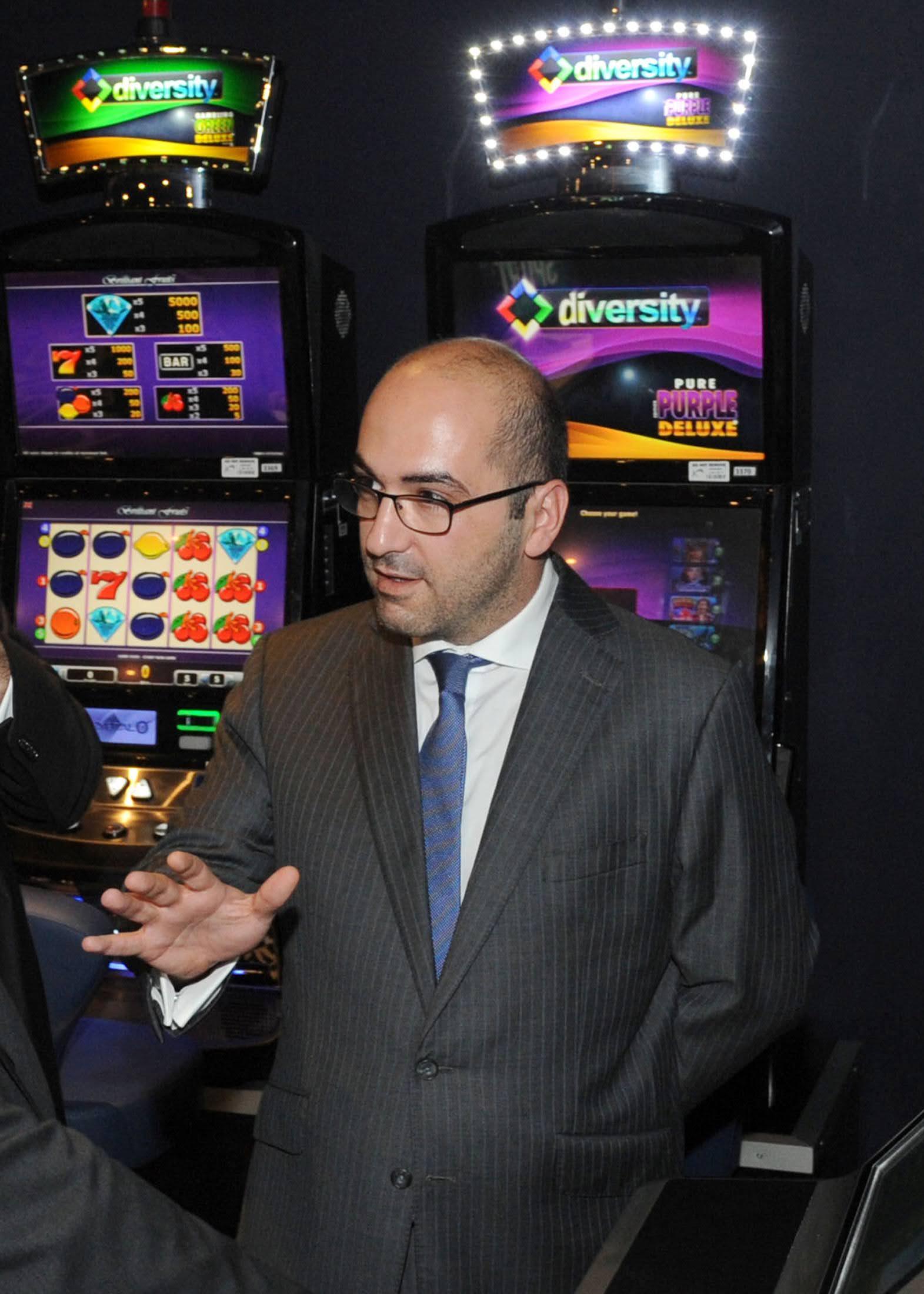 Yorgen Fenech with VIP guests during the opening of the Oracle Casino in St Paul's Bay on June 4, 2014. Photo: DOI handout
'I need to kill Daphne Caruana Galizia'
6pm. Theuma told police how three weeks before the 2017 election was announced, Yorgen Fenech called Theuma saying he needed to speak to him. Theuma went to meet Fenech at the Blue Elephant restaurant in Portomaso. Fenech asked Theuma whether he knew iċ-Ċiniz (George Degiorgio). He said no, but he knew his brother.
“I need to kill Daphne Caruana Galizia because she knows something about my uncle,” Fenech told him, according to Theuma.
Uncle Ray
5.58pm Meanwhile, police continued interviewing Melvin Theuma, who gave them more context to his relationship with Yorgen Fenech.
Theuma said he knew Fenech’s uncle, Ray, and began to become acquainted with Yorgen Fenech over time. Eventually, Theuma was granted access to use his taxi at Portomaso.
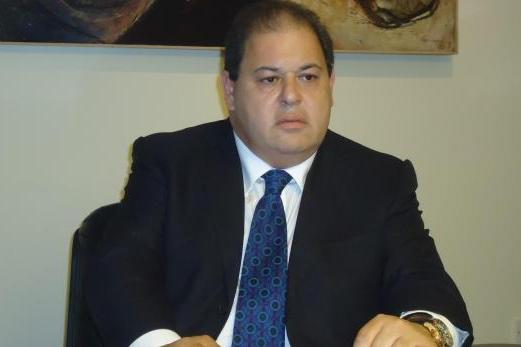 Ray Fenech, an uncle of Yorgen Fenech
The recordings
5.55pm Police began listening to the recordings taken by Melvin Theuma. There were over 100. Some long, some short. Not all of the recordings were immediately accessible to the police, but they started listening to what was available.
Corroborating evidence
5.47pm Arnaud explains that these documents helped support Theuma's version of events.
One document is essentially a receipt. It is dated and includes lawyer William Cuschieri's name and the amount Melvin Theuma handed over. Theuma explained that he would give the money to Mario Degiorgio, who would then pass it on to the lawyer.
Theuma kept these receipts to show Yorgen Fenech that the money was reaching the Degiorgios and that he was not keeping any of it for himself.
Arnaud says almost half a million euro was passed to the Degiorgio brothers in this way to cover legal fees, food and other expenses.
Receipts
5.45pm Melvin Theuma handed investigators a handwritten receipt from the Degiorgio brothers' lawyer, confirming Theuma had passed on money to cover their legal fees.
The receipt, signed by lawyer William Cuschieri, was found in Theuma's kitchen, on the extractor hood above the stove.
Arnaud says investigators also recovered a document recording cash that had allegedly been passed from Yorgen Fenech to Melvin Theuma.
These documents are shown to the jury now.
Theuma's anxiety
5.42pm Arnaud tells the court that Melvin Theuma became noticeably more anxious shortly after Vince Muscat (il-koħħu) was questioned by police.
According to Arnaud, Theuma had never revealed Yorgen Fenech's name to the hitmen, but they knew Theuma was the middleman who passed on the orders.
"Vince had no one to expose other than him," Arnaud tells the court.
Arnaud says this is why Theuma began taking photos and recording conversations with Yorgen Fenech. He believed Theuma wanted evidence to show that he had not been acting alone if anything happened to him.
Prosecution presents photos
5.35pm The prosecution starts showing photos. The first image on the screen appears to be a poor-quality photo of a mobile phone screen. Very few details are visible from the stranger’s gallery, where our court reporter Nicole Meilak is sitting.
Melvin Theuma's relationship with Yorgen Fenech
5.33pm Keith Arnaud describes Melvin Theuma’s relationship with Yorgen Fenech. Theuma wasn’t an employee of his, but he still felt that Fenech was more powerful than him, and that’s what led to his fears and anxieties, Arnaud tells the court.
Trial resumes
5.31pm We're back in action. Lead investigator Keith Arnaud continues testifying.
Times Talk
5.11pm Our main court reporter, Clara Farrugia, has stepped away from proceedings this afternoon to record a special edition of our podcast, Times Talk, with Mark Laurence Zammit.
Together, they'll take you through the key developments in the Yorgen Fenech trial so far. Look out for the episode over the weekend wherever you get your podcasts.
In the meantime, Nicole Meilak is covering proceedings from the courtroom.
Short break
4.54pm We're now on a short break and will be back at 5.15pm.
Police on your trail
4.48pm Arnaud tells the court Theuma's explanation for the photographs of the messages.
According to Theuma, the messages were received after Yorgen Fenech learned that police were treating the Ta' Maksar group and Żebbuġ as persons and locations of interest in the investigation.
The messages, Arnaud says, were warnings to be careful because police were on their trail.
Theuma starts speaking
4.44pm Once the pardon was signed on November 19, 2019, Theuma started to tell all.
Pardon conditions
4.42pm An agreement was reached. But it contained conditions. Theuma undertook to disclose everything he knew about the Caruana Galizia murder: what he had personally seen and heard, who carried out the killing, who gave him the money, how much he received and to whom he passed it on.
Arnaud says the agreement required Theuma to withhold nothing from investigators.
A pardon request
4.37pm Arnaud tells the court that Yorgen Fenech's name appeared in the chat messages recovered by investigators. The chats were happening over the messaging app Signal.
However, he says police deliberately did not question Melvin Theuma about those references immediately.
"Evidence is collected first, then the interrogation happens," Arnaud explains.
Arnaud says Theuma's lawyers sought assurances that, if their client's information led investigators to other suspects, he would receive some form of presidential pardon. According to Arnaud, they were concerned that Theuma could be betrayed after cooperating with police.
What was in the ice cream tub
4.27pm Arnaud details the contents of Theuma's ice cream tub:
- Three mobile phones;
- A long voice recorder;
- Three USB sticks;
- A USB wire;
- Two packs of cards rolled up in rubber bands and another pack folded;
- 15 photos of chats (not screenshots, physical photographs);
- A picture of Melvin Theuma and Keith Schembri
[This photo shows Melvin Theuma and Keith Schembri side by side at Castille, and a photo of Keith Schembri with Joseph Muscat framed in the background.]
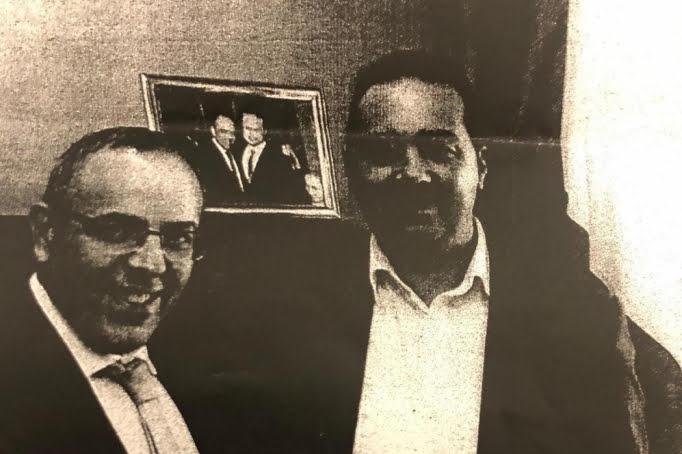 The photo of Melvin Theuma, right, and OPM chief of staff Keith Schembri, left.
What police knew
4.24pm Arnaud tells the court that, before Melvin Theuma started cooperating with investigators, police had identified only a limited number of people they believed were connected to the case.
These included Theuma as the alleged middleman, Yorgen Fenech as the possible mastermind, and several people whom investigators believed were aware of developments in Theuma's life.
Among them was Edgar Brincat, known as Il-Ġojja, who was also arrested as part of the money laundering investigation. Arnaud says the operation planned for November 16, 2019 targeted Theuma, his partner, his partner's daughter and Brincat.
He also mentions Johann Cremona as someone investigators believed might have had knowledge of the events surrounding the case.
The 'ice cream tub' of evidence
4.20pm Arnaud tells the court that Melvin Theuma was nervous.
The inspector says he suggested that Theuma could first explain the substance of what he knew without naming anyone, but Theuma remained hesitant.
He kept hold of an ice cream tub throughout. He told investigators he was ready to speak about "the case, the money, everything".
The inquiring magistrate was then called to the police depot and entered the audiovisual interrogation room, where the proceedings were recorded from multiple angles. Inspector Nicholas Vella was also present.
Arnaud says the ice cream tub was opened in front of the magistrate at 5.25pm on that day.
'I imagined a tough guy'
4.17pm "I always imagined Theuma to be a tough guy, but he was different with us," Arnaud tells the court.
He says he was informed that Theuma was ready to speak about the Daphne case and claimed to have an "ice cream tub" full of material relevant to the investigation.
After the FCID carried out searches, Theuma was taken to the police depot.
According to Arnaud, Theuma asked for a lawyer "from the Nationalist Party camp" to be present while he gave his statement.
Arnaud says Theuma's demeanour was very different from what he had expected. Rather than being confrontational, he repeatedly broke down in tears and told investigators he had been considering going to the police for some time.
A big problem
4.11pm Arnaud told them the FCID he would be on standby for the arrest. But something went wrong.
“I remember that week of the arrest, planned on November 16, it was a Saturday. I remember receiving a phone call from Nicholas Vella on the 14th about a big problem," Arnaud tells the court.
Theuma was arranging something with someone. So police swooped in and arrested him on November 14th.
Police set date for operation against Theuma
4.09pm Arnaud tells the court that by August, September and October 2019, the Financial Crimes Investigation Department (FCID) informed him that preparations were underway for an operation targeting Melvin Theuma over alleged illegal gambling and money laundering offences.
By around September, investigators believed they were close to concluding the financial investigation.
Arnaud says that, by October, police had fixed November 16, 2019 as the date for Theuma's arrest.
A plan develops
4.04pm Arnaud tells the court that in the first quarter of 2019, investigators settled on a new strategy.
By then, they had concluded that Melvin Theuma was not just a taxi driver but was also involved in criminal activity, including illegal betting.
Instead of arresting him over the Daphne Caruana Galizia murder, police decided to build a money laundering case against him.
Arnaud says this would allow investigators to arrest Theuma without revealing their suspicions about his alleged role in the murder, while giving them the opportunity to search his properties for any recordings.
The Economic Crimes Unit was brought into the operation and began its own investigation.
According to Arnaud, the inquiry, led by Inspector Nicholas Vella, had gathered significant momentum by May and had developed into a strong money laundering case.
Arnaud says the homicide squad deliberately stayed in the background while the financial investigation progressed.
Divided over whether to arrest Theuma in 2018
4pm Arnaud tells the court that by late 2018 and early 2019, investigators were divided over how to proceed.
"We were literally jammed," he says. "It's disappointing and frustrating because you want to do something but can't."
According to Arnaud, one group wanted to arrest Theuma immediately. Another group, which included Arnaud, argued for waiting because investigators suspected Theuma might have recordings that could significantly strengthen the case.
Arnaud says police did not know whether those recordings actually existed or where they were being kept. Arresting Theuma without finding them would have carried a major risk.
He explains that police are legally required to tell an arrested person why they are being detained. In Theuma's case, that would have meant informing him he was being arrested over suspected involvement in Daphne Caruana Galizia's murder.
If investigators then failed to find the recordings or sufficient evidence, they would have had to release him, effectively alerting him to the investigation and revealing the police's hand.
Changes to the investigation team
3.58pm Arnaud tells the court that the investigation team consisted of around eight to 10 people, including officers from the security services. He also notes that the inquiry saw a change in the inquiring magistrate in 2018.
He says he first met Keith Schembri in around 2017, after Silvio Valletta was no longer involved in the investigation and Arnaud began attending meetings at Castille himself.
There were also regular meetings with Europol.
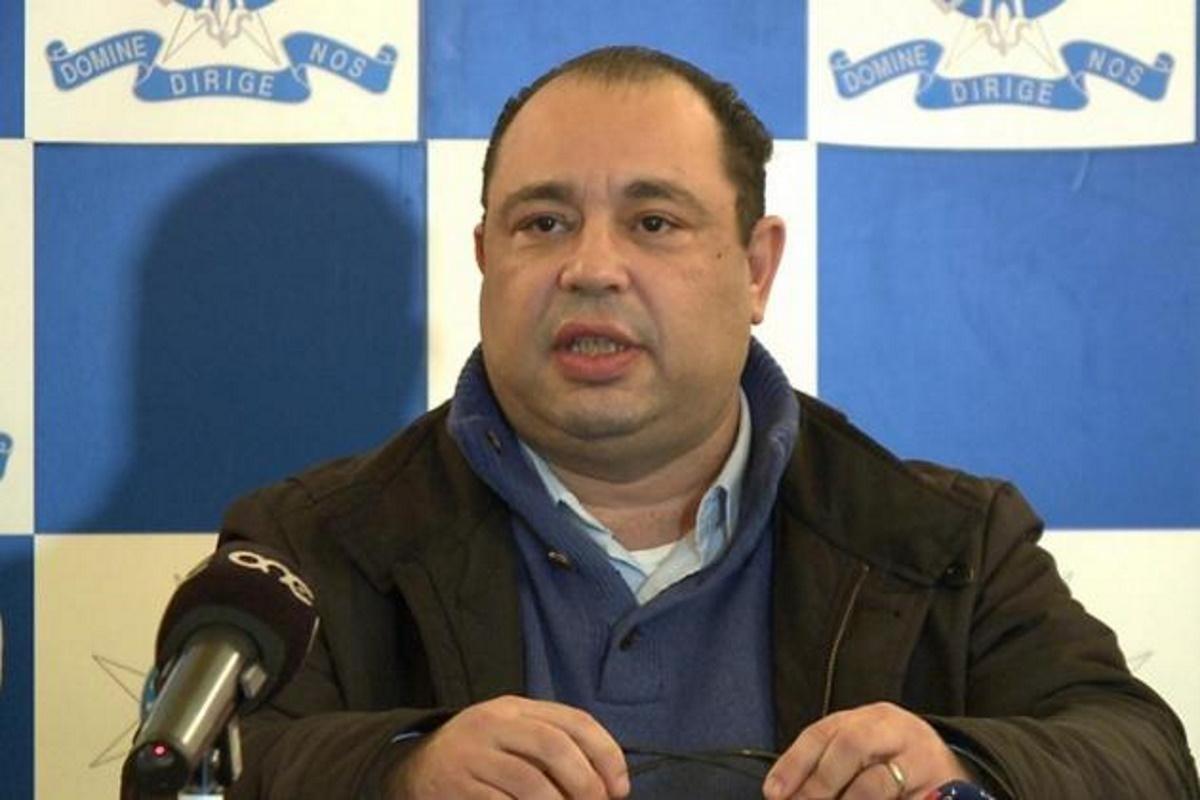 Silvio Valletta.
Return to Castille
3.54pm Arnaud tells the court that investigators returned to Castille to provide an update on the case.
He says they briefed officials on developments concerning Melvin Theuma, including an observation of him speaking to Alfred Degiorgio at a petrol station.
The possibility of granting Vince Muscat a presidential pardon was discussed again. Arnaud says that, by around October, investigators concluded there was still no basis for such a pardon.
Arnaud also explains that by this stage, former deputy police commissioner Silvio Valletta was no longer supervising the investigation.
Instead, he began reporting directly to the police commissioner. Together with Kurt Zahra, who was also on the homicide squad, it was agreed that Arnaud would focus exclusively on the Caruana Galizia investigation while Zahra handled other homicide cases.
Investigators begin linking Theuma's concerns to Fenech
3.52pm Arnaud tells the court that by around June or July, investigators received the first indications that Melvin Theuma was experiencing problems with Yorgen Fenech.
He says he also continued speaking to Vince Muscat's lawyer, Arthur Azzopardi, about his meetings with Muscat.
By that stage, investigators knew there was an intermediary in the murder plot and that Theuma was panicked and secretly recording conversations. However, Arnaud says police still did not know why Theuma was so anxious, what was on the recordings or where they were being kept.
Theuma recording conversations
3.49pm Arnaud tells the court that investigators discovered Melvin Theuma had been secretly recording conversations. It was not always clear who Theuma was speaking to.
Attention turns to Melvin Theuma
3.44pm From there, attention turned to Melvin Theuma. Police found out he was a taxi driver, who would regularly frequent Portomaso. The found out Theuma had major problems in life. Some days OK, other times he was worried and panicked [iddisprat]. Police were trying to understand if this stemmed from his involvement in the murder or because of other matters.
Day after Castille meeting, Koħħu talks exposed
3.42pm Arnaud tells the court that, following the meeting at Castille, investigators informed Vince Muscat's lawyer that the plan was to continue strengthening the case while assessing whether there could eventually be grounds for a presidential pardon.
According to Arnaud, Muscat was also told that if he remembered any further details, he should pass them on to investigators to help build the case.
But the following day, Arnaud says, Muscat's lawyer, Arthur Azzopardi, contacted police in a panic, saying the Degiorgio brothers had already discovered that Muscat had been speaking to investigators. According to Azzopardi, the brothers confronted Muscat and asked him what he was planning to do.
Arnaud says everyone was concerned, even for Vince Muscat’s safety. They continued with the case.
A meeting at Castille
3.40pm Arnaud tells the court about a meeting at Castille attended by then prime minister Joseph Muscat, his chief of staff Keith Schembri, then justice minister Owen Bonnici, the police commissioner, and two or three others.
The meeting focused on whether investigators had gathered enough evidence to justify arresting Melvin Theuma.
According to Arnaud, it was ultimately decided that the case was not yet strong enough. Instead of moving in, police opted to continue their investigation and strengthen the evidence before making an arrest.
Bomb brothers would be 'taken care of'
3.37pm Arnaud tells the court that investigators set up surveillance outside Mario Degiorgio's home. He is a brother of Alfred and George.
He says police were aware of a phone call between one of the Degiorgio brothers and Mario, with the information from that call being passed on to Melvin Theuma.
According to Arnaud, Theuma remained in constant contact with Mario Degiorgio, repeatedly reassuring him that the brothers would be "taken care of". Investigators also frequently observed Theuma carrying bags into Mario Degiorgio's house, although they suspected these contained nothing more than food.
Arnaud says investigators believed this was Theuma's way of keeping the third Degiorgio brother satisfied. He notes there was no similar contact with Vince Muscat, which, he says, suggests the murder plan was primarily between Alfred Degiorgio and Theuma.
Hearsay but evidence corroborated
3.34pm Arnaud tells the court that Muscat provided his account after he had been arrested and charged, and after expressing an interest in cooperating with investigators in exchange for a presidential pardon.
While much of Muscat's account was based on what others had told him, Arnaud says it corroborated the evidence investigators had already gathered.
Cold feet
3.33pm Arnaud tells the court that Vince Muscat drove Alfred Degiorgio to Marsaskala to meet Melvin Theuma and collect the remaining money they were due for carrying out the murder.
According to Arnaud, Muscat also told investigators that he had developed cold feet at one stage and had even considered returning the money. Despite his doubts, he remained part of the plot.
Preparing for murder
3.29pm As preparations continued, the group obtained firearms from Robert Agius, known as Ta' Maksar, and rented a garage in Mosta, Arnaud tells the court.
According to Vince Muscat's account, he later identified the garage to investigators using Google Maps. The group also rented a second garage in Santa Venera. Arnaud says this explained why location data showed the burner phone linked to the bomb had, at one point, been in Santa Venera.
Arnaud adds that, according to Muscat, Robert Agius and Jamie Vella taught the Degiorgio brothers how to use the bomb. Both men have since been convicted of murder and are serving life sentences.
Tracking Daphne
3.25pm Arnaud says the men began carrying out surveillance on Daphne Caruana Galizia to learn her routine and movements.
According to Vince Muscat's account, they asked Melvin Theuma for information about her. Theuma told them she regularly visited a coffee shop in Naxxar, near the Bank of Valletta branch and a playground.
Over time, Arnaud says, the group tracked her movements and found out where she lived.
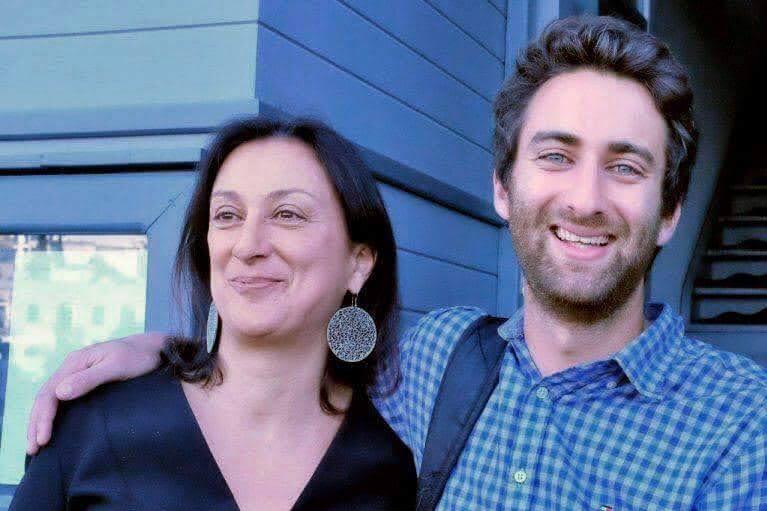 Daphne Caruana Galizia and her son Matthew. Photo: Family handout
Who wanted Daphne dead?
3.24pm The trio began planning the murder but Melvin Theuma did not reveal to them who it was that wanted Daphne Caruana Galizia dead.
€150,000 for a murder
3.22pm A few days later, Alfred Degiorgio again asked Vince Muscat to drive him to meet Melvin Theuma, Arnaud tells the court.
Arnaud stresses that this is Muscat's version of events. Muscat did not attend the meeting himself and was recounting what Alfred later told him.
Theuma agreed to the €150,000 price. A few days later, Muscat drove Alfred to collect the deposit. They then returned to the potato shed, where the money was split equally.
Arnaud says Muscat told investigators that it was from that point that the three began planning how they would kill Daphne Caruana Galizia.
Melvin Theuma enters the scene
3.19pm Arnaud tells the court that, according to Vince Muscat, the plot began earlier that year when Alfred Degiorgio asked him to drive him to Busy Bee in Msida to meet someone about "a particular job".
Muscat said he waited near the Msida parish church. Alfred told Vince Muscat that they met with Melvin Theuma over a plan to kill Daphne Caruana Galizia. After the meeting, they returned to the potato shed, where Alfred briefed George Degiorgio on the plan.
According to Arnaud, Muscat said the three agreed to carry out the murder and asked for €150,000 in return.
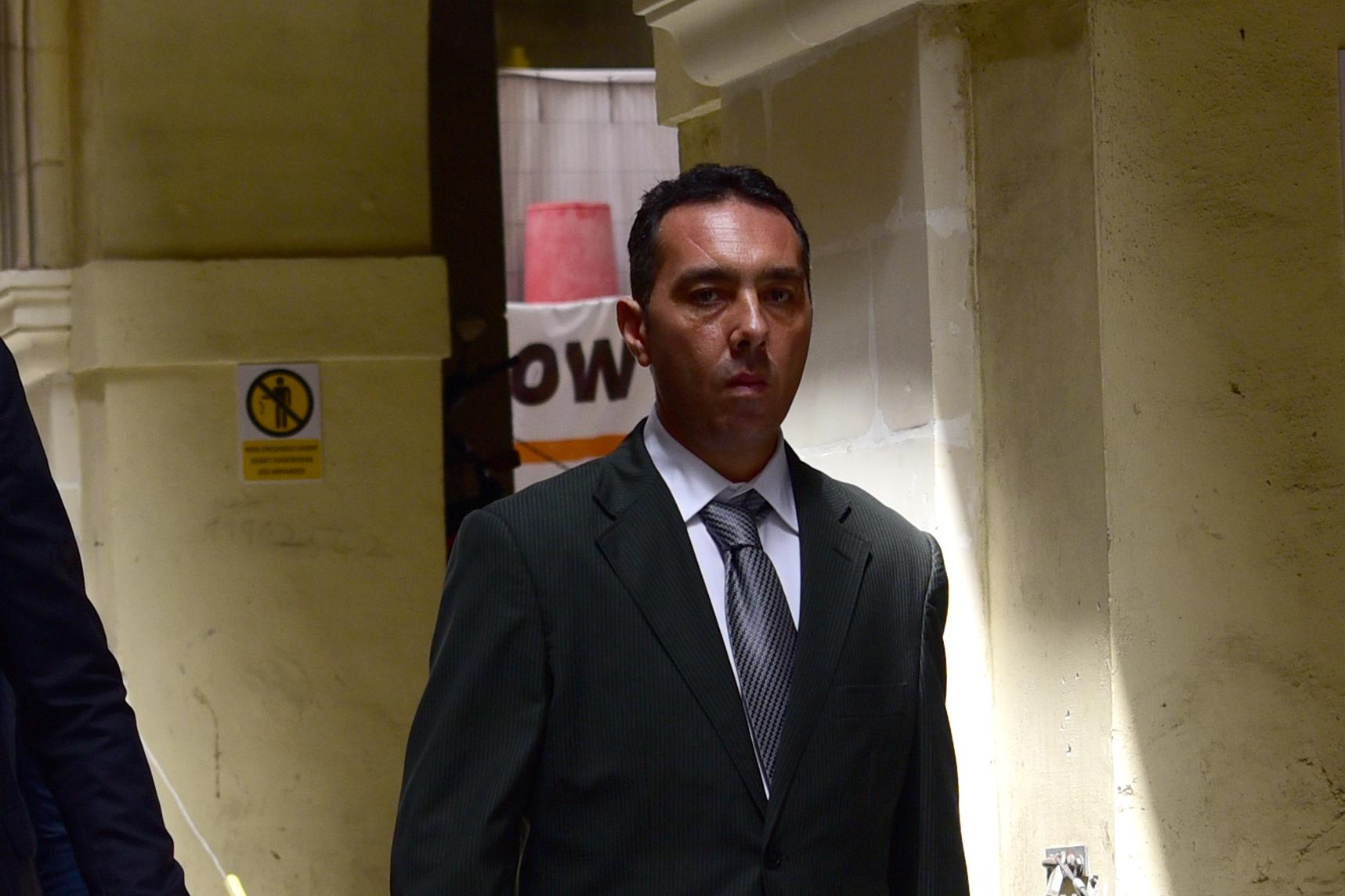 Melvin Theuma will be a key witness in the trial of Yorgen Fenech. File photo: Mark Zammit Cordina
No copycats
3.13pm Arnaud is now giving detailed evidence about how the hitmen accessed the rental car. However, the court has ordered the media not to report these details to avoid the risk of copycat offences.
Il-Koħħu's evidence matches
3.11pm Arnaud sets out what one of the hitmen, Vince Muscat (il-Koħħu) told the police as he attempted to get a pardon for his role.
He says Muscat's version of events matched the evidence investigators had gathered up to that point.
Muscat accurately described details including the hiding places used, the location of the cigarette butt found at the scene, the initial plan to ambush Daphne Caruana Galizia with a gun before the group switched to using a car bomb, and the white rental car used to rehearse the attack, which had a large leasing company sticker on the back.
Muscat also explained how the mobile phones were used to execute the bombing.
"Everything matched the evidence," Arnaud tells the court
We're back
3.02pm Court is back in session. Lead investigator Keith Arnaud resumes his testimony.
Meanwhile in court
2.45pm We're still on a break, but court reporting isn't. Elsewhere in court today, a tourist has been charged with injuring two police officers.
Inside the courtroom
1.30pm As Keith Arnaud retraces the first moments of the investigation, the jurors listen intently, many of them taking notes throughout his testimony.
At the centre of the courtroom sits a long table stacked with brown envelopes, with photographs just visible inside some of them, hinting at the evidence still to be presented.
The public gallery is packed with local and international journalists, law students, courtroom sketch artists and police officers ensuring proceedings continue without disruption.
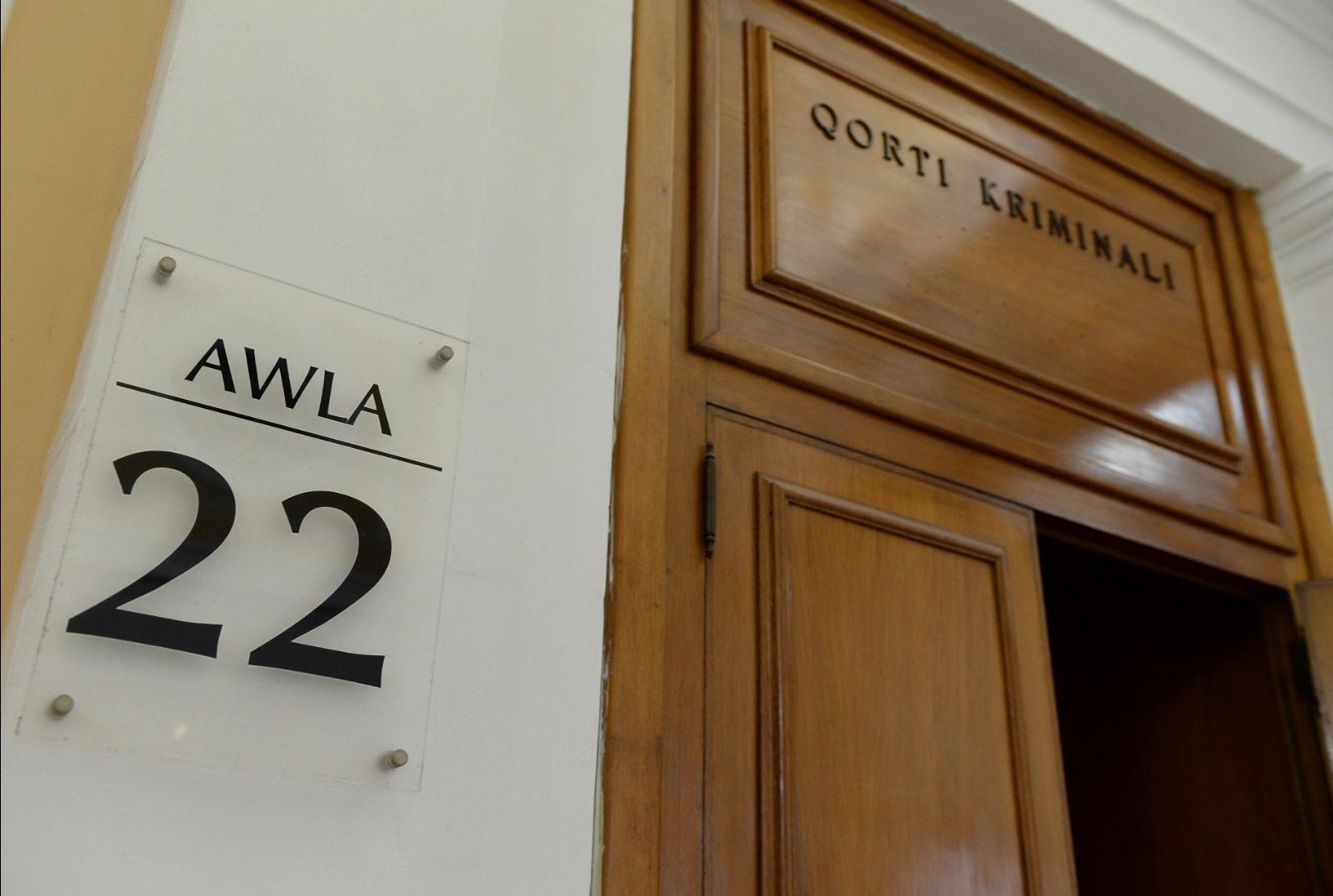 The case is being heard in Hall 22.
What we've learnt so far
1.25pm These are the most salient points of today's testimony so far:
- CCTV, phone data and a boat helped identify the hitmen;
- The moment Il-Koħħu decided to speak out;
- Joseph Muscat was briefed on the investigation;
- Investigators turn their attention to identifying who ordered the murder.
Break
1.02pm Judge Edwina Grima orders a break in proceedings. We'll be back with the second part of Arnaud's testimony.
Il-Koħħu speaks out
1pm In March 2018, George Degiorgio again asked his brother Mario about the unidentified person mentioned in earlier prison calls.
This time, Arnaud says, George referred to the individual by saying his name began with the letter "M".
Mario replied that he had gone looking for him at a gas shop opposite the Ħamrun police station.
Arnaud then describes what he said was another significant development in the investigation.
Lawyer Arthur Azzopardi contacted him to say Vince Muscat wanted to speak to police.
On April 23, 2018, Arnaud met Muscat and Azzopardi discreetly at his office.
Arnaud says the meeting was kept confidential for security reasons and because Muscat had indicated he wanted to provide information.
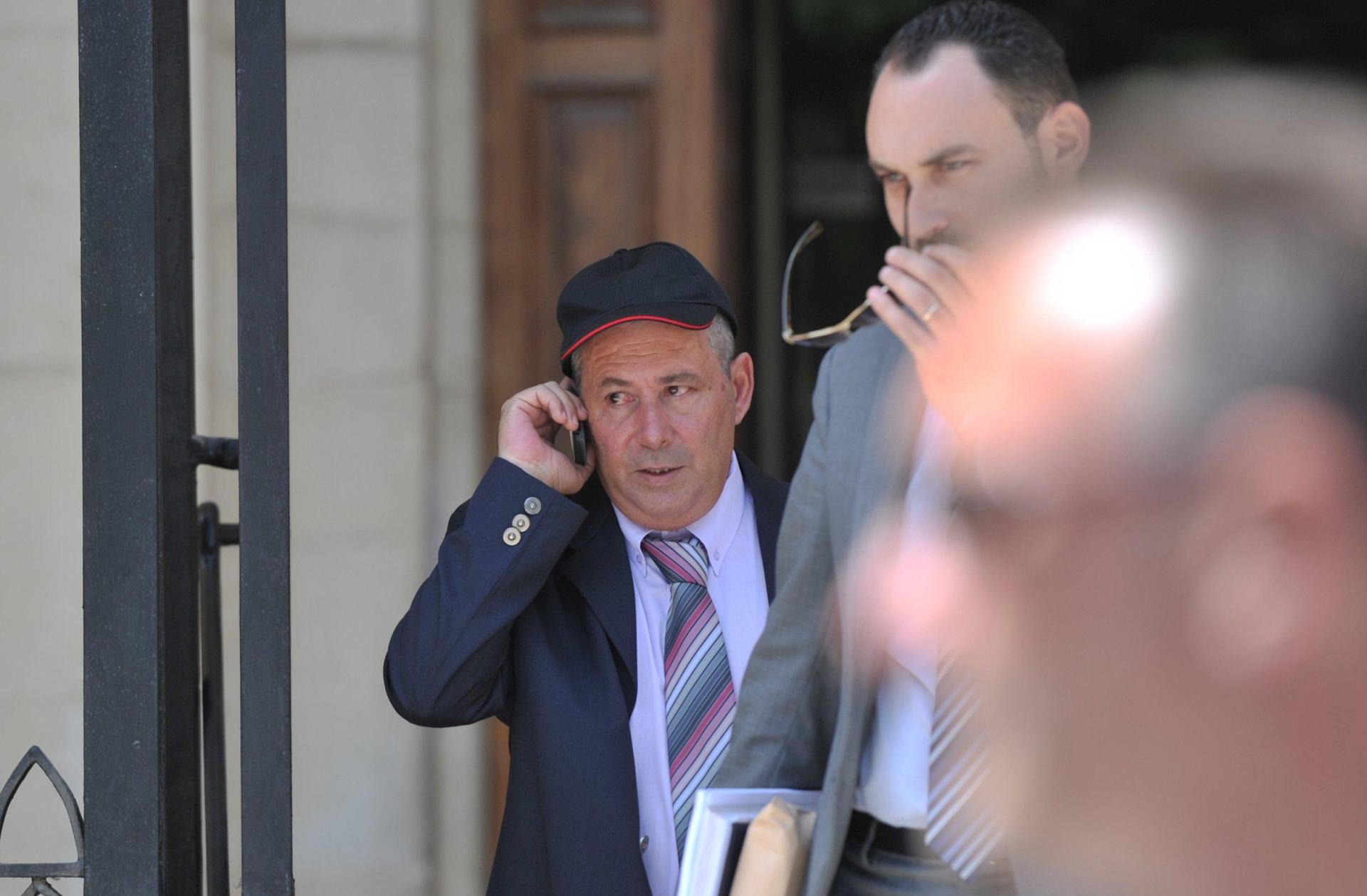 Vince Muscat walking out of court with his lawyer Arthur Azzopardi.
A mysterious visitor
12.55pm Arnaud says investigators began closely monitoring who visited the suspects in prison, their phone calls with family members and the flow of money into their prison accounts.
One detail, he said, repeatedly stood out. Whenever the Degiorgio brothers called their brother Mario from prison, they would always ask about the same unidentified person.
"Has he come? Have you seen him?" they would ask.
Arnaud says Mario's answer was invariably the same: "No."
Investigators also noted that the brothers never referred to the person by name, something that raised further suspicion.
What was Daphne going to publish?
12.50pm Europol continued assisting the Maltese investigation for years after the arrests.
One team was tasked with analysing Daphne's blog, examining what she had published and what she had been planning to write.
Arnaud says investigators found nothing in her published work that appeared to explain the motive for the murder.
"That led us to conclude that what happened was linked to something she had not yet published but was working on," he told the jury.
Hitmen charged
12.42pm The three alleged hitmen were arraigned on December 5, 2017. But the investigation was far from over, Arnaud says.
Investigators had a fundamental question to answer: why was Daphne Caruana Galizia killed?
"Did these men have a reason to kill her themselves, or had someone commissioned them?" Arnaud says.
The seven other people arrested in the operation were not charged. They were released on police bail while investigators continued questioning them and pursued further lines of inquiry into the murder.
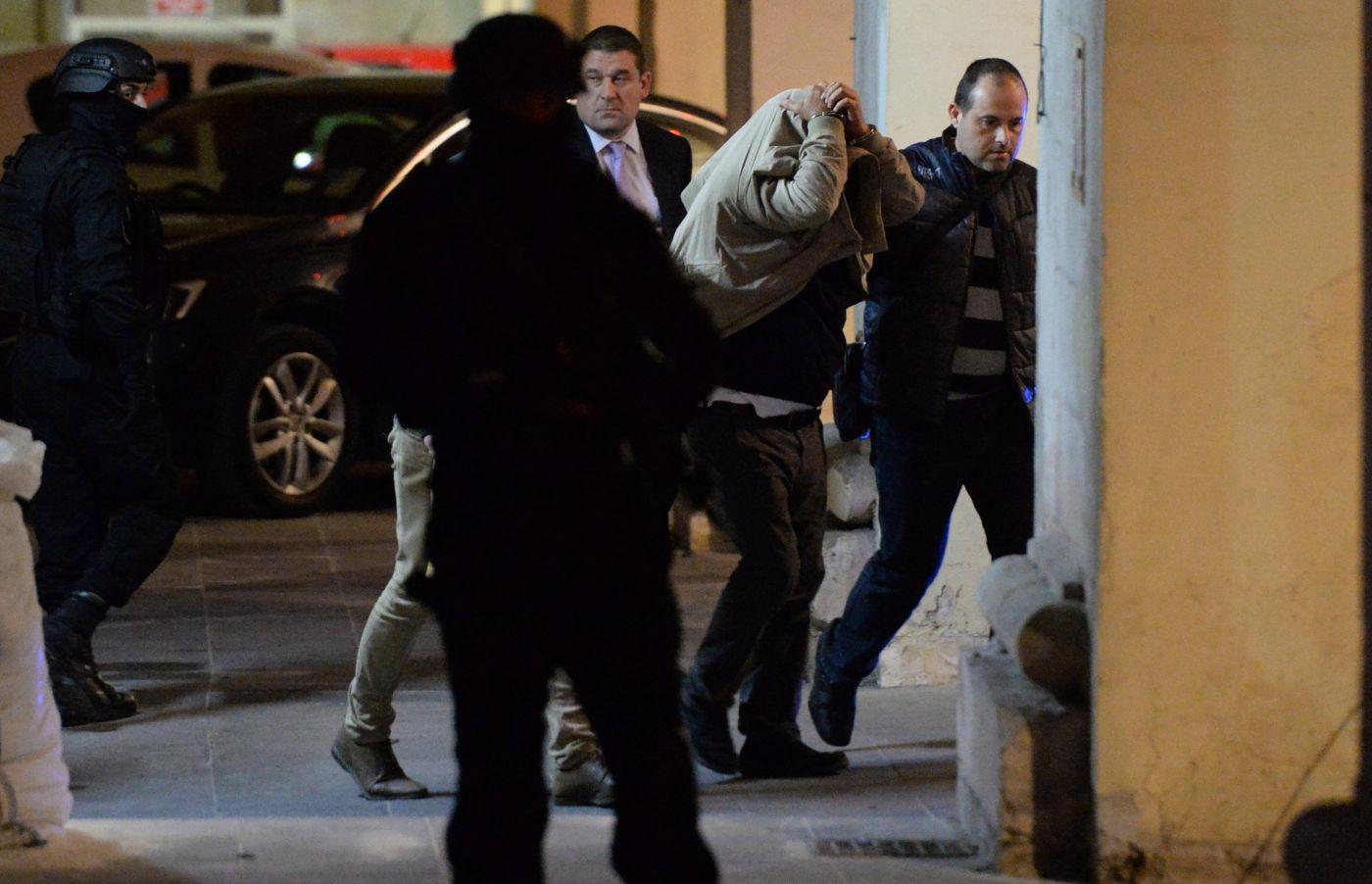 One of the hitmen charged in court in 2017.
Phones recovered
12.37pm Six or seven mobile phones were recovered during searches, including Vince Muscat's personal phone and the burner phone ending 8824, which investigators had linked to George Degiorgio.
Arnaud says the discovery further strengthened the prosecution's case, as the burner phone had been traced to the Grand Harbour area near the Upper Barrakka at the time the bomb was detonated.
Police believe some of the phones may have been discarded as officers moved in to make the arrests.
"That left us wondering whether they knew we were coming for them," Arnaud tells the jury.
All three suspects exercised their right to remain silent during police interrogation.
They were arraigned on December 5, 2017, while further searches were carried out at the Marsa potato shed the previous day.
Ten suspects arrested
12.30pm Investigators ultimately decided to arrest 10 people, rather than the five initially identified, in a coordinated operation carried out with Europol.
Arnaud recounts how officers arrested the suspects at the Marsa potato shed. When George Degiorgio was apprehended, he had his partner's mobile phone number written on his hand in pen but was not carrying his own phone.
Investigators later found a mobile phone nearby with its battery removed.
Police also deployed divers to search the surrounding waters, Arnaud says, because investigators believed the sea could have been used to dispose of evidence.
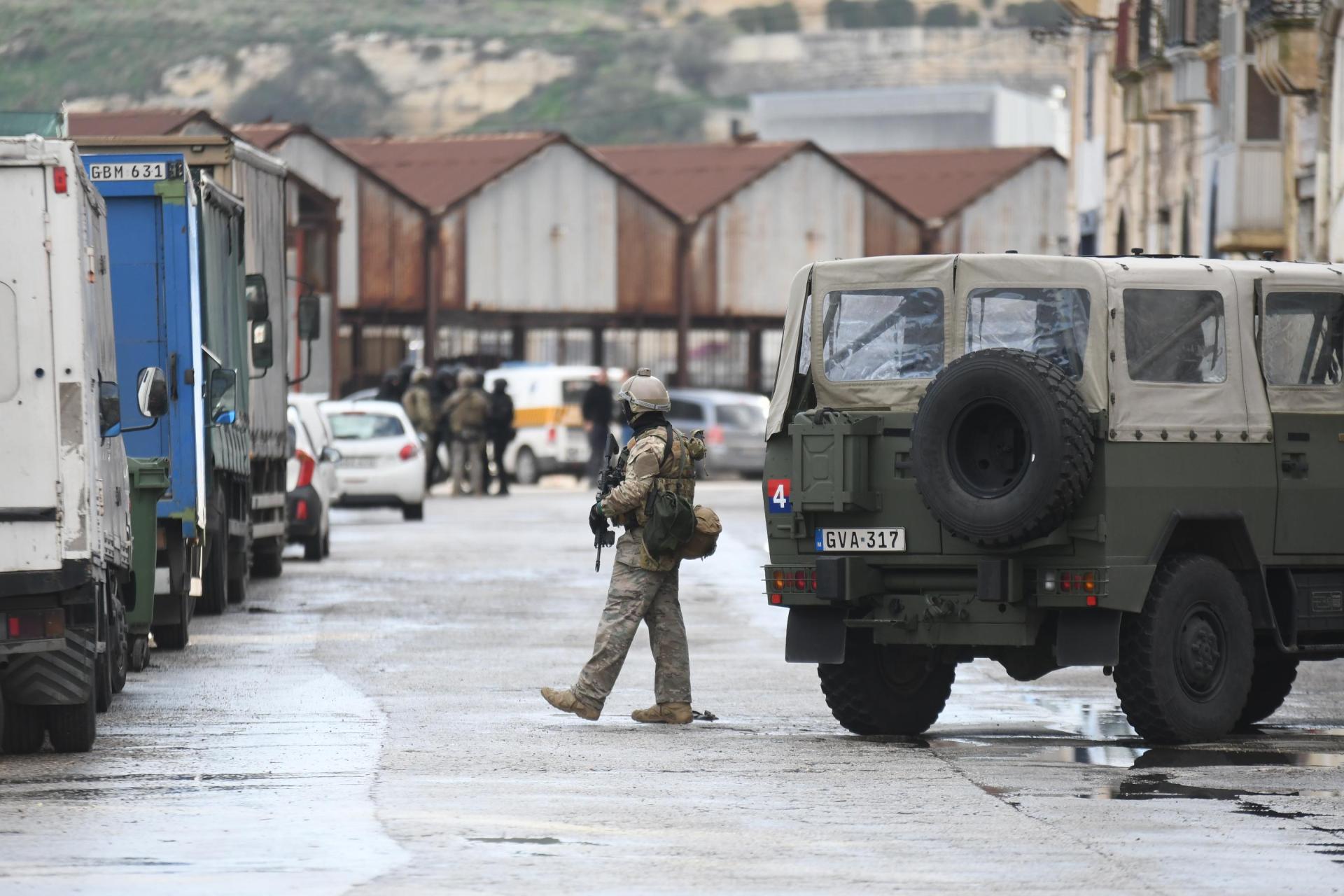 The raid on the Marsa potato shed in 2017. Photo: Jonathan Borg
Joseph Muscat briefed
12.22pm Arnaud says that in the last week of November 2017, the inquiring magistrate signed the arrest warrants.
Around the same time, then Assistant Commissioner Silvio Valletta asked him to accompany him to the Office of the Prime Minister in Castille to brief prime minister Joseph Muscat on the progress of the investigation. No names were mentioned in this meeting.
Arnaud says they returned to Castille in the following weeks to provide another update as the investigation neared its conclusion.
Asked by the judge if the names of the suspects were mentioned in the second meeting, Arnaud says he does not recall.
Arrest warrants issued
12.20pm Arrest warrants were issued for George and Alfred Degiorgio and Vince Muscat.
Arnaud says investigators also believed others had played a role in the plot.
"As the investigation progressed, we saw indications that more people had assisted in carrying out the plan," he told the jury.
Police therefore also obtained arrest warrants for brothers Robert and Adrian Agius, known as Ta' Maksar.
Il-Koħħu enters the scene
12.18pm Arnaud says the telecommunications evidence enabled investigators to identify who they believed was using each of the three burner phones.
On the morning of the murder, all three devices were active together in Bidnija before later moving to St Paul's Bay. One of the phones would normally register overnight in Siġġiewi, but on the night of the murder all three were traced to St Paul's Bay.
Arnaud said investigators identified the burner phone ending 8824 as the one used by George Degiorgio, while the phone ending 8823 was linked to Alfred Degiorgio.
The remaining burner phone, ending 8820, was identified through a process of elimination and telecommunications analysis.
Police already knew that one of the brothers' closest associates was Vince Muscat, known as il-Koħħu. By comparing the location data from Muscat's personal phone with that of the burner phone ending 8820, investigators concluded he was the user of the third device.
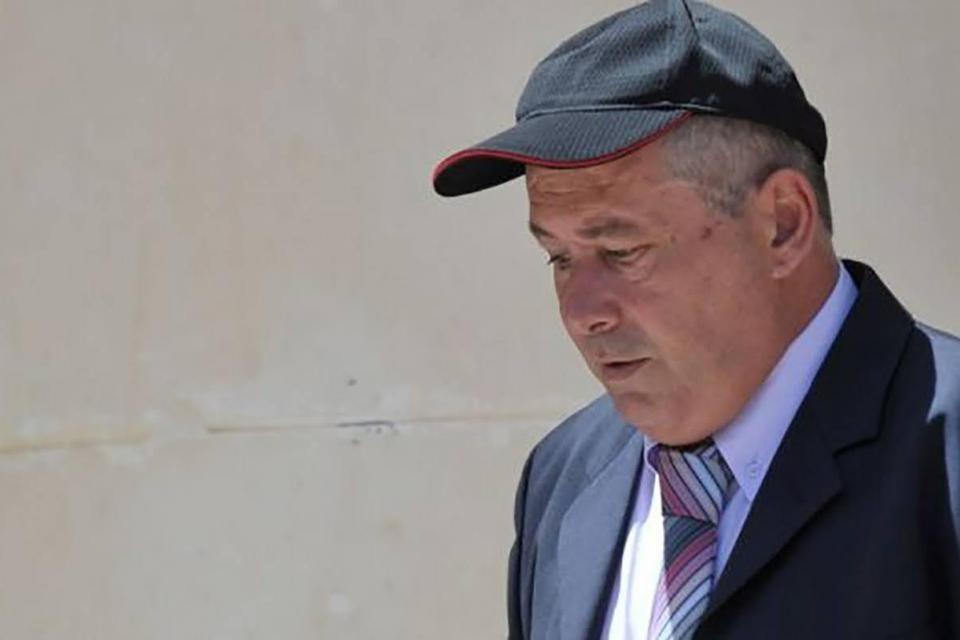 Vince Muscat, known as il-Koħħu.
'The features matched'
12.05pm Investigators carried out a reconstruction exercise to determine whether the boat seen on CCTV on the day of the murder was George Degiorgio's Maya.
Knowing where the boat was berthed, officers positioned themselves near the Upper Barrakka and waited for it to leave the harbour. They filmed Maya as it departed, capturing close-up footage of both the vessel and its skipper, George Degiorgio.
Police then filmed the boat again as it returned to the Marsa potato shed.
Arnaud says investigators compared the footage from the reconstruction with CCTV recorded on October 16, 2017.
"The features matched," he told the jury. "We concluded it was the same boat used on the day of the murder."
A boat named Maya
12pm Court is back in session.
Arnaud tells the jury that investigators were already familiar with the Degiorgio brothers, whom he described as known figures in the criminal underworld living in St Paul's Bay.
While police were initially unable to identify who was linked to activity in the Siġġiewi area, they knew George Degiorgio owned a boat named Maya and that his brother Alfred also owned a boat. CCTV footage later proved crucial.
Investigators established that at around 6.30am on the day of the murder, a boat left the Grand Harbour. Shortly before 3pm, it stopped beneath the Upper Barrakka area, where the mobile mast identified in the investigation was located.
"It remained stationary for between five and 10 minutes, including at the time of the explosion," Arnaud says.
The boat then headed back into the Grand Harbour in the direction of the Marsa potato shed, he added.
Parties called to chamber
11.38am We are back in the hall. But the judge has called all the parties into her chamber.
Break
11.02am The judge orders a 30-minute coffee break. For the past 90 minutes, we've been listening to the testimony of Keith Arnaud, the lead investigator in the Daphne murder case.
We'll be back shortly.
Degiorgio brothers
11am Keith Arnaud says the telecommunications evidence began pointing investigators towards the (notorious) Degiorgio brothers.
On the night before the murder, one of the phones was last traced to the Marsa potato shed, a location police already associated with individuals who frequented the area.
"We already knew who used to frequent the potato shed," Arnaud tells the jury.
Investigators also found that two of the phones repeatedly connected to mobile masts covering St Paul's Bay, close to the apartments where Alfred and George Degiorgio lived.
Arnaud adds that one of the brothers also owned a boat, a detail investigators considered significant as they pieced together the movements of the phones before and during the murder.
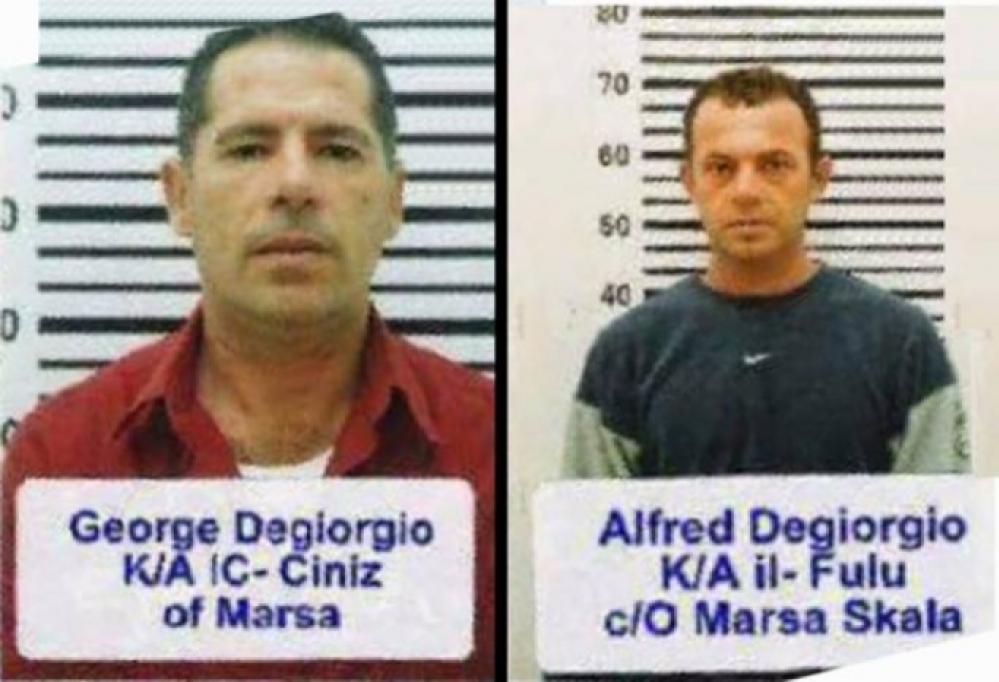 The Degiorgio brothers.
Cheap burner phones
10.53am Investigators gradually began forming a picture from the telecommunications evidence.
"The elements started fitting together," he tells the jury.
Police believed the devices were cheap "burner phones" purchased before October 16 and used almost exclusively to communicate with each other.
Arnaud says the phones were occasionally left switched on overnight in Siġġiewi and St Paul's Bay. In the days leading up to the murder, two of the devices repeatedly appeared together in the Bidnija area, connecting for extended periods to the mobile mast closest to Caruana Galizia's home.
He says investigators considered this consistent with surveillance of the journalist before the assassination.
More suspicious numbers
10.45am FBI experts identified two additional mobile numbers that also appeared in the Bidnija area on the day of the murder and ceased all activity shortly after 3pm.
The two numbers communicated exclusively with each other and were switched off just minutes after the explosion.
Arnaud says the numbers shared an unusual pattern, differing only in their final two digits, making them stand out during the investigation.
Trail leads to sea
10.40am An FBI expert was able to reconstruct the remains of the electronic triggering device, including the SIM card recovered from the wreckage, and decode the command sent to detonate the bomb: #rel1=on.
Investigators then turned their attention to the second SIM card, which had connected to mobile masts in the Grand Harbour area.
Arnaud says its activity closely mirrored that of the device in Bidnija. The phone was switched on shortly before the explosion and, based on the pattern of connections to different mobile masts, investigators concluded its user was most likely at sea.
"The locations were changing over very short periods of time," Arnaud says. "That suggested movement at a speed that would have been impossible on land."
Final activity at 2.58pm
10.36am Arnaud says the SIM card inside the electronic triggering device continued sending hourly location updates, indicating it remained in the Bidnija area until the moment of the explosion.
At 2.58pm, the SIM card registered its final activity before disappearing from the mobile network.
Arnaud tells the jury that an FBI expert reconstructed the shattered triggering device from fragments recovered at the scene. The SIM card was found to be part of the same device, allowing investigators to decode the command sent moments before the explosion.
The analysis, he said, confirmed the SMS activated the bomb.
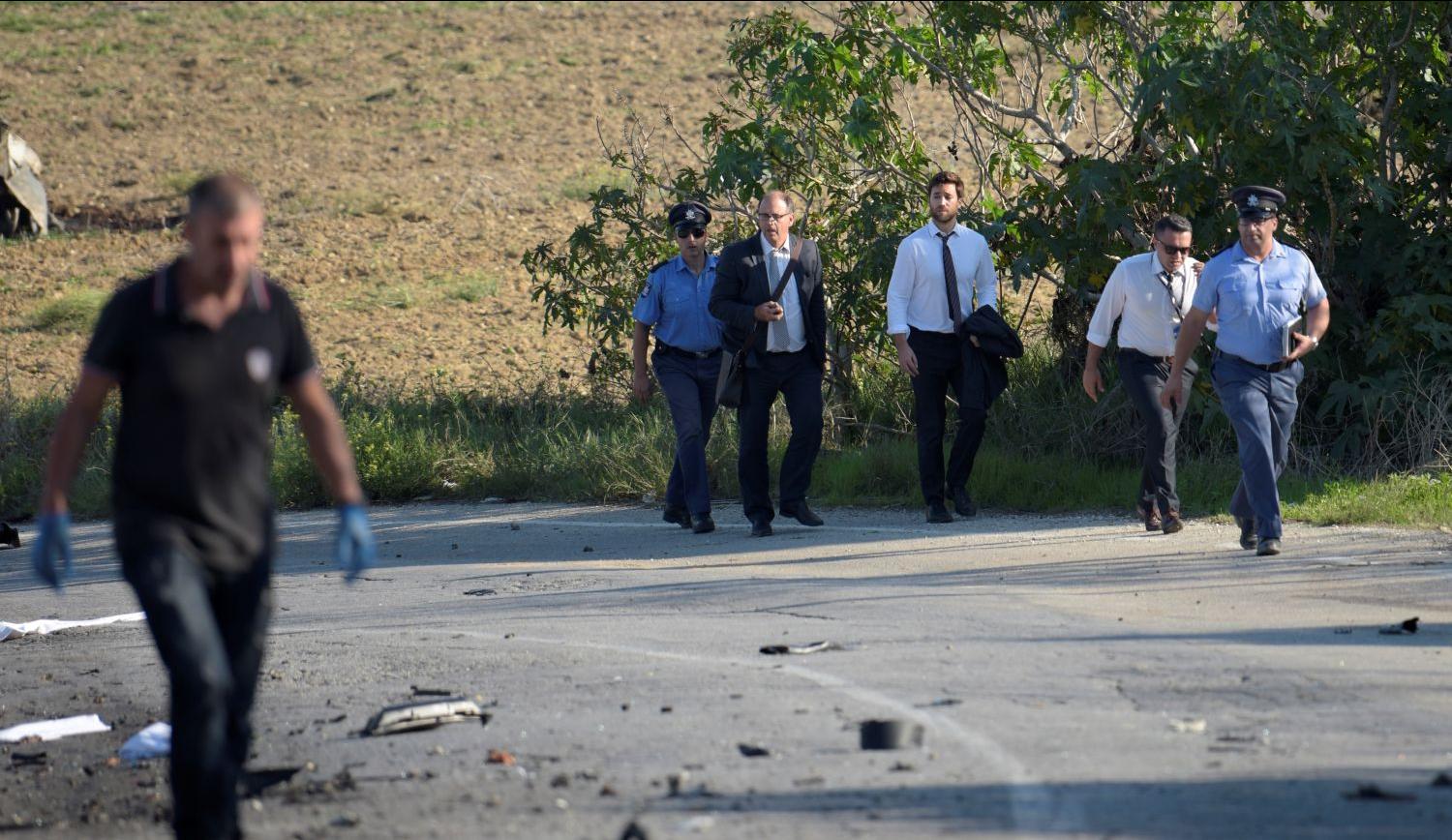 Peter Caruana Galizia (centre) and his son Andrew arriving on site together with police on that tragic October 17 afternoon. Photo: Mark Zammit Cordina
SMS exchanged
10.32am Telecommunications data allowed investigators to determine who contacted whom, how long calls lasted and the location of each device.
Arnaud says the SMS sent from the phone in Valletta contained the code that activated the electronic device.
Investigators identified what they believe was the first significant communication between the two SIM cards on August 21, 2017. An SMS was exchanged between the same two numbers while they were connected to a mobile mast at Burmarrad Hill View, covering the Bidnija area.
"We understood this to have been a test," Arnaud tells the jury.
The next activity was recorded on October 13, when both devices were activated in the Santa Venera area, near the Regional Road flyover. A number of messages were exchanged before both devices were switched off again.
The final activity took place on October 16, the day of the murder. Arnaud says the SIM card ending in 3752, which had been inserted into the electronic triggering device, was switched on at 1.40am in Bidnija.
Linked SIM cards
10.25am Investigators traced the second phone number to a mobile mast covering the Grand Harbour area in Valletta.
The other SIM card, ending in 3752, was not installed in a mobile phone but in an electronic device capable of receiving text messages and triggering another device remotely.
Arnaud explains that such devices can receive an SMS containing a code to activate equipment, similar to systems used to switch on appliances remotely.
Investigators found that both SIM cards had been activated in 2017 and communicated exclusively with each other.
"That is not something you would normally see with an ordinary mobile phone," Arnaud says.
The two SIM cards were switched on together and never communicated with any other devices. Investigators also established that they were first activated in the vicinity of the Toyota showroom in Żebbuġ.
The phone goes silent
10.20am Arnaud says investigators eventually narrowed thousands of mobile phone numbers down to one that immediately caught their attention.
He tells the court that the victim's phone received a message at 2.58pm before going offline at 3pm, the moment the bomb exploded.
Investigators found that another mobile number, 99683752, also switched off at the same time. Police obtained the phone's records and discovered it had no internet activity, being used only for calls and text messages.
Arnaud says investigators also established that, moments before it was switched off, the phone had received a message from another number, 99684366.
"At that stage, we concluded these were numbers of interest to the investigation," he told the jury.
TNT used
10.15am CID officers expanded the search around the crime scene, collecting CCTV footage from across the surrounding area.
"We were almost working in the dark," he said, explaining that investigators sought to preserve every possible piece of evidence in the early stages of the inquiry.
Arnaud confirms that forensic experts established that the explosive used in the attack was TNT.
DNA clue emerges
10.10am Caruana Galizia had parked her car outside the family home the night before because she and her son Matthew were sharing a rental vehicle.
As investigators searched the suspected lookout point, they noticed the area appeared undisturbed, apart from a tree under which they found a discarded cigarette butt.
The item was treated as potentially significant evidence. It was collected by forensic officers and sent for DNA analysis by forensic expert Marisa Cassar.
Arnaud said the DNA profile recovered from the cigarette butt was found to belong to a man.
A perfect vantage point
10.08am Investigators searched the area identified by the witness and discovered what they believed was an ideal observation point.
A short distance from where the suspicious car had been seen, officers found a collapsed wire fence that allowed someone to slip through and descend to a secluded spot hidden from the road.
From there, investigators had a clear view of Bidnija, including the lane leading to Caruana Galizia's home, the stretch of road where the bomb exploded, the gate to her residence and the place where she usually parked her car.
"It was a perfect vantage point," Arnaud says, explaining why investigators believed the location could have been used to monitor the journalist's movements.
A small car
10.05am Arnaud says investigators received an important lead from a resident living near the Victoria Lines.
The witness told police that, on the day of the murder and on several days beforehand, he repeatedly noticed a small car bearing the registration prefix QZ parked in the area.
Although he could not describe the driver, the witness said the man would remain inside the vehicle, watching and observing the surroundings before driving away.
The witness also told investigators the car disappeared after the explosion.
Arnaud said this information prompted police to begin investigating both the vehicle and the person seen inside it.
Two lookout points
10.02am Keith Arnaud says investigators identified two locations from where the victim could be observed without the lookout being easily seen.
One was along the Victoria Lines, which overlooks Bidnija, while the other was a garden next to the MCAST campus, known as L-Għarusa tal-Mosta, which also commands a view of the area.
Investigators believed either location could have been used to monitor Caruana Galizia's movements before the bomb was detonated.
Daphne was being watched
10am Investigators immediately began examining how the attack had been coordinated.
"It was clear that whoever coordinated the attack was watching the victim, because they knew she was inside the vehicle," Arnaud says.
Investigators therefore began searching the Bidnija area for vantage points from where the victim's movements could have been observed before the bomb was detonated.
Victim's mobile phone data extracted
9.57am Matthew Caruana Galizia told investigators his mother had been working on her computer before publishing a post on her blog.
She then left the house, only to return moments later after realising she had forgotten her chequebook. After getting back into the car, she drove off. Moments later, the bomb exploded.
Arnaud said a second Europol team was set up inside the CID headquarters, where officers worked alongside Maltese investigators to analyse the growing volume of evidence.
The crime scene remained sealed for six to seven days. On the second day of the investigation, Caruana Galizia's car was transferred to the police compound, where it was kept under lock and key. The inquiring magistrate retained the keys and security cameras were installed to ensure the vehicle remained untouched.
Investigators also recovered Caruana Galizia's mobile phone and extracted data from the device.
A crater in the road
9.55am Arnaud says investigators identified the exact point where the bomb exploded after discovering a crater in the road. From there, they were able to reconstruct the vehicle's trajectory using marks left on the road, which showed how the car veered off into the adjacent field after the blast.
Investigators also relied on eyewitness accounts to reconstruct the explosion.
A magisterial inquiry was immediately opened, led by then-magistrate, now Judge Anthony Vella, who appointed experts to examine the scene and report their findings to the court.
Arnaud says an explosives expert from Europol was also brought in to analyse the crime scene and identify components believed to have formed part of the bomb used in the assassination.
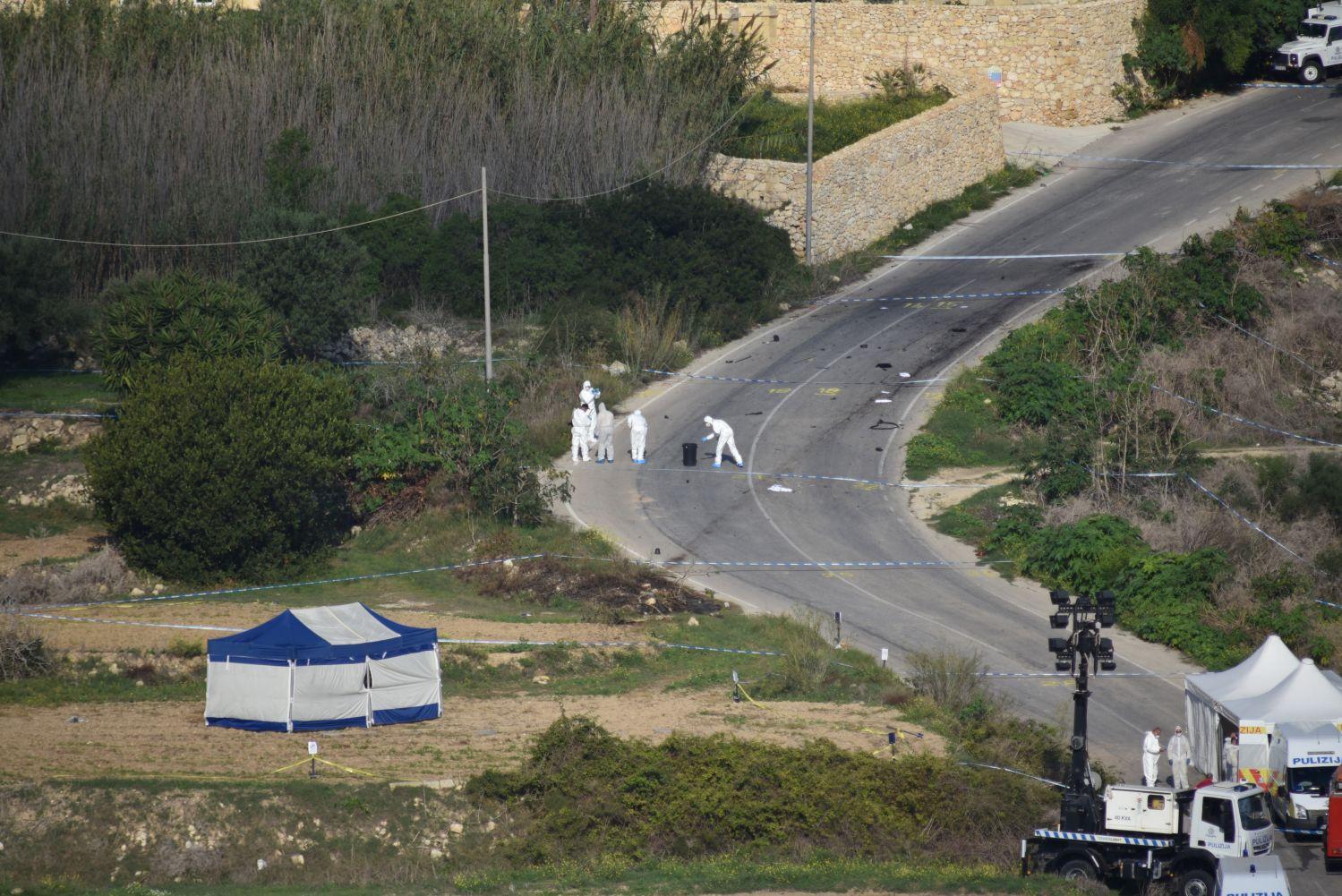 The site in Bidnija after the car bomb. Photo: Mark Zammit Cordina
'We preserved everything'
9.50am Matthew Caruana Galizia informed investigators that his mother had left home just a minute before the explosion.
Investigators immediately began examining how the bomb was detonated. Arnaud says the FBI was called in to assist with analysing mobile phone mast data.
Police obtained telecommunications records from all local service providers, eventually identifying thousands of phone numbers that connected to nearby mobile towers around the time of the explosion.
Arnaud says investigators made a crucial decision on the first day of the inquiry: nothing at the crime scene should be touched until foreign forensic experts arrive.
"We preserved everything," he tells the court, adding that police officers and members of the Armed Forces of Malta secured the scene until the international experts began their work.
Bomb placed inside the car
9.45am Investigators identified two priorities: gathering forensic evidence from the devastated crime scene and analysing telecommunications data to establish how the bomb was triggered.
Despite the extensive destruction, Arnaud says investigators were able to determine at an early stage that the explosive was placed inside the car.
"The way the vehicle exploded showed us, at first glance, that the bomb had been placed inside the car rather than underneath it, as we had seen in previous cases," he tells the court.
'Not the first bomb attack'
9.40am Arnaud tells the jury that in October 2017, he was an inspector assigned to the homicide squad. Shortly before 3pm on October 16, police were informed of an incident in Bidnija.
Together with district police officers, investigators immediately began their work, with the priority being securing and preserving the crime scene.
Police soon established that the victim was journalist Daphne Caruana Galizia.
Arnaud says international investigators were also called in to assist the probe, adding that this is not the first vehicle bomb attack police had investigated.
Keith Arnaud to testify
9.35am Keith Arnaud, the assistant commissioner and the lead investigator in the murder case, is the first witness.
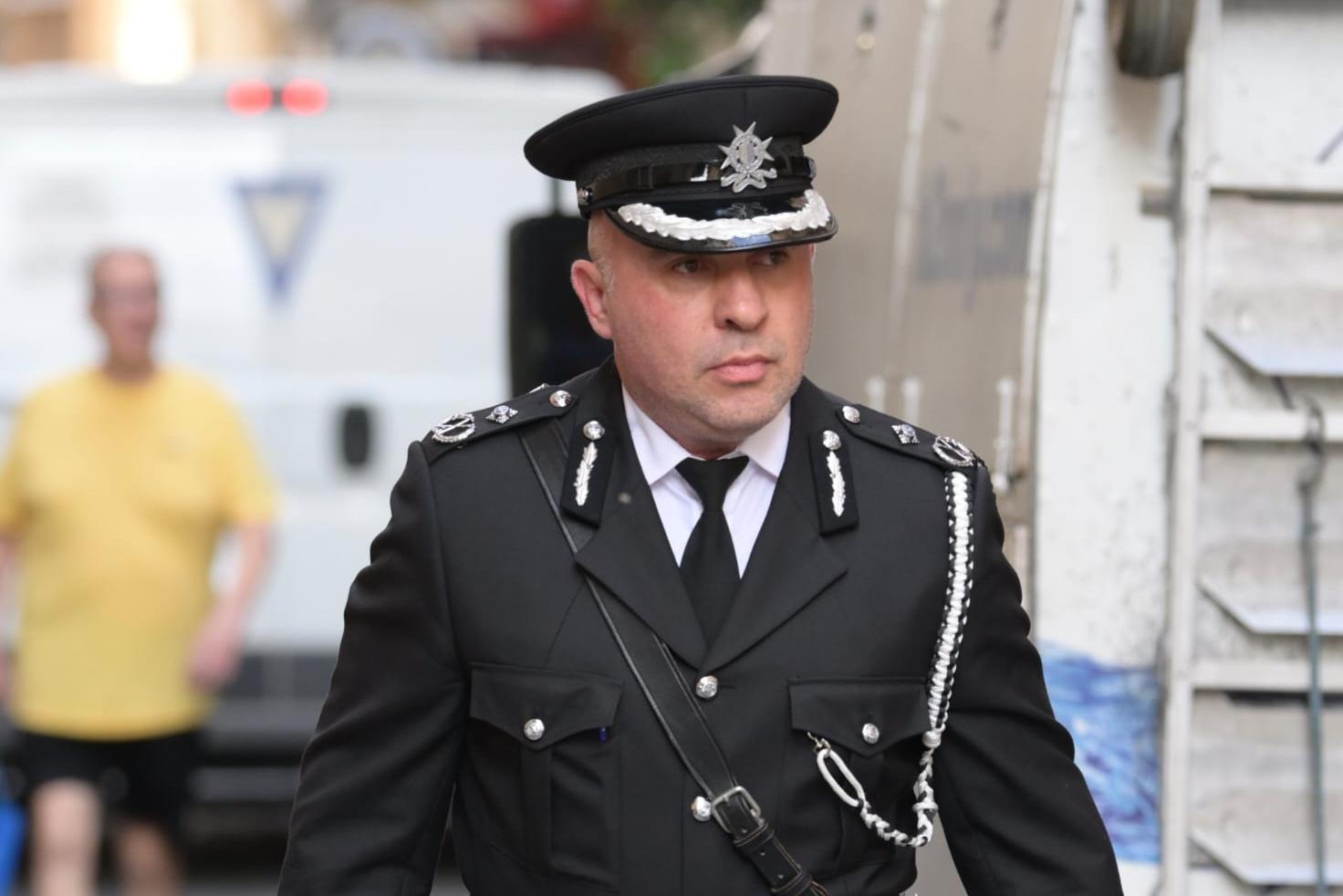 Police investigator Keith Arnaud. Photo: Matthew Mirabelli
Inside the courtroom
9.30am Our court reporter, Clara Farrugia, is inside Hall 22. We're expecting the case to start shortly.
The prosecution, defence lawyers and parte civile are in the room. The jurors have taken their places.
Judge Edwina Grima will lead proceedings.
'Mum died without seeing justice'
8.45am Daphne Caruana Galizia's sister, Mandy, has uploaded a post about the murder, the trial and the impact on her family.
"Mummy died without seeing justice served, while Daddy - who is in his late eighties - still follows every little detail about Daphne online, after having spent years sitting in court (along with Mummy) inches away from his eldest daughter’s assorted murderers. Justice for Daphne can’t come soon enough. Malta must step up," she wrote on Facebook.
A complex case
8.35am The case has had far-reaching ramifications because of the prominent figures implicated in it, and because it centres on the assassination of one of Malta's best-known journalists.
Here are some background stories to help you follow the trial:
How prosecutors say the Daphne Caruana Galizia murder was planned
The nine-year road to the Yorgen Fenech murder trial, explained
'Absolutely not': Abela denies calling early election due to Yorgen trial
Who's who in the Yorgen Fenech trial
What happened so far?
8.30am The first day of the long-awaited trial was dominated by the delicate choice of the jury members, followed by the judge's address.
Yesterday, Thursday, we heard Attorney General prosecutor Anthony Vella lay out the case. He made the case that Fenech was the person who set the murder in motion, financed it and applied pressure until it was carried out.
Welcome
8.15am Good morning and welcome to the third day of one of the most consequential trials in Maltese history. Today, Friday, we're expecting the first witness to take the stand.
Who are the main players?
8am Let's take a look at the key figures in this complex case.
Yorgen Fenech: a business tycoon and heir to a family fortune, and the man in the dock: Fenech is accused of complicity in Caruana Galizia's murder;
Melvin Theuma: a taxi driver who worked for Fenech and who has testified that he served as a middleman between Fenech and the alleged hitmen;
Vince Muscat, Alfred Degiorgio, George Degiorgio: the convicted hitmen;
Keith Schembri: a friend of Fenech's and the chief of staff to Joseph Muscat when he was prime minister;
Edwina Grima: the presiding judge;
Keith Arnaud, Kurt Zahra: the lead police investigators and prosecutors;
Godwin Cini, Anthony Vella, and Danika Vella: the lawyers leading the Attorney General's office prosecution;
Giannella de Marco, Gianluca Caruana Curran, Charles Mercieca: Yorgen Fenech's legal team;
Jason Azzopardi, Therese Comodini Cachia: lawyers appearing for the Caruana Galizia family.