As it happened: Daphne would be alive had Fenech not paid for murder: prosecutor
Jury told to remove personal opinions about Daphne Caruana Galizia when deciding fate of businessman
If Yorgen Fenech had not paid for Daphne Caruana Galizia's murder, the journalist would still be alive, a prosecutor told a jury on Thursday.
On the second day of Fenech's trial, Attorney General lawyer Anthony Vella urged jurors to keep their focus firmly on the businessman despite the many other names expected to surface during the weeks-long proceedings.
"Without Yorgen Fenech's participation in this crime, Daphne would not have been killed... If Fenech had not paid for it and had not engaged the Degiorgios (the hitmen), Daphne would still be alive," he said.
Fenech is charged in connection with the killing of Caruana Galizia in a car bomb in October 2017. Five men have already been convicted of the crime.
Vella repeatedly reminded jurors that, although the trial would feature testimony by many, they were being asked to decide the fate of one man alone.
"Many other people will be mentioned during this trial," he said.
"The defence will likely ask you to focus your attention on others. But keep in mind that this is Yorgen Fenech's trial and nobody else's."
The prosecution also appealed to jurors to put aside any personal opinions they may have held about Caruana Galizia, whose writing often polarised public opinion.
"You may agree or disagree with what she wrote, but keep in mind that she was killed because of her work," Vella said.
He described the slain journalist as "a person like us" – a mother of three sons, a wife and a daughter who never lived to meet her grandchildren. She had dignity and many dreams still to fulfil. She was killed in a brutal and cruel manner."
The prosecutor then revisited the gruesome details of the assassination, taking jurors step by step through what Vella said was a carefully orchestrated murder plot.
Fenech repeatedly pressured middleman Melvin Theuma to hurry the hitmen because Caruana Galizia was preparing to publish information concerning him personally, Vella said.
Jurors heard from Vella that the killers planted a powerful bomb beneath the driver's seat of the journalist's Peugeot 108 before he described how a container filled with petrol was also placed inside the vehicle to ensure she did not survive the blast.
The court heard that a witness driving in the opposite direction saw the explosion and heard a scream as the bomb detonated.
Vella also told jurors that, after the assassination, a further €400,000 was paid to finance the legal defence of Alfred and George Degiorgio after their arrest.
Turning to legal issues, Vella said jurors would ultimately have to decide whether Fenech intentionally ordered the murder.
"You must determine whether, when he ordered this murder, Yorgen Fenech acted intentionally and whether he intended to kill the journalist or place her life in danger, with death as the consequence," he said.
The prosecution also explained why middleman Melvin Theuma was granted a presidential pardon, telling jurors it was because he broke the "code of silence" between criminals and helped investigators identify Fenech.
"The presidential pardon breaks the code of silence between criminals," Vella said.
'I screwed up'
Jurors were told they will hear Theuma testify in the coming weeks, along with police investigators, forensic experts from Malta and abroad, secretly recorded conversations and chats recovered from Fenech's mobile phone.
Among the recordings, jurors will hear Yorgen Fenech say: "Push her overboard... I don't mind" and "jien għaffiġta" (I screwed up).
As he concluded his opening address, Vella urged jurors to assess each witness carefully, paying attention to their consistency, credibility and demeanour.
"We believe the evidence that will be presented against the accused will confirm his guilt," he said.
Fenech denies the charges.
The trial resumes on Friday morning, when the prosecution is expected to call its first witnesses.
LIVE BLOG
And that's it for today
5.05pm Judge Grima has closed the proceedings for today, telling those present that the first witness will take the stand tomorrow, Friday, at 9am.
We'll have a full wrap-up of today's proceedings shortly.
Final message
4.57pm Vella ends his opening address with an appeal to the jury about the importance of their task.
"It is a tragedy when an innocent person is found guilty, but it is an even greater tragedy when a guilty person is found innocent," he tells jurors.
He closes by saying justice must also be done to Maltese society.
"At the end of the day, justice must also be done to Maltese society, which certainly deserves better."
'We believe evidence will confirm his guilt'
4.55pm Vella urges jurors to carefully assess every witness who takes the stand during the trial.
He asks them to consider whether witnesses are consistent and credible, and to closely observe their demeanour while giving evidence.
"We believe the evidence that will be presented against the accused will confirm his guilt," Vella tells the jury.
Evidence to be presented Friday
4.45pm Jurors are told the trial will move from opening submissions to evidence on Friday morning.
The first witnesses will include police officers and investigators involved in the case. As the trial progresses, jurors will also hear from forensic experts, including medical specialists and foreign experts engaged by agencies such as Europol, the FBI and the Netherlands Forensic Institute (NFI).
"This is when the evidence begins," Vella tells the jury.
Jurors will also hear recordings involving Melvin Theuma and will be shown chats recovered from Yorgen Fenech's mobile phone, the prosecutor says.
Back in court
4.35pm We are back in the court room for the conclusion of the opening statement of the prosecution. Since this morning, AG lawyer Anthony Vella has been addressing the jury. In a nutshell, he has been urging the jurors to keep their eyes on the ball and focus on the case against Yorgen Fenech.
Short break
3.55pm The judge has ordered a break. The prosecutor's opening statement will resume at 4.30pm.
Why Theuma was pardoned
3.45pm Prosecutor Vella tells jurors that Vince Muscat, known as il-Koħħu, cooperated with police and identified Melvin Theuma.
Theuma was subsequently arrested and requested a presidential pardon, Vella says. He tells the jury the pardon was granted because Theuma revealed what had happened and helped investigators reach Yorgen Fenech.
"The presidential pardon breaks the code of silence between criminals," Vella says.
Vella says Theuma's testimony explains how he was commissioned, how the murder unfolded and the level of trust Fenech placed in him.
'Focus on Fenech'
3.40pm The prosecutor urges jurors to remain focused on the man in the dock, despite the many other names expected to surface during the trial.
"Many other people will be mentioned during this trial. The defence will likely ask you to focus your attention on others. But keep in mind that this is Yorgen Fenech's trial and nobody else's. Your task is to decide Yorgen Fenech's case," he tells the jury.
Vella also tells jurors that the prosecution is not legally required to prove a motive for the murder. What it must prove, he says, are the two essential elements of the offence: the intention to commit the crime (mens rea) and the physical act (actus reus).
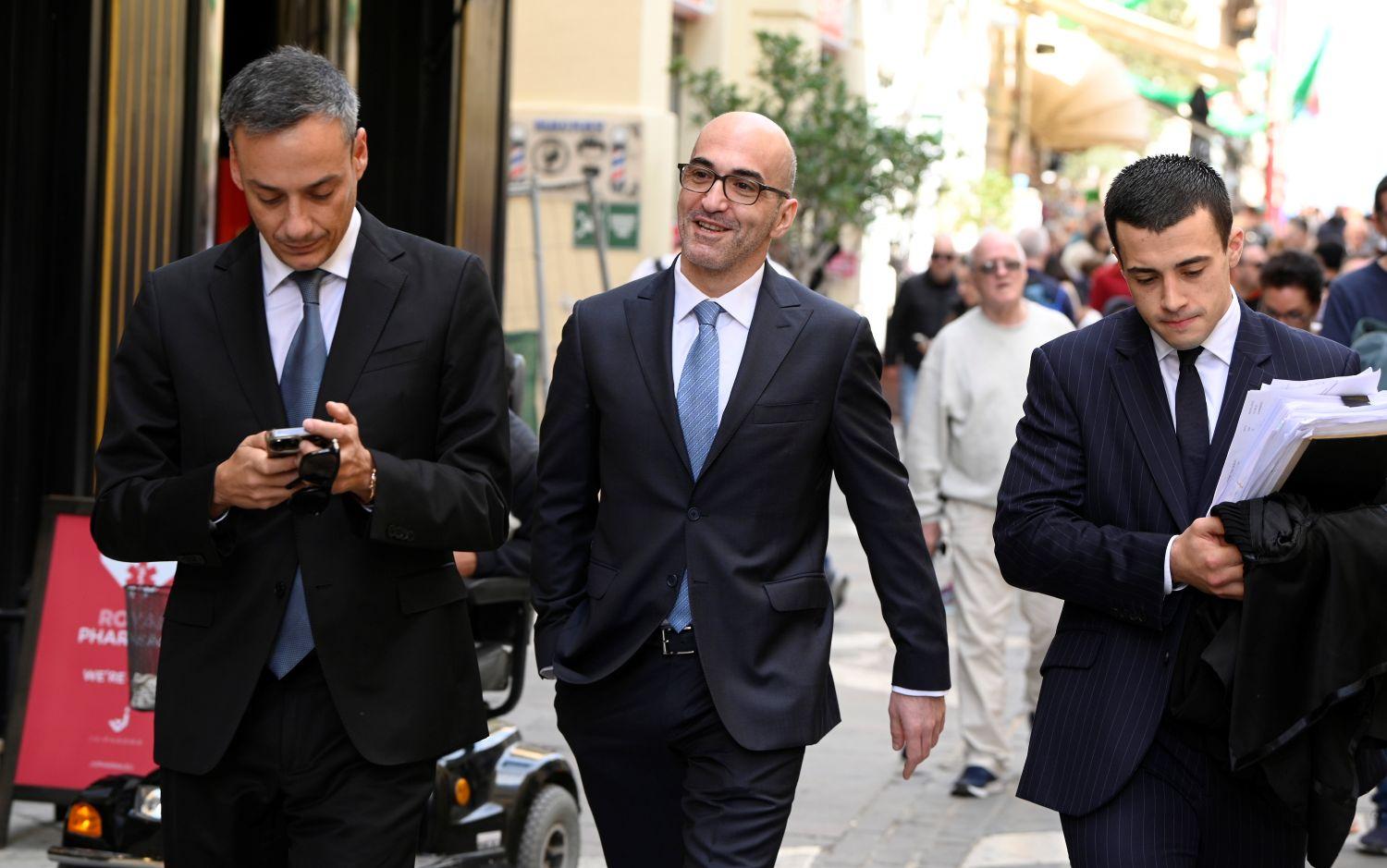 Yorgen Fenech (centre) outside court with two of his lawyers. Photo: Matthew Mirabelli
Second charge explained
3.35pm Prosecutor turns to the second charge facing Fenech: criminal association to commit a crime.
He tells jurors the prosecution's case is that Fenech ordered, planned and financed the killing of Caruana Galizia through other people.
To help explain the charge, Vella reads out the relevant provision of the Criminal Code before putting it into simpler language. He tells the jury that the offence concerns conspiring or associating with one or more people to commit a crime punishable by imprisonment.
Judge orders limit
3.25pm Proceedings pause after prosecutor begins explaining an article of the Criminal Code and a sub-article linked to it. The defence objected, arguing that the sub-articles should not be explained to the jury.
Judge Grima agrees, ordering the prosecution to limit its address to the specific charges Fenech faces. She says jurors should not be directed to consider other provisions within the same article, as this could confuse them.
'Daphne wouldn't have been killed if...'
3.20pm Vella argues that, in the prosecution's view, Caruana Galizia would not have been killed without Fenech's involvement.
"Without Yorgen Fenech's participation in this crime, Daphne would not have been killed," Vella tells the jury.
"If Fenech had not paid for it and had not engaged the Degiorgios, Daphne would still be alive."
He said this is why the prosecution believes Fenech should be found guilty of complicity in the murder.
Proceedings have paused after the defence raise a point of law.
Judge Grima orders the jury to leave the courtroom while the legal issue is argued in their absence.
Explaining complicity
3.10pm Prosecutor Vella explains to jurors why Yorgen Fenech is charged with complicity rather than carrying out the killing himself.
He says a homicide can involve several perpetrators with different roles. While Fenech was never at the Bidnija crime scene, Vella tells the jury that the prosecution's case is that he coordinated the murder and financed it, making him criminally liable as an accomplice.
Drawing a line
3.05pm There's a brief interruption in proceedings when a court marshal approached a courtroom cartoonist, instructed him to stop sketching and asked for his drawings.
Judge Grima quickly intervened, clarifying that the cartoonist was free to continue drawing, provided the jurors were not depicted. The proceedings then resumed.
Recordings to be played
3pm Jurors are told they will hear hours of secretly recorded conversations that concern the murder plot, the payments and details surrounding the killing.
Among the recordings, jurors will hear Yorgen Fenech say: "Push her overboard... I don't mind" and "jien għaffiġta" (I screwed up).
In another exchange, Theuma is heard saying: "And you gave me the €150,000."
According to Vella, Fenech replies: "I remember."
What jurors must decide
2.55pm Jurors are told that one of the central questions they will have to answer is whether Fenech acted intentionally when he allegedly ordered the killing of Caruana Galizia.
"You must determine whether, when he ordered this murder, Yorgen Fenech acted intentionally and whether he intended to kill the journalist or place her life in danger, with death as the consequence," Vella said.
He tells the jury they will hear evidence from Melvin Theuma, who testified during the compilation of evidence that Fenech instructed him to recruit the men who would kill Caruana Galizia and gave him the money to finance the assassination.
An important distinction
2.50pm Prosecutor is explaining the legal elements the prosecution must prove for a conviction.
He tells jurors that criminal liability rests on two essential components: 'mens rea' – the intention or state of mind behind the crime – and 'actus reus' – the physical act of committing it.
Vella explains the distinction in Maltese law between voluntary and involuntary homicide. Involuntary homicide, he says, arises where there is no intention to kill or injure another person. Voluntary homicide, by contrast, requires proof that the accused intended to kill or deliberately place another person's life in danger.
AG lawyer takes the stand
2.45pm The jurors take their seats. Tablets are being distributed to the prosecution, defence lawyers, parte civile and the jurors.
AG lawyer Anthony Vella takes the stand.
Back in court
2.35pm Our court reporter Clara Farrugia is back in Hall 22. We are waiting for the jury to be called back in and the trial to continue.
We're expecting prosecutor Vella to continue with his address.
Matthew's thanks
1.55pm Daphne Caruana Galizia's son, Matthew, is among the family members following proceedings in court. He's just thanked journalists for reporting the daily coverage for free.
"The alternative is that you get no or bad information."
We couldn't have put it better ourselves.
The evolving plot
1.30pm Our journalist Jacob Borg, who investigated Daphne's assassination, recalls that the car bomb wasn’t the killers’ first choice.
The initial plan was to shoot the journalist through a window in her Bidnija home. According to past testimony by convicted killer Vince Muscat, known as il-Koħħu, eventual bomb suppliers Robert Agius and Jamie Vella initially gave the triggermen three rifles with telescopic sights for them to try out.
"We had prepared the spot for the shooting. We removed some stones, put the sandbags. We had been given three rifles by Robert tal-Maksar, Jamie Vella,” Muscat told investigators.
The plan was eventually ditched in favour of a car bomb.
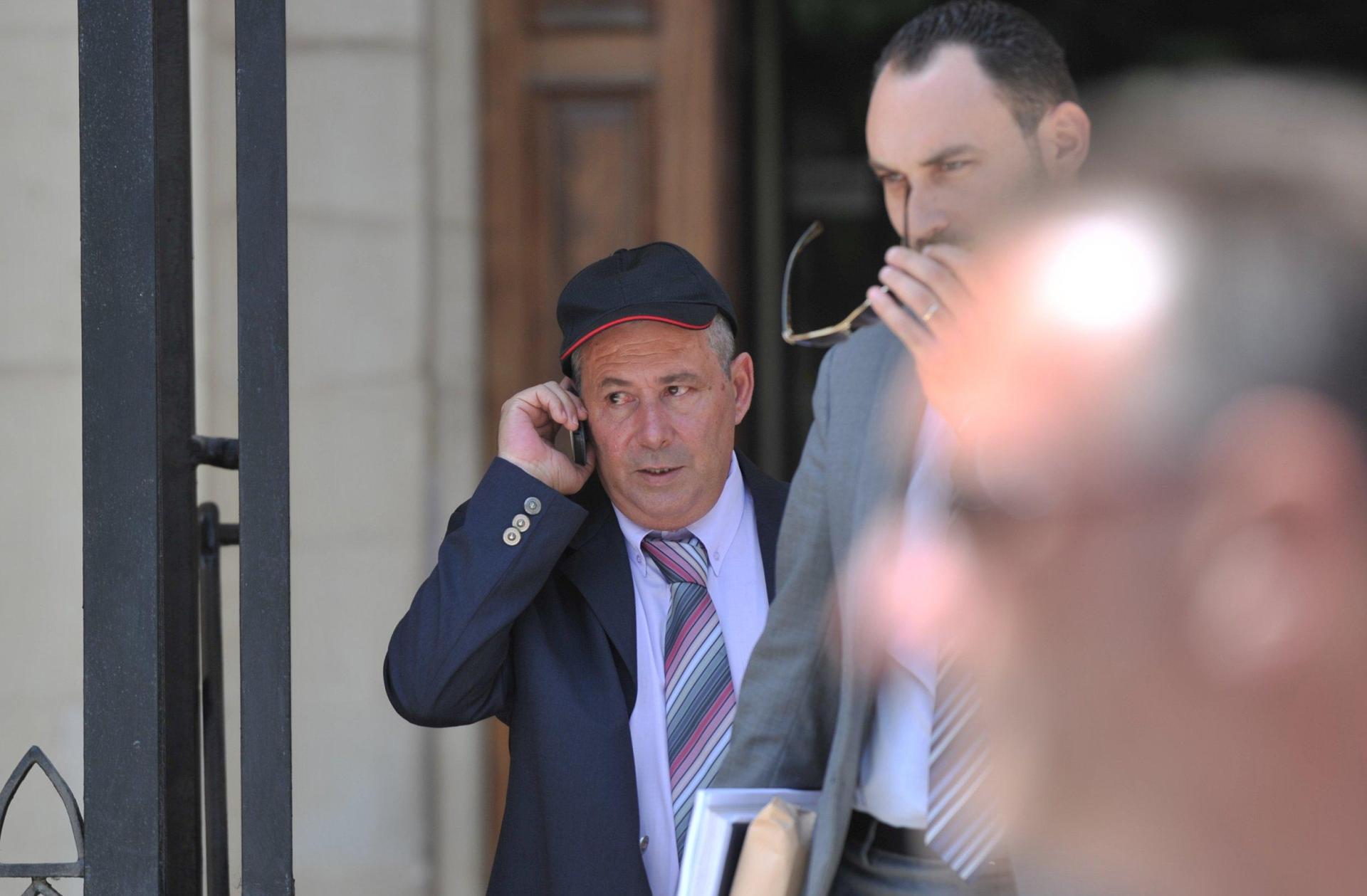 Vince Muscat (wearing cap), one of the three triggermen.
A break
12.45pm After a morning dominated by legal disputes and the prosecutor's opening address, including gruesome details of the murder plot and the bombing that killed Caruana Galizia, Judge Edwina Grima adjourned the case until 2.30pm.
We'll continue bringing you live updates throughout the afternoon as proceedings resume in what many are calling the trial of the century in Malta. Stay with us.
'She was a person like us'
12.33pm Prosecutor Vella urges jurors not to allow prejudice to influence them, either against the accused or the victim.
"Daphne was a journalist who wrote constantly. You may agree or disagree with what she wrote, but keep in mind that she was killed because of her work," he says.
Vella goes on to describe Caruana Galizia as a mother of three sons, a wife, a daughter and, later, a grandmother who never lived to meet her grandchildren.
"She was a person like us, with dignity and many dreams still to fulfil. She was killed in a brutal and cruel manner," he tells the jury.
Fenech's attempt to flee
12.30pm Vella tells jurors that Yorgen Fenech was arrested in November 2019 as he was attempting to flee Malta aboard his yacht from Portomaso towards Italy.
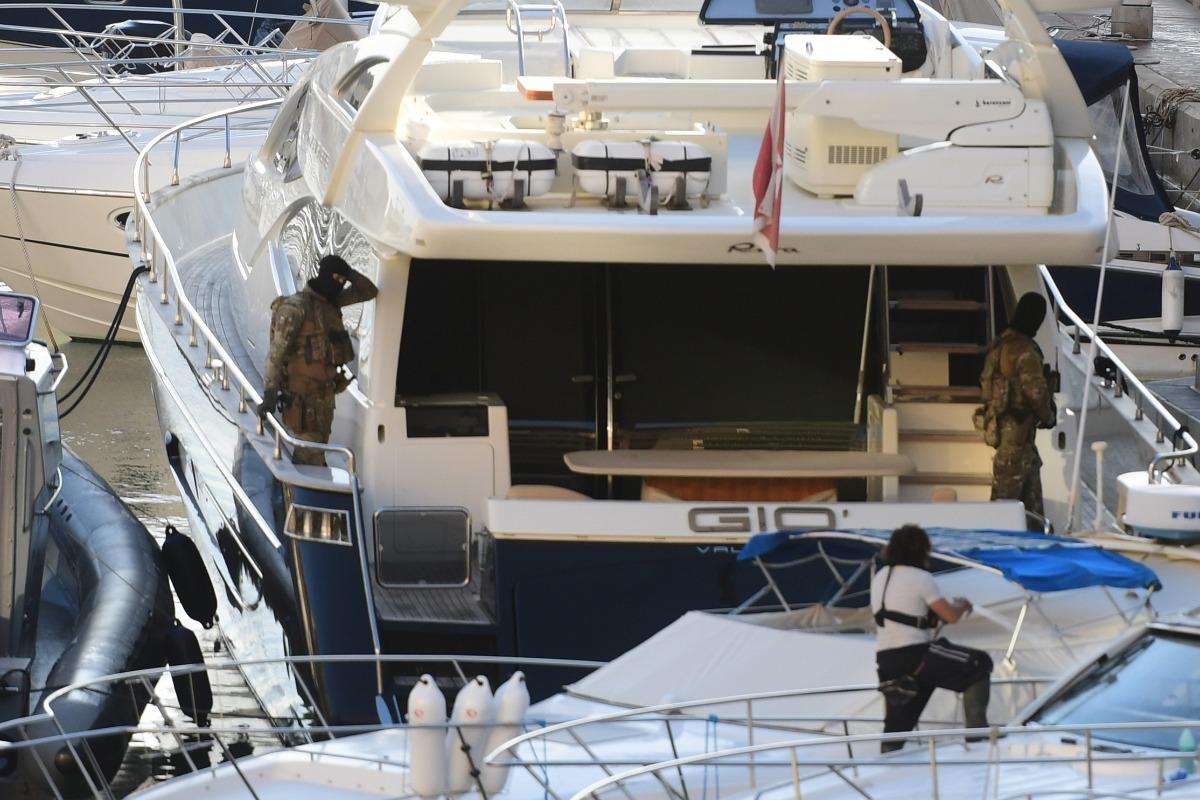 Fenech was caught in 2019 as he was leaving Malta on board his luxury yacht.
A further €400,000 paid to finance defence
12.28pm Alfred Degiorgio met Melvin Theuma a few days after the murder to collect the remaining €120,000, along with an additional €5,000.
The prosecution says the extra money was requested to cover expenses incurred in preparing the assassination, including the purchase of sophisticated binoculars and other equipment.
Vella says that in the months following the murder, a further €400,000 was paid to finance the legal defence of Alfred and George Degiorgio after they were arrested and charged.
'A blast and a scream'
12.25pm A witness driving in the opposite direction saw Caruana Galizia's car explode and heard a scream at the moment of the blast.
"This shows the violence that was used and the lengths they went to in order to ensure Daphne Caruana Galizia was killed," Vella says.
A container filled with petrol
12.20pm Caruana Galizia's son, Matthew, was at home when the explosion occurred just metres away.
He ran outside and was confronted with what the prosecution described as a shocking scene. Parts of the journalist's body had been blown out of the vehicle by the force of the blast, while other remains were found inside the burnt-out car, which had been engulfed in flames.
The men "wanted to make absolutely sure" Caruana Galizia would be killed.
To ensure she did not survive the blast, Vella tells the jury, they also placed a container filled with petrol inside the car to intensify the fire and destroy the victim.
The coded text message
12.17pm The hitmen seized their opportunity on the night of October 15-16, 2017, when they planted a powerful bomb beneath the driver's seat of Caruana Galizia's Peugeot 108.
The device, Vella says, could be detonated remotely by sending a text message.
Shortly before 3pm on October 16, Caruana Galizia left her Bidnija home and set off for a bank appointment. Alfred Degiorgio and Vince Muscat, who were allegedly monitoring the house, informed George Degiorgio, who was aboard his boat Maya just outside the Grand Harbour.
The prosecution says George Degiorgio then sent a coded text message from his mobile phone, triggering the explosion that killed the journalist.
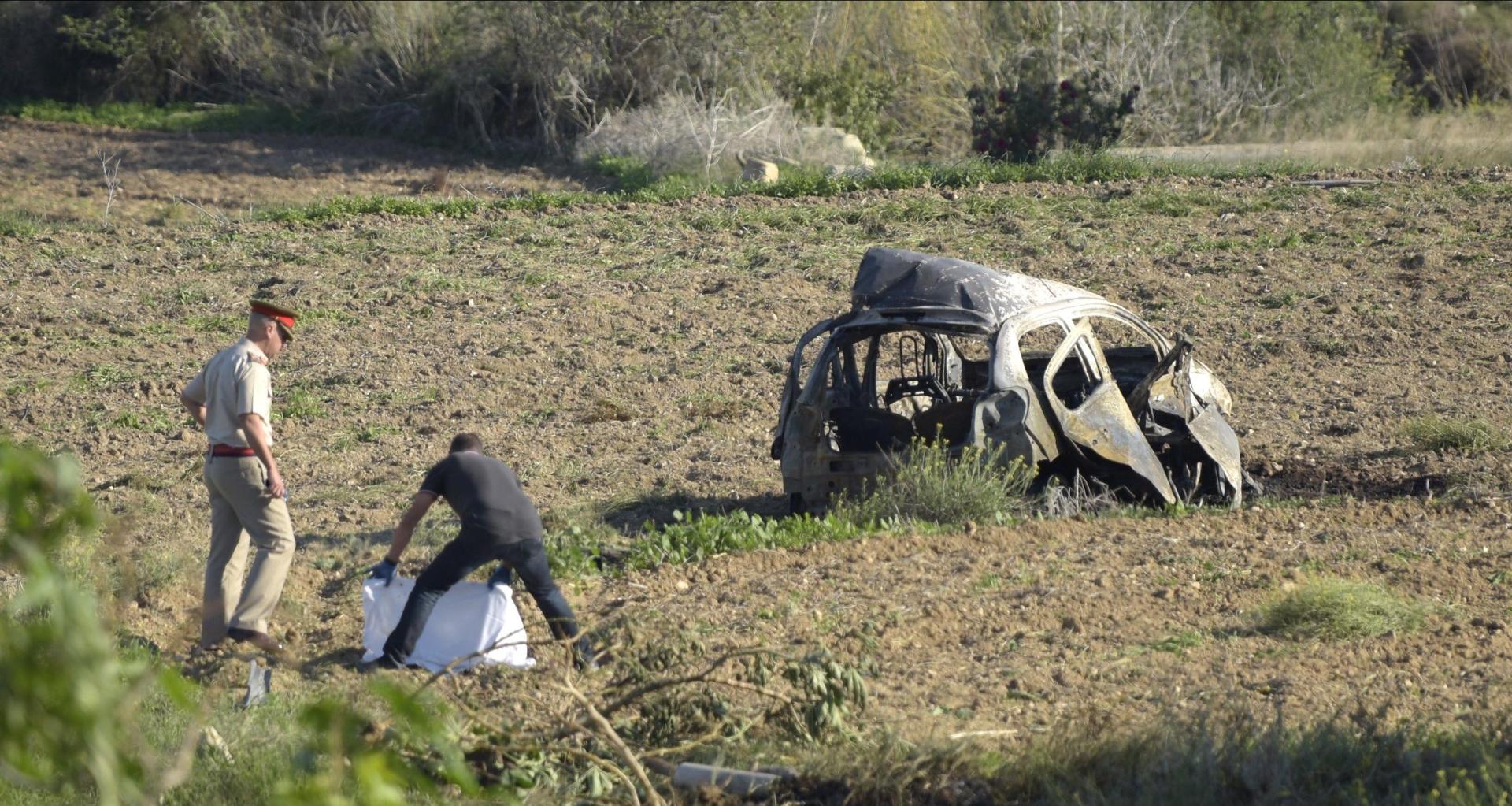 The scene of the crime in Bidnija. Photo: Mark Zammit Cordina
Daphne's movements tracked
12.15pm Vella says the three hitmen decided to use a bomb to kill Caruana Galizia.
According to the prosecution, the explosive was procured from brothers Robert and Adrian Agius, known as tal-Maksar, and Jamie Vella. The trio bought burner phones and SIM cards that could not connect to the internet to avoid detection.
Vella says the men kept Caruana Galizia under constant surveillance, repeatedly monitoring the area around her Bidnija home and tracking her movements in the weeks leading up to the murder.
'Kill her ASAP'
12.10pm According to the prosecution, Fenech ordered the murder plot to be put on hold when the 2017 general election was called.
But after the election, Vella says, Fenech urged Theuma to reactivate the plan. The prosecution claims the two met at the Busy Bee outlet in Msida, where Fenech handed over the agreed payment. The initial €30,000 deposit was split equally between Alfred Degiorgio, George Degiorgio and Vince Muscat.
Vella says the prosecution's case is that, as Daphne Caruana Galizia continued publishing on her blog, Fenech became increasingly anxious and repeatedly pressured Theuma to push the trio into carrying out the killing as quickly as possible because she was about to publish information concerning him personally.
'Will this man pay?'
12.05pm The prosecution says Theuma obtained the phone number of Alfred Degiorgio after failing to contact his brother George directly.
The two met near the Marsa potato shed, where Theuma told Degiorgio he had someone looking to have Caruana Galizia killed, without revealing the person's identity.
According to the prosecution, Alfred Degiorgio's immediate response was: "But will this man pay?"
Vella said Theuma assured him he would, and that Degiorgio replied he would discuss the proposal with his brother and associates.
A few days later, the pair allegedly met again at Busy Bee in Msida, where Degiorgio quoted a price of €150,000 for the murder: a non-refundable €30,000 deposit, with the remaining €120,000 to be paid after the killing. According to the prosecution, Theuma relayed the proposal to Fenech, who approved it.
A meeting in April 2017
12pm Vella describes Melvin Theuma as someone who had become a trusted confidant of the Fenech family.
According to the prosecution, Theuma first befriended Fenech through his uncle, Ray Fenech, and the relationship grew to the point where he regularly met the businessman at his ranch and often drove him and his family to and from the airport in his taxi.
Vella tells the jury that, in April 2017, Fenech summoned Theuma to a meeting at Portomaso and instructed him to find someone to kill journalist Daphne Caruana Galizia because she was about to publish information concerning his uncle. According to the prosecution, Fenech suggested approaching George Degiorgio, whom he knew frequented the Marsa potato shed.
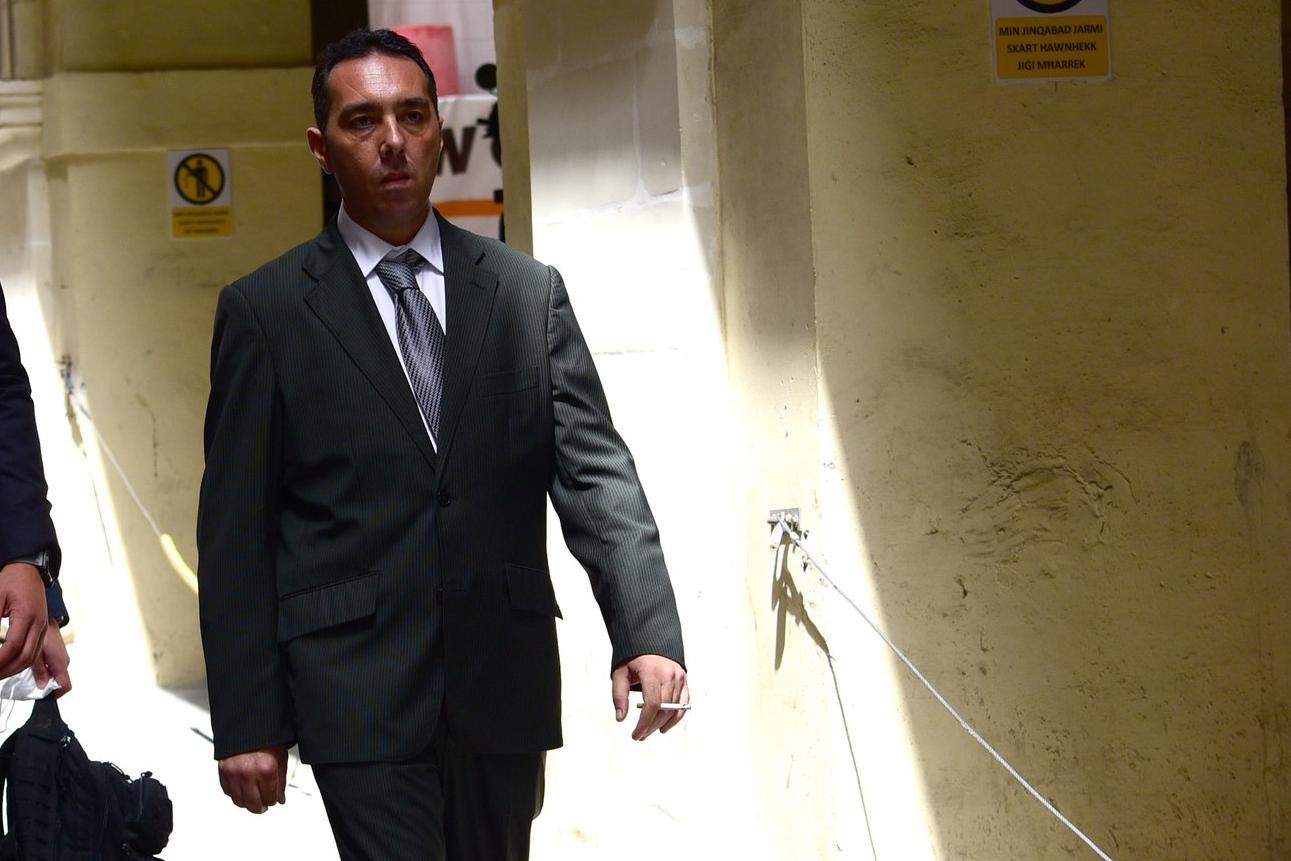 Melvin Theuma outside court.
How evidence is gathered
11.50am Prosecutor Vella is explaining to jurors how a major criminal investigation unfolds after a serious crime is committed.
He says a magisterial inquiry is immediately launched, with the inquiring magistrate appointing experts to examine the scene and the victim. Crime scene officers are then tasked with documenting the scene and collecting evidence.
"The primary aim is to preserve the evidence," Vella says, explaining that the material gathered during the inquiry is later presented in court.
Stack of brown archive boxes
11.35am Prosecutor Vella explains that in his opening address, the prosecution has the opportunity to present its case to the jury.
Pointing to a stack of brown archive boxes in the courtroom, he says they contained the evidence gathered during the compilation of evidence.
"But you have the right to hear that same evidence again, viva voce," he tells jurors, stressing they must base their verdict on testimony and evidence presented during the trial, not on what was heard in earlier proceedings.
He goes on to explain the court procedures relating to this case.
Prosecution opens case
11.25am The court is back in session. The judge has read her decree, but we have been barred from reporting the decision.
AG lawyer Anthony Vella takes the stand. He stresses that the Attorney General prosecutes on behalf of the Republic of Malta and that its duty is to ensure proceedings are conducted fairly while safeguarding the accused's right to a fair trial.
He tells jurors that the prosecution's role is to gather and present evidence capable of proving Fenech's guilt to the standard required by law, leading to the filing of the bill of indictment.
Fenech stands accused of complicity in the murder of Caruana Galizia, a crime Vella described as having "irreparable consequences".
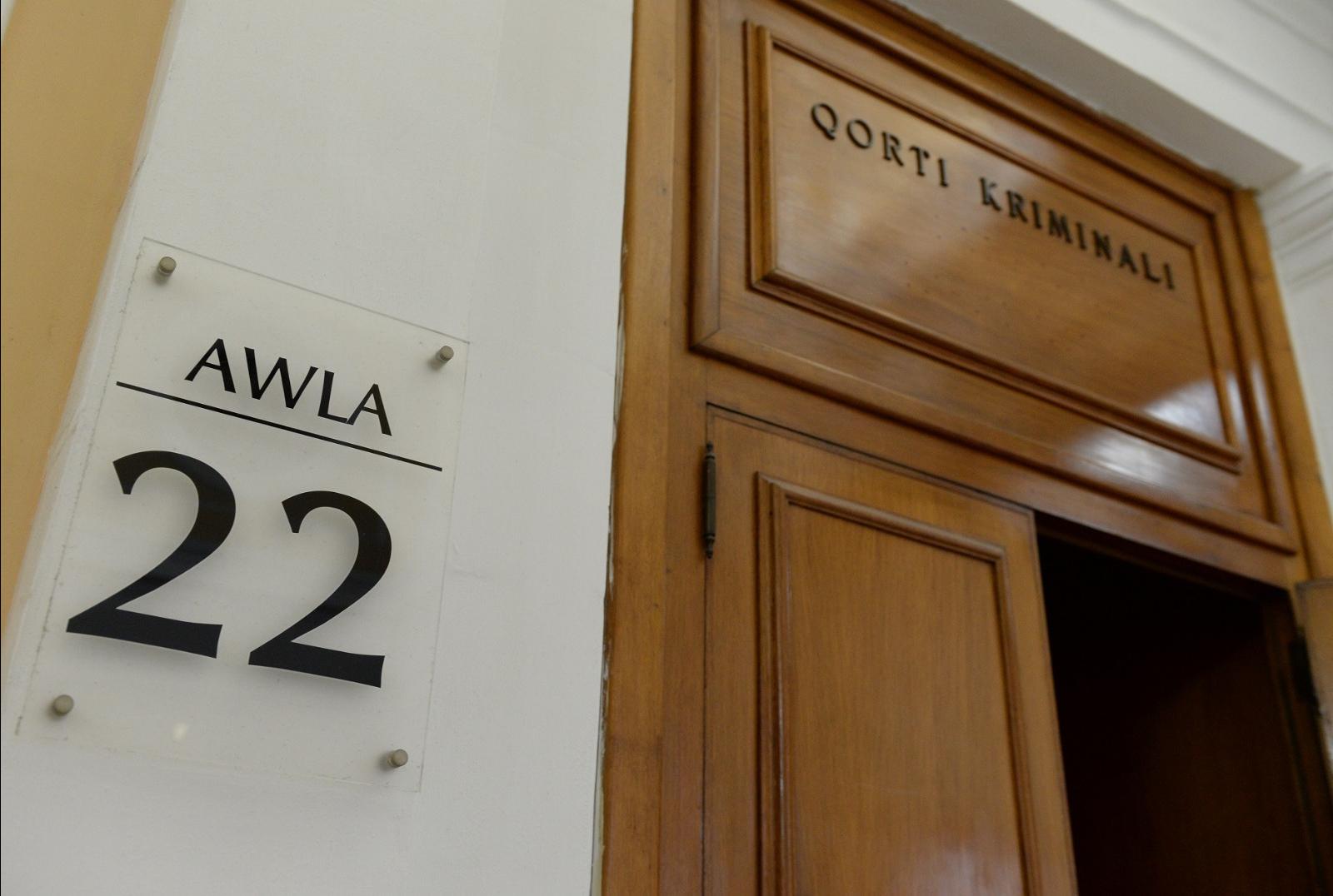 The case is being heard in Hall 22 of the lawcourts.
Azzopardi on early election
11.10am Lawyer Jason Azzopardi, who is representing the Caruana Galizia family as parte civile, has challenged Prime Minister Robert Abela's claim that the timing of the general election was unrelated to the start of Yorgen Fenech's trial.
Responding to an earlier Times of Malta story, Azzopardi said he had publicly predicted in January that an election would be held before June.
He wrote on social media: "At the beginning of last January (six weeks before the US attack on Iran on 28 February 2026, when the international crisis began), I publicly wrote that the election would be held before June. I wrote that because I knew the jury would begin on 1 July, but I was bound by a court order not to disclose it."
Why the delay?
10.30am The prosecution and defence are locked in a procedural dispute at the start of proceedings, but the court has barred the media from reporting the details of the argument at this stage.
Judge Edwina Grima has retired to her chambers to consider the matter and is expected to issue a decree.
We'll be back with an update as soon as reporting restrictions allow.
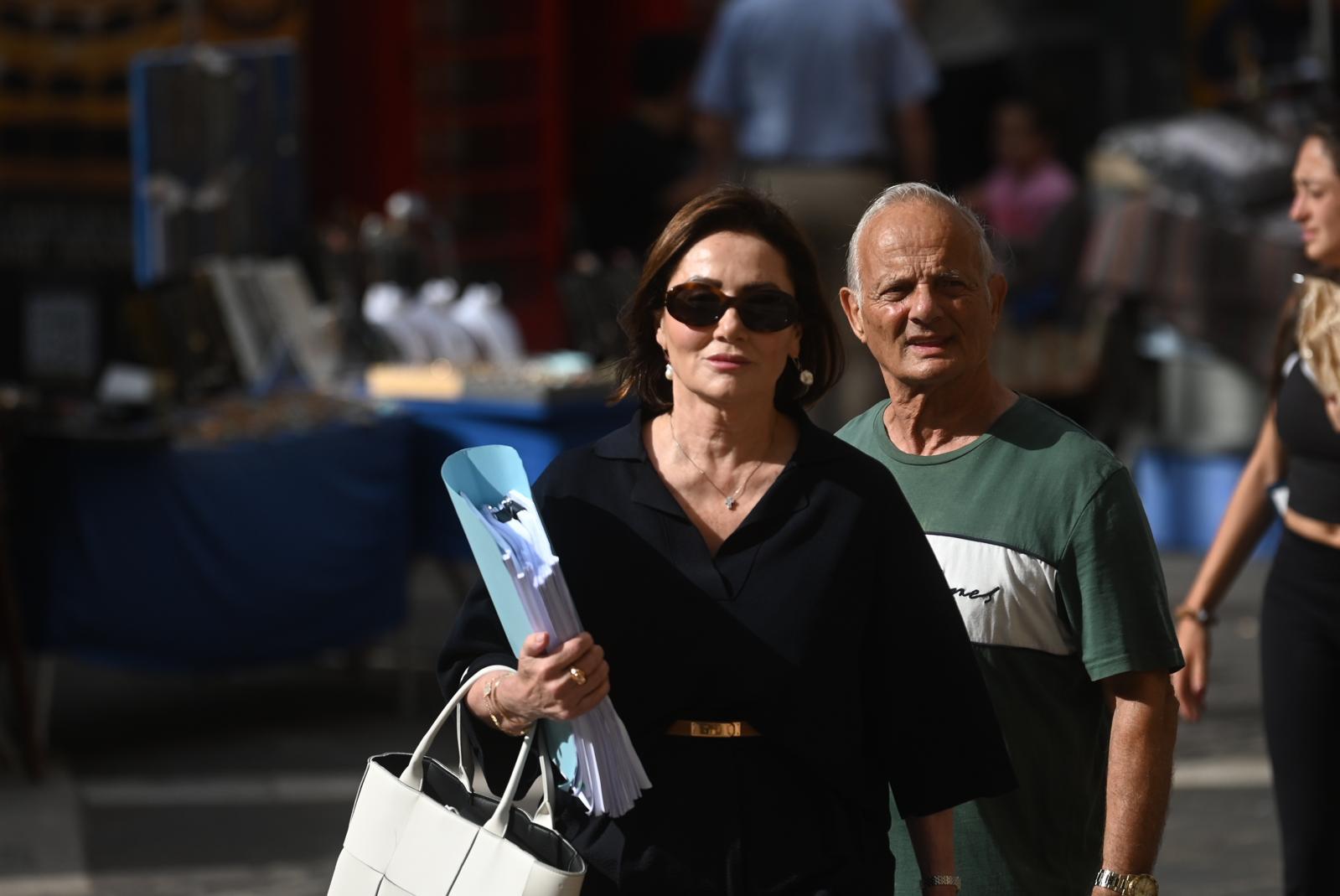 Defence lawyer Giannella de Marco entering court on Thursday. Photo: Jonathan Borg
Legal points raised
10am The jury has entered the room, and the second day of the trial starts, after a lengthy delay.
Legal points are being raised, which cannot be reported by the media.
All set to go
9.15am Our court journalist Clara Farrugia is present in Hall 22. The accused, his lawyers and the prosecution are in place. Also present in the courtroom are relatives of Daphne Caruana Galizia.
AG lawyer Godwin Cini and the defence team are speaking to the judge.
'Absolutely not'
8.50am Last night, our journalist Daniel Ellul asked Prime Minister Robert Abela whether Fenech's trial had any bearing on his decision to call an early election, amid speculation on social media.
"Absolutely not," the prime minister replied.
Background
Yesterday, we had several background stories about the 2017 crime that jolted Malta. Here's a wrap:
How prosecutors say the Daphne Caruana Galizia murder was planned
The nine-year road to the Yorgen Fenech murder trial, explained
Who's who in the Yorgen Fenech trial
Welcome
8.45am Good morning. We will be bringing you minute-by-minute updates from Hall 22. We're expecting the prosecution to make its opening statement today, but you never really know how the day pans out - especially in a delicate case like this.
Who are the main players?
8.30am Let's take a look at the key figures in this complex case.
Yorgen Fenech: a business tycoon and heir to a family fortune, and the man in the dock: Fenech is accused of complicity in Caruana Galizia's murder;
Melvin Theuma: a taxi driver who worked for Fenech and who has testified that he served as a middleman between Fenech and the alleged hitmen;
Vince Muscat, Alfred Degiorgio, George Degiorgio: the convicted hitmen;
Keith Schembri: a friend of Fenech's and the chief of staff to Joseph Muscat when he was prime minister;
Edwina Grima: the presiding judge;
Keith Arnaud, Kurt Zahra: the lead police investigators and prosecutors;
Godwin Cini, Anthony Vella, and Danika Vella: the lawyers leading the Attorney General's office prosecution;
Giannella de Marco, Gianluca Caruana Curran, Charles Mercieca: Yorgen Fenech's legal team;
Jason Azzopardi, Therese Comodini Cachia: lawyers appearing for the Caruana Galizia family.