Wrap: Theuma named Fenech as mastermind, as Schembri sought to contain fallout
Yorgen Fenech told police Keith Schembri sent him draft agreement of Theuma's pardon
Murder middleman Melvin Theuma never wavered in identifying Yorgen Fenech as the sole mastermind behind Daphne Caruana Galizia's assassination, a lead investigator said on Saturday, as evidence mounted on Keith Schembri’s attempt to contain the fallout.
As the murder investigation closed in, a panicked Theuma begged Fenech to seek help from anyone, including then police commissioner Lawrence Cutajar.
On the fourth day of Fenech's trial by jury, Keith Arnaud unravelled the aftermath of the October 2017 murder.
Arnaud said that every time investigators challenged Theuma over recordings, handwritten notes and references to Schembri, he maintained that the businessman alone had commissioned the murder.
But Schembri featured in events that unfolded after the assassination as the noose around the suspects tightened.
The court also heard how evidence recovered from Fenech's mobile phone prompted police to arrest Schembri, while investigators simultaneously pieced together what they believed was an attempt by Fenech to flee Malta after reports emerged that Theuma was set to receive a presidential pardon.
Fenech, 44, denies complicity in the murder of the journalist, who was killed in a car bomb outside her Bidnija home. Prosecutors say he commissioned the murder through Theuma, who acted as a middleman between Fenech and the Degiorgio brothers and later received a presidential pardon in exchange for his testimony. Fenech has pleaded not guilty. Five other men have already been convicted over the assassination.
Arnaud told jurors that investigators repeatedly confronted Theuma over references to Schembri, including a handwritten letter recovered from Fenech's Portomaso office stating that both Fenech and Schembri were trying to "eliminate" him.
Despite the wording of the note, Theuma insisted Schembri had never discussed the murder with him and that his references to the former chief of staff related instead to a phantom government job and events that unfolded after the hit.
"He always maintained there was one mastermind," Arnaud told the court.
The assistant commissioner of police also described how police decided to arrest Schembri after examining a partial extraction of Fenech's mobile phone.
Investigators searched through more than 150,000 images looking for evidence of communications between the two men and eventually located a thumbnail image of a conversation they considered significant.
Earlier, police had arrested Dr Adrian Vella after he admitted collecting a bundle of documents from Schembri before delivering them to Fenech while the businessman was on police bail.
The jury also heard evidence about a five-page document that investigators say was passed from Schembri to Fenech through Vella.
The document contained allegations seeking to implicate former economy minister Chris Cardona in the murder, including claims that Alfred Degiorgio had met him at Ferdinand's Bar in Siġġiewi. Arnaud said police investigated those claims but there was nothing to substantiate them.
Jurors were told that a copy of the draft conditions governing Theuma's presidential pardon had been recovered from Fenech's mobile phone.
According to Arnaud, Fenech told investigators the document had been sent to him by the OPM chief of staff. Officers went on to arrest Schembri and Vella, who admitted acting as the courier for a bundle of documents between the two men.
The court also heard that Schembri asked Office of the Prime Minister security official Kenneth Camilleri to visit Theuma as the middleman became increasingly distressed.
Arnaud said Camilleri told investigators he assumed Theuma's concerns were political rather than linked to the murder and denied any knowledge of the assassination.
Jurors also heard evidence about what police believed was Fenech's escape plan after news broke that a presidential pardon was being considered for Theuma.
According to Arnaud, investigators established that Fenech searched for flights to France, discussed travelling by boat to Italy before continuing overland and was advised by a relative to use cash rather than credit cards to avoid leaving a trail.
Police intercepted Fenech aboard his yacht as it left Portomaso on November 20, 2019. He was charged with Caruana Galizia’s assassination days later.
Arnaud told jurors that police corroborated key aspects of Theuma's account through witness testimony, phone data and other evidence, strengthening investigators' belief that the middleman's version of events was credible.
Proceedings continue on Monday with Arnaud expected to continue giving evidence.
LIVE BLOG
That's it for today
6.04pm And on that note, the judge suspends Arnaud's testimony for the day.
We'll be giving you a wrap of today's proceedings shortly. We'll return with the live blog on Monday.
Tomorrow's print edition of The Sunday Times of Malta will also feature reports about the case as well as historic accounts.
The details of Theuma's presidential pardon
6pm Arnaud takes the jury through the presidential pardon granted to Theuma on November 25, 2019, with the document displayed on courtroom screens.
Its conditions largely mirror those contained in the draft agreement previously prepared by police.
They required Theuma to disclose:
- the full truth about his own involvement, based on what he personally experienced rather than hearsay;
- the identity of the mastermind or masterminds behind the murder;
- the amount of money he received and passed on to the hitmen;
- how much money he retained for himself;
- the identities of those who financed the murder;
- and details of any payments made by third parties to people accused in the case, including the source of those funds.
Arnaud says these conditions were designed to "close every corner" of the investigation and establish everyone who may have played a role in the murder.
The witness also notes that the pardon extended beyond the Caruana Galizia murder, covering offences allegedly committed by Theuma before that date, including illegal betting and money laundering.
It also covered information Theuma had offered police in connection with the HSBC 2010 heist investigations and the Casino di Venezia case in the same year.
'We might get away with things'
5.48pm Arnaud continues reading exchanges recovered during the investigation, telling the court about a voice recording between Theuma and Johann Cremona.
According to Arnaud, the conversation centres on the police raid and includes references to then police superintendent Ray Aquilina.
The witness says the two men spoke as though they knew Aquilina and suggested that, if he were involved in the investigation, they might be able to "get away with things".
Some background about Aquilina's role: Ex-police superintendent Ray Aquilina and Yorgen Fenech charged with corruption
Court shown messages as investigations closed in
5.37pm The court is shown another exchange of Signal messages between Theuma and Fenech from November 12, 2019, days before Theuma's arrest. In one message, Theuma tells Fenech he is "heartbroken".
The following day, after Theuma calls him, Fenech replies by text: "I can't forget something like this, my friend."
Arnaud says the messages also show Theuma urging Fenech to make sure "everything is clean", including mobile phones, so that investigators would have nothing to recover.
Theuma also pleads with Fenech to do everything possible to get him out of trouble and asks him to speak to then police commissioner Lawrence Cutajar.
Theuma frequently referred to Keith Schembri during this period. In recordings played to investigators, Theuma also asked whether there was any possibility of speaking to the magistrate over the Degiorgio brothers' bail requests.
Arnaud says those requests ultimately came to nothing. He also points out that Theuma's recordings were sometimes not continuous.
'Don't worry, we'll get there'
5.27pm The court is shown an extraction of Signal messages recovered from Theuma's Samsung phone.
The document, displayed as a table, lists messages exchanged between Theuma and Fenech.
As the prosecution asks Arnaud to navigate through the document, the witness reads one exchange in which Fenech tells Theuma: "Serraħ rasek, se naslu" ("Don't worry, we'll get there").
Theuma replies by referring to his partner and children, warning: "If you involve my partner and kids, there will be trouble."
Melvin's evidence
4.18pm Arnaud opens the ice cream tub that Melvin Theuma was carrying when he was arrested.
One by one, the lead investigator removes the contents, each sealed in an evidence bag, and shows them to the jury.
The items include several USB drives, which have already featured prominently in the proceedings.
Daphne's 17 Black post
5.06pm The court is shown documents from the investigation, including a screenshot of Daphne Caruana Galizia's February 2017 blog post mentioning 17 Black.
Arnaud tells the court the post became relevant to the investigation because Fenech was mentioned in a reply to a reader's comment beneath the article.
According to Arnaud, investigators had preserved a complete copy of Caruana Galizia's blog and examined the timing of the post alongside Theuma's account that Fenech believed the journalist had obtained sensitive information.
Police questioned him about it during his interrogation.
The Gozo trip
4.58pm During police questioning, Fenech described the trip to Gozo that his doctor had suggested the weekend before his arrest. Fenech said Dr Adrian Vella accompanied him to Gozo at Schembri's request.
The witness says Fenech also claimed that, while they were travelling, Schembri phoned Vella and, after speaking to Fenech, became emotional and told him he would miss him.
Arnaud tells the court that investigators examined media reports published that weekend, beginning with the first reports on November 17 about developments in the Caruana Galizia murder investigation, followed by reports concerning Theuma's presidential pardon.
Police also analysed telephony data between Schembri and Vella to determine whether they had met in person during that period.
According to Arnaud, the available data did not indicate that the two were together at any point that weekend.
Focusing on Cardona
4.50pm Arnaud tells the court that one of the recordings between Fenech and Theuma referred to Chris Cardona.
According to Arnaud, both Fenech and Theuma spoke about police allegedly focusing on Cardona and discussed that a mobile phone recovered from the sea had been used for communication between Alfred Degiorgio and Cardona.
Arnaud says Theuma later confirmed making those remarks.
The investigator said Theuma was relieved by that development because he believed investigators were focusing on Cardona rather than on him.
Procedural point raised
4.40pm Jurors have been taken out of the court room as the defence lawyers raise another procedural point.
Jurors return to the courtroom after minutes. Arnaud takes the stand again. Prosecution points out Arnaud was not present for certain statements made by Fenech.
Who conceived the murder?
4.26pm Arnaud tells the court that, according to Fenech's police statement, Keith Schembri had told him he wanted to "get rid of" Daphne Caruana Galizia.
Arnaud says Fenech claimed that, a few days later, after returning to Malta from a trip, he met Melvin Theuma at the Żebbuġ ranch.
According to Fenech's account, Theuma told him there was a plan to kill Caruana Galizia but did not say who had conceived it.
Fenech said that after returning from abroad, Theuma told him he had found people willing to carry out the murder for €120,000.
Fenech claimed he relayed this to Schembri, who replied: "Mexxi, mexxi" ("Go ahead, go ahead").
Arnaud tells the court that Fenech said he replied that he would "touch base" on the matter later.
The witness also notes that the figure of €150,000 again features in Fenech's version of events.
'He wanted to get rid of her'
4.17pm Investigators found significant similarities between the contents of the disputed document and the statement later given by Fenech to police. Both referred to specific sums of money.
The witness says the document also contained a claim that Schembri had told Fenech in 2015 that Chris Cardona "xtaq jeħles minnha" ("wanted to get rid of her"), referring to Daphne Caruana Galizia.
Arnaud tells the court that, according to Fenech's statement, discussions at the ranch in October 2016 often centred on Caruana Galizia's blog, which frequently wrote about Schembri, his illness and the Labour government.
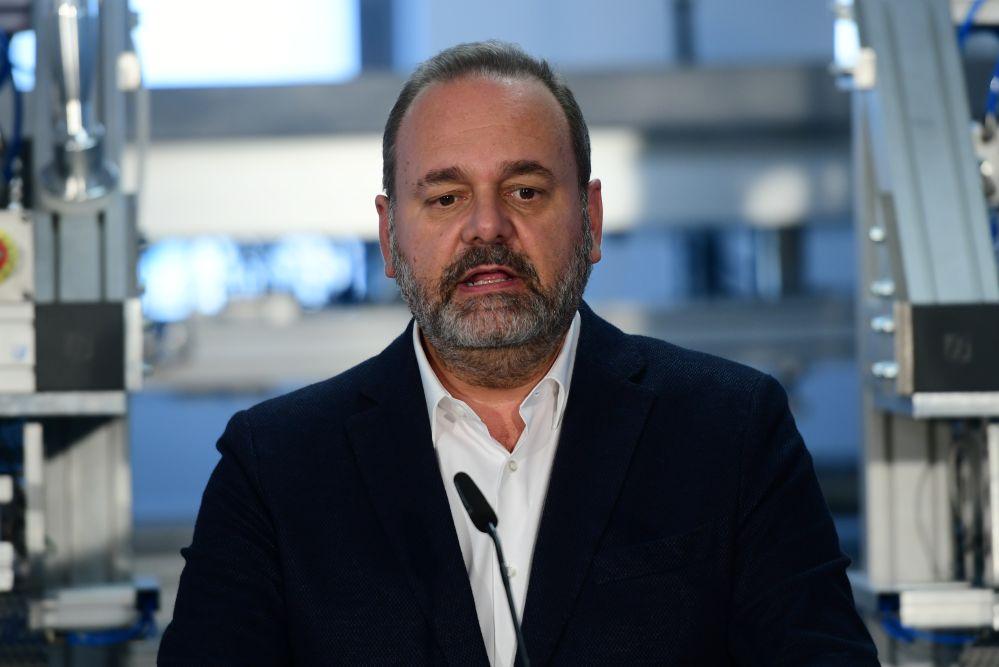 Chris Cardona pictured in 2019. Photo: Jonathan Borg
The Siggiewi bar
4.12pm The prosecution asks Arnaud what investigators did after examining the documents.
Arnaud tells the court that police investigated claims concerning Chris Cardona, including an allegation that Alfred Degiorgio had met him at Ferdinand's Bar in Siġġiewi.
Investigators also sought CCTV footage from the area, but by the time inquiries were made - around four months after the alleged meeting - any recordings had already been overwritten.
Still, Arnaud says police were unable to find any evidence that Cardona and Alfred Degiorgio had met before the arrests.
"Not a single shred of proof," Arnaud tells the court.
Pinning the murder on Chris Cardona
4.04pm Keith Arnaud reads aloud from documents recovered during the investigation, which are displayed on courtroom screens.
This is the transcript of the infamous Chris Cardona ‘frameup’ letter which Schembri sent to Yorgen Fenech via Dr Adrian Vella.
Schembri had denied the allegations, telling the court that he hadn’t given the letter to Vella.
In a nutshell, the letter attempt to pin the murder on the former economy minister.
Here's our story about the matter from 2020 when Cardona testified in the inquiry.
A third bomb
3.55pm Investigators identified three explosive devices with common components during the murder investigation.
According to Arnaud, one was used in the attempted murder of Romeo Bone, the second killed Daphne Caruana Galizia, and a third was later used in an attempted attack on Kevin Ellul, known as 'Double-0', in Għargħur.
The witness says investigators were first alerted in April 2018 to the possible existence of a third bomb and were warned to exercise caution.
After examining the evidence and components recovered from the three devices, Arnaud tells the court that investigators concluded they shared common characteristics.
Friends in high places
3.50pm One of Theuma's recordings included a reference to then police commissioner Lawrence Cutajar. Investigators asked Theuma why he had mentioned Cutajar's name.
The witness says Theuma explained that he knew Johann Cremona was a business associate of Fenech and wanted to project the impression that he, too, had influential contacts.
Arnaud tells the court that Theuma said he used Cutajar's name because Edgar Brincat knew the former police commissioner and he wanted to make it appear he also had friends in high places.
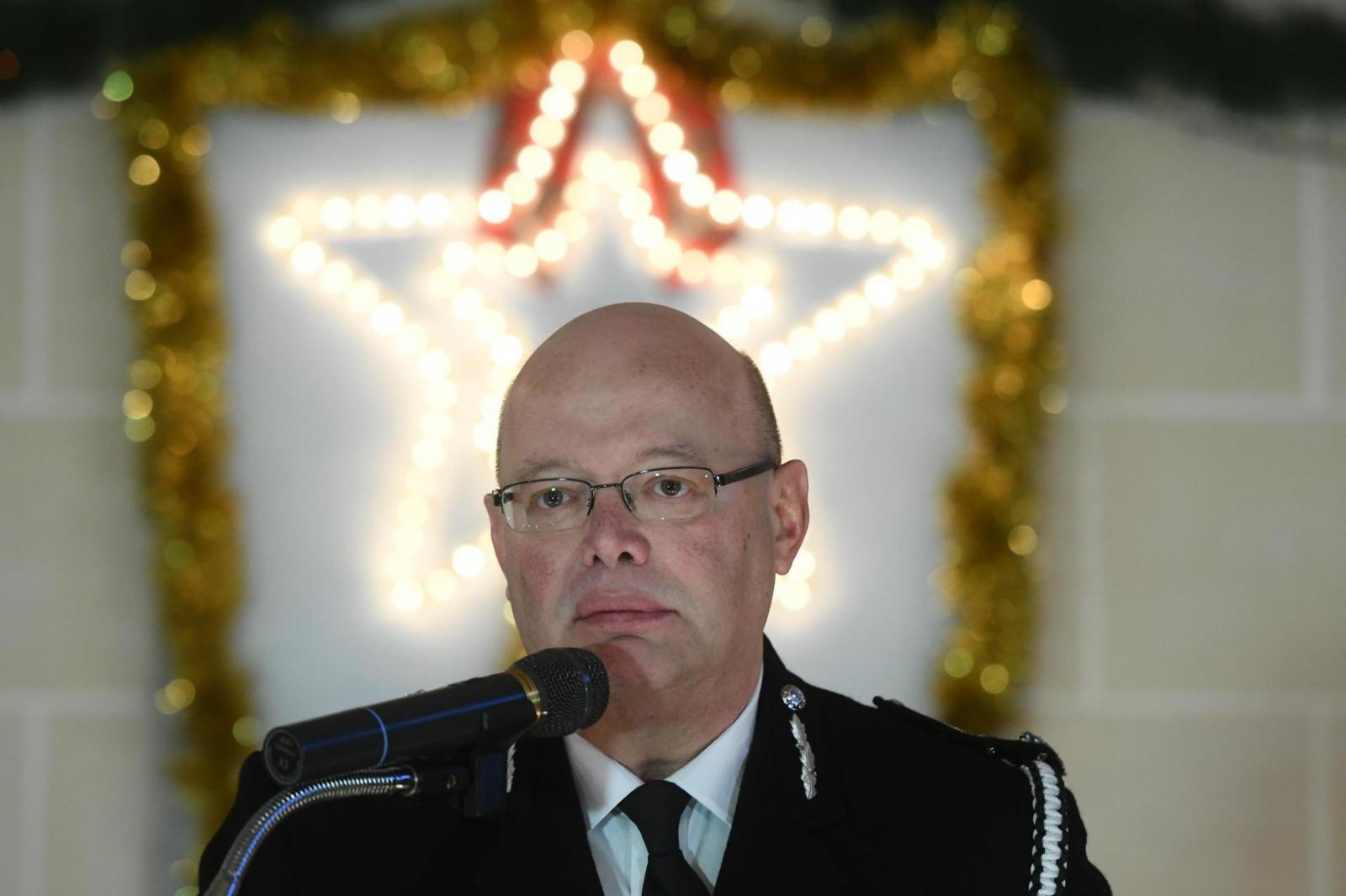 Former police commissioner Lawrence Cutajar.
Recordings became crucial
3.45pm Edgar Brincat advised Theuma to make sure anyone he secretly recorded was clearly identifiable.
Brincat suggested that Theuma mention a person's name during conversations so that, when the other person replied, investigators could later confirm who was speaking on the recording.
The witness says those recordings became increasingly important as the investigation progressed.
Arnaud tells the court that, after the inquiry reached something of a dead end, investigators came to rely heavily on the recordings.
Theuma urged to stay quiet
3.40pm Arnaud tells the court that, as Theuma became increasingly panicked, he confided in Edgar Brincat about going to the police.
Brincat advised him against it, fearing Theuma would end up in prison and become the one who "took the fall".
The witness says Johann Cremona gave similar advice, warning Theuma that it was too risky and that Yorgen Fenech was far more powerful than he was.
Police tried to persuade Brincat to speak
3.35pm The prosecution turns to Edgar Brincat, known as il-Ġojja.
Arnaud tells the court that Brincat was arrested on November 14, 2019 because of his close relationship with Theuma and suspicions by the Financial Crimes Investigation Department that he was involved in money laundering and illegal betting.
According to Arnaud, Brincat exercised his right to remain silent during questioning.
The witness says investigators repeatedly told Brincat they believed he knew a great deal about Theuma and the murder case, using every lawful tactic they could to persuade him to speak.
Despite those efforts, Arnaud says, Brincat chose not to answer police questions.
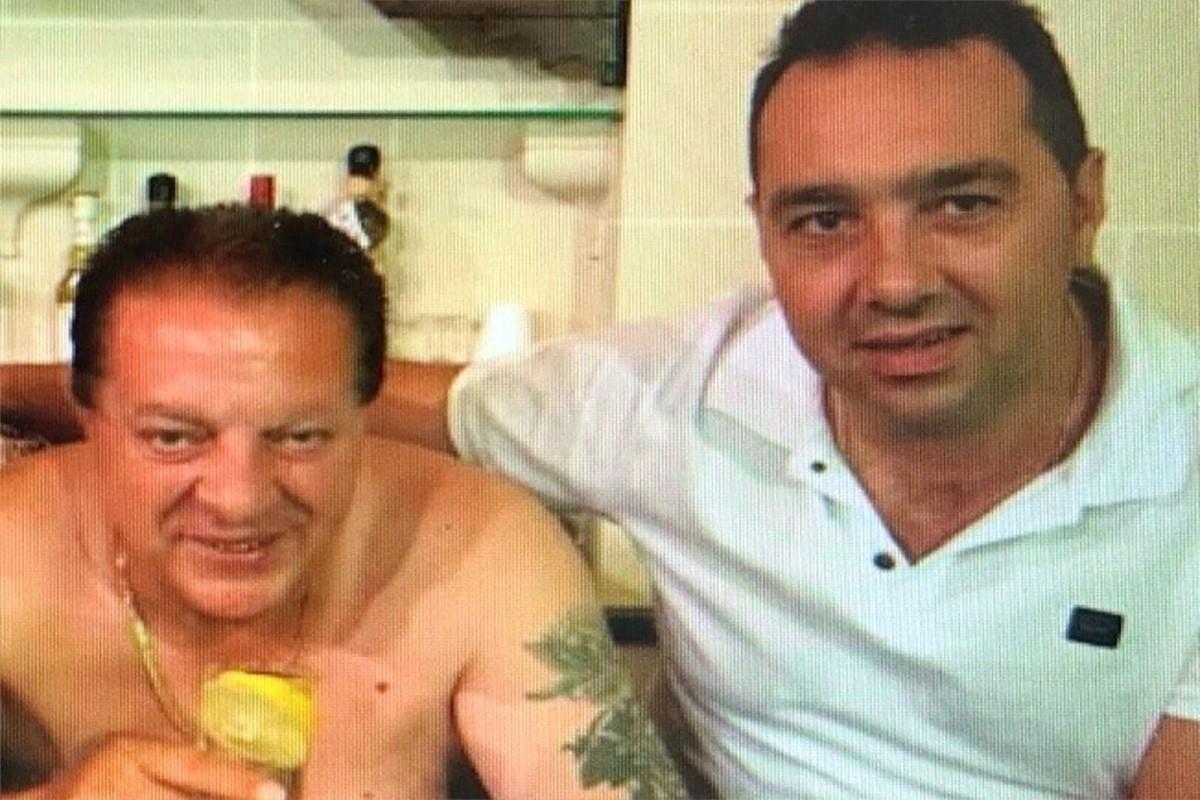 Edgar Brincat, known as il-Ġojja, with Melvin Theuma.
More recordings surfaced
3.34pm Arnaud takes the stand again.
The prosecution asks Keith Arnaud about Melvin Theuma's recordings. During Theuma's first interviews after his arrest, investigators were aware of only a small number of recordings.
The witness says that during the early sittings of Fenech's compilation proceedings, Theuma approached him and revealed that many more recordings existed than those already in police possession.
Investigators then focused their searches on locating the additional audio files.
He says the first recordings recovered were conversations between Theuma and Fenech, followed by others involving Johann Cremona and Mario Degiorgio.
Back in court
3.15pm We are back in the court room. The legal parties have entered the judge's chambers.
We are waiting for the jury to come out.
Six points
2.15pm So here's a recap of the more salient points which emerged so far from Arnaud's testimony on Saturday:
- Theuma consistently maintained there was only one mastermind behind Daphne's murder: Fenech
- A draft of the conditions dictating Theuma's presidential pardon were found on Fenech's phone
- Keith Schembri, Kenneth Camilleri denied plan to kill Theuma
- Arnaud details Fenech's planned escape from Malta as the noose tightened
- Dr Adrian Vella acted as a go-between for Fenech and Schembri when the businessman was arrested
- Arnaud says Theuma, the self-confessed middleman is a credible witness.
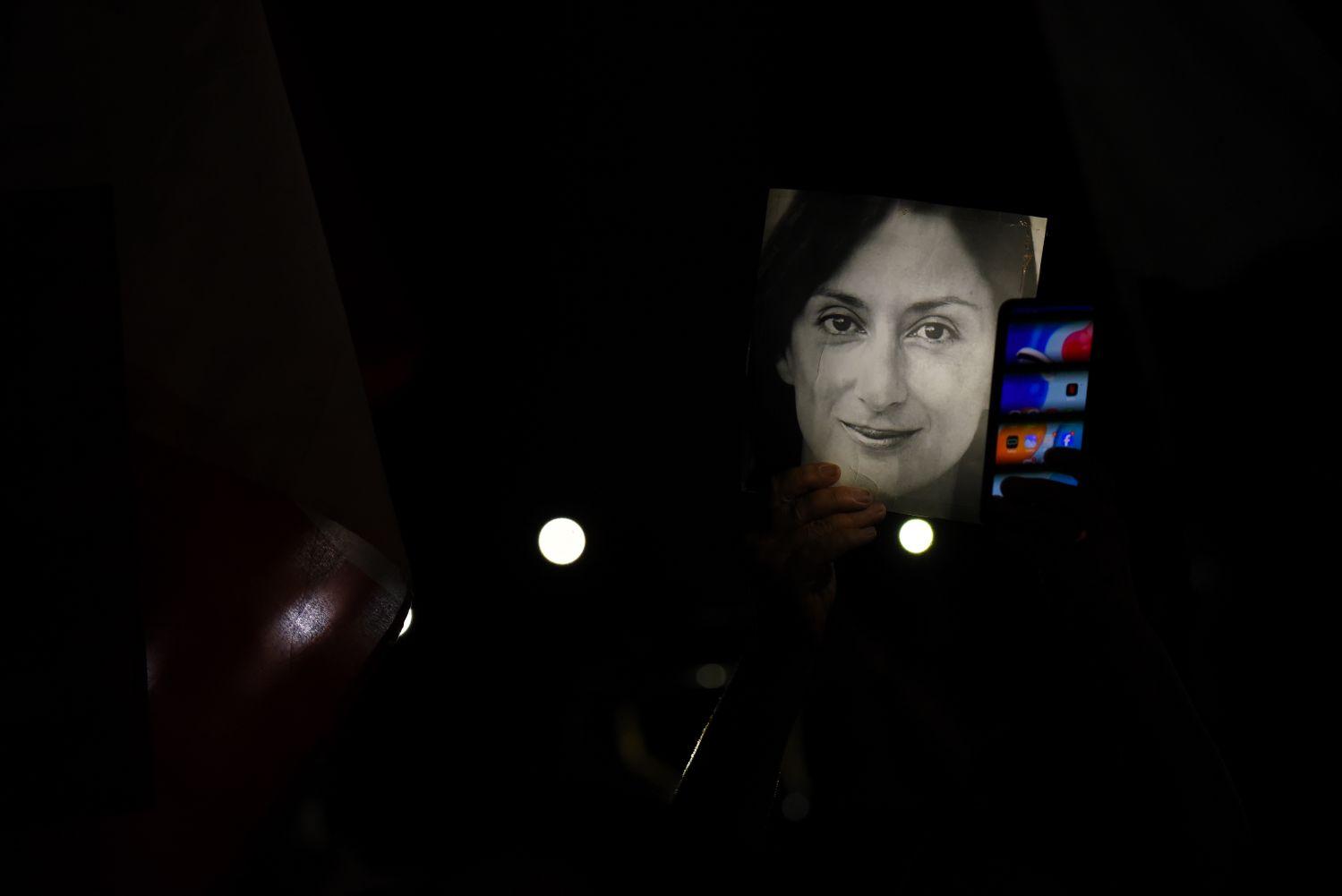 Several protests and manifestations have been held since Daphne's assassination. Photo: Chris Sant Fournier
Break
And after a relentless three-and-a-half-hour testimony by Arnaud, the court orders a break. That was relentless. We'll be back around 3pm.
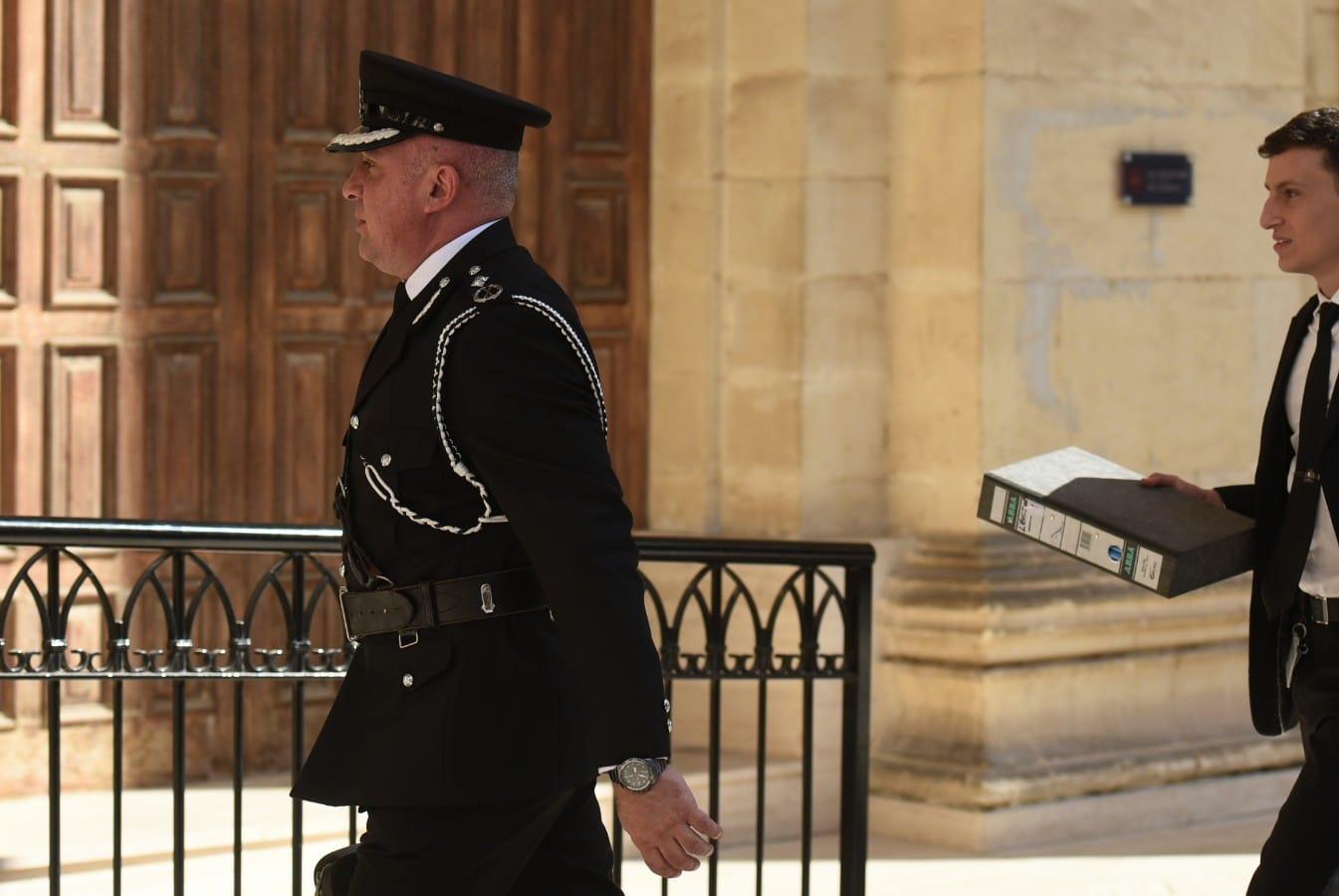 Keith Arnaud entering court on Saturday. Photo: Chris Sant Fournier
Theuma drew up a will
1.02pm Arnaud tells the court that Fenech once gave Theuma €5,000 and urged him to go on holiday with his family to try to relax.
According to Arnaud, Theuma was in a very poor mental state at the time.
The witness says Theuma also told investigators he drafted a will after the Degiorgio brothers were arraigned.
Arnaud explains that Theuma feared he would be the next person arrested if the brothers decided to speak to police.
He says those events unfolded during the first week of December, as Theuma became increasingly convinced that the investigation was closing in on him.
Fenech provided the money to Degiorgios
1pm Arnaud goes back to 2018, saying that the refusal of bail to the Degiorgio brothers in May that year triggered a period of intense panic for Melvin Theuma.
According to Arnaud, that was when Theuma began secretly recording conversations and drafted the handwritten "betrayal" letter referred to earlier in the proceedings.
Theuma's anxiety was driven less by the murder itself than by developments that followed, particularly the continued detention of the Degiorgio brothers, Arnaud said.
The assistant police commissioner also notes that, despite Yorgen Fenech's claims that Keith Schembri was involved in the crime, it was always Fenech who provided the money that was passed on to the Degiorgio brothers.
Draft of pardon agreement sent
12.47pm Investigators found a copy of the draft of the conditions dictating the presidential pardon agreement intended for Theuma on Fenech's mobile phone.
According to Arnaud, when questioned about the document, Fenech told police that Schembri had sent it to him.
However, Arnaud says investigators found no verifiable message on the phone confirming Schembri had sent the document.
Schembri, Camilleri deny claim about Theuma murder plan
12.45pm Arnaud tells the court that investigators had received information about an alleged plan for Kenneth Camilleri (an OPM security official) to shoot Melvin Theuma.
According to Arnaud, police had been informed that Camilleri abandoned the alleged plan after finding Theuma with his child.
However, when questioned, Arnaud says Camilleri laughed off the claim. He told investigators he had only been sent to calm Theuma down and believed he was simply a politically distressed individual.
Arnaud says Camilleri categorically denied there had ever been any plan to kill Theuma.
The witness adds that Schembri was also questioned about the allegation and likewise denied there had been any plot to murder Theuma.
Denies passing information to Fenech
12.40pm Arnaud tells the court that, although Melvin Theuma never implicated Keith Schembri in the murder, investigators still questioned Schembri about him.
According to Arnaud, Schembri told police it was in his interest, as chief of staff, for the case to be solved. He also said he had helped the foreign investigation team that came to Malta and denied passing information to Fenech.
Arnaud says police also questioned Schembri about references to the possible killing of Theuma.
Plan to go to Italy and then France
12.40pm Arnaud tells the court that, on November 20, 2019, Fenech boarded the boat that investigators believed he intended to use to leave Malta.
According to Arnaud, police established that Fenech's brother had agreed to meet him in Italy, where they planned to obtain a car and continue overland to France.
The witness says investigators also uncovered discussions aimed at buying time while Fenech assessed his legal position.
Arnaud then returns to Keith Schembri's police interviews.
Schembri spoke about the phantom government job and said he had tried to persuade Fenech to remain in Malta because his fleeing would reflect badly on the government.
Arnaud reminds the court that Fenech had initially been released on police bail before being re-arrested for further questioning.
The escape plan
12.35pm On the night before Yorgen Fenech's arrest, media reports emerged that someone involved in the Caruana Galizia murder investigation could receive a presidential pardon.
Investigators later established that Fenech began searching for flights to France and exploring the most discreet way to leave Malta.
The witness says police found evidence that Fenech discussed possible escape plans with his brother, including a scenario in which one person would leave by boat while another travelled by car before meeting in Italy and continuing overland.
Arnaud also tells the court that Fenech was in contact with the captain of a boat and insisted there should be no crew on board.
"We interpreted this as a possible escape," Arnaud tells the jury.
Fenech's uncle advised him not to use a credit card if he rented a car abroad.
According to Arnaud, the uncle told Fenech to use cash instead, to avoid being traced.
Muscat's comment on investigation
12.33pm Arnaud returns to the timeline of events between November 19 and 20, 2019, telling the court that the first media reports during that crucial period appeared on November 17.
He refers to a Times of Malta article published that Sunday, which included a comment by then prime minister Joseph Muscat about the Caruana Galizia murder investigation.
Arnaud says it was the first time information about the investigation surfaced publicly during that phase of the inquiry.
Plans for escape
12.31pm Arnaud tells the court that, according to the investigation, Fenech went to his farmhouse in Gozo, where plans were discussed for him to leave Malta.
Arnaud says Fenech's brother was also present.
As he mentions this, Arnaud briefly apologises, apparently responding to a remark from the direction of the defence or the accused.
"I'm sorry, but he was there," the witness says, before continuing his testimony.
Fenech's brother died last May.
Fenech says escape plan was Schembri's idea
12.28pm Dr Adrian Vella described seeing Fenech during the weekend before his arrest, at a time when Melvin Theuma had just been arrested and discussions about a presidential pardon were under way.
According to Arnaud, Vella noticed Fenech appeared panicked and suggested he take a break by spending some time at his farmhouse in Gozo.
The witness says investigators later questioned Vella again after Fenech claimed in a police interview that Schembri had wanted to leave Malta and that the alleged plan to escape had been Schembri's idea.
Separate probe into leaks
12.25pm Arnaud tells the court that Keith Schembri explained he had urged Yorgen Fenech not to leave Malta during the hectic days following Theuma's presidential pardon.
Schembri told investigators it would have been "shameful" if Fenech had fled the country in those circumstances and said he had tried to convince him to remain in Malta.
The witness says investigators also questioned Schembri about possible leaks from the murder investigation.
Arnaud tells the court that those allegations became the subject of a separate inquiry, with the information passed on to other police units to investigate independently.
The communication between Schembri, Fenech
12.20pm Police took three statements from Keith Schembri after his arrest.
One of the first issues investigators raised was the five-page document that Dr Adrian Vella said he had collected from Schembri and delivered to Yorgen Fenech.
According to Arnaud, Schembri repeatedly denied any knowledge of the document, despite Vella's account that he had received it from him.
The witness says investigators had also established that Schembri and Fenech had been in contact during that period.
Arnaud adds that Schembri told police he had been instructed to ensure that Fenech did not leave Malta.
No Schembri DNA on document
12.18pm Arnaud tells the court that Dr Adrian Vella, assisted by a lawyer, was questioned about the five-page document.
Vella maintained he had delivered the document to Yorgen Fenech but did not know what it contained.
The witness says investigators tried to compare the document's typeface with other material but were unable to carry out a meaningful analysis because there was insufficient data.
Police instead submitted the documents for fingerprint and DNA testing.
Arnaud tells the court that those analyses did not identify Keith Schembri's fingerprints or DNA on the document.
Inquiry widened
12.16pm Arnaud tells the court that police seized several electronic devices during the searches.
Investigators also sent officers to examine CCTV cameras at Schembri's property to establish whether Dr Adrian Vella had visited the residence.
Arnaud says that on November 26, Fenech was granted police bail at around 11am.
By then, investigators had shifted their focus to Keith Schembri and Adrian Vella, both of whom were arrested and questioned as the inquiry widened.
Schembri taken to lock-up
12.12pm Investigators searched through more than 150,000 images extracted from Yorgen Fenech's mobile phone for a screenshot of a particular chat.
The screenshot itself was not found, Arnaud says, but investigators discovered a thumbnail image that appeared to show the conversation they were looking for.
According to the witness, that was the first indication the phone contained the information investigators needed, prompting them to proceed with Keith Schembri's arrest.
Arnaud says he and fellow investigator Kurt Zahra drove to Mellieħa at around 6am to arrest Schembri. After initially struggling to locate the address, they found him, arrested him and escorted him to the police lock-up.
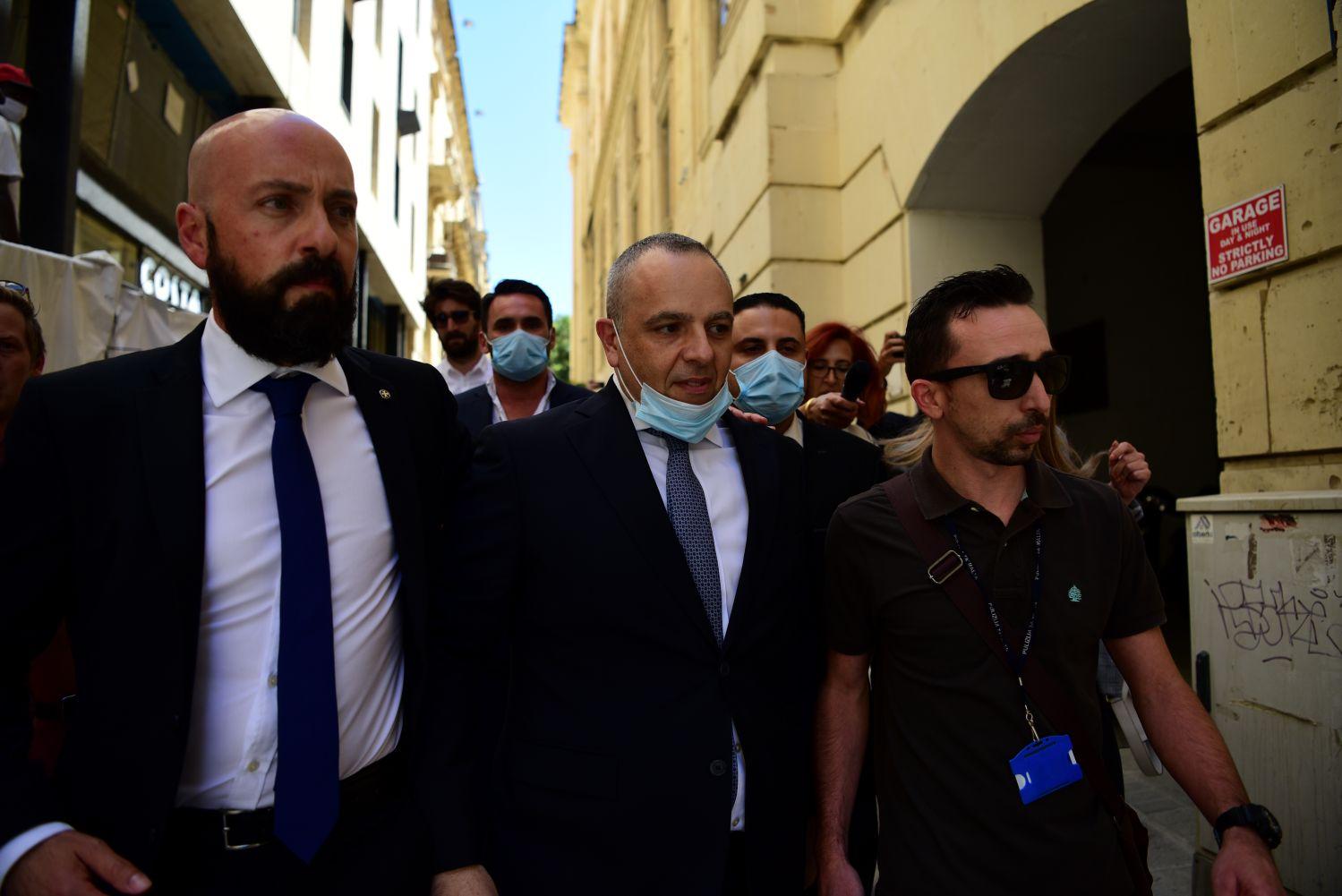 Keith Schembri (centre) taken to court in 2020.
The contacts between Schembri and Fenech
12.09pm Dr Adrian Vella insisted he never passed the second, two-page document on to Fenech.
The witness says investigators examined the contents of both documents before deciding they needed to take the inquiry a step further.
Police then considered whether there were sufficient grounds to arrest Keith Schembri and to establish whether there was reasonable suspicion he had committed an offence.
Arnaud says police therefore searched data extracted from Fenech's mobile phone, looking for a specific conversation after receiving information that Schembri may have been in contact with Fenech on the night of his arrest.
Documents handed over to Fenech
12.05pm Dr Adrian Vella said he never looked at the contents of the documents he collected from Keith Schembri.
According to Arnaud, Vella folded the bundle and placed it in the inside pocket of his jacket before driving from Mellieħa to Portomaso.
There, Vella met Yorgen Fenech and his lawyer, Gianluca Caruana Curran, and handed over the documents.
Arnaud says Vella told investigators he saw Fenech scribble something on the papers before throwing them aside. He also recalled that Fenech appeared panicked.
Vella could not say with certainty whether the documents he delivered were the same ones later recovered by police because he had never looked at their contents.
From Schembri to Vella to Fenech
12.03pm Dr Adrian Vella explained to investigators that, on Sunday, November 24, while Yorgen Fenech was on police bail, Fenech called him and asked him to collect a document from Keith Schembri.
According to Arnaud, Schembri had also contacted Vella.
The witness says Vella told police it was not unusual for him to visit Schembri.
While there, Arnaud says, Schembri handed Vella a bundle of documents, which the doctor then took away.
Schembri also arrested
12pm Arnaud says police arrested Dr Adrian Vella at around midnight.
The decision to arrest the doctor was not straightforward because of legal implications. Investigators first tried to contact Vella and ask him to go to the police depot voluntarily, but were unable to reach him. Investigators established that Vella had visited Fenech twice while he was under arrest.
Meanwhile, another team of investigators continued examining the data extracted from Fenech's mobile phone - and that led to Keith Schembri's arrest.
Large dataset extracted
11.54am Arnaud tells the court that after Theuma was granted a presidential pardon, investigators continued questioning Fenech while also deciding to arrest Dr Adrian Vella.
At the same time, police turned their attention to data extracted from Fenech's mobile phone, which had been seized following his arrest on November 20.
Arnaud says investigators were initially only able to carry out a partial extraction because of technical difficulties accessing the device.
Even so, police recovered a substantial amount of information.
"It was a very large dataset," Arnaud tells the court, adding that the material became an important part of the investigation.
Court is back in session
11.49am The jurors are being called back in. Assistant police commissioner and lead investigator Keith Arnaud will continue with his testimony.
Break
11.27am And after almost two hours of testimony, the court takes a short break. The judge tells the parties to resume the case at 11.45am.
Doctor arrested
11.26am Arnaud tells the court that two documents handed to investigators by Yorgen Fenech's lawyer during an interview on November 24 prompted police to arrest Dr Adrian Vella.
According to Arnaud, the first document ran to five pages, while the second was two pages long.
After reviewing their contents, investigators concluded they needed to arrest Vella.
Arnaud tells the court that those documents formed the basis for the decision to take action against the doctor.
You may want to read the background to that story from 2019 here.
Pardon granted
11.21am Theuma was granted a presidential pardon on November 25, while the investigation continued to gather pace, Arnaud says.
That afternoon, Fenech asked to consult his lawyers before investigators resumed questioning him at around 8pm.
The interview lasted about an hour and a half, during which Fenech added to the two statements he had already given police.
Arnaud then turns to the arrest of Dr Adrian Vella, telling the court that officers went to his home in Qawra at around 10.30pm.
Police recommend presidential pardon
11.17am Fenech was re-arrested on November 24 after spending the morning with his lawyers.
According to Arnaud, investigators resumed questioning Fenech at 5.15pm, while continuing to interview Theuma. By that stage, police had spoken to Fenech twice and interviewed Theuma six times.
After analysing Theuma's various statements, the handwritten letter, the recordings and other evidence, and after interviewing witnesses including Edgar Brincat, Kenneth Camilleri, Johann Cremona and several taxi drivers, Arnaud says he and fellow investigator Kurt Zahra concluded they were in a position to recommend that Theuma be granted a presidential pardon.
Fenech taken to hospital
11.14am While under police watch, Fenech remained in contact with his lawyers, who also visited him at his home.
On November 23, after consulting his legal team, Fenech requested to be examined by Dr Adrian Vella - he's the same doctor who treated Keith Schembri.
According to Arnaud, Dr Vella examined Fenech and referred him to Mater Dei Hospital, where he was escorted by police.
At around 2.50pm, doctors informed investigators that medication administered to Fenech meant he could not be questioned for the next 24 hours.
As a result, police postponed his interrogation and granted him a second period of police bail, with questioning scheduled to resume the following day.
Searches at the office
11.11am Arnaud spoke to Fenech later that day at the police commissioner's office, in the presence of his lawyer. Investigators were approaching the 48-hour limit during which Fenech could legally be held in police custody.
With the agreement of Fenech's lawyer, police released him under what Arnaud describes as an unusual arrangement, placing him under continuous police watch at his home.
The witness says Fenech cooperated with the arrangement.
He was subsequently arrested again and taken back to the police depot while investigators carried out further searches at his offices on the third floor of Portomaso.
Fenech in police lock-up
11.08am Arnaud tells the court that the day after Fenech was taken to the police lock-up, his lawyer met him in the lawyers' consultation room.
Police disclosed the circumstances that had led to Fenech's arrest, as required by law, including the evidence investigators were relying on.
That included playing voice recordings recovered during the investigation, which Fenech and his lawyer listened to during the meeting.
Arnaud describes those days as an especially intense period for investigators.
"A lot happened in those days," he tells the court.
'Now's your chance'
11.04am Arnaud refers the court to a partially redacted timeline documenting the key events in the weeks following Fenech's arrest.
The witness says he met Fenech twice while he was being held in the police lock-up.
Arnaud recalls telling him: "It will be a long process. There's a bit of trouble, but if you want to help yourself, now's your chance."
He explains this is a routine approach used by investigators to encourage suspects to cooperate and provide their version of events.
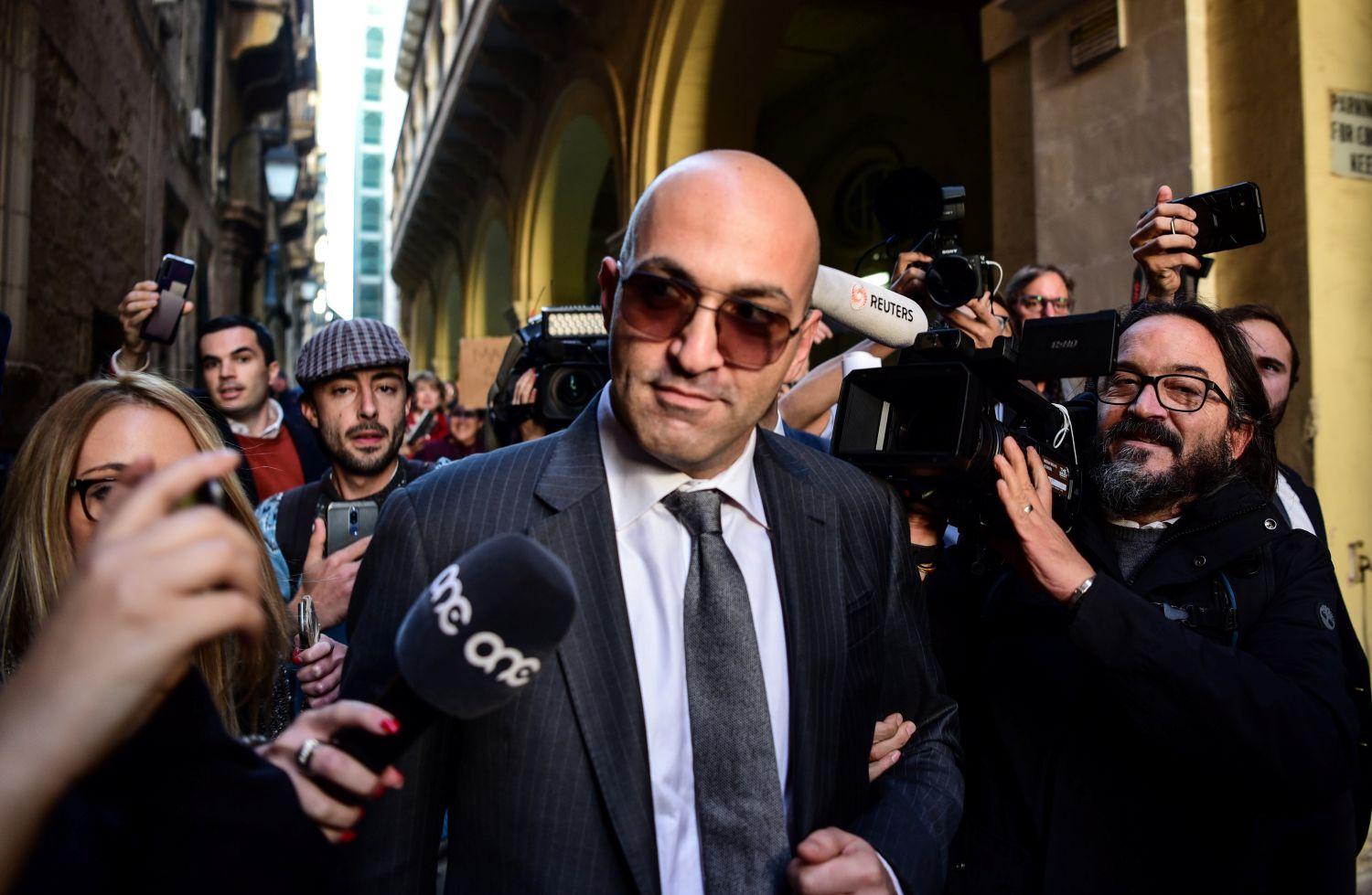 Yorgen Fenech exiting court in 2019. Photo: Mark Zammit Cordina
Keith Schembri 'froze' when told
11am The prosecution asks Arnaud what Fenech said about Schembri in the recordings recovered by investigators.
According to Arnaud, Fenech says Schembri "froze" when he told him about the murder.
Arnaud reiterates that Theuma consistently maintained he knew of only one mastermind behind the assassination - and that was Yorgen Fenech.
The prosecution then moves on to another document recovered during the investigation.
'There was only one mastermind'
10.57am Arnaud tells the court that Theuma consistently maintained there was only one mastermind behind Daphne Caruana Galizia's murder - and that was Yorgen Fenech.
The witness says investigators estimated that around €450,000 was passed from Fenech to Theuma for the Degiorgio brothers, covering legal fees and other expenses after their arrest.
Arnaud also tells the court that the recordings investigators had listened to at that stage were mainly conversations between Theuma and Fenech.
He says they captured a panicked Theuma seeking reassurance, while Fenech repeatedly tried to calm him down, including by telling him he had spoken to Keith Schembri.
Recordings were 'insurance'
10.55am Theuma also explained why he had compiled excerpts from recordings onto a USB stick, insisting they were intended as a form of insurance.
The witness says Theuma told police he wanted Fenech to know that if anyone tried to blackmail or eliminate him, others would still get into trouble because he had preserved evidence.
Theuma insisted his references to Keith Schembri in the recordings related to events that unfolded after the murder investigation gathered pace, rather than to the planning or execution of the assassination.
Middleman confronted about the letter
10.52am Arnaud tells the court he confronted Theuma with the handwritten note recovered from Fenech's office.
Theuma said he wrote the note because he feared he would be "eliminated".
Investigators focused on the passage in which Theuma claimed that "the same two people" were trying to get rid of him.
Arnaud tells the court he challenged Theuma, pointing out that the wording suggested there were two masterminds behind the murder.
However, Arnaud says Theuma insisted he had met Keith Schembri only once or twice, had never discussed the murder with him, and that his references to Schembri related instead to the phantom government job, which he then explained to investigators.
Theuma's letter
10.50am Arnaud reads out the contents of the handwritten note recovered during the search of Fenech's Portomaso offices.
The note begins: "I, Melvin Theuma, am giving this information that I was the middleman in the Daphne Caruana Galizia murder."
Arnaud says the note goes on to state that Theuma decided to come forward because he believed "the same two people" - Yorgen Fenech and Keith Schembri, referred to as "il-Kasco" - were trying to eliminate him.
The note also says Theuma had gathered evidence so that, if anything happened to him, "people will know the story".
It further refers to the government job Theuma claimed he had been given through Schembri, adding that he was later discarded after he had "served his purpose". The note states that a copy of his employment contract was also being provided.
Here's the story we had written about that letter at the time.
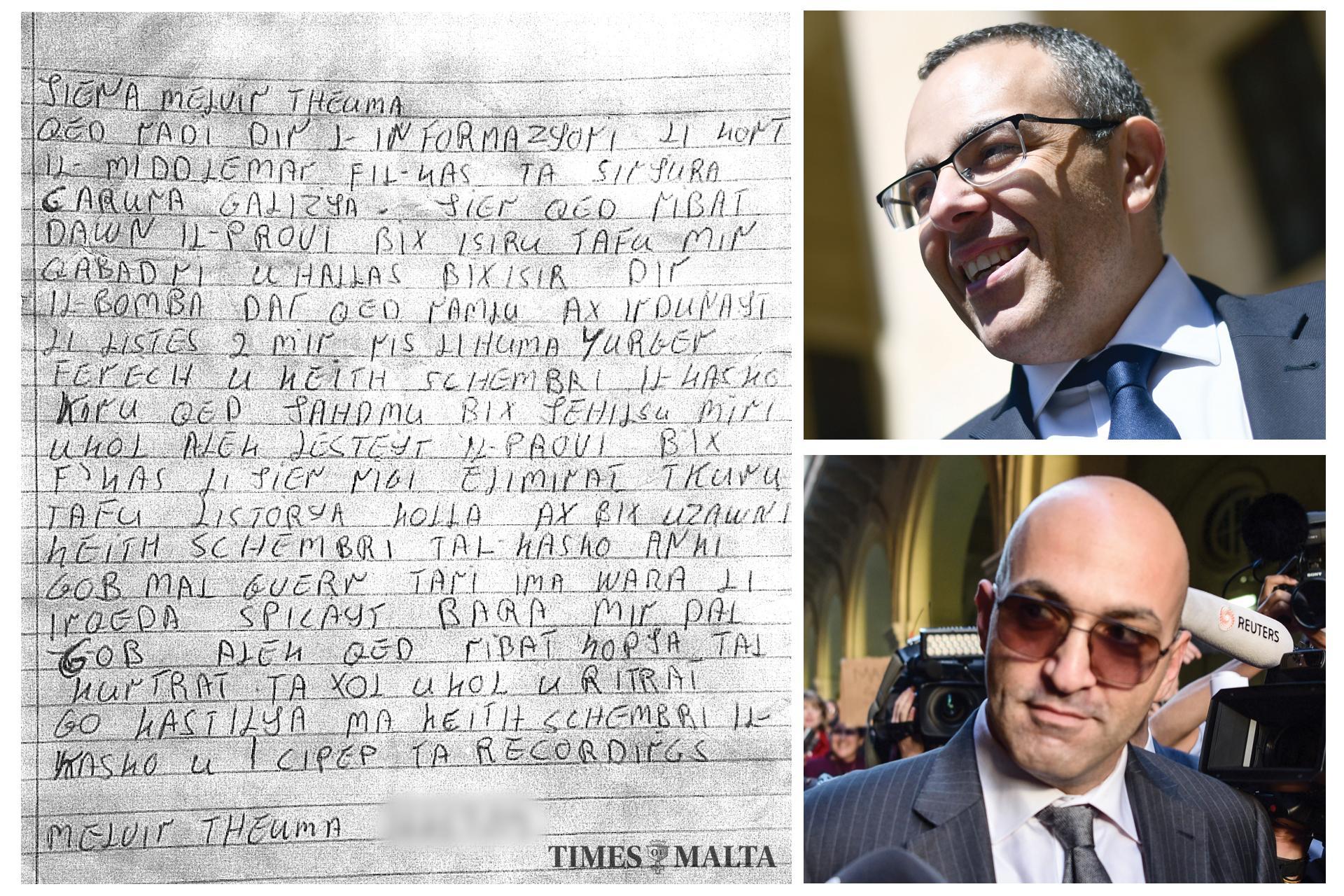 Melvin Theuma's letter reproduced by Times of Malta in 2019.
A handwritten note
10.43am Arnaud tells the court that police had interviewed Melvin Theuma only once when they received information that Fenech was about to leave Malta by boat.
Fearing he was attempting to flee, investigators decided to intercept and arrest him immediately, Arnaud says.
Police then carried out searches on the boat and at Fenech's offices in Portomaso.
During those searches, investigators recovered a handwritten note from Fenech's office.
A photograph of the document is now being displayed to the jury. From the public gallery, it appears to be a crumpled sheet of lined paper with handwritten notes, though the writing is not legible.
Police did not intend to arrest Fenech yet
10.41am The prosecution interrupts Arnaud's testimony to clarify the events surrounding Fenech's arrest.
Arnaud confirms Fenech was arrested on the morning of November 20, 2019. He tells the court that police conducted three interview sessions with Theuma that same day.
The witness says he was not directly involved in Fenech's arrest or in the searches carried out at his Portomaso offices.
Asked what the investigators' original plan had been, Arnaud replies that police had not intended to arrest Fenech at that stage.
"We were still trying to understand the story," he tells the court.
That week in November
10.38am Arnaud tells the court Theuma was arrested on November 14, at a time when nothing about the investigation had yet been reported in the media. Media reports can place additional pressure on investigators and do not always help complex criminal investigations, he says.
He notes that reports about the case began emerging on November 17, after which Joseph Muscat made what Arnaud describes as an indirect public comment on the investigation.
Two days later, reports emerged that someone had been granted a presidential pardon.
Arnaud says that once Fenech's alleged involvement became public, the businessman attempted to flee Malta by boat from Portomaso before he was arrested.
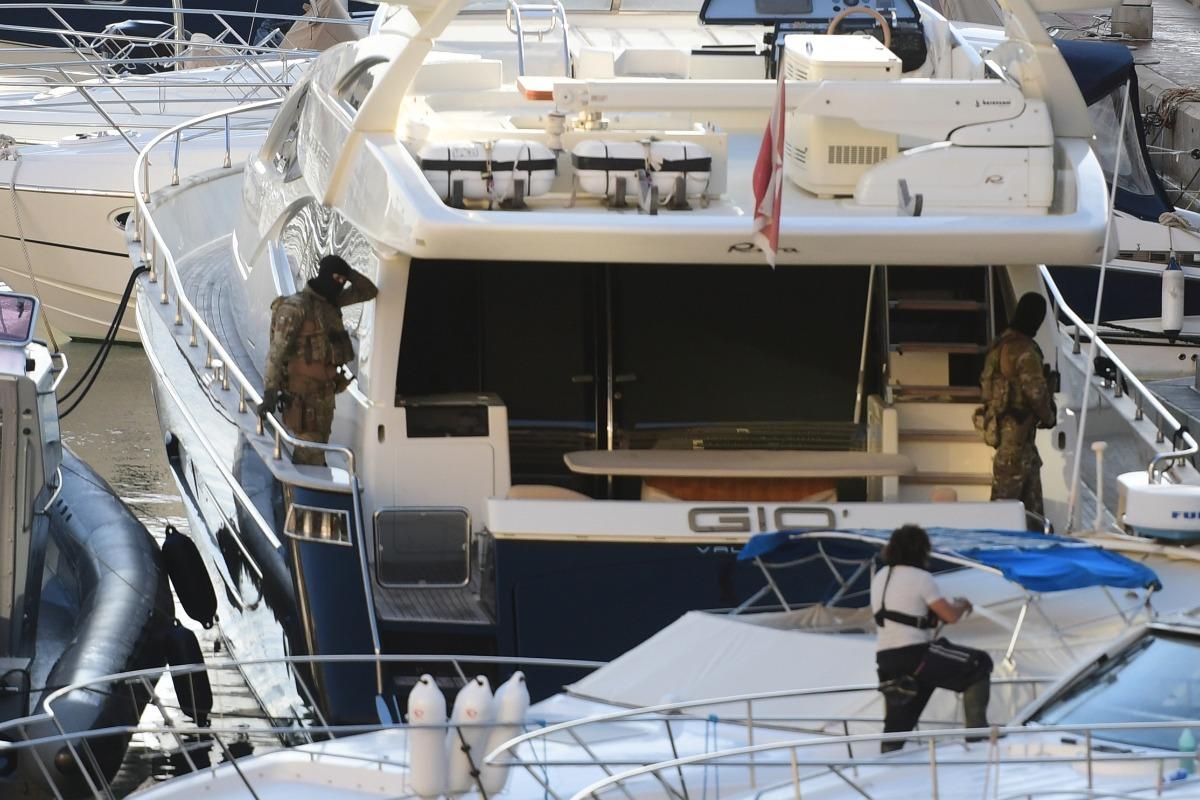 Soldiers on board Yorgen Fenech's boat, shortly after he tried to leave the country.
Theuma only met Schembri twice
10.35am Arnaud tells the court that Theuma became convinced that news that Vince Muscat was speaking to police formed part of a plan by Yorgen Fenech and Keith Schembri to betray him.
Arnaud says that was Theuma's belief, reflected in the recordings investigators recovered.
The witness adds that Theuma consistently maintained he had met Keith Schembri only twice and had never discussed the murder with him.
According to Theuma's account, the first meeting took place at a ranch in Żebbuġ, while the second was at Castille, where Fenech had sent him in connection with the government job he later described as a phantom role.
Schembri 'not implicated' in murder
10.33am The prosecution asks Arnaud why Theuma believed Kenneth Camilleri had been sent by Keith Schembri.
Arnaud replies that Schembri's name came up repeatedly in recordings made by Theuma, often in connection with Kenneth Camilleri.
He stresses that Schembri is not implicated in the murder.
According to Arnaud, another recurring theme in the recordings was Theuma's fear that he had been "betrayed", a word that surfaced repeatedly as his anxiety grew.
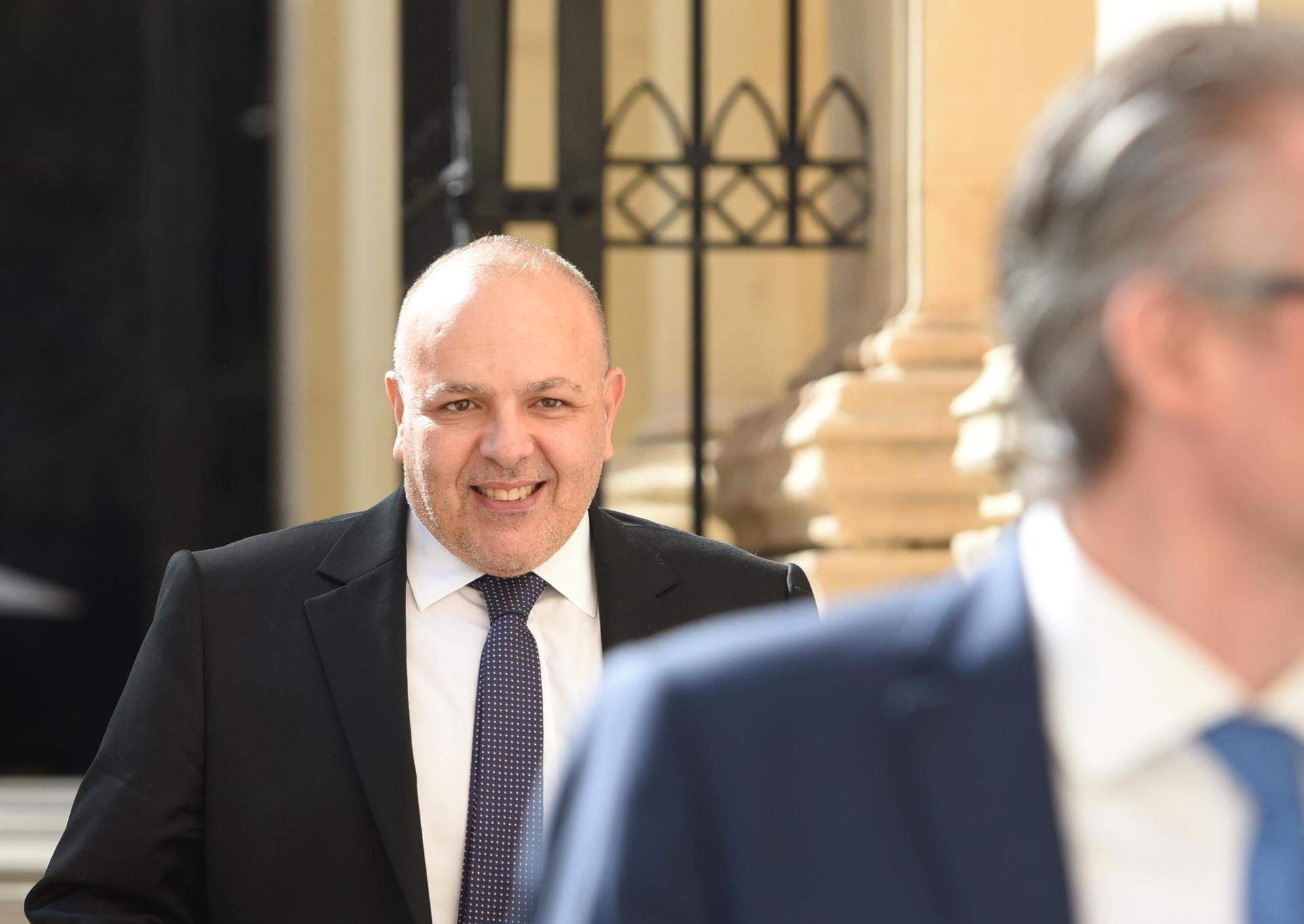 Keith Schembri exiting court.
Sent by Schembri to calm Theuma down
10.31am Theuma became increasingly panicked after learning that hitman Vince Muscat wanted to start speaking to police.
The witness says Kenneth Camilleri later told investigators he had never been informed that Theuma's concerns related to the Caruana Galizia murder itself.
According to Arnaud, Camilleri said he had been asked by Keith Schembri to calm Theuma down, but assumed the issue was political rather than criminal.
Arnaud adds that Camilleri told police it was Theuma who repeatedly insisted that someone should ensure the Degiorgio brothers were granted bail.
Jurors sent out over legal objection
10.25am Arnaud tells the court that the second phase of the investigation introduced a number of new figures, including Johann Cremona, Edgar Brincat and Kenneth Camilleri.
Investigators believed they each played different roles in helping to reassure and calm Theuma as he became increasingly anxious while the police investigation gathered pace.
Proceedings are then interrupted after defence lawyer Charles Mercieca raises a legal objection.
The jurors are asked to leave the courtroom while the point is argued before the judge. Arnaud also steps out of the witness box pending the court's ruling. Within minutes, they are back in.
And the band played on...
And while Hall 22 is hearing one of the most important legal cases in Malta's history, the sound of a band march outside the law courts in Valletta drowns out testimony inside the courtroom.
The music is so loud that parts of Arnaud's evidence become almost inaudible.
Two phases
10.16am Asked to explain when Kenneth Camilleri allegedly made promises to Melvin Theuma, Arnaud tells the court the investigation falls into two distinct phases.
The first, he says, covers the period before Caruana Galizia's murder, including the planning of the assassination and the payments made in connection with it.
The second phase begins once the police investigation gathered momentum.
It was during this period, Arnaud says, that Theuma became increasingly anxious as investigators closed in, prompting many of the events and conversations the court has been hearing about.
'I wanted to blackmail him'
10.14am Arnaud tells the court that Melvin Theuma explained why he had kept a photograph of himself with Keith Schembri inside the box handed to investigators.
According to Arnaud, Theuma said the photo was taken on the day he was given the phantom government job.
"I wanted to blackmail him," Theuma told police.
The witness adds that investigators also interviewed Kenneth Camilleri and Johann Cremona as they continued piecing together Theuma's account.
Arnaud notes that until Theuma's arrest, Fenech's name had never surfaced publicly in connection with the murder investigation.
Theuma considered confessing
10.13am Theuma expressed remorse over Daphne Caruana Galizia's murder and said he wanted to apologise to her family.
According to Arnaud, Theuma also told investigators he had at one stage considered going to the police and confessing everything he knew about the murder plot.
The witness says Theuma described coming under increasing pressure from the Degiorgio brothers for money while sometimes struggling to contact Yorgen Fenech, who was frequently abroad.
Arnaud adds that parts of Theuma's account were later borne out by Fenech's own statement to police.
Recordings revealed Theuma's distress
10.11am Investigators recovered recordings of conversations between Melvin Theuma and Johann Cremona.
According to Arnaud, Theuma would sometimes call Cremona in the middle of the night in a state of panic, sounding desperate and deeply distressed, while Cremona tried to calm him down.
The witness describes Cremona as a source of emotional support for Theuma, saying he would sometimes invent reassuring stories to keep him calm.
Arnaud also tells the court that Theuma attempted to take his own life during this period.
Theuma contemplated suicide
10.09am Arnaud tells the court that Melvin Theuma knew Yorgen Fenech was in contact with then OPM chief-of-staff Keith Schembri and believed he was a powerful figure with influential connections.
According to Arnaud, Theuma was in such a fragile state that he was contemplating taking his own life.
The witness says this was corroborated by Johann Cremona, who knew Theuma well. Cremona rented a garage from Theuma for his business and regularly paid him rent, giving him insight into Theuma's state of mind.
Why Theuma began recording Fenech
10.07am Melvin Theuma was regularly passing on between €2,000 and €3,000 a week to the (hitmen) Degiorgio brothers to cover legal fees and other expenses.
According to Arnaud, Mario Degiorgio (their other brother) would ask Theuma for money, who would then approach Yorgen Fenech. Fenech would provide the cash, which Theuma would pass on to Mario Degiorgio.
Arnaud says Mario Degiorgio was becoming increasingly frustrated that the brothers were still being denied bail, leaving Theuma anxious about the situation.
It was at this stage, Arnaud says, that Theuma began secretly recording conversations with Fenech because he believed the businessman was a powerful man with influential contacts.
False bail tip-off
10.04am Following a court sitting in May (we're not sure which year), during which the Degiorgio brothers sought bail, Melvin Theuma was approached by Kenneth Camilleri, who worked in security at the Office of the Prime Minister, and Johann Cremona.
According to Arnaud, the pair told Theuma not to worry because the Degiorgio brothers were going to be released on bail.
Arnaud says Theuma passed that information on to the brothers. However, bail was ultimately not granted.
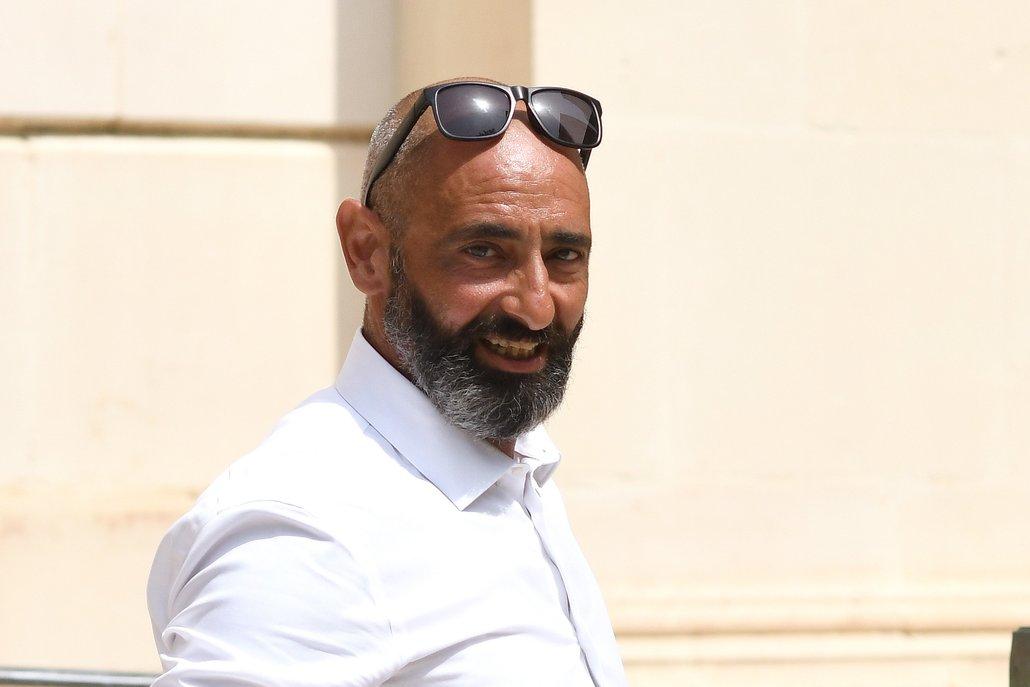 Kenneth Camilleri
Fenech warned Theuma about Muscat
10.02am Arnaud tells the court that, according to the investigation, it was Yorgen Fenech who informed Melvin Theuma that hitman Vince Muscat was speaking to police.
Arnaud says Theuma then passed that information on to Mario Degiorgio, who relayed it to his brothers in prison.
According to the witness, this explains why Vince Muscat's lawyer, Arthur Azzopardi, later contacted investigators in a panic to report that the Degiorgio brothers had discovered Muscat was cooperating with police.
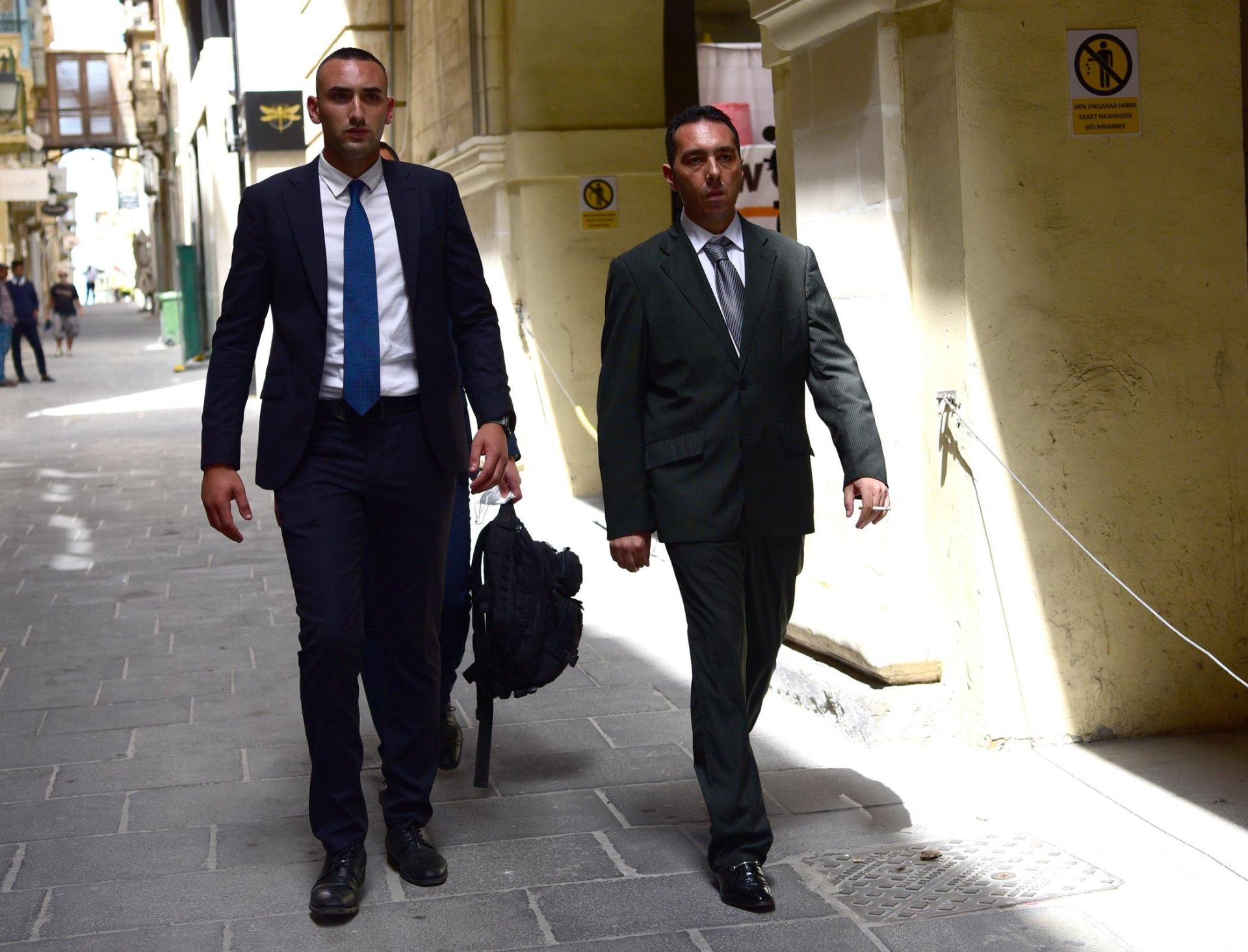 Melvin Theuma (right) being escorted to court in a previous sitting.
Melvin was a 'credible witness'
10am Arnaud tells the court that Melvin Theuma's account was repeatedly corroborated by other evidence gathered during the investigation.
He says key parts of Theuma's version matched Vince Muscat's (il-Koħħu) testimony, forensic evidence and information already uncovered by police.
Even tip-offs Theuma claimed to have received about the progress of the investigation proved to be accurate, Arnaud says, strengthening investigators' confidence in the credibility of his evidence.
Fenech warns about looming police raids
9.55am The investigation gathered momentum in mid-November 2019, around the time of the first meeting at Castille.
According to Arnaud, Theuma told investigators that, shortly before the Degiorgio brothers were arrested, Yorgen Fenech instructed him to warn them that police were about to carry out raids.
Arnaud says this helped explain why one of the Degiorgio brothers was not carrying his personal mobile phone when he was arrested.
The witness says Theuma had effectively become a messenger between Fenech and the Degiorgio brothers, passing on instructions while never revealing who had commissioned the murder.
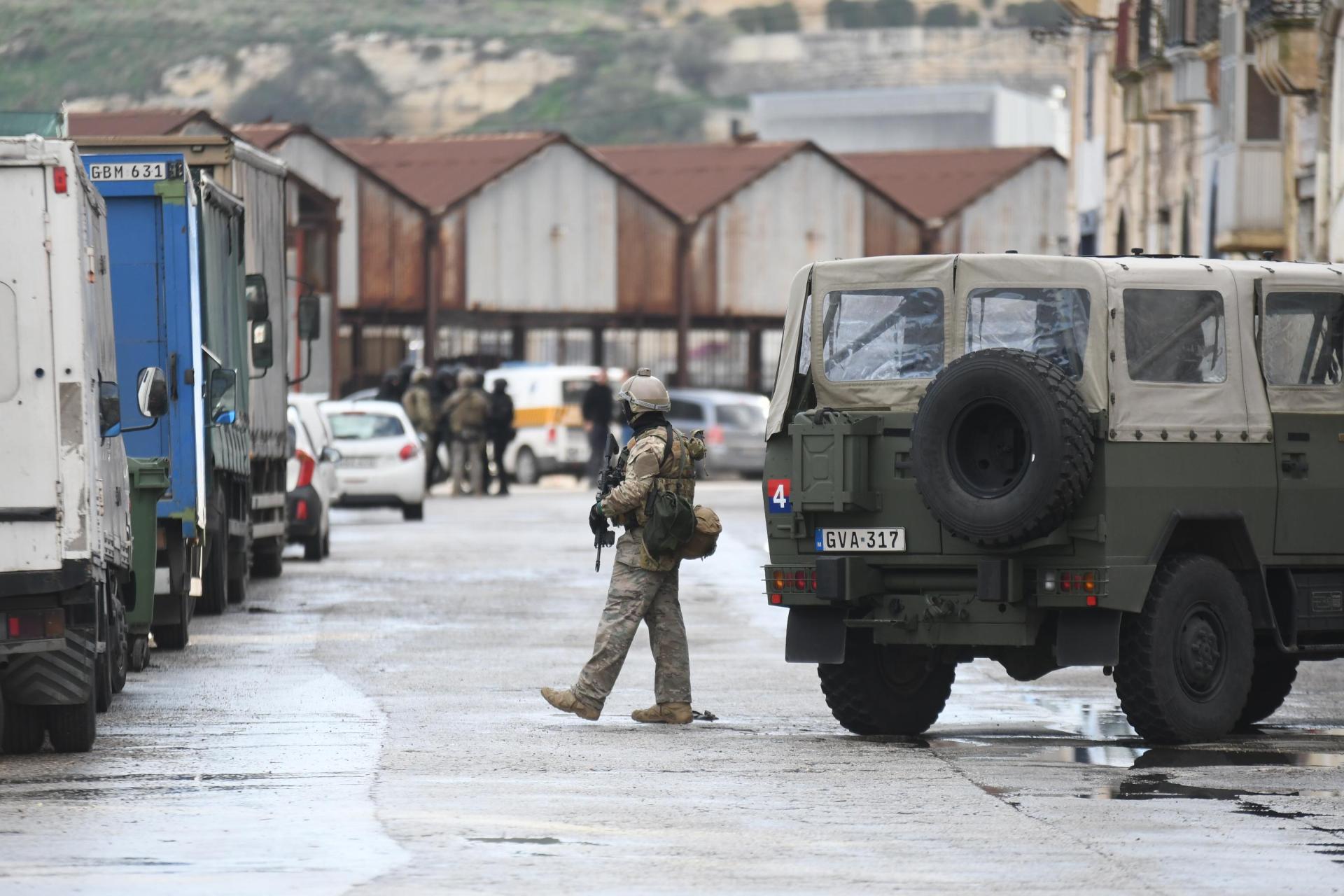 The hitmen were made aware of the raid on the Marsa potato shed in advance. Photo: Jonathan Borg
Bomb assembled in Żebbuġ
9.53am One of the chat messages between Melvin Theuma and Yorgen Fenech referred to police believing the bomb had been assembled in Żebbuġ.
At the time, Arnaud says, Żebbuġ had already become a key focus of the investigation. Police had searched the area, which investigators believed was under the control of the Ta' Maksar brothers (the bomb makers).
Arnaud says this was information that had not been made public, reinforcing investigators' belief that Theuma's account was credible and that he had first-hand knowledge of the murder plot.
'Everyone was happy'... until
9.52am According to Theuma, everything appeared to be over once the murder had been carried out and the money passed on.
"The mission was complete, the money had been handed over and everyone was happy," Arnaud says, recounting Theuma's version of events.
But that changed when Theuma became aware police were closing in on those involved.
Arnaud says this confirmed investigators' belief that Theuma knew the police investigation was gathering pace.
Six interviews with Melvin
9.50am Lead investigator Keith Arnaud takes the stand. The jurors finally take their place.
Arnaud tells the court that police interviewed Melvin Theuma over six sessions between November 19 and 22, 2019, after his arrest.
The strategy, Arnaud says, was to let Theuma speak freely about everything he knew regarding the murder plot.
According to Arnaud, Theuma described handing a bag of cash to Alfred Degiorgio at his apartment in Marsaskala.
"At that point, everything was sorted," Arnaud says, referring to Theuma's account of the payment.
Prosecution, defence in animated exchange
9.30am The case hasn't started yet, and the jurors are still not in the room as the prosecution and the defence lawyers are arguing over a legal point.
And some of the exchanges are quite animated.
Judge enters courtoom
9.15am Judge Edwina Grima has just entered the courtroom. Procedural issues are being ironed out before the jurors enter the room. There are nine jurors and six reserve jurors in this case. And they are being shielded from all that is being reported in the media.
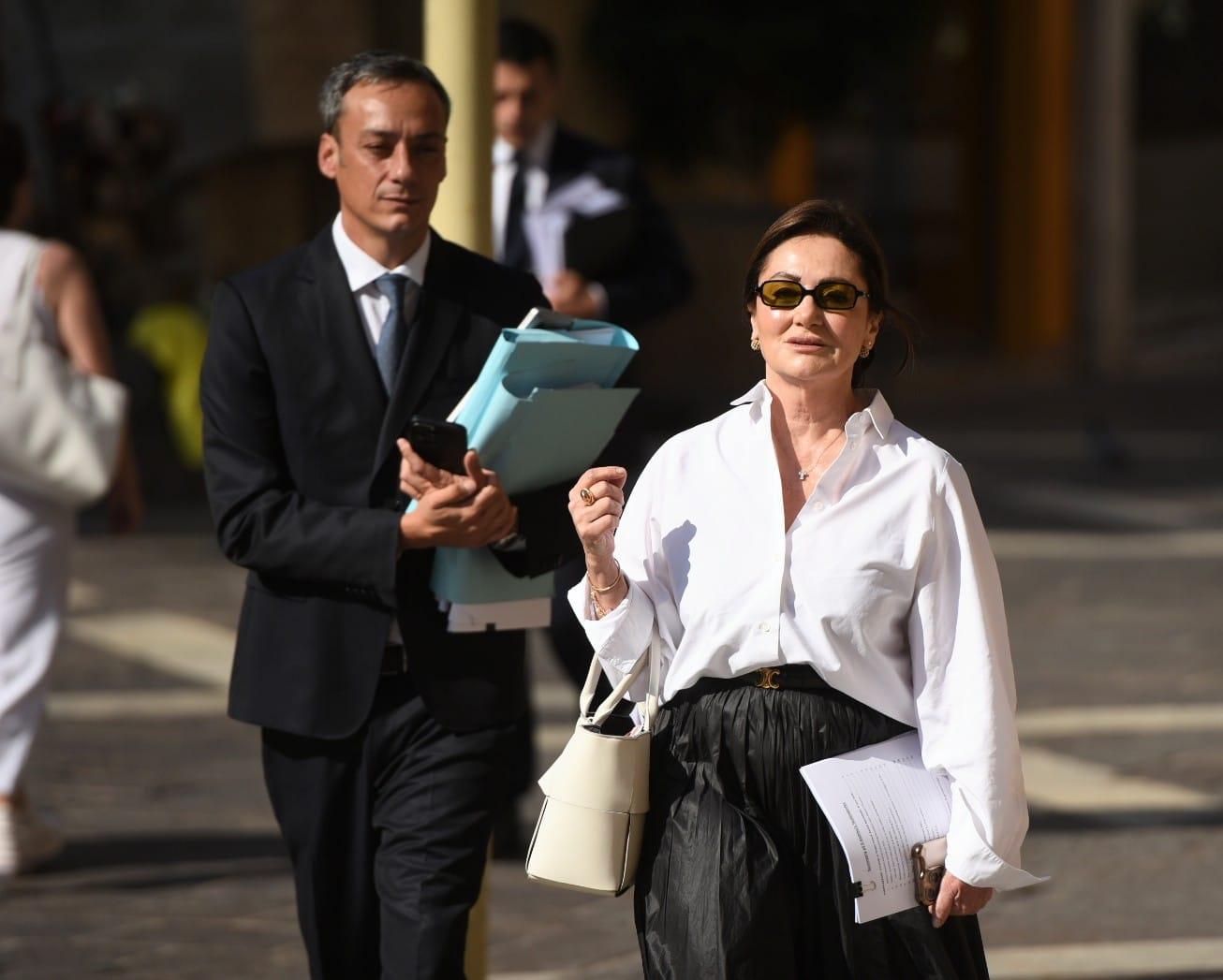 Defence lawyers Gianluca Caruana Curran and Giannella de Marco entering court on Saturday. Photo: Chris Sant Fournier
Case to start soon
9am Our journalist Nicole Meilak will be inside Hall 22 on Saturday to report the continuation of proceedings.
What's it like being in the courtroom?
8.40am Many have been curious about the proceedings leading to this court case as well as the atmosphere inside the court room as the jurors decide Fenech's fate.
Mark Laurence Zammit sat down with our main court correspondent Clara Farrugia to discuss in the latest episode of Times Talk.
What happened so far?
8.30am This case has long been coming - all the way back since 2019 when Fenech was arrested, sparking political crisis. That led to a lengthy compilation of evidence and a series of constitutional and legal challenges which delayed the trial.
Since then, the three hitmen and the bomb-makers have been convicted for the October 16, 2017 crime.
On Wednesday, a jury of nine, with six reserves was composed.
On Thursday, we heard Attorney General prosecutor Anthony Vella lay out the case. He made the case that Fenech was the person who set the murder in motion, financed it and applied pressure until it was carried out.
And on Friday, Arnaud spent almost seven hours retracing the painstaking investigation that police say exposed the hitmen before turning their attention to those suspected of commissioning the murder.
Who are the main players?
8.10am Let's take a look at the key figures in this complex case.
Yorgen Fenech: a business tycoon and heir to a family fortune, and the man in the dock: Fenech is accused of complicity in Caruana Galizia's murder;
Melvin Theuma: a taxi driver who worked for Fenech and who has testified that he served as a middleman between Fenech and the alleged hitmen;
Vince Muscat, Alfred Degiorgio, George Degiorgio: the convicted hitmen;
Keith Schembri: a friend of Fenech's and the chief of staff to Joseph Muscat when he was prime minister;
Edwina Grima: the presiding judge;
Keith Arnaud, Kurt Zahra: the lead police investigators and prosecutors;
Godwin Cini, Anthony Vella, and Danika Vella: the lawyers leading the Attorney General's office prosecution;
Giannella de Marco, Gianluca Caruana Curran, Charles Mercieca: Yorgen Fenech's legal team;
Jason Azzopardi, Therese Comodini Cachia: lawyers appearing for the Caruana Galizia family.
Good morning
8am It's the weekend, but that doesn't mean the high-profile case or journalists take a break as we soon convene in Hall 22 for the continuation of Yorgen Fenech's trial.
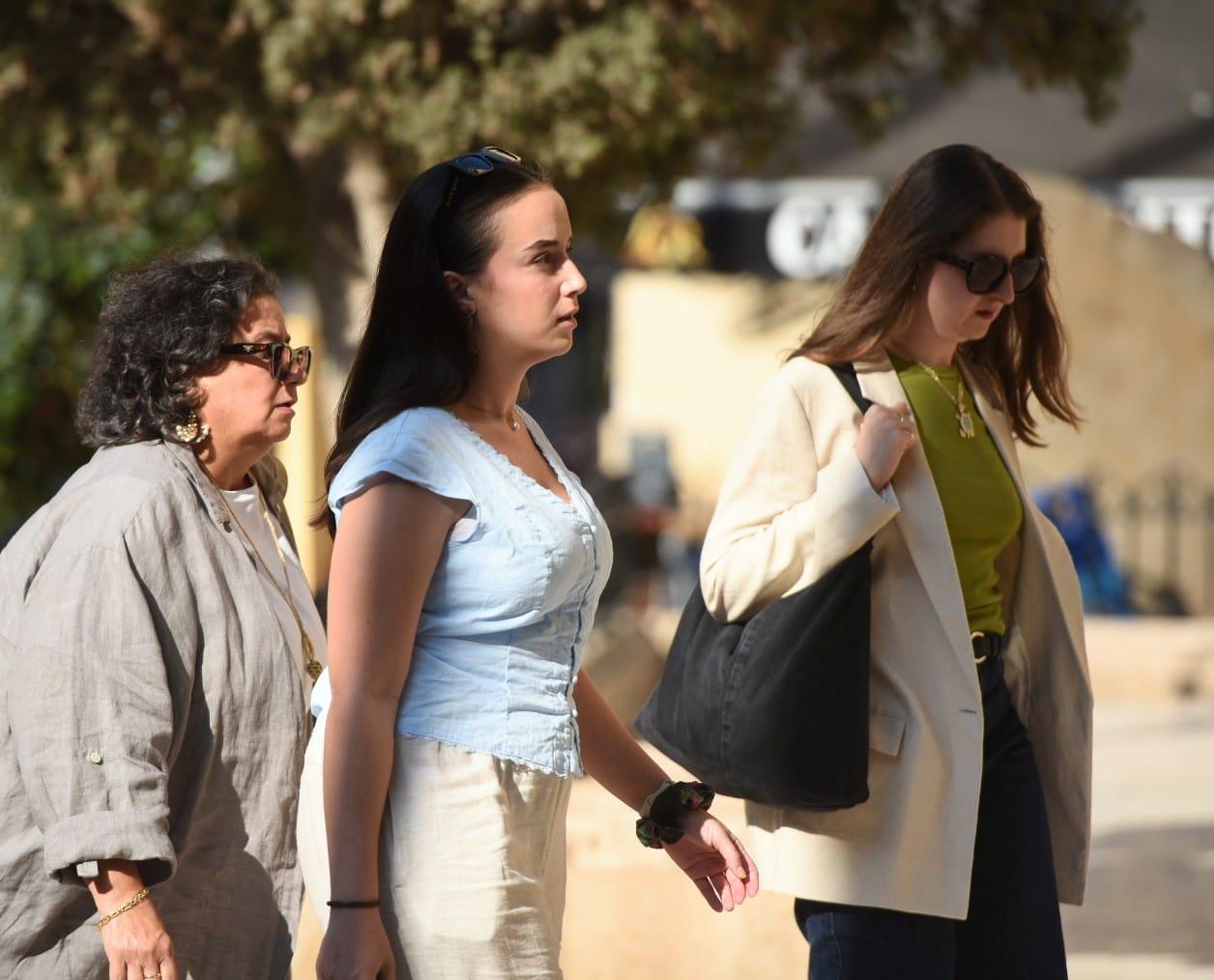 Relatives of Daphne Caruana Galizia in court on Saturday. Photo: Chris Sant Fournier