Malta blanketed in Saharan dust as pollution levels hit six times safe limits
Dust carried over to Malta by strong southwesterly winds
Malta has been blanketed in Saharan dust over the past few days, with airborne concentrations of pollutants hitting more than six times the recommended World Health Organisation (WHO) daily limit.
Recent images taken by the EU’s Copernicus satellite show a massive and intense dust plume extending from North Africa across the Mediterranean and up past Sicily.
Malta’s five air quality monitoring stations – in Attard, Għarb, Msida, Żejtun and St Paul’s Bay – recorded intense spikes of airborne dust on Wednesday and Thursday mornings, with levels continuing to rise as of today.
All stations recorded pollution levels more than four times the WHO limit, with most hitting around five times the limit and Msida reaching a staggering six times the limit.
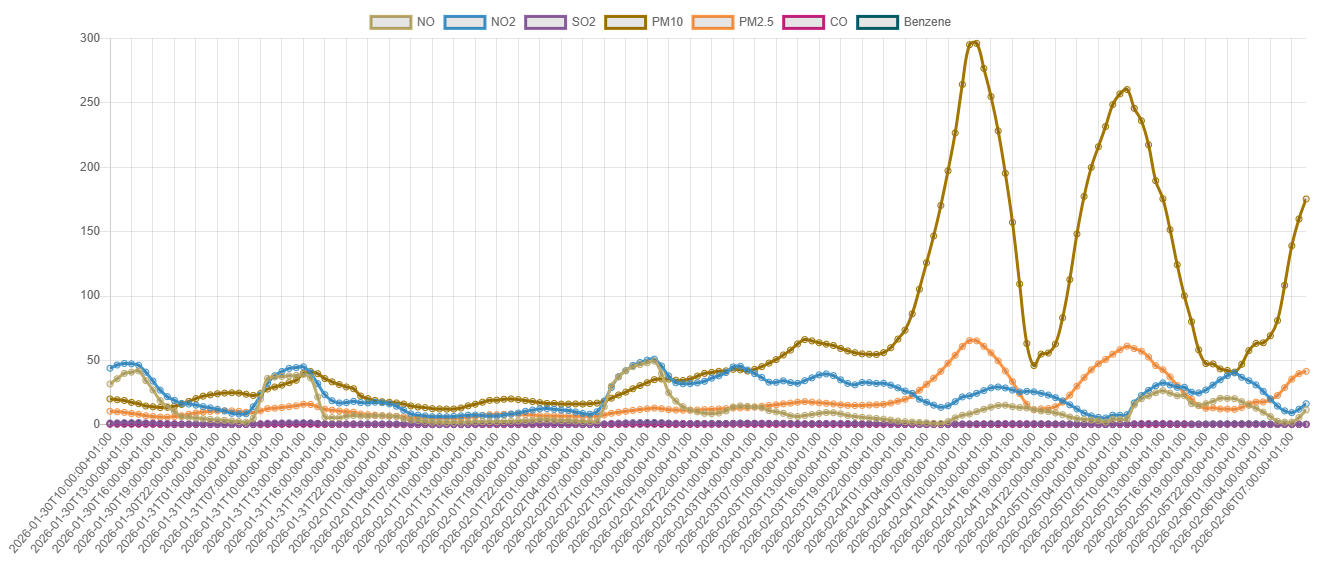 Pollution levels in Msida peaked at just under six times the WHO-recommended 24-hour mean limit. Screenshot: ERA.
The Met Office told Times of Malta the dust had originated from the Saharan desert, carried over the central Mediterranean by strong Southwesterly winds seen over the past few days, but that conditions were expected to improve “in the coming hours”.
All ERA monitoring stations recorded concentrations of PM10 particles – those with a diameter of 10 microns or less – of more than 200µg/m3 (micrograms per cubic meter), with most peaking at around 250µg/m3.
Msida, meanwhile – an area of the country frequently linked to higher pollution levels due to heavy traffic – saw concentrations of almost 300µg/m3. The WHO-recommended 24-hour mean limit is 45µg/m3.
PM10 particles have been linked to a range of adverse health impacts, including worsened asthma and increased risk of respiratory infections.
Common sources include activities linked to construction sites and landfills, wildfires and vehicle exhaust fumes.
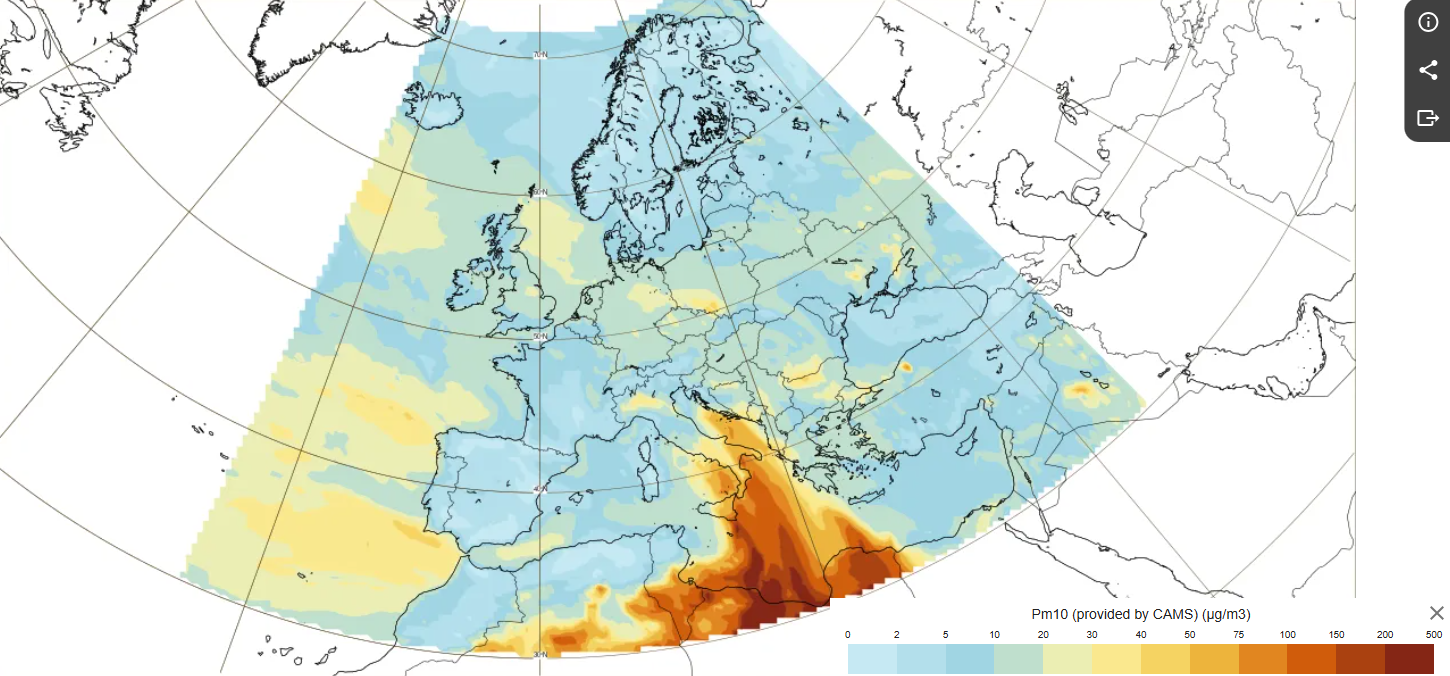 Recent Copernicus imagery suggest the plume is drifting east across the Mediterranean. Screenshot: EU, Copernicus.
Prominent marine biologist Alan Deidun, who highlighted the issue in a social media post on Thursday, noted that while the Saharan dust was a natural cause of pollution, it remained an important source of nutrients for marine levels.
With Saharan dust naturally high in iron and other trace elements not found natively in the sea, it was “essential for the productivity of our waters”, he said, describing the dust as an “important fertiliser” for plankton.
Deidun said marine biologists typically recorded booms in plankton growth weeks after high levels of dust, adding that with plants in Malta less easily able to absorb iron from the soil, which in Malta is typically alkaline, the dust was also an important fertiliser on land.
He noted its impacts were even more far-reaching, with Saharan dust regularly detected by a large German-run facility in the Amazon rainforest. “It’s incredible how everything is connected”, he said.
Saharan dust is a regular feature in Malta, leading to hazy conditions and sending motorists scrambling for the nearest car wash. In March last year, Saharan dust lingered in the air for around a week.