Towards a democratic Libya
Libya’s next chapter must be written through elections, not force, says Saadun Suayeh
On May 30, Malta voted for a new government. We, here in Libya, wish the Maltese people success in their choice of their elected government. Democracy is not a smooth process, it can be difficult, messy and even uncertain but it is the only guarantee for a social contract that protects us from dictatorship and totalitarian rule.
When Libya won its independence in 1951, under a UN resolution, the fledgling Libyan kingdom had a constitution and an elected parliament. The late King Idris, a paternal and spiritual figure, banned political parties, as he thought the country was not yet ready to have political parties that could be divisive.
Elections were held nonetheless to choose parliament representatives, and, although the practice was not perfect, it was an exercise in democracy and the constitution, a progressive one, was upheld, although the king also exerted considerable authority as a constitutional monarch and a paternal leader unifying Libya.
Unfortunately, the late Mummar Gaddafi, who led a coup d’état in September 1969 that ended the monarchy and ushered the Republic, known later as Jamahiriya, did not choose to build on the legacy of the kingdom to help evolve the nascent democracy, allow political parties and constitutional reform but opted instead to take an even stronger stance against political parties to the extent of labelling the forming of parties as an act of treason.
He had a unique chance to build a nation, which he squandered as he fell victim to his own visions, aspirations and whims. Libya paid dearly for his fatal errors and missed opportunities in 2011.
The uprising of February 2011, in the wake of the Arab Spring, eventually led to the fall of the Gaddafi regime, aided by the decisive intervention of NATO forces. There was again an opportunity to build, or rebuild, a nation. In fact, elections were held in 2013, with a large participation of the Libyan people. It seemed that Libyans were ready to unite, transcend their differences, reconcile with their past and move forward towards the future.
Unfortunately, the Libyan people’s dream of a democratic Libya was aborted. It was sacrificed at the altar of greed, political opportunism, shortsightedness, divisive ideologies, lack of enlightened leadership with a vision, narrow mindedness, foreign interests, tribalism and, above all, the lack of a plan by the intervening NATO forces for the future of the country after the fall of the Gaddafi regime and the ensuing chaos.
No more interim solutions for Libya- Saadun Suayeh
Over the last 15 years since the February uprising, the march towards democratic Libya was bloody, painful and tragic. The country witnessed internal fighting, rise of militias, uncontrollable use of weapons, violations of human rights by armed groups and, in 2019, the forces of General Hafter invaded Tripoli in a bid to unify the country by force. The attempt failed thanks to a decisive intervention by Turkey. The price was, however, high in the number of Libyans killed in the confrontation, on both sides.
Currently, Libya is politically divided, with an internationally recognised government in Tripoli, the Government of National Unity, and a rival government in the east supported by parliament, very much under the control of Hafter.
Successive UN envoys have failed to find a solution.
As outlined by the former UN envoy to Libya, Stephanie Williams in her book Libya Since Gaddafi, released in April, Libya suffers from serious structural weaknesses with incompetent and corrupt politicians, dysfunctional legislative bodies, a rising oligarchy, increasing external influences and a general lack of a unifying national vision.
Libya undoubtedly deserves better. It is a country with huge potential and its stability is essential for the entire region. The dream of a democratic Libya, for which many Libyans sacrificed their lives, is realisable.
It is the responsibility of the United Nations Support Mission in Libya to call for a general referendum on the draft constitution, which the parliament keeps in suspension, in order to pave the road for parliamentary and presidential elections in the near future.
However, the UN mission cannot do this by itself as it needs the support of the large powers, namely the US and the EU, and, to be more specific, all the NATO countries that were instrumental in toppling the Gaddafi regime. They have the legal and moral responsibility to do so. No more interim solutions for Libya as the time for a flourishing, progressive and democratic Libya is now.
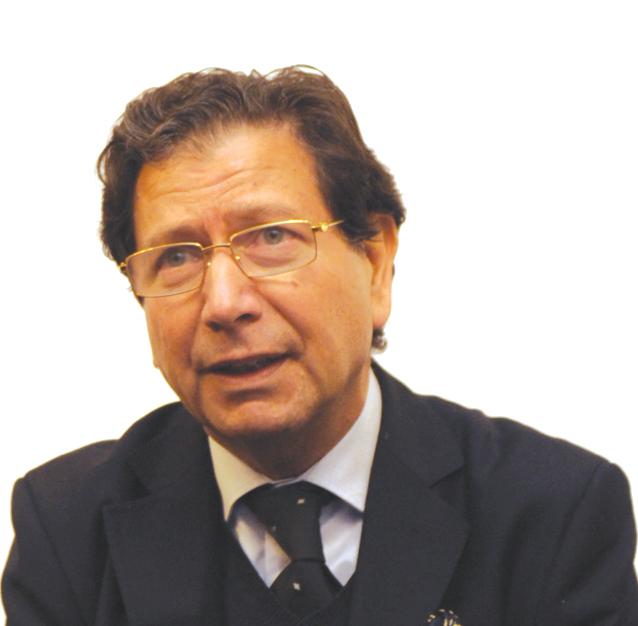
Saadun Suayeh is a former Ambassador of Libya to Malta.