Our unsung heroes
Our national story should be told through those who resisted oppression, not only through those who ruled over us, writes Evarist Bartolo
It was Godfrey Wettinger who opened my eyes when I read his article ‘Early Maltese Popular Attitudes to the Government of the Order of St. John’ (Melita Historica - 1974).
I was so pleased to read Wettinger’s study showing that the Maltese opposed the harsh autocratic rule of the Knights and how the physician Giuseppe Callus was hanged because he protested against Grand Master Jean de la Valette’s decision to impose extremely heavy taxes on the Maltese while greatly reducing their already limited role in governing their own islands.
The Order did help set us on the path toward becoming an independent state but this was certainly not their intention. They regarded us as inferiors in our own land. They were colonial rulers over us.
A note by Wettinger in the article stated that not only did very few Maltese know about this national hero Callus but, even among those who did, many believed his name was Mattew when, in fact, it was Giuseppe. We do not even know the name of one of our national heroes, yet, we know and revere Grand Master de la Valette, the man who ordered his execution.
We erected a monument to de la Valette in Valletta. How do we commemorate Callus? Stanley Fiorini shed further light on Callus and found that he was born around 1505. By now, we should have marked the 520th anniversary of his birth. We did not. What does the story of Callus say about our national consciousness when we do not even know those who stood up for our people throughout the centuries?
As a young man, I read extensively about the suffering and enormous efforts made by other peoples to free themselves from colonialism and govern themselves. I must admit that, until I read Wettinger and other historians who shed new light on our people, I felt ashamed to belong to a country that seemed destined to be ruled by others and to accept it meekly like a flock of sheep.
Historical studies such as those of Wettinger, built on painstaking collection and analysis of facts, are crucial for our national consciousness. Wettinger chose to tell the story of the ruled rather than the story of the rulers, which often ignores how those in power oppressed the people they governed.
The rulers taught us to accept their history as our own while setting aside ours. Our true history is the history of the ruled and of how we managed to endure until we achieved freedom. If we do not learn from history, we risk losing what those before us secured through wisdom and sacrifice.
We were taught more about the grand masters, kings, queens and governors who ruled these islands than about our own people. Our land is full of monuments commemorating those who ruled over us.
Without us, against us
In 1933, Dun Karm wrote ‘Lil Mikiel Xerri’ lamenting that, throughout the Maltese islands, he could find no monument commemorating Dun Mikiel Xerri. He was executed by firing squad along with 42 others on January 17, 1799 for rising against the French. They had occupied Malta as part of their imperialist expansion into the Mediterranean after expelling the Order of the Knights:
Our land is full of monuments commemorating those who ruled over us- Evarist Bartolo
“And I searched in vain upon Maltese soil
for a stone to mark where you are buried;
I trembled and wept, for I saw how unkind
this land had been toward you.”
At least 52 years later, a monument was finally erected to honour those Maltese patriots who gave their lives for their country in 1799. Dun Karm also paid tribute to Mikiel Anton Vassalli, not only because of his work for the Maltese language but also because he dreamed of seeing the Maltese govern themselves:
“…but because you loved this gentle land,
and were among the first of our people
to conceive our right to be a nation unto ourselves.”
A century after the hanging of Callus, Dun Filippu Borgia (1567–1649) also wrote to the pope about the Order’s oppression of the Maltese people. He escaped execution only because he had influential supporters in Rome. It was not uncommon for a newly elected grand master to decide which Maltese leader should be executed in order to intimidate the people and discourage protest or resistance against the Order.
Fr Gaetano Mannarino (1733–1814) was imprisoned for 23 years because he organised an uprising against the Order. Three of his associates, including the pharmacist Pasquale Balzan, were strangled and beheaded on September 9, 1775, and their heads were displayed on the roof of St James Cavalier as a warning.
The lawyer Giuseppe Elia Pace (1747–1820) was exiled because he embraced the values of liberty, equality and fraternity inspired by the French Revolution and criticised the Order. In Rome, he became a minister of the Roman Republic (1798–99) and hosted Vassalli (1764–1829).
Giovanni Nicolò Muscat (1735–1803) worked tirelessly for the separation of Church and state. Archpriest Saverio Cassar (1759–1847) led the Gozitan uprising against the French on September 3, 1798. The Gozitans took control of the island and declared Gozo an independent nation until 1801, when the British reversed this development.
Camillo Sceberras (1772–1855) and Giorgio Mitrovich (1795–1885) worked to ensure that the Maltese played an active role in government rather than remaining merely a servile outpost of the British Empire.
More than monuments, we need books in Maltese and visual documentaries on social media about the persons who, from time to time, rose up and, in the words of Rużar Briffa:
“Cried out: ‘I am Maltese!
Woe to whoever humiliates me –
woe to whoever mocks me!”
Over the years, our ancestors understood that when we left our fate in the hands of others they used us as it suited them.
Our ancestors understood that when we do not decide for ourselves and do not fully participate in decisions concerning us those decisions are made not only without us but against us.
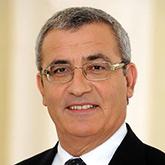
Evarist Bartolo is a former Labour foreign and education minister.