Save our shores: Disintegration and resistence
In spite of the disintegration of local communities, grassroots resistance endures
The community you’re born into is always one of the most important determining factors in your life.
A supportive community with a decent amount of time, resources, and energy to spare for its youth is essential for healthy dynamics in society at large.
So what happens when a community faces a slow, painful process of disintegration? Who stands up for the neighbourhood when hardly anybody can afford to remain in the area?
In our project titled Save our Shores, we looked at the government’s relentless drive to push Malta’s maritime industry and the divisive gaps between policymakers and the people who are affected by those policies.
The project is an initiative created and implemented by Friends of the Earth Malta with the help of Amphora Media and funded by The Minor Foundation for Major Challenges.
Our research, as can be seen below, shows that the cumulative health impact of pollution and additional stressors generated by such industries, and policies’ failure to address them, cannot be ignored.
In this article, we spoke to activists, residents, and local councillors who chose to plant seeds of organised resistance, and understand that policies change once people demand it.
More importantly, they acknowledge that numbers don’t lie, and when preventable problems like high rates of respiratory illnesses in areas with heavy air pollution continue to present themselves, swift action cannot wait for better political timing.
Why action cannot wait
Our research reveals that the Southern Harbour district, made up of 14 towns around the Grand Harbour, has experienced the highest burden of respiratory illness in Malta over the past seven years.
To reach this conclusion, we relied on two health ministry data sources: regional inhaler consumption and asthma-related hospital discharges.
The study focused on three major bronchodilator types: beclometasone, budesonide, and salbutamol, used for long-term prevention, inflammation management, and acute asthma relief.
While burgeoning traffic and the widespread proliferation of active construction sites across Malta and Gozo also factor into the high rates of respiratory illnesses suffered in the Southern Harbour region, the consistency of high rates of inhaler use is unique to the area.
It is also worth mentioning that the same region reports other notable contributing factors to the prevalence of respiratory illnesses in the district.
One such factor is tobacco use. The Family Ministry’s Alcohol, Tobacco, and Drug Use survey from 2023 found that around 50% of respondents in the Southern Harbour reported using tobacco in their lifetime, 4.3 percentage points higher than the second-highest region.
The same survey notes that lifetime use of both prescription and recreational drugs was particularly elevated in the Southern Harbour.
21.4% of respondents in the Southern Harbour said they made use of prescription drugs, 2.5 percentage points higher than the next region.
As for the use of drugs such as cocaine, heroin, and methamphetamines, the Southern Harbour reports in second at 0.7%, beaten only by the Northern Harbour region at 0.9%.
A recent meta-study, which is basically a study that reviews a large number of other academic papers, also shows a significant link between low-income households and asthma rates.
Within the context of the Southern Harbour’s historical socio-economic disadvantage, it only makes sense for the government to develop a primary healthcare hub in Paola.
The new regional hospital began to operate three years late after a legal dispute over poor workmanship led to an additional €1.7 million in emergency works.
Air quality readings from monitoring stations across Malta and Gozo confirm that the country’s pollution problem is broad and persistent. These stations track several harmful pollutants, including PM2.5, PM10, nitrogen dioxide, ozone, sulphur dioxide, and carbon monoxide.
From 2020 to 2024, World Health Organisation (WHO) safety limits for PM2.5, PM10, and NO₂ were exceeded repeatedly in five localities: Msida, Attard, Senglea, Żejtun, and St Paul’s Bay.
Ozone levels breached WHO limits in nearly every locality from 2020 to 2023, while SO₂ and CO remained within safe ranges.
ERA provided its justification for the removal of Senglea’s air monitoring station in its responses to our questions, reproduced further below.
The sister island’s protectors
Given that Malta’s GDP more than doubled since 2014, it was inevitable that huge sums of money would be poured into transforming the country’s real estate.
Though Gozo seems to have escaped the very worst of it, the once tranquil sister island is also becoming increasingly vulnerable to the same commercial pressures that are so prevalent in Malta’s coastal communities.
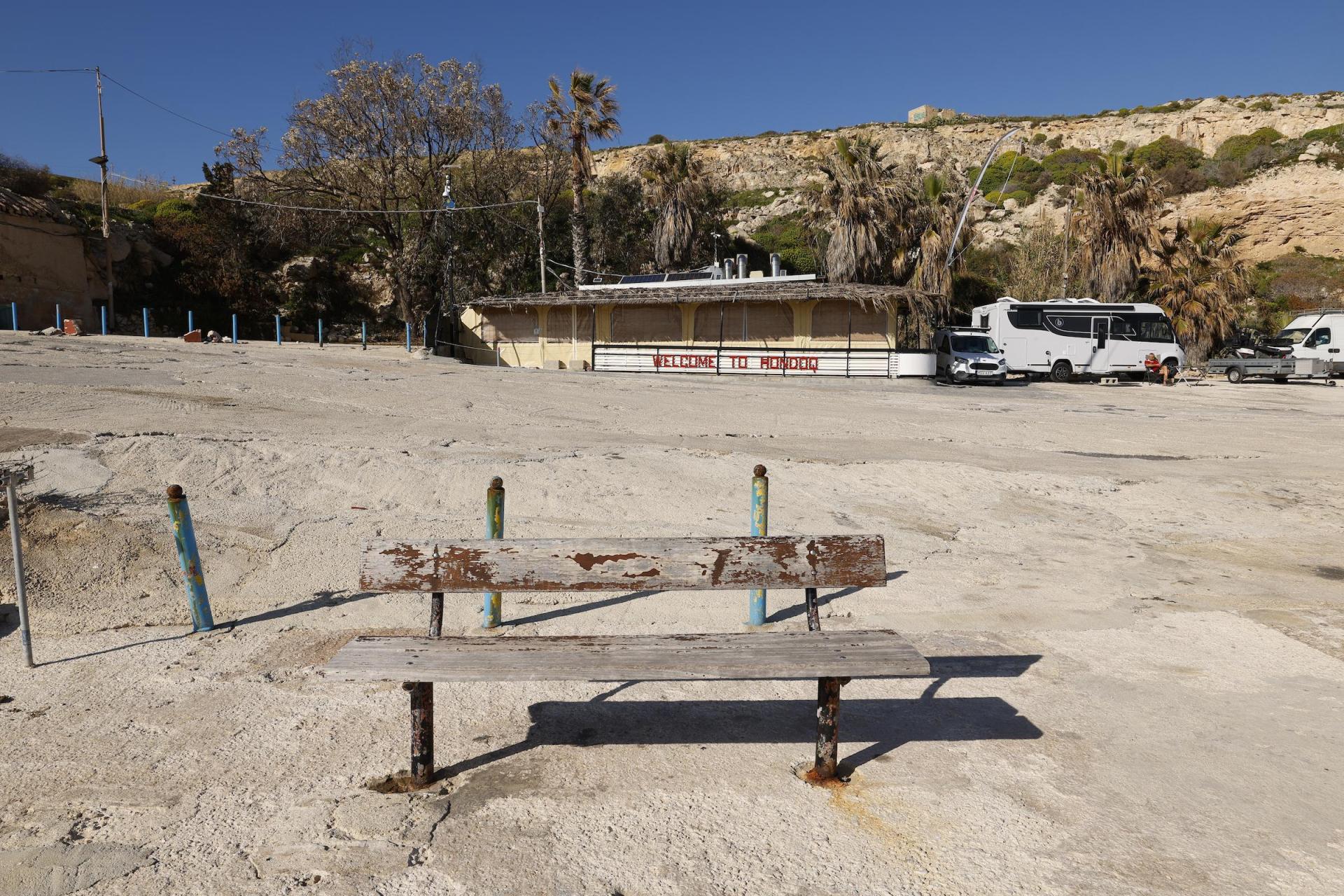 Photo: Darrin Zammit Lupi
Eventually, Gozitan residents had to form their own groups just to keep up with the increasingly large volume of planning applications and infrastructural projects which sought to capitalise on the government’s efforts to bring more year-round tourism to the island.
One such group is Għawdix, an NGO that has been actively involved in some of Gozo’s biggest environmental campaigns to date.
It was involved in the campaign to reclaim Comino for the general public, Din L-Art Ħelwa’s decades long struggles to restore an abandoned battery that was previously converted into a nightclub, and saving Ħondoq Bay from plans to redevelop the entire area, to name a few examples.
Rosalyn Kamp, Għawdix’s coordinator, says that practically most of Gozo’s famed beaches are impacted by maritime commercial activity in some way or another, often involving businesses that cater to tourists.
Though Għawdix initially sought to rally the grassroots and push for the kind of big-tent campaigns that unfold in Malta, Gozo’s exceptional insularity made it difficult for the group to make inroads with “desensitised” local communities.
“We’ve changed the way we try to do things this year because we realised that we objected to so many major developments that people seem to have just gotten desensitised. We don’t even issue calls for objections anymore, we just do that process internally,” Kamp says.
To challenge this desensitisation, the group has resorted to creative solutions, focusing on obtaining funding to be able to work on projects like collecting stories from farmers and presenting them to the public and organising “botany walks” to give people an opportunity to familiarise themselves with the environment that they stand to lose.
When asked to determine what should be done about Gozo’s transformation, Kamp makes it a point to clarify that their group isn’t focused on reducing development, an accusation that is often levelled at environmentalists.
“Our priority isn’t to reduce development, it’s to develop Gozo sustainably. That’s one of them. There are so many things that need to be done in Gozo, but for now, I think this is the most important one by far. I think this affects many aspects of how Gozo is being shaped. It should be more about quality over quantity in terms of what tourists we get,” she continues.
Collective resistance in every nook and cranny
Economic and spatial pressures in Malta have also led to a gradual uptick in Gozo’s population, which crept past the 40,000 mark in 2022 and has been increasing since. That number is expected to shoot past 50,000 within 15 years.
Wayne Flask, the secretary-general of Il-Kollettiv, argues that this drift towards the quieter sister island is a result of people being forced out of their towns due to developers and would-be landlords seeking to extract profit rather than actually using the houses they purchase.
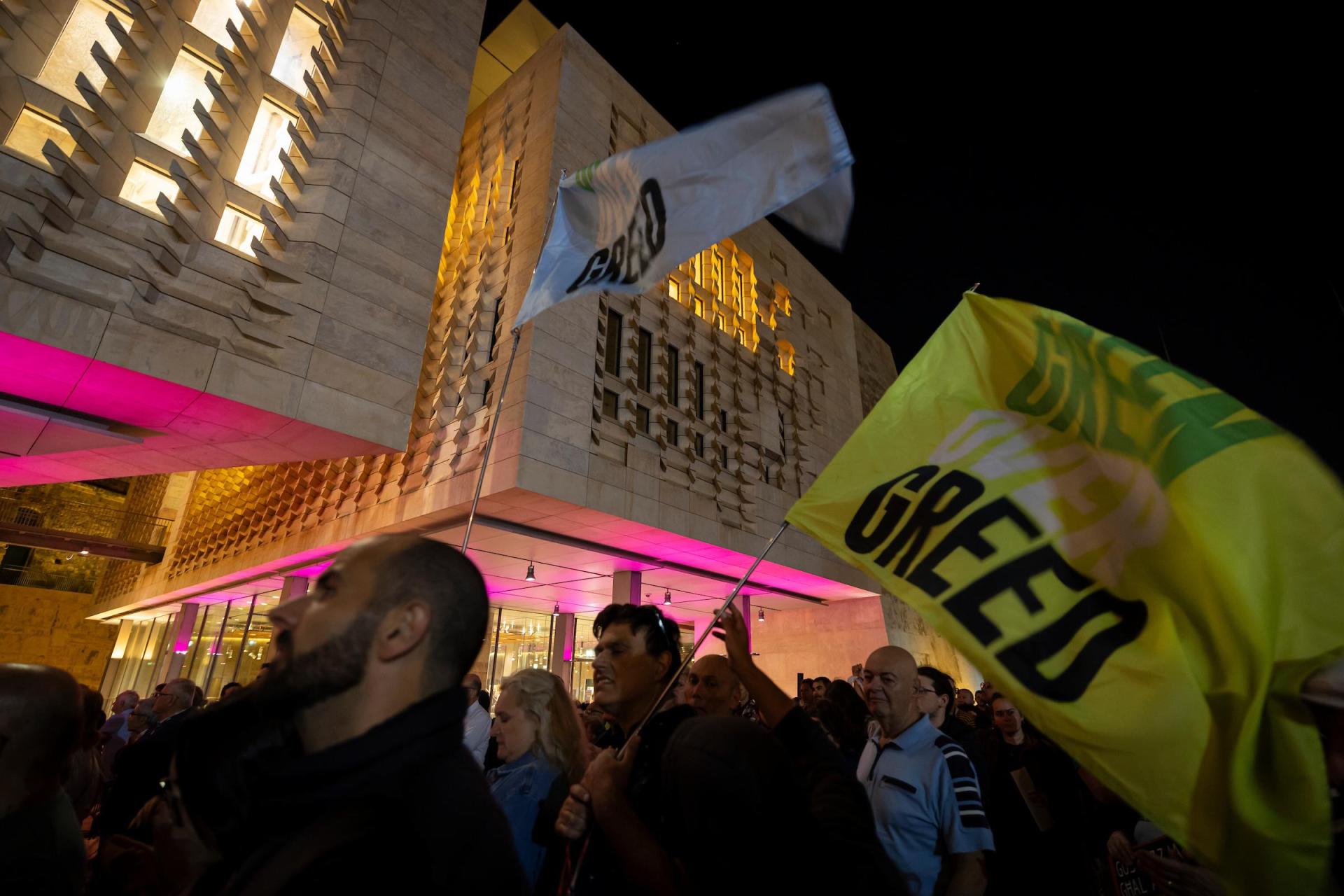 Demonstrators march in Valletta. Photo: Darrin Zammit Lupi
“Let’s face it: Malta was just one big construction site for the past decade,” he adds.
Il-Kollettiv is another group which was formed to unite different resident groups across the Maltese islands into a more effective, unified entity, an increasingly vital approach when considering that there will never be a locality with enough manpower to fight back against a major project alone.
Community resistance is rising as ports are reshaped to serve cruise tourists and wealthy superyacht owners demanding ever more waterfront space.
In Floriana and Valletta, cities with a history of rivalry in pretty much anything that can be turned into a competition, the same exact kind of pressures felt in Gozo’s harbour towns have wrought irreversible damage to their rich heritage.
Airbnbs and other similar short-let platforms continue to erode what’s left of the cities’ expensive housing stock, from which younger families have been all but priced out.
Marguerite Delia is one of the few “born and bred” Valletta residents who are left in the capital, and she struggles to recognise the soul of a city she once loved.
In an interview in her tastefully renovated home, she explains how the capital’s gradual transformation into a popular nightclub and bar area has been a source of constant discomfort, on top of all the noisiness of Valletta’s busy daytime cafes and restaurants.
A crowded port dropping off never-ending streams of cruiseliner tourists and a public ferry system which shuttles people to and from Gozo have led to the additional hassle of gridlocked road networks in towns that were never designed to be able to withstand high traffic volumes.
While the fast ferry system does partially reduce reliance on cars since users must travel on foot or using a bicycle, the poor traffic management system that serves Valletta’s terminal fails to adequately cater for the flow of pedestrians and vehicles that are generated as a result.
Despite the chaos of a busy city, she expresses heaps of gratitude for the efforts of groups like Residenti Beltin and other similar groups that make life more bearable.
“...thank God they exist, because at least, we see that somebody is speaking up and has the guts to say the facts as they are,” Delia says.
Meanwhile, over in nearby Floriana, others have taken it upon themselves to pressure the authorities to fill in the gaps that they are responsible for.
During a community assembly organised by Friends of the Earth Malta, Rory Apap Brown, one of the members of an organisation called Clean Air For The Grand Harbour, explained how there was “zero monitoring” of air quality in Floriana, in spite of the town’s proximity to the harbour.
“We’ve been pressuring ERA and Transport Malta to get a better understanding of why this is not happening. ERA has a very firm position about not being interested in monitoring air quality in the Grand Harbour. So we keep lobbying them alongside other associations we are in touch with, like Friends of the Earth Malta,” Apap Brown said, arguing there should be a clear roadmap towards restricting the amount of large ships burning fossil fuels in the harbour.
To date, authorities failed to explain why it is not only failing to increase Malta’s air quality monitoring capacities, but reducing it - as evidenced by its unexplained decision to dismantle Senglea’s mobile station after the ERA’s study was concluded.
Though the gradual erosion of Valletta and Floriana’s social fabric makes for disappointing reading, recent memory also affords one of the most significant wins that civil society has ever achieved to date, affirming the value of persistent campaigning against the odds.
Marie-Claire Gatt, one of the activists involved in the campaign to win back Manoel island, recalled just how set in stone the government’s refusal to even consider turning the islet into a public park originally was.
In fact, both Prime Minister Robert Abela and then-opposition leader Bernard Grech had rubbished the idea that the concession could be scrapped, before both parties were forced to reckon with public sentiment quickly.
Describing one of the very last meetings held with the office of the prime minister prior the government’s U-turn, Gatt expressed her surprise at “how quickly they folded.”
“As soon as we went in, the first sentence that came out of the prime minister’s mouth was about how he was willing to fight for this cause. We were like, okay, we’ll take it! I mean sure, they were cautious about how they framed their wording, but we knew that the boundaries of the conversation were completely different by then,” she says.
“Think about it, we had one of the biggest business groups in the country - along with two major political parties - begging on their knees, by the end. Change of this kind rarely happens because of the benevolent will of these kinds of people, but because there is enough public pressure that is being directed in a strategic manner,” she added.
Responses
Out of all the relevant stakeholders we reached out to for comment for this investigative project, we received two responses - a response from ERA’s spokesperson, and a response from Valletta mayor Olaf McKay.
ERA’s spokesperson noted that Malta’s legally binding standards are set by the EU Ambient Air Quality Directive - which are far less stringent than the guidelines published by the WHO.
“These standards set the EU limit values which constitute the official basis for compliance across all Member States including Malta. All official assessments and compliance reporting follow such EU standards,” the spokesperson noted.“In this regard, the regulated pollutants are in line with EU standards during the period in question for all pollutants, with the exception of particulate matter of size 10 micrometres or less (PM10) at Msida station in 2018 and 2023, where the number of exceedances of the daily limit value exceeded that of the EU, and ozone which was exceeded in our Għarb station* in 2021, 2022, 2023,” the spokesperson added.
ERA also explained that ozone is known as a “transboundary pollutant”, which means that it is not just generated locally but also carried over from other countries, making it impossible to control except through “global action and efforts from other countries”.
Earlier this year, ERA published an air quality plan, which the spokesperson says is meant to target road transport as the main source of air pollution and “includes a set of measures aiming to reduce traffic congestion, focusing on the inner harbour area.”The spokesperson cited proposals including collective transportation, cleaner distribution services, grants and schemes for cleaner vehicles and incentives to surrender vehicles.“These measures build on a series of initiatives that the government has implemented over the years, which have already contributed to significant emission reductions. These include the reform of the power generation sector, the introduction of free public and school transport, the provision of free ferry services in the inner harbour area, and the fast-ferry link between Malta and Gozo,” the spokesperson added.The spokesperson also stated that the mobile monitoring station in Senglea was set up to collect samples for a study on “any impact shipping in the Grand Harbour may have on air quality”, noting that the exercise was completed and that the station was removed afterwards.The regulator did not share the results of its study nor did it explain whether its study was impacted by the poor quality of the data that was collected through the mobile station.As for Valletta’s mayor, who was elected on the Labour Party’s ticket, his comment was largely about ongoing cooperation with the government to form a master plan for the capital city.
“I have always believed that a “one-size-fits-all” approach cannot be applied in all cases. Valletta needs its own dedicated action plan so that, together with the relevant entities, we can develop a model that truly addresses the needs of both residents and commercial establishments in the City,” McKay says.
Valletta’s mayor also stated that the council is collaborating with the office of the deputy prime minister on a pilot project that will design “measures tailored for a capital city that attracts high-quality tourism.”
“Through this initiative, we will be able to tackle issues such as waste management, public order, and the regulation of tourist accommodations. I thank the Government for its support in helping us present our proposals and the residents' suggestions, and implement our ideas so that we may achieve a balanced approach that meets the needs of residents, commercial activity, and tourism,” McKay adds.
The health ministry, the transport ministry, the culture ministry, and Marsaskala’s local council did not respond to a request for comment.
This is the final part in a three-part series. Read part one here and part two here.
The Save our Shores project is an initiative created and implemented by Friends of the Earth Malta with the backing of Amphora Media and funded by The Minor Foundation for Major Challenges.
The author used ChatGPT 5.1 for analytical support, multi-stage data processing, comparison against WHO air quality guidelines, and the interpretation of pollutant trends across Malta’s monitoring stations (2020–2024).